
Millipedes look harmless — slow, cylindrical, more interested in dead leaves than in you — but pick one up and your skin may tell a different story. Their defensive secretions can stain skin reddish-brown and cause a burning irritation that looks alarming. Millipede burn on skin treatment is straightforward: wash promptly and thoroughly with soap and water, keep the secretion away from your eyes, and let the generally self-limited irritation resolve on its own.
What a millipede burn looks like #
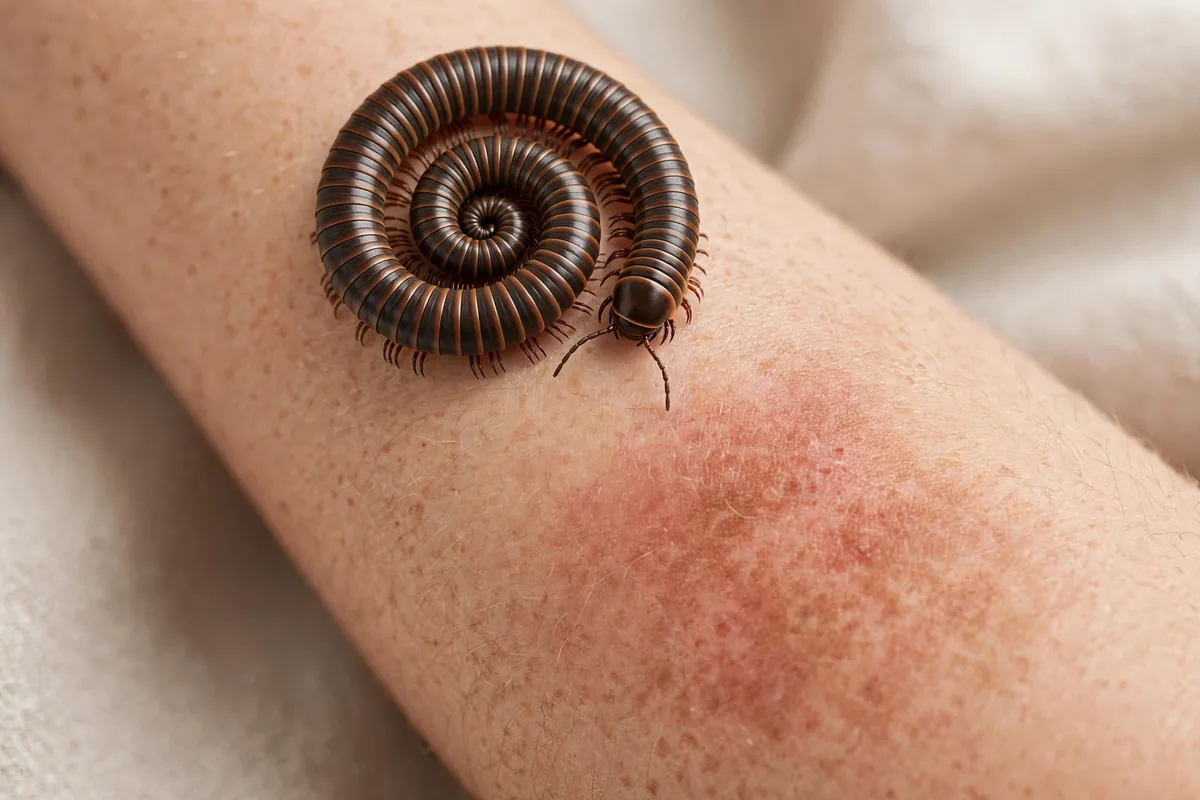
When threatened, many millipede species release defensive chemicals — including benzoquinones — from pores along their bodies. On skin, the secretion typically causes a reddish-brown or purplish discoloration that can look like a bruise or a chemical burn, along with burning, stinging, or itching. The stain comes from the chemicals themselves oxidizing on the skin, and it can linger for days even after the irritation fades.
The reaction is usually mild and self-limited: uncomfortable for hours, fading over days, with the stain outlasting the soreness. Blistering is uncommon but possible with prolonged contact or sensitive skin. The real risk is the eyes — millipede secretions in the eyes can cause significant pain, redness, and swelling, and eye exposure should be treated as urgent. This is not venom in the bite-or-sting sense; millipedes do not bite people. It is a contact chemical irritation, which is why prompt washing matters so much.
Step-by-step treatment #
Act quickly — the sooner the secretion is washed off, the milder the reaction tends to be.
Wash thoroughly. Rinse the area under running water, then wash with soap and water, and rinse again. Repeat once more for good measure. Do not scrub harshly enough to break the skin; firm but gentle washing is enough to remove the chemical.
Cool and soothe. Apply a cool, damp cloth to ease burning. An oral antihistamine taken per label directions can help if itching develops, and a bland moisturizer or aloe-based product can soothe dry, irritated skin afterward. Avoid applying random home chemicals — vinegar, alcohol, and bleach do more harm than good on chemically irritated skin.
Protect the area. Keep the discolored skin clean and covered if clothing will rub it. Do not pick at any blisters that form; intact blisters protect the skin underneath. If your clothing touched the millipede, change out of it and wash the garments normally — the secretion can transfer from fabric to skin on continued contact, prolonging the irritation. Watch the area over the next day or two using the same judgment you would for any skin irritation — guidance on cleaning a bite or sting safely applies here too. Most redness and burning ease within hours, while the stain fades over days.
Eyes are different. If secretion gets into the eyes, flush immediately with clean water or saline for at least 15 minutes, remove contact lenses, and seek medical care the same day. Eye exposures should not be managed with wait-and-see.
Preventing the next encounter #
Millipedes thrive in damp, decaying organic matter: leaf litter, mulch, compost, woodpiles, and damp basements. Wear gloves when gardening, handling firewood, or clearing leaf litter, and shake out shoes left in garages or mudrooms. Reduce moisture around the foundation — fix leaky spigots, improve drainage, and keep mulch a few inches away from the house walls.
Indoors, millipedes usually wander in by accident during wet weather and cannot survive long in dry homes. Seal gaps under doors, repair torn screens, and run a dehumidifier in chronically damp basements. A vacuum with a hose attachment is the cleanest way to remove indoor millipedes — sweeping or crushing them releases more of the staining secretion onto floors. Teach children the look-but-do-not-touch rule: millipedes are fascinating to watch, but handling them is what triggers the defensive secretion. If a child does pick one up, calm washing with soap and water is the whole treatment in most cases — and tips for reducing bite itching can help if the irritation itches as it heals.
Warning signs: when to seek care #

Call 911 immediately if exposure causes trouble breathing or swallowing, swelling of the face, lips, tongue, or throat, widespread hives, dizziness or fainting — signs of a severe allergic reaction, which is rare with millipedes but possible with any exposure. Eye exposure with severe pain or vision changes also warrants emergency evaluation.
See a doctor or urgent-care clinic if blistering is extensive, the skin shows signs of infection (increasing pain, spreading redness, warmth, pus, or fever), the discoloration and irritation worsen after 48 hours instead of improving, or the exposure involved the eyes and flushing has not fully resolved the pain. People with eczema or very sensitive skin may react more strongly and should seek advice sooner rather than later.
Frequently asked questions #

How long does the brown stain from a millipede last? #
The reddish-brown discoloration is a chemical stain, not a bruise, and it typically fades over several days to a couple of weeks as skin naturally renews. Gentle exfoliation during normal washing helps, but do not use harsh scrubs or bleaching products — they irritate the skin without meaningfully speeding stain removal.
Are millipedes poisonous to touch? #
They are not poisonous in the way a venomous animal is, and handling one will not poison you systemically. The secretion is a topical irritant meant to taste bad to predators. Serious effects are essentially limited to eye exposure and rare allergic reactions, which is why washing hands after any contact is the key habit.
What is the difference between a millipede and a centipede burn? #
Millipedes cause chemical-contact irritation from defensive secretions; they do not bite. Centipedes are predators with venom-delivering fangs and can deliver a genuinely painful bite. If something fast, flattened, and long-legged bit you, that was a centipede and the first aid differs — this guide covers millipede secretion exposure only.
Should I worry if my dog sniffed or mouthed a millipede? #
Dogs that mouth millipedes often drool, paw at the mouth, or vomit from the foul-tasting secretion. Rinse the mouth with water and offer drinking water; most cases resolve quickly. If drooling is profuse, vomiting persists, or the dog seems distressed, call your veterinarian rather than waiting.
Medical and editorial note #
This guide is general information about millipede secretion exposure and skin care, not medical advice. Most cases are mild and resolve with washing and time, but eye exposures and signs of infection or allergic reaction need professional care. If you are concerned about a reaction, consult a healthcare professional.


