
Found a tick with a white dot on its back? That is likely a lone star tick — an aggressive biter common across the eastern, southeastern, and south-central United States. Lone star tick bite symptoms range from a stubborn itchy bump that means nothing, to fever, rash, and other signs of tick-borne illness developing days to two weeks later. The bite itself is only chapter one. Here is what the bite looks like, what to watch for in the coming weeks, and exactly what to do after you find one.
What a Lone Star Tick Bite Looks Like #
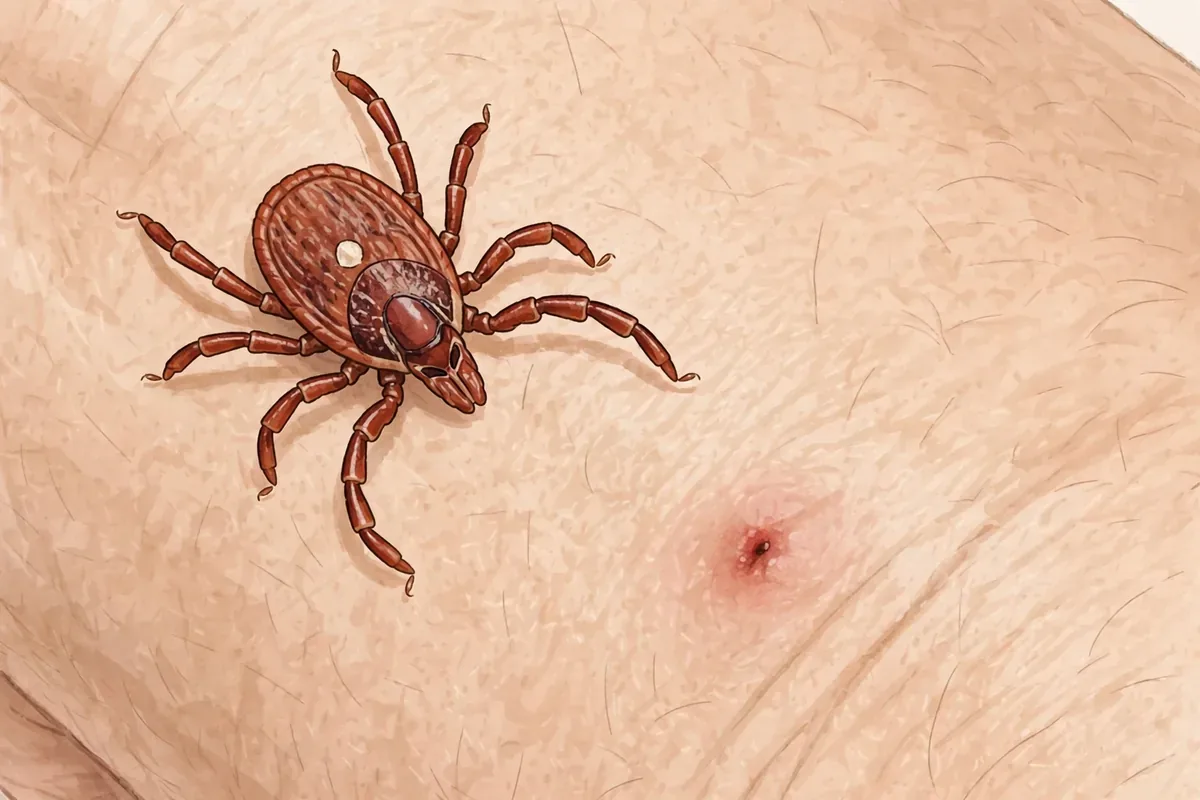
Identification starts with the tick. Adult female lone star ticks are reddish-brown with a single bright white or silvery dot in the center of the back — the “lone star.” Males have scattered pale markings around the body edge instead of one dot, and the nymph and larva stages are tiny and hard to identify without magnification. All stages bite people, and unlike some ticks that wait passively, lone stars actively move toward hosts.
The bite itself often leaves a red, itchy bump that can be surprisingly persistent — lone star tick saliva is notably irritating, and many people develop a firm, itchy red nodule at the bite site that lasts a week or more. This local reaction, by itself, does not mean you have been infected with anything. It is simply your skin’s response to the saliva.
Two things worth knowing upfront: lone star ticks do not transmit the bacteria that cause Lyme disease — that is the blacklegged (deer) tick’s territory. But lone stars carry their own list of concerns, covered in the illnesses section below. And because the nymphs are so small, many people never see the tick at all — they only find the itchy bump afterward.
Symptoms to Watch Over the Next Few Weeks #
After any lone star tick bite, monitor yourself for up to a few weeks. Symptoms of tick-borne illness typically appear within a few days to two weeks after the bite. Watch for:
- Fever and chills. The most common early signal across several lone star tick illnesses. Any unexplained fever within two weeks of a tick bite deserves a call to your clinician.
- Headache and muscle aches. Flu-like body pain without respiratory symptoms is a classic tick-borne illness pattern.
- Rash. A spreading rash around the bite — or a more widespread rash — can appear with several of these illnesses. Note that the expanding “bull’s-eye” rash is associated with Lyme disease (not a lone star illness), but other rashes still matter.
- Fatigue. Unusual, heavy tiredness that does not match your activity level.
- Nausea, vomiting, or loss of appetite. Digestive symptoms accompany some tick-borne infections.
- Swollen or painful lymph nodes near the bite site.
- An open sore or ulcer developing at the bite site, which can occur with certain infections like tularemia.
Keep a simple dated log: when you found the tick, how long it may have been attached, and any symptoms with dates. If you saved the tick (recommended — see below), note that too. This log is exactly what a clinician needs to assess your risk.
Illnesses Linked to Lone Star Ticks #
Lone star ticks are associated with several illnesses. You do not need to memorize this list — but knowing the names helps you have an informed conversation with your clinician:
- Ehrlichiosis — a bacterial infection causing fever, chills, headache, and muscle aches. This is one of the more common serious lone star tick illnesses.
- Tularemia — can cause fever, skin ulcers at the bite site, and swollen lymph nodes.
- Southern tick-associated rash illness (STARI) — produces a Lyme-like expanding rash; the exact cause is still being studied.
- Heartland virus disease and Bourbon virus disease — viral illnesses that can cause fever, fatigue, and body aches.
- Alpha-gal syndrome — a delayed allergic reaction to red meat (and other mammal products) that can develop after lone star tick bites. Reactions typically occur hours after eating meat. Our article on alpha-gal syndrome explains the symptoms and testing in depth.
Important context: most tick bites do not result in illness. The list above describes what is possible, not what is likely from any single bite. Prompt tick removal reduces risk for the bacterial and viral illnesses, so speed matters — details in the next section.
What to Do After a Bite: Step by Step #
Act quickly and methodically. Every step here reduces your risk.
- Remove the tick properly. Use fine-tipped tweezers: grasp the tick as close to the skin as possible and pull straight up with steady pressure. Do not twist, squeeze the body, or use heat, nail polish, or petroleum jelly — these can irritate the tick and are not reliable. For the full technique, see our guide to removing an attached tick safely.
- Clean up. Wash the bite area and your hands with soap and water, and clean the tweezers with alcohol.
- Save the tick. Drop it in a sealed container or zip bag with a little rubbing alcohol, labeled with the date. Identification helps your clinician assess which illnesses are even possible.
- Note the details. Write down where on your body it was attached, your best estimate of how long it was there, and where you likely picked it up (which trail, yard, or park).
- Watch and log. Monitor the bite site and your general health for the next few weeks using the symptom list above. Take a photo of the bite site every few days.
- Call your clinician if symptoms appear. Report the tick bite explicitly — say “lone star tick bite” and mention the date. Do not wait for symptoms to become severe; early evaluation leads to simpler treatment for most tick-borne illnesses.
- Do not take antibiotics “just in case.” Preventive antibiotics are not routinely recommended after tick bites; the decision belongs to your clinician based on your specific situation.
For guidance on the weeks after any tick bite, see our tick bite aftercare guide.
Reducing Your Risk Outdoors #

Lone star ticks thrive in wooded areas, brush, tall grass, and leaf litter — and they are aggressive enough to make prevention worth the effort.
- Dress defensively. Long pants tucked into socks, long sleeves, and light-colored clothing (which makes ticks easier to spot) for hikes, yard work, and woodland edges.
- Use repellent. Apply an EPA-registered repellent to exposed skin per label directions. Treat clothing and gear with permethrin for longer-lasting protection — it stays effective through several washes.
- Do the tick check. After time outdoors, check your whole body: behind ears, along the hairline, under arms, around the waist, behind knees, and between toes. Shower within a couple of hours of coming inside — showering alone dislodges unattached ticks.
- Tumble dry clothes on high heat. Ticks that hitched a ride on clothing die in a hot dryer cycle.
- Manage your yard. Keep grass short, clear leaf litter and brush piles, and create a barrier of wood chips or gravel between lawns and wooded areas.
- Protect pets too. Dogs and cats can carry ticks indoors on their fur. Keep pets on veterinarian-recommended tick prevention year-round.
Warning signs: when to seek care #
Call 911 immediately if you develop trouble breathing or swallowing, swelling of the face, lips, tongue, or throat, widespread hives, dizziness or fainting, or a racing heartbeat after any insect exposure. If you have an epinephrine auto-injector, use it at the first sign of a severe reaction.
Seek prompt medical care if you develop fever, chills, rash, headache, muscle aches, or unusual fatigue within a few weeks of a lone star tick bite — mention the tick bite explicitly when you call. Also seek care if the bite site develops an open sore, expanding redness, or red streaks, or if you develop delayed hives or stomach symptoms hours after eating red meat (possible alpha-gal syndrome).
Frequently asked questions #

How long does a lone star tick need to be attached to transmit disease? #
It varies by pathogen and is not precisely established for every illness — for some, transmission risk rises with longer attachment. The practical rule is simple: remove any attached tick as quickly as possible, since faster removal reduces risk across the board.
The bite left a hard itchy lump that will not go away. Is that normal? #
Yes, often. Lone star tick saliva is highly irritating, and a firm, itchy nodule at the bite site can persist for a week or more without indicating infection. Watch for the systemic symptoms above rather than judging by the bump alone.
Should I save the tick? #
Yes. A saved tick in a sealed container lets a clinician or lab confirm the species, which narrows down which illnesses are possible and informs testing decisions. Label it with the bite date.
Can lone star ticks give me Lyme disease? #
No. The CDC has not shown lone star ticks to transmit the Lyme disease bacteria — that is carried by blacklegged (deer) ticks. Lone stars have their own distinct list of associated illnesses, described above.
Medical and editorial note #
This guide is general information about lone star tick bites and associated illnesses, not medical advice. Tick-borne diseases vary by region and individual risk, and symptoms overlap with many other conditions. If you find an attached tick or develop symptoms afterward, contact a healthcare professional promptly for personalized guidance.


