
How to remove a bee stinger from a dog: scrape it out as quickly as you can with the edge of a credit card, soothe the area with cool water, and then watch your dog closely for several hours. Dogs get stung most often on the face, muzzle, and paws — usually while sniffing or pawing at a bee. The stinger keeps pumping venom until it is removed, so speed matters. And one critical rule: never give your dog any medication without asking your veterinarian first.
Step-by-step: getting the stinger out #
Only honeybees leave stingers behind; wasps and bumblebees generally do not. If you saw a bee sting your dog, or you can see a tiny dark stinger in the skin, follow these steps:
- Calm and steady your dog. A panicked dog is hard to treat and may bite out of pain. Speak softly, have a second person gently hold the dog if possible, and work in a quiet spot.
- Find the sting site. Part the fur and look for a tiny dark dot — the stinger — often with a small pale venom sac attached. Common spots: the muzzle, lips, around the eyes, the tongue (if the dog snapped at the bee), and the paws.
- Scrape, do not squeeze. Use a credit card edge, a fingernail, or a blunt butter knife to scrape firmly across the skin and flick the stinger out. Avoid grabbing it with tweezers if you can — squeezing the attached venom sac can inject more venom. If the stinger is too deep to scrape out safely, leave it; it will work its way out as the skin heals.
- Clean the area. Wash gently with mild soap and cool water, then pat dry.
- Cool it. Hold a cool, damp cloth against the site for a few minutes. Most dogs tolerate this on a paw; on the face, brief gentle contact is enough.
- Note the time. Write down when the sting happened and where. If your dog develops a reaction later, your vet will want this timeline.
Work efficiently but gently — the whole removal should take a minute or two.
Why scraping beats squeezing #
A honeybee’s stinger is a barbed needle with a venom sac attached. When the bee pulls away, the stinger tears free and stays in the skin, and the sac keeps contracting — pumping venom for a minute or longer. How you remove it affects how much venom gets in:
- Scraping flicks the stinger and sac away from the side without compressing the sac, minimizing additional venom delivery.
- Squeezing with tweezers or fingers can compress the sac like a tiny syringe, pushing the remaining venom into the wound.
This is the same reason the human-focused remove a bee stinger guidance recommends scraping. The principle is identical for dogs — only the patient is furrier and less cooperative.
Signs of a serious reaction in dogs #

Most dog stings cause only local pain and swelling that fades within a day or two. But dogs can have severe allergic reactions, and multiple stings are more dangerous. Watch closely for at least 4 to 6 hours, and call your vet or an emergency animal hospital immediately if you see:
- Facial swelling — a puffy muzzle, swollen eyelids, or swelling around the lips that is rapidly increasing.
- Hives or widespread itching — raised bumps under the fur, frantic scratching beyond the sting site.
- Vomiting or diarrhea appearing after the sting.
- Trouble breathing — panting that will not settle, noisy breathing, or pale or bluish gums.
- Weakness, wobbliness, or collapse.
- Stings inside the mouth or throat — swelling here can threaten the airway, just as in people. This is an emergency regardless of other symptoms.
Dogs with known sting sensitivity, very small dogs, and dogs stung many times at once (for example, after disturbing a nest) are at higher risk. When in doubt, call your vet — describing the symptoms by phone costs nothing and they will tell you whether to come in.
Aftercare at home #
For a normal, mild reaction — a single sting, local swelling, a dog that is otherwise acting fine:
- Monitor for 24 hours. Most local reactions peak within a few hours and improve steadily. Check the site a few times during the day.
- Keep your dog from chewing or scratching the sting site. An e-collar (cone) for a day can prevent a paw or face sting from becoming a raw, infected wound.
- Cool compresses a few times during the first day can ease swelling and discomfort.
- Do not give human medications — no antihistamines, no pain relievers, nothing from your medicine cabinet — unless your veterinarian specifically directs you to. Dosing, safe products, and safe amounts differ enormously between people and dogs, and some common human drugs are dangerous for dogs. The rule is simple: ask your vet first.
- Watch the healing trend. Shrinking swelling and a dog returning to normal behavior means healing. Spreading redness, discharge, increasing pain after the first day, or lethargy warrants a vet visit.
For general outdoor-hazard checks on your dog, the how to check your dog for ticks guide pairs well with this one — the same post-outing inspection routine catches both.
Preventing the next sting #
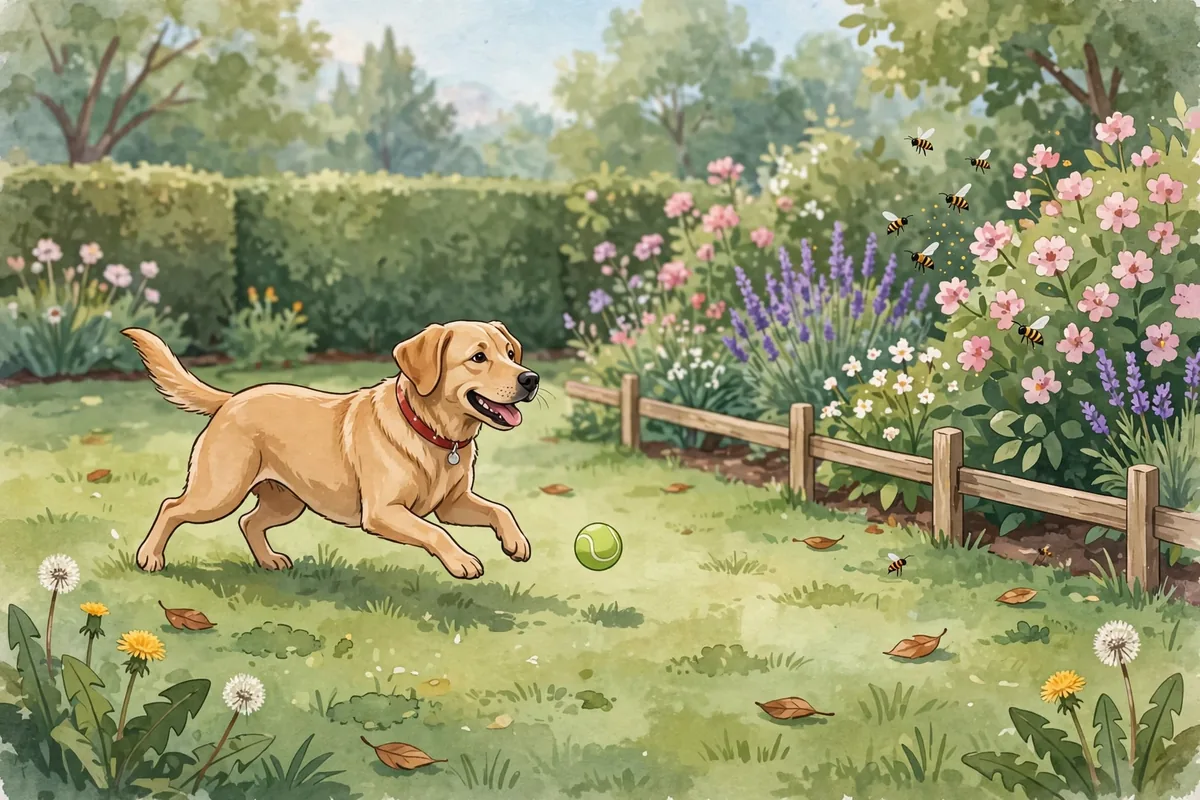
Dogs that have been stung once often get stung again — they do not learn the lesson the way you might hope:
- Watch flowering plants and clover. Bees work blossoms heavily; a dog snuffling through a flowering patch is asking for a nose sting.
- Check water bowls and food left outside, which attract bees and wasps in warm weather.
- Keep dogs away from nests. If you find a hive or nest in the yard, have it professionally removed and keep the dog leashed away from the area until then.
- Supervise outdoor play in late summer, when wasps and bees are most active and most defensive.
- Know your vet’s emergency number — and the nearest emergency animal hospital — before you need it. Save both in your phone now.
Warning signs: when to seek care #
Contact your veterinarian or an emergency animal hospital immediately if your dog shows trouble breathing, pale or bluish gums, rapidly increasing facial or throat swelling, collapse, uncontrollable vomiting, or widespread hives after a sting. Stings inside the mouth or throat are emergencies even without other symptoms. If your dog carries no known allergy but was stung many times at once, seek veterinary care promptly — venom load matters.
For milder situations, call your vet the same day if swelling keeps growing after several hours, the sting site oozes or looks infected, your dog seems painful or lethargic beyond the first day, or you are simply unsure. Vets would much rather triage a worried call than treat a delayed reaction.
Frequently asked questions #
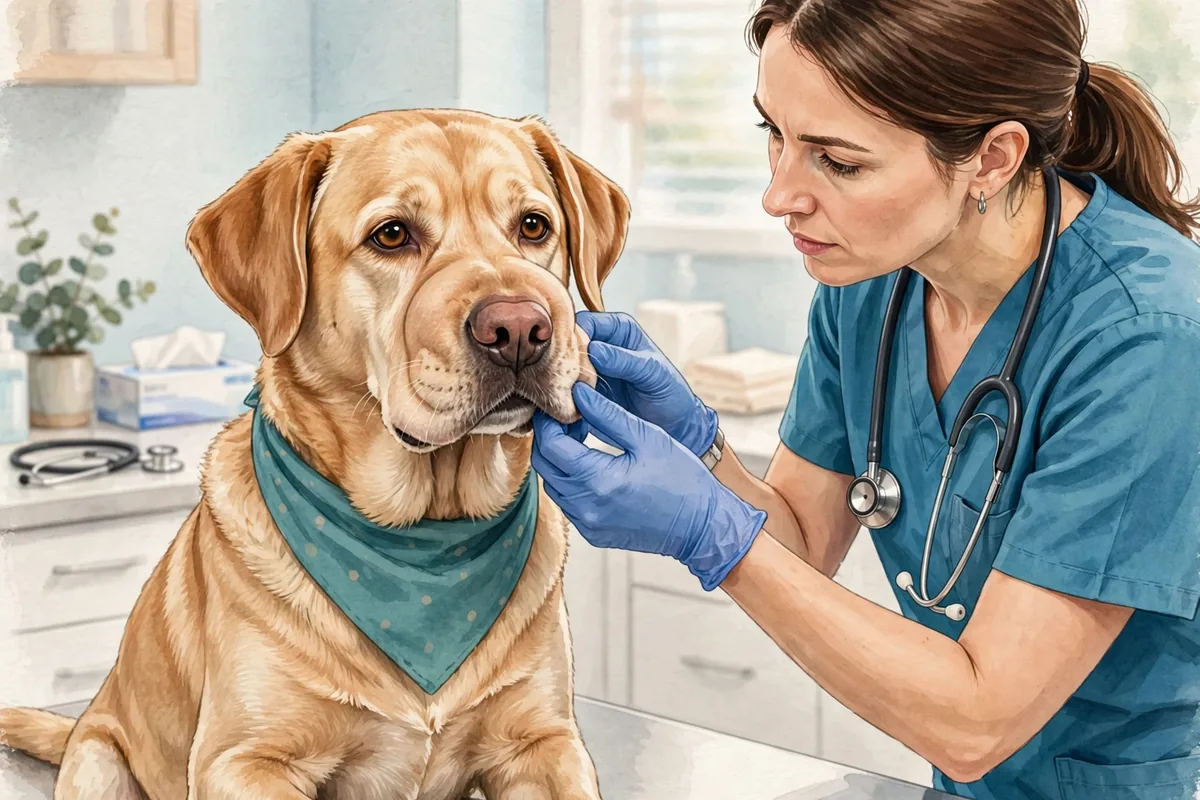
How do I get a bee stinger out of my dog? #
Scrape it out with a credit card edge, fingernail, or blunt knife — a firm sideways flick. Avoid squeezing it with tweezers, which can push more venom in. Then wash the area with mild soap and cool water and apply a cool cloth. If you cannot find or safely reach the stinger, leave it and monitor; it will shed with normal skin healing.
Can I give my dog Benadryl for a bee sting? #
Do not give your dog any medication — antihistamines, pain relievers, or anything else — without asking your veterinarian first. Safe products and doses vary by the dog’s size, health, and other medications, and some human drugs are toxic to dogs. Call your vet, describe the sting, and follow their specific direction.
How long does a bee sting last on a dog? #
Local pain usually fades within a few hours and swelling typically resolves within one to two days. Mild residual tenderness at the site can linger a bit longer. Swelling that keeps increasing after several hours, or any systemic symptoms, should be evaluated by a vet rather than waited out.
What if my dog was stung in the mouth? #
Treat it as urgent. Mouth and throat tissue swells quickly and sits next to the airway. Remove any visible stinger if you can do so safely, offer cool water, and contact your vet or an emergency animal hospital right away — do not wait to see how it develops.
Medical and editorial note #
This guide provides general information about bee stinger removal and sting first aid for dogs and is not veterinary advice. Every dog reacts differently, and only your veterinarian can advise on medications, dosing, or whether your dog needs to be seen. If your dog shows any sign of a serious reaction — especially breathing difficulty or collapse — seek emergency veterinary care immediately, and mention any known sting sensitivity when you call.


