
How long do mosquito bites last? For most people, about three to seven days. The itch is worst during the first 24 to 48 hours, eases over days two and three, and the bump flattens out by the end of the week. Scratching, strong sensitivity, or a broken-skin infection can stretch that timeline — this guide walks you through the normal day-by-day course, what slows healing down, and when a lingering bite deserves medical attention.
Day-by-day: what normal healing looks like #
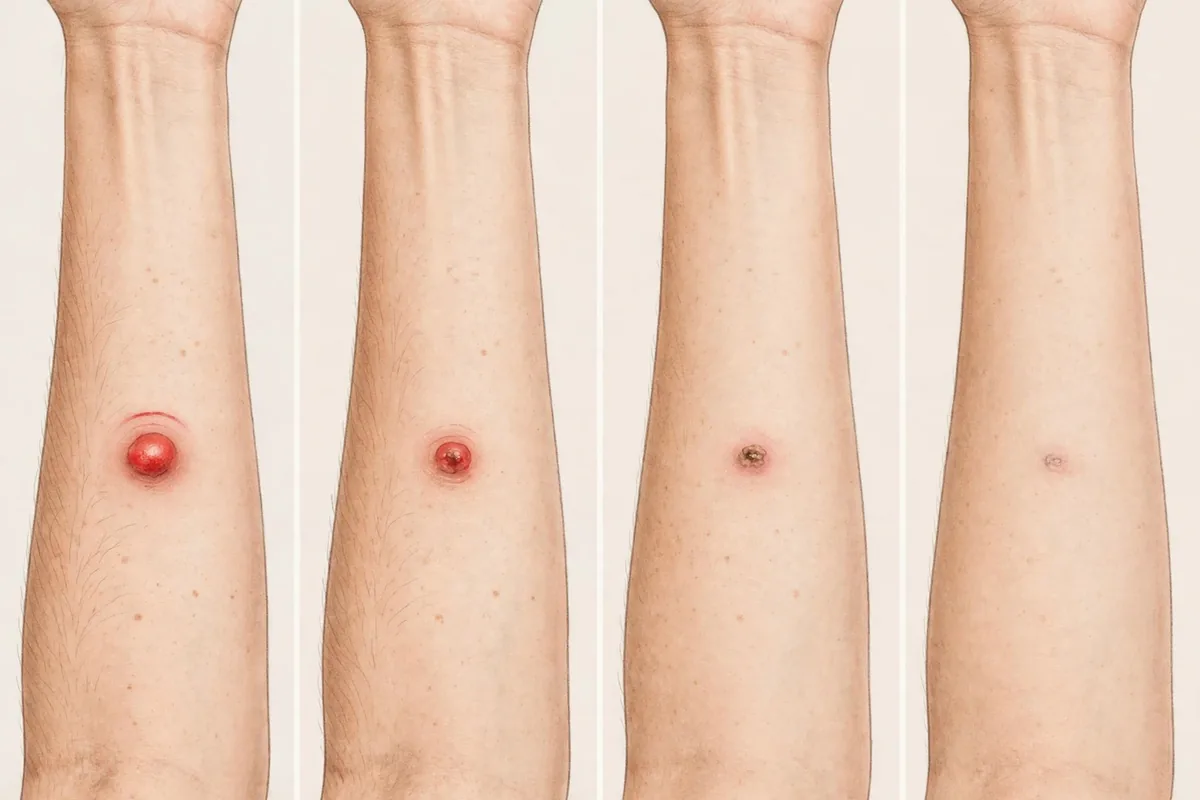
Mosquito bites follow a predictable pattern because they are all the same event: a female mosquito injects saliva proteins that keep your blood flowing while she feeds, and your immune system answers with histamine and inflammation. Here is the usual course:
- Minutes to hours: A small red bump appears. Itching starts, sometimes within minutes, sometimes after a delay of several hours as the immune response ramps up.
- Day 1: The peak. Redness, swelling, and itch are usually at their worst around 24 to 48 hours after the bite. The bump may feel warm.
- Days 2–3: The itch fades first. Redness shrinks inward and the bump begins to flatten. Most people stop noticing the bite for long stretches of the day.
- Days 4–5: The bump is mostly flat. A faint pink or slightly darker mark may remain where the bite was.
- Day 7: For most bites, this is the finish line. Pediatric care guidelines note that while itching and redness usually settle in three to four days, residual swelling can take up to a week to fully disappear.
Anything within this range is a normal reaction, not a sign something is wrong. The timeline is a guide, not a guarantee — your personal pattern depends on how your immune system responds.
Why some bites last longer than others #
Not every bite heals on the same schedule. These factors are the most common reasons a bite hangs around:
- Your sensitivity level. People who have recently moved to a new area, travelers encountering unfamiliar mosquito species, and young children often react more strongly because their immune systems have not “seen” those particular saliva proteins before. Stronger reactions last longer.
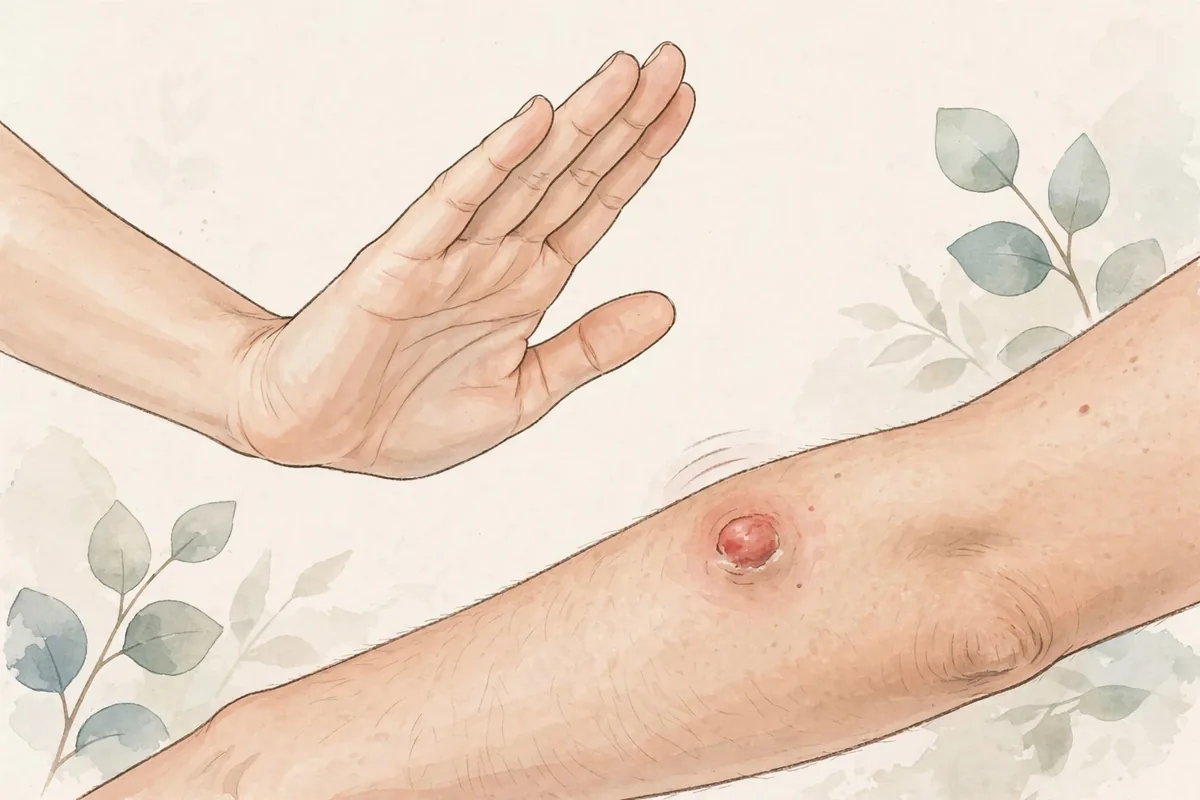
- Scratching. This is the biggest delay factor under your control. Scratching tears the skin’s surface, triggers more inflammation, and can push bacteria into the bite. A scratched bite can easily add several days to the timeline and leave a darker mark behind. Keeping the area untouched is the single fastest way to shorten healing — a principle that applies to all bites and stings, as covered in the don’t scratch or squeeze the bite guide.
- Bite location. Bites on the face, especially near the eyes, and on the hands or feet tend to swell more dramatically because the skin is thin or the tissue is tight. They are not more dangerous, but they can look alarming and take a day or two longer to settle.
- Large local reactions. Some people develop a bigger, hotter, more swollen response — sometimes called skeeter syndrome. These reactions can last a week or more and may cover a large area of skin. They are uncomfortable but are a local allergic-style response, not an infection.
- Secondary infection. If bacteria get into scratched skin, the bite stops following the normal script: redness spreads instead of shrinking, warmth and pain increase after the first day or two, and the area may develop pus. Infection resets the clock and needs medical care.
How to help a bite heal faster #
You cannot force your immune system to finish faster, but you can remove everything that slows it down:
- Leave it alone. Cover the bite with a small bandage if you keep touching it unconsciously, especially at night.
- Cool it down. A cold compress or ice cube wrapped in a cloth, applied for 10 to 15 minutes at a time, calms itch and swelling. Repeat a few times a day during the worst phase.
- Soothe the surface. Calamine lotion, a baking-soda-and-water paste, or a low-strength hydrocortisone cream used per label directions can take the edge off the itch. If itching is severe, an oral antihistamine taken per label directions often helps; talk to your pharmacist if you take other medications.
- Keep it clean. Wash the area with mild soap and water, especially if the skin is broken. If a scab forms, keep it clean and covered until it heals on its own.
- Track the trend. A quick daily glance is enough: is the redness shrinking and the itch fading? That is healing. If the trend reverses — spreading redness, increasing pain, new warmth after day two — switch from home care to medical care.
For a broader step-by-step approach to bite and sting care, the bite and sting first aid checklist walks through the same routine in order.
When a lingering bite is a different problem #
A bite that is still prominent after seven to ten days, or one that was improving and then got worse, deserves a second look:
- Spreading redness or warmth after 24–48 hours, especially if the red area keeps growing, suggests a skin infection such as cellulitis.
- Pus, yellow crusting, or red streaks radiating from the bite are infection signs that need a clinician.
- Fever, chills, swollen lymph nodes, or body aches alongside bites can signal infection or, in some regions, a mosquito-borne illness — seek medical care promptly.
- A bite that never fully heals or keeps recurring in the same spot may not be a mosquito bite at all. Bed bug bites, flea bites, and certain rashes mimic mosquito bites closely.
Stop the cycle: get bitten less in the first place #
Fewer bites means fewer healing timelines to wait out. The basics work:
- Use a registered repellent. Products with DEET or picaridin are the most studied options. Apply per label directions; picaridin and DEET are generally recommended for children over two months old — younger infants should rely on physical barriers like netting.
- Drain standing water. Mosquitoes breed in tiny amounts of still water: saucers, buckets, clogged gutters, tarps. Empty them weekly.
- Time your exposure. Many mosquitoes feed most aggressively at dusk and dawn. Long sleeves and pants during those hours cut bites dramatically.
- Screen your home. Intact window screens and a fan on the patio (mosquitoes are weak fliers) make indoor and outdoor spaces far less inviting.
Warning signs: when to seek care #
Call 911 immediately if a bite — or any insect sting — triggers trouble breathing or swallowing, swelling of the face, lips, tongue, or throat, widespread hives, dizziness or fainting, a racing heartbeat, nausea or vomiting, or a sense that something is seriously wrong. If you carry an epinephrine auto-injector and have signs of a severe allergic reaction, use it first, then call 911.
Beyond that emergency scenario, contact a doctor or urgent-care clinic if redness keeps spreading after 48 hours, the bite becomes very painful, you see pus, yellow crusting, red streaks, or blistering, or you develop fever, chills, or swollen lymph nodes. Bites on the face that swell an eye shut are usually dramatic but harmless; still, have a clinician take a look if vision is affected or the swelling worsens after a few days.
Frequently asked questions #

How long do mosquito bites last on average? #
Most mosquito bites last three to seven days from the moment you are bitten. Itching is typically worst in the first day or two and fades by day three or four, while any remaining swelling or faint mark can take up to a full week to disappear. Scratching or a stronger-than-average immune reaction can push the timeline past a week.
Why do some mosquito bites last for weeks? #
Bites that linger for weeks usually involve something beyond the normal reaction: repeated scratching that keeps the skin inflamed, a large local allergic response, a secondary bacterial infection from broken skin, or a misidentified bite — bed bug and flea bites can look very similar and keep appearing night after night. If a single bite is still active after two weeks, have a clinician examine it.
Do mosquito bites heal faster if you don’t scratch them? #
Yes. Scratching is the single biggest reason bites take longer to heal. It breaks the skin, increases inflammation, risks infection, and can leave a darker, longer-lasting mark. A cold compress, an oral antihistamine per label directions, or covering the bite with a bandage all help you leave it alone so healing can proceed.
Can a mosquito bite get infected? #
Yes, through broken skin — usually skin you broke by scratching. Warning signs include redness that spreads after the first day or two, increasing warmth and pain, pus or yellow crusting, and red streaks extending from the bite. An infected bite needs medical treatment and will not heal on the normal timeline.
Medical and editorial note #
This guide provides general information about mosquito bite healing and is not medical advice. Everyone’s immune response differs, and persistent, worsening, or unusual skin reactions should be evaluated by a qualified healthcare professional. If you are concerned about a bite — especially one showing signs of infection or accompanied by fever — seek care rather than waiting out the timeline.


