
Horse flies are the heavyweight bullies of the biting-fly world — big, persistent, and painful. Horse fly bite on horse treatment is straightforward: clean the bite, cool the swelling, discourage rubbing, and watch for infection or allergic reaction, then fix the fly problem so it does not repeat all summer.
What Horse Fly Bites Look Like on Horses #
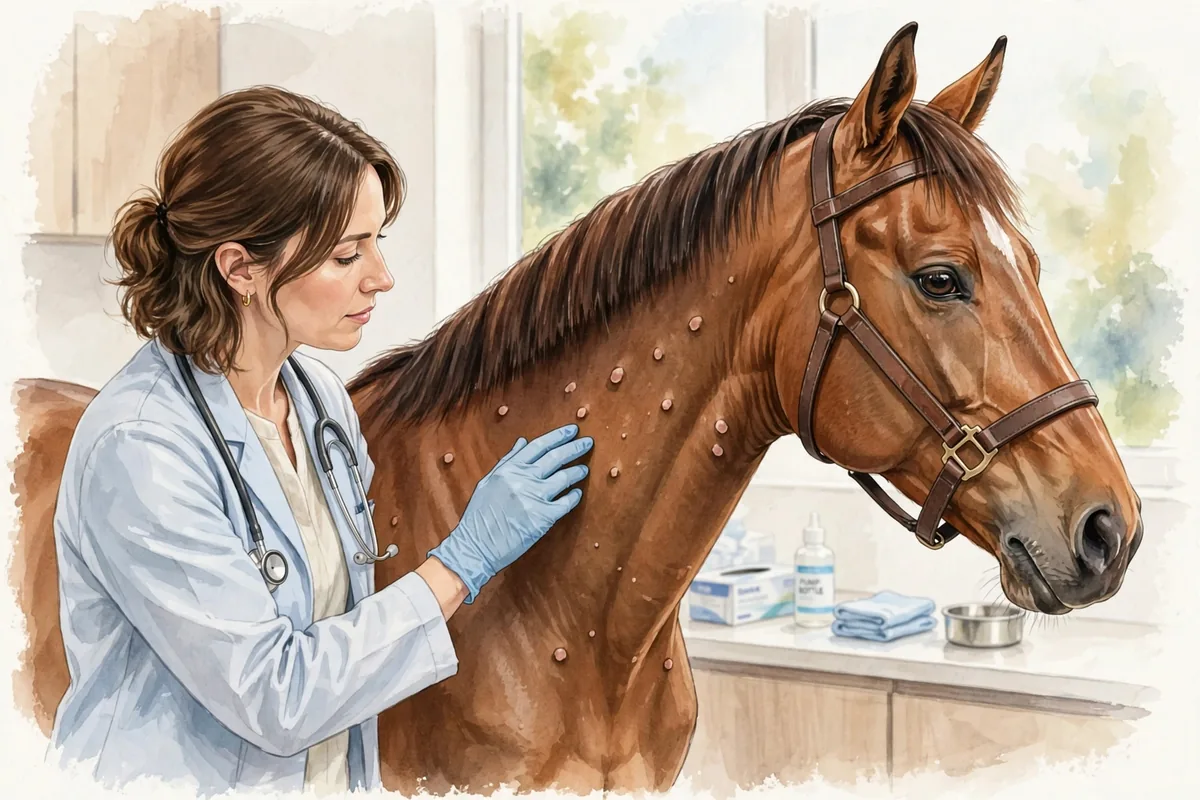
A horse fly bite often shows as a small puncture, sometimes with a bead or trail of blood, because these flies slash the skin rather than piercing it delicately. Around the bite you may see a raised welt, local swelling, and hair standing up over the area. Some horses barely react; others — especially those sensitive to fly saliva — develop hives around the bite or across the whole body.
Bites cluster where flies land easiest: the legs, belly, neck, and around the ears. Because horse flies are visual hunters active in warm daylight, turnout horses in open pasture get hit hardest in mid-summer. A single bite is a nuisance; dozens of bites over a season cause real misery, hair loss from rubbing, and open sores that attract yet more flies.
Treating a Fresh Horse Fly Bite #
- Move the horse out of fly pressure — into a barn, under fans, or into shade — so you can work without new bites landing.
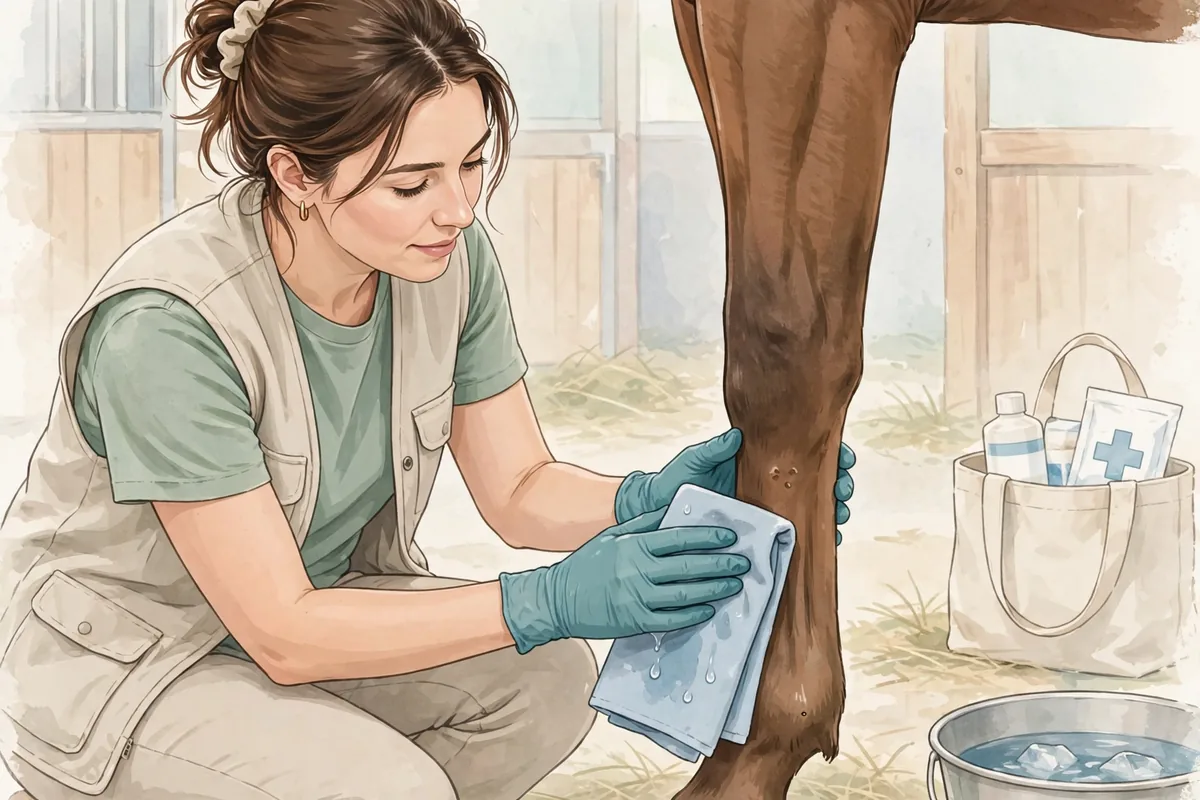
- Clean the bite with cool water and a mild horse shampoo to remove dried blood, scurf, and bacteria. Horse fly bites are more prone to infection than many insect bites because of how the fly tears the skin, so cleaning matters.
- Cool the swelling. Hold a cold, damp cloth or a wrapped ice pack on the bite for about 10 minutes. Repeat a few times over the first day.
- Apply a soothing topical if the skin is intact: colloidal oatmeal, witch hazel, calamine lotion, or zinc oxide cream can calm itching. Use only products labeled safe for horses, and do a small spot test first if your horse has sensitive skin.
- If the bite is open and weeping, bathe it with a mild antiseptic solution and keep it clean. Do not pick at scabs — let them protect the healing skin underneath.
Discourage rubbing and scratching, since the horse will gladly tear a healing bite open on a fence post. A fly rug or leg wraps can double as physical protection for sore spots. For general bite-care principles that apply across species, the bite and sting first aid checklist is a useful refresher.
Recognizing an Allergic Reaction #
Most horses take horse fly bites in stride, but some mount an outsized immune response to fly saliva. Warning signs of a significant allergic reaction include: hives spreading well beyond the bite, swelling of the face or around the eyes, intense itching over large areas, restlessness, or — rarely — difficulty breathing and signs of colic-like distress.
If hives are widespread or your horse seems systemically unwell, call your vet. Antihistamines and steroids can control fly-bite hypersensitivity, but both must be given under your vet’s guidance — never dose a horse from your own medicine cabinet. Horses with known fly-bite allergies benefit from an action plan worked out with the vet before fly season peaks.
When a Bite Turns Into Something Worse #
A bite that is getting worse instead of better needs attention. Call your vet if you see: spreading redness or heat beyond the bite, increasing pain or swelling after the first 48 hours, yellow or green discharge, a foul smell, or the horse going off feed or developing a fever.
One specific complication worth knowing: summer sores (cutaneous habronemiasis). These start when flies deposit larvae into an existing wound, producing a non-healing, granulating sore — common in warm climates during fly season. A wound that refuses to heal, grows proud flesh aggressively, or develops gritty yellow granules needs veterinary diagnosis (sometimes a biopsy) and targeted treatment, which may include deworming medication and specialized wound care. Do not confuse a stubborn summer sore with a simple bite — they need different treatment.
Also watch for cellulitis-like swelling in the legs: a leg that becomes hot, puffy, and painful a day or two after multiple bites may need veterinary assessment rather than more cold hosing.
Prevention: Keeping Horse Flies Off Your Horse #
Treatment is damage control; prevention is the real fix. Layer these defenses:
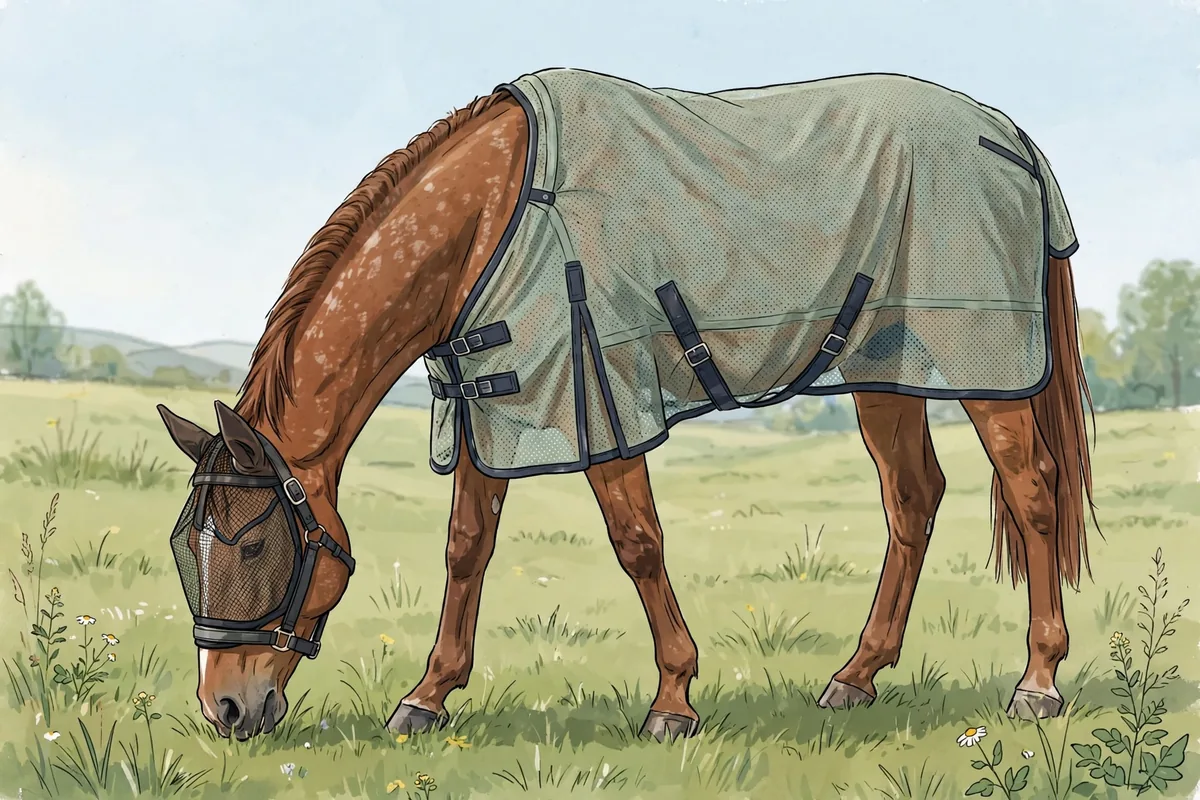
- Physical barriers first. Fly rugs with neck covers, fly masks (especially with ear protection — black flies love horse ears), and leg wraps block bites better than any spray.
- Fly spray, used correctly. Synthetic pyrethroid-based sprays (permethrin or cypermethrin products labeled for horses) are the most effective option against horse flies; homemade repellents generally disappoint against these robust insects. Follow label directions exactly — many are not meant for daily use — and spot-test new products.
- Manage the environment. Clear manure regularly, drain or manage standing water, and stable horses during peak fly hours (warm, calm daylight). Fans in the barn disrupt fly flight — horse flies are strong but dislike turbulent air.
- Treat the property, not just the horse. Fly traps (biting-fly traps that use visual lures) placed away from turnout areas can meaningfully cut local populations over a season.
Horses that suffer badly every summer deserve a pre-season vet conversation: options range from adjusted turnout schedules to vet-guided medication plans for hypersensitive individuals.
Warning signs: when to seek care #
Call your vet or an emergency equine vet immediately if your horse shows any of these red flags: difficulty breathing or noisy breathing; severe facial swelling, especially around the eyes or muzzle; widespread hives with distress; sudden lameness with a hot, swollen leg after bites; a wound with spreading redness, foul discharge, or proud flesh that will not heal; fever, lethargy, or going off feed following multiple bites.
For milder cases, call your regular vet if swelling has not started improving within 48 hours, if the horse keeps the bite open by rubbing despite protection, or if you are seeing new bites daily despite your prevention routine — that pattern means the fly-control strategy needs upgrading, not just the first-aid kit.
Frequently asked questions #
Do horse fly bites need antibiotics? #
Not routinely. Most uncomplicated bites heal with cleaning and time. Antibiotics enter the picture only when a vet diagnoses infection — spreading redness, heat, pus, or fever. Never start antibiotics on your own; unnecessary use breeds resistance and will not help a clean bite heal faster.
Why do horse fly bites bleed so much? #
Horse flies cut the skin with scissor-like mouthparts and lap up the pooling blood, rather than piercing a vessel neatly like a mosquito. That slash is why you often find a bead of blood — and why these bites carry a higher infection risk than a typical mosquito bite.
Can horses be allergic to horse fly bites? #
Yes. Some horses develop hypersensitivity to fly saliva, showing hives, intense itching, and hair loss that far exceed the bite count. If your horse reacts dramatically every summer, discuss a management plan with your vet before the next fly season — antihistamines or steroids under veterinary guidance can transform these horses’ summers.
What is the best fly spray for horse flies? #
Products based on synthetic pyrethroids (such as permethrin or cypermethrin) labeled for equine use are generally the most effective against horse flies. No spray is perfect — combine repellent with rugs, masks, and environmental control. Always follow the label, spot-test first, and reapply per directions, since sweat and rain shorten effectiveness.
Medical and editorial note #
This guide is general information about equine care, not veterinary advice. Fly pressure, climate, and individual horse sensitivity vary widely, so work with your veterinarian on prevention plans, any medication, and wounds that do not follow a normal healing course.


