
If you have spent a July afternoon on a Jersey Shore or New England beach, you already know: greenhead fly bites are the uninvited guests of salt-marsh summers. Only the females bite, and they cut the skin with scissor-like mouthparts, producing a sting-like pain that can throb for hours. Treatment is straightforward — clean, cold, and itch control — and a few beach-day habits cut your bite count dramatically. Here is the full guide.
Meet the greenhead #
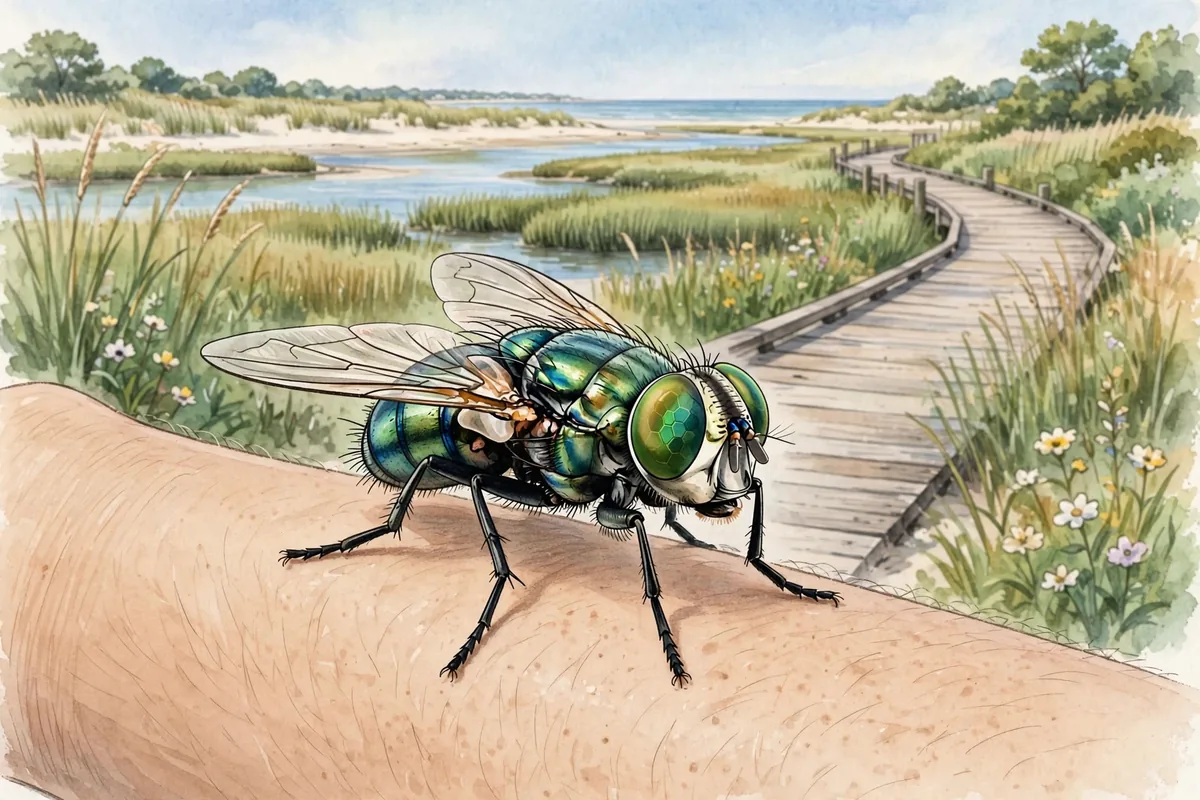
The greenhead (most famously Tabanus nigrovittatus, the salt marsh horse fly) is a large biting fly of the Atlantic coast salt marshes, from Nova Scotia to Florida. Its range centers on the marshes of New Jersey, New York, and New England — the beaches near those marshes are where most people meet it.
What to know:
- Only females bite. Like other horse flies, the female needs a blood meal to develop eggs. Males feed on nectar and cannot bite.
- They are big and fast. Roughly horse-fly sized with a dark body and the vivid green eyes that give them their name. You will hear and feel them — these are not stealth biters.
- The marsh is home base. Larvae develop in the intertidal mud of salt marshes for one to two years before pupating in early spring. Adults emerge in late spring and are most abundant from late June through mid-August — “fly season” on the coast.
- Range is wide. A female can fly miles from the marsh looking for a blood meal, so beaches, bayside yards, and coastal trails near marshes are all in play.
- Daytime hunters. Females are most active from mid-morning to dusk, especially on hot, sunny, calm days. Overcast or breezy days are noticeably better.
- They find you by breath and movement. Greenheads key in on carbon dioxide, body heat, dark colors, and movement — the same cues female mosquitoes use, which is why one can find you across a beach.
Why greenhead bites hurt so much #
A greenhead bite is not a mosquito-style puncture. It is a cut.
- Scissor-like mouthparts slice the skin and capillaries open; the fly then laps up the blood that pools out. The cut is bigger and deeper than a mosquito bite, so the pain is immediate and sharp — people routinely describe it as a sting.
- Anticoagulant saliva keeps the blood flowing freely during feeding. Your immune system’s reaction to that saliva drives the itch, redness, and swelling that follow.
- The wound bleeds. A small drop or smear of blood at the bite is normal — it is a cut, after all, not a puncture.
- Swelling can be impressive. Red, hot, raised welts are common; large local reactions of several inches occur in sensitive people or after multiple bites.
- Itch that lingers. The inflammatory response peaks over hours and can itch intensely for days. Scratching is the main route to secondary infection.
Because the bite is an open wound, cleaning matters more than with mosquito bites — and that is where treatment starts.
Treatment: calming a greenhead bite #
- Clean it. Wash with soap and water as soon as you can — beach shower, bottle of water, restroom sink. The open cut plus sand plus scratching is the infection pathway.
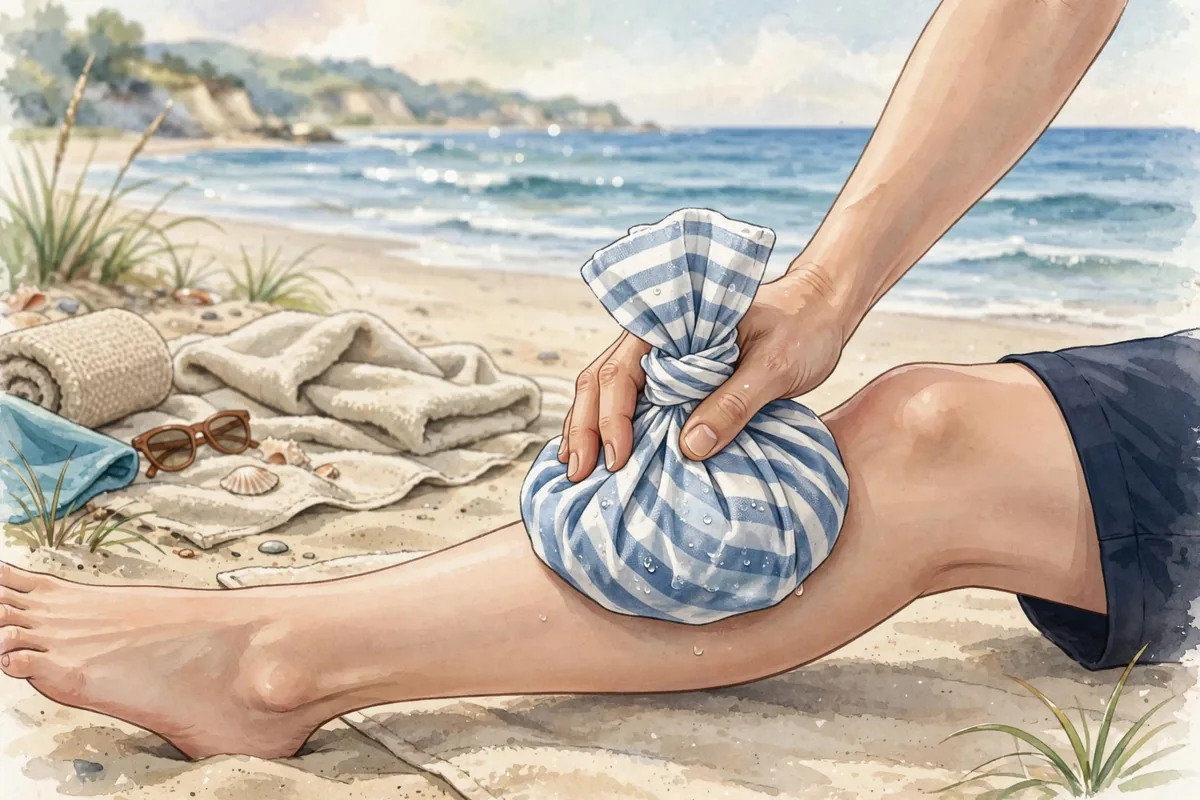
- Apply cold. Press a cold compress or ice wrapped in cloth on the bite for 10–15 minutes. At the beach, a cold drink can, a bag of ice, or even cool wet sand wrapped in a towel works in a pinch. Repeat through the day. Cold limits swelling and numbs the throb — technique details are in how to use a cold compress on bites and stings.
- Calm the itch. An oral antihistamine per label directions; hydrocortisone cream or calamine lotion on the skin. A baking-soda-and-water paste is the classic beach-bag alternative.
- Ease the pain. A pain reliever per label directions for the throbbing, especially for bites on the ankle, shin, or foot — the greenhead’s favorite targets.
- Keep it clean and dry. Change out of the wet swimsuit area around the bite if you can; pat dry, do not rub.
- Do not scratch. Broken skin plus sand plus bacteria equals cellulitis. Keep nails short, cover the bite loosely if you scratch in your sleep, and see why you should not scratch or squeeze a bite for the reasoning.
Healing timeline. Pain fades within hours; the welt and itch resolve in 3–7 days. Large reactions can take up to two weeks. Mark the redness edge with a pen on day one — expansion beyond the mark, pus, increasing pain after day one, or fever means call your clinician. General how long insect bites last covers the normal-versus-not spectrum.
Your beach-day protection plan #
Greenheads are visual hunters with a long range — you cannot avoid them entirely near the marsh, but you can cut your bite count sharply.
Clothing and color:
- Wear light colors. Biting flies prefer dark over light objects. A light cover-up, light hat, and light towel placement all help. Dark swimsuits and black rash guards are greenhead magnets.
- Cover up during peak hours. A light long-sleeve cover-up from 10 a.m. to dusk — the female’s active window — is the highest-value habit. You can shed it in the water and re-cover on the sand.
- A hat with a brim protects head and neck; a head net over it is the gold standard for truly bad fly days.
Behavior:
- Dry off after swimming. Wet, glistening skin draws them. Towel off and re-cover promptly.
- Keep moving or get in the water. Greenheads struggle to land on moving targets and will not follow you into the surf. A walk along the waterline beats sitting still in one sunny spot.
- Sit upwind and in breeze. They are weak against wind — the breeziest spot on the beach is the safest.
- Shade helps. They prefer hot, sunny conditions; an umbrella or tent reduces landings (though it will not stop a determined fly).
Repellents:
- Use an EPA-registered repellent (DEET, picaridin, or oil of lemon eucalyptus) per label directions on exposed skin. It reduces landings but is less bulletproof against greenheads than against mosquitoes — layer it with clothing and timing.
- Reapply after swimming, per the product label.
For the full outdoor playbook that works across biting species, see the outdoor bite prevention checklist.
Where greenheads live and when they peak #
Timing your beach trips around fly season is legitimate strategy.
- Peak season: late June through mid-August, with July the worst month in most years. Numbers taper through late August into September.
- Peak hours: 10 a.m. to dusk on hot, sunny, calm days.
- Peak places: beaches, bays, and yards within a few miles of salt marshes along the Atlantic coast — the Jersey Shore, Long Island, Cape Cod, and the New England coast are the classic zones.
- Weather effects: windy or overcast days are noticeably better; a sea breeze is your friend. Hot, still, sunny days are the worst.
- Year-to-year variation: wet springs and warm early summers can mean heavier seasons. Local news and beach-town forums often report on the current year’s intensity — worth a check before a big beach week.
Warning signs: when to seek care #
Call 911 immediately if you develop trouble breathing or swallowing, swelling of the face, lips, tongue, or throat, widespread hives, dizziness or fainting, or a racing heartbeat after a bite. Fly saliva can trigger anaphylaxis in sensitive people — use prescribed epinephrine first if you have it, then call 911.
See a doctor or urgent care if redness spreads well beyond the bite or you see red streaks; if there is pus, increasing pain after the first day, or fever; if the bite is on the eyelid or near the eye and swelling is significant; if swelling does not improve after a week; or if you took many bites and develop nausea, dizziness, or widespread swelling. The local-wound guidance in bite and sting warning signs applies to each bite.
Frequently asked questions #

Do greenhead flies bite at night? #
Rarely. Greenheads are daytime hunters, most active from mid-morning to dusk. Evening beach walks and nighttime bonfires are comparatively safe from greenheads — though mosquitoes and no-see-ums may take over the night shift.
Why do greenhead bites swell so much? #
Because the bite is a cut, not a puncture. The scissor-like mouthparts slice skin and capillaries, and the anticoagulant saliva triggers a strong inflammatory response. Bigger wound plus saliva reaction equals bigger swelling than a mosquito bite — and sensitive people can develop large local reactions of several inches.
What repellent works best against greenhead flies? #
EPA-registered repellents (DEET, picaridin, oil of lemon eucalyptus) used per label directions reduce landings, but none is fully reliable against greenheads — they are aggressive visual hunters. The most effective protection is layered: light-colored cover-ups, a hat, timing (avoid 10 a.m. to dusk peaks), breeze, and repellent together.
How long is greenhead season? #
Adults are most abundant from late June through mid-August, with July typically the peak. Numbers decline through late August into September. The larvae live in salt marsh mud for one to two years before emerging, so the season returns every summer regardless of what you do — plan beach weeks accordingly.
Medical and editorial note #
This guide is general information about greenhead fly bites and is not medical advice. Reactions vary between individuals, and wound infections require professional evaluation. If you are unsure about a bite, develop spreading redness, pus, or fever, or feel unwell, contact a healthcare professional promptly.


