
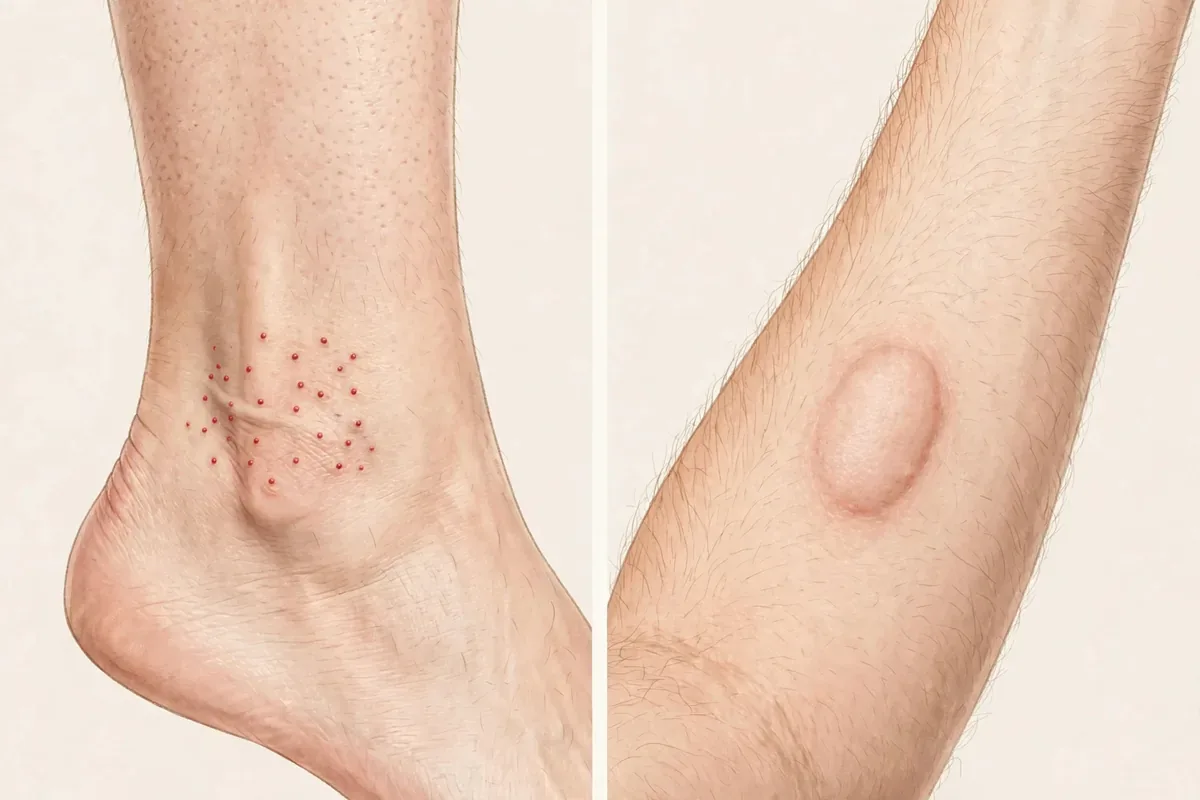
Scratching and wondering who is responsible? The flea bite vs mosquito bite question comes up a lot because both cause small, itchy, red bumps. Here is the fast ID method: flea bites cluster low on the body — ankles, feet, and lower legs — in groups of tiny red dots, while mosquito bites are larger raised welts scattered wherever skin was exposed. The patterns, timing, and the room you were in when it happened will usually settle the case.
Flea Bite vs Mosquito Bite: Side-by-Side #
| Clue | Flea bite | Mosquito bite | |—|—|—| | Size and look | Small (2-4 mm) red dots, sometimes with a tiny dark center or a small blister | Larger (5-15 mm) raised welt or bump, pale in the middle with a red rim | | Pattern | Clusters or lines of 3-4 bites close together | Scattered, random singles | | Location | Ankles, feet, lower legs, around waistbands and warm folds | Any exposed skin — arms, legs, neck, face | | Itch | Intense, immediate, and often worse at the ankle line | Builds over minutes to hours, moderate to intense | | Timing | Anytime — often noticed indoors during the day | Mostly dawn, dusk, and night; often noticed after being outdoors | | What you heard | Nothing — fleas are silent | That high-pitched whine near your ear | | Cause | Jumping insect, usually from pets or carpet | Flying insect that landed and fed |
The single most useful distinction: flea bites stay low and grouped, mosquito bites spread out and raised. If your ankles are dotted with clusters and your arms are clear, fleas are the strong suspect. If the bites are big puffy singles on your arms, neck, and legs after an evening on the porch, think mosquito.
Location Clues: Where the Bites Show Up #
Fleas are jumpers, not climbers. They live in carpet, rugs, pet bedding, and upholstered furniture, and they launch themselves onto whatever passes nearby — which is usually your feet and ankles. That is why the classic flea bite zone runs from the toes to just below the knee, with extra hits around sock lines, waistbands, and other tight edges where fabric presses against skin. Children playing on the floor often show bites on their lower legs and bottoms.
Mosquitoes are far more democratic. They land on any exposed skin they can reach: forearms while you are reaching for a drink, calves under a table, the back of the neck, the cheek you fell asleep on. Bites on the upper body, face, and ears are almost always mosquitoes (or another flying biter), because fleas rarely travel that high.
One caveat: people with flea allergies can react with larger, more dramatic bumps that mimic mosquito welts. If the reaction looks outsized for the bite, the pattern and location still tell the truer story.
For a deeper look at why some bites land in neat groups, read our guide on bites in a line or cluster.
Timing and Behavior Clues #
When and where the bites appeared adds another layer of evidence.
- Flea clues: Bites appeared while you were indoors at home, especially after sitting on a carpeted floor, a couch, or near a pet’s favorite spot. They itch almost immediately. New bites keep appearing over days in the same area. Someone else — or the family dog or cat — is scratching too.
- Mosquito clues: Bites showed up after being outside at dawn or dusk, near standing water, or after a night with the window open. You may have heard buzzing. The welts swell over an hour or two. Once you are back indoors and away from the source, no new bites appear.
- The repeat test: If fresh bites keep showing up overnight for a week straight despite repellent and closed windows, you are feeding an indoor population — which points to fleas (or bed bugs) rather than mosquitoes.
Treating Each Bite Right #
First aid for both is similar, but the priorities differ slightly.
- Stop the itch. A cold compress for 10 to 15 minutes, then a soothing option like calamine lotion or 1% hydrocortisone cream on the itchiest spots. An oral antihistamine per label directions can help when many bites are itching at once. See our guide on cold compresses for bites and stings for technique.
- Do not scratch. Broken skin on flea bites around the ankles is a common entry point for infection, especially in children who scratch in their sleep. Keep fingernails short.
- Flea bites — add a wash. Fleas leave debris and sometimes feces on the skin. Wash the area gently with soap and water before applying anything else.
- Mosquito bites — expect a slower peak. The welt may keep swelling for a day or two. That is a normal large local reaction, not necessarily an infection, as long as the redness is shrinking rather than spreading after 48 hours.
- Watch for infection either way. Increasing pain, warmth, pus, red streaks, or fever mean it is time to call your clinician.
Stopping the Next Round of Bites #
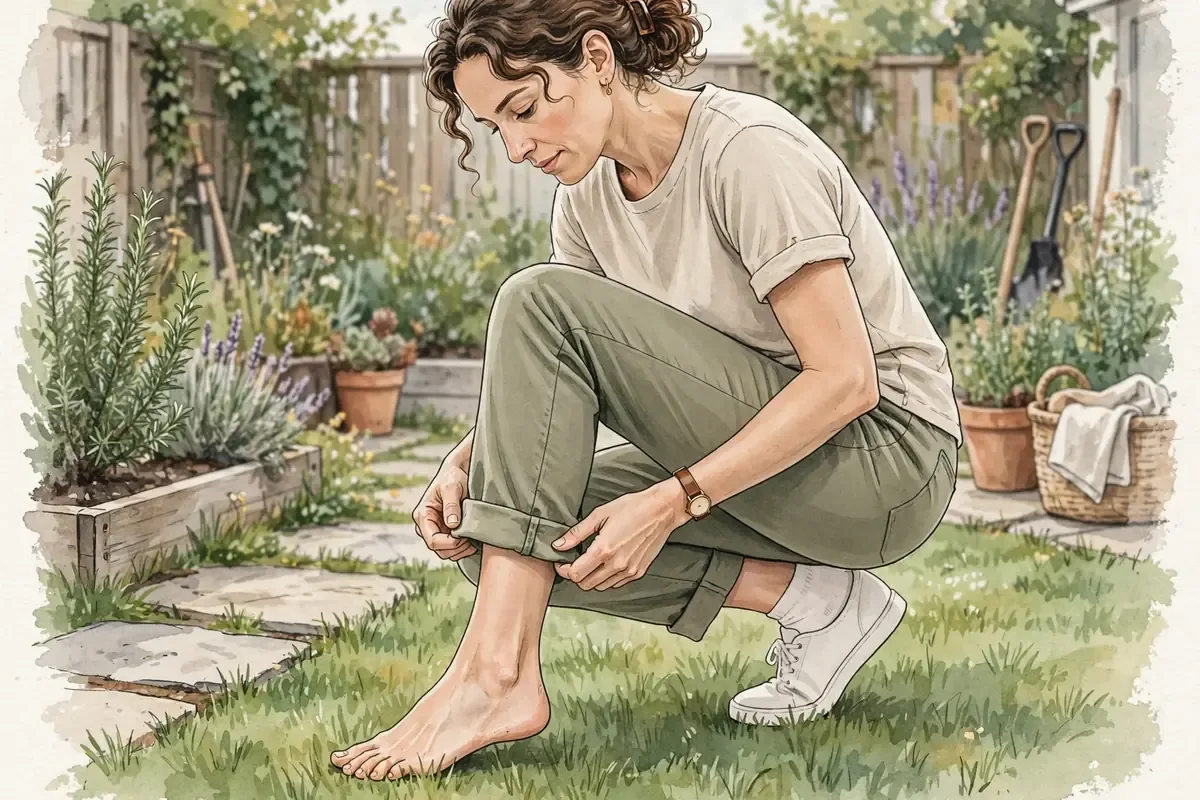
Treating the bumps is only half the job — the other half is evicting the biter.
- If it is fleas: Vacuum carpets, rugs, and upholstery thoroughly and dispose of the bag or empty the canister outside. Wash pet bedding and your own bedding in hot water and dry on high heat. Treat pets with a veterinarian-recommended flea product. Heavy infestations often need a professional exterminator; do-it-yourself foggers rarely reach the larvae hiding deep in carpet.
- If it is mosquitoes: Dump standing water from saucers, toys, and gutters. Use window screens and keep them repaired. Apply an EPA-registered repellent when outdoors at dawn and dusk. A fan on the porch disrupts their weak flight and genuinely reduces bites.
- For both: Launder sheets and blankets weekly during an active bite episode so you can tell whether new bites are still appearing.
Warning signs: when to seek care #
Call 911 immediately if you develop trouble breathing or swallowing, swelling of the face, lips, tongue, or throat, widespread hives, dizziness or fainting, or a racing heartbeat after any insect exposure. If you have an epinephrine auto-injector, use it at the first sign of a severe reaction.
For urgent care or a doctor visit: bites that become increasingly painful, warm, swollen, or pus-filled; red streaks spreading from a bite; fever after multiple bites; or bites that are not improving after a week of proper care. Also seek care if you find fleas or bed bugs are established in the home and bites keep recurring despite treatment efforts.
Frequently asked questions #

Can flea bites look like mosquito bites? #
Yes, especially in people who react strongly to flea saliva. The welts can look identical at a glance. Use the pattern and location — low, clustered dots versus scattered singles on exposed skin — rather than the bump alone.
Do flea bites spread disease to people? #
Fleas can carry certain diseases, but the most common problem by far is the itchy allergic reaction to their saliva. Keep the focus on itch control, avoiding scratching, and eliminating the fleas.
Why do mosquito bites itch more at night? #
They do not necessarily itch more — you simply notice them more when the day’s distractions fade. An oral antihistamine per label directions in the evening can make the night much more comfortable.
Can I get flea bites if I don’t have pets? #
Yes. Fleas can ride in on clothing, move between apartments, or linger in a home after a previous tenant’s pet. Wildlife under a porch or in a crawl space can also seed an indoor population.
Medical and editorial note #
This guide is general information about identifying and treating flea and mosquito bites, not medical advice. Bite reactions vary widely between people, and other conditions can mimic both. If you are unsure of the cause, if symptoms are severe, or if anything worries you, see a healthcare professional for an in-person evaluation.


