
You rarely see the bite happen — most owners notice a limp, a swollen spot, or sudden restlessness and have to work backward. Dog bitten by spider first aid means keeping your dog calm and still, applying a cool compress, photographing any wound, and getting to a veterinarian fast, because the two dangerous US spiders can cause serious systemic illness.
First Minutes: The Immediate Checklist #
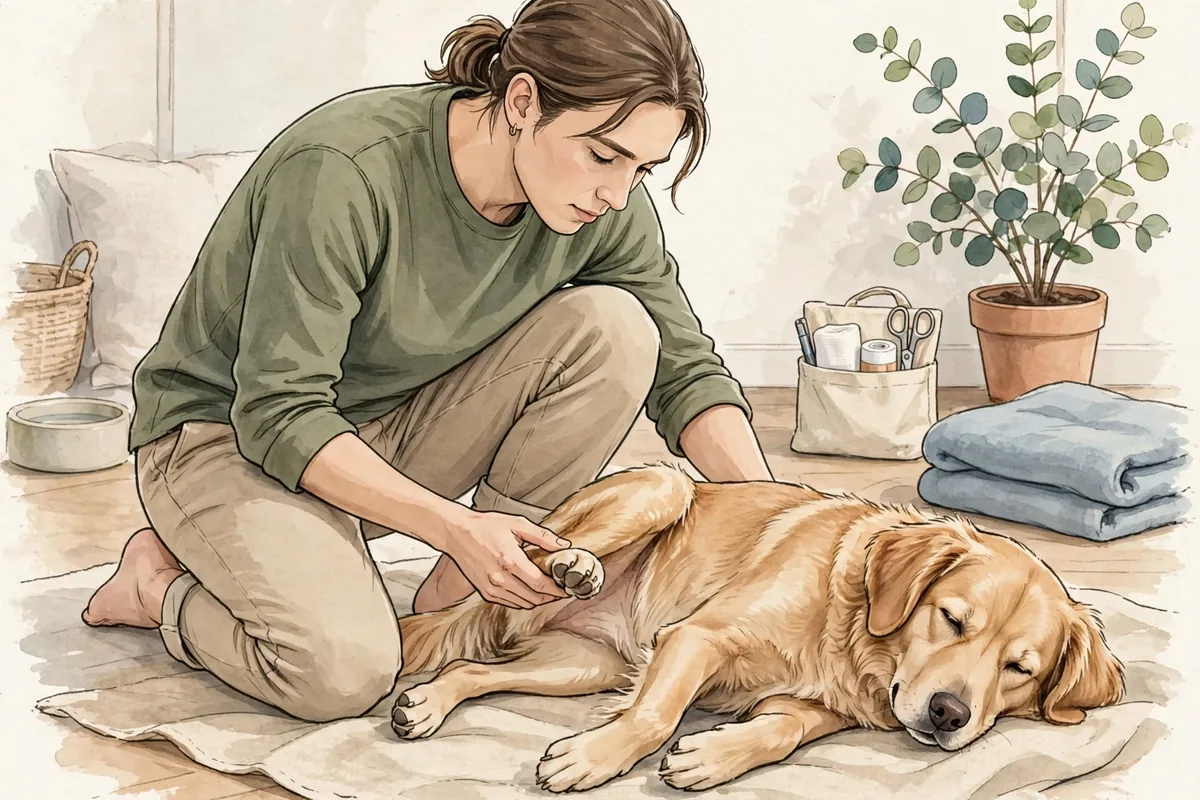
- Keep your dog calm and restrict movement. Excitement and running speed up circulation, which can spread venom faster. Leash the dog or hold it quietly in one spot.
- Look for the spider only if it is safe. Do not risk a second bite by poking into dark corners. If you can see the spider from a safe distance, note its appearance — color, size, any markings — or take a photo. If it is already dead and easy to collect safely, save it in a jar for the vet. Never handle a live spider with bare hands.
- Check the bite area. Part the fur and look for redness, swelling, a puncture mark, or a spreading lesion. Photograph it with your phone so the vet can compare later — wounds from dangerous spiders change over hours, and a time-stamped photo series helps diagnosis.
- Apply a cool compress. Wrap ice in a towel and hold it on the area for about 10 minutes. Do not press hard, and do not apply ice directly to the skin.
- Note the time. Write down when you first noticed symptoms. Vets use the timeline — for example, a lesion that worsens over 2 to 8 hours points in a different direction than one that fades.
Most spider bites on dogs are mild and heal without drama. But in the southern and midwestern United States, two spiders demand respect: the black widow and the brown recluse. Because early signs are often vague — limping, shaking, a red spot — the checklist above doubles as your evidence-gathering routine for the vet. For a rundown of general warning signs after any bite or sting, see bite and sting warning signs.
Black Widow Bites in Dogs #
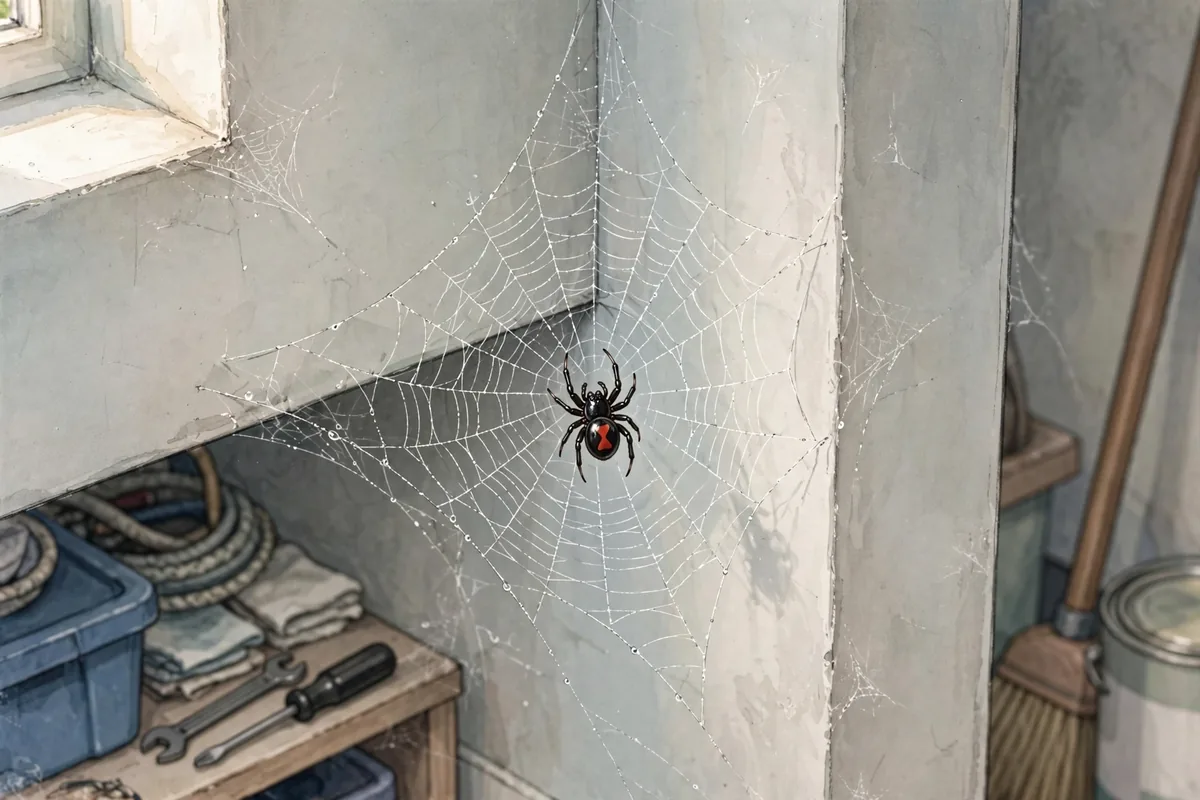
Black widows (shiny black spiders, females with a red hourglass on the underside) inject a neurotoxic venom. Bites are uncommon in dogs, and dogs are somewhat more resistant to the venom than some other species — but severe cases can still be serious, even life-threatening, especially in small or young dogs.
Symptoms can begin immediately or take up to eight hours to fully appear. Watch for: muscle tremors or twitching, rigid or board-like abdominal muscles, restlessness, drooling, vocalizing in pain, weakness or difficulty walking, abnormal breathing, and in severe cases seizures or paralysis. Increased blood pressure and heart rate can also occur. The hallmark pattern is generalized muscle pain and rigidity rather than a wound at the bite site — there is often little to see on the skin.
There is no effective home remedy for a suspected black widow bite. Do not wait to see if symptoms improve on their own. This is an automatic emergency vet visit: treatment may include pain control, muscle relaxants, IV fluids, oxygen support, and antivenom in severe cases. With prompt care, most dogs recover fully.
Brown Recluse Bites in Dogs #
Brown recluse spiders (tan to brown, with a violin-shaped marking on the back, found mostly in the southern Midwest and southern US) inject a venom that destroys skin tissue. The bite itself is often painless at first, which makes it easy to miss.
What to watch over the next hours and days: the site develops redness and itchiness, then within 2 to 8 hours a blister or ulcer forms that can turn into a bull’s-eye lesion — a pale or purple center with surrounding redness. The center darkens as tissue dies, and the wound can widen into a deep ulcer that takes weeks or months to heal. Unlike a simple insect bite, it gets progressively worse rather than better.
Systemic signs can follow within 24 hours: fever, lethargy, vomiting, weakness, and blood in the urine (a sign of red blood cell damage). In severe cases, clotting problems, liver or kidney damage, and tissue death around the wound can develop. There is no antivenom for brown recluse bites — treatment is supportive wound care, pain medication, and antibiotics if infection sets in, plus monitoring for organ effects. Any suspected brown recluse bite needs same-day veterinary care, even if the dog seems fine at first.
What Not to Do #
- Do not apply a tourniquet or try to cut or suck the venom out. These cause harm and do not help.
- Do not give human painkillers or antihistamines without veterinary direction.
- Do not assume it was a spider. Veterinary sources note that many suspected spider bites turn out to be bacterial skin infections, allergic reactions, or other insect bites. That is exactly why the vet needs to see the lesion and its progression — a comparison guide like spider bite vs flea bites shows how easily bites get misidentified.
- Do not “wait and see” with a worsening lesion. A wound that darkens, blisters, or expands over hours is moving in the wrong direction and needs professional care the same day.
Preventing Spider Bites in Dogs #
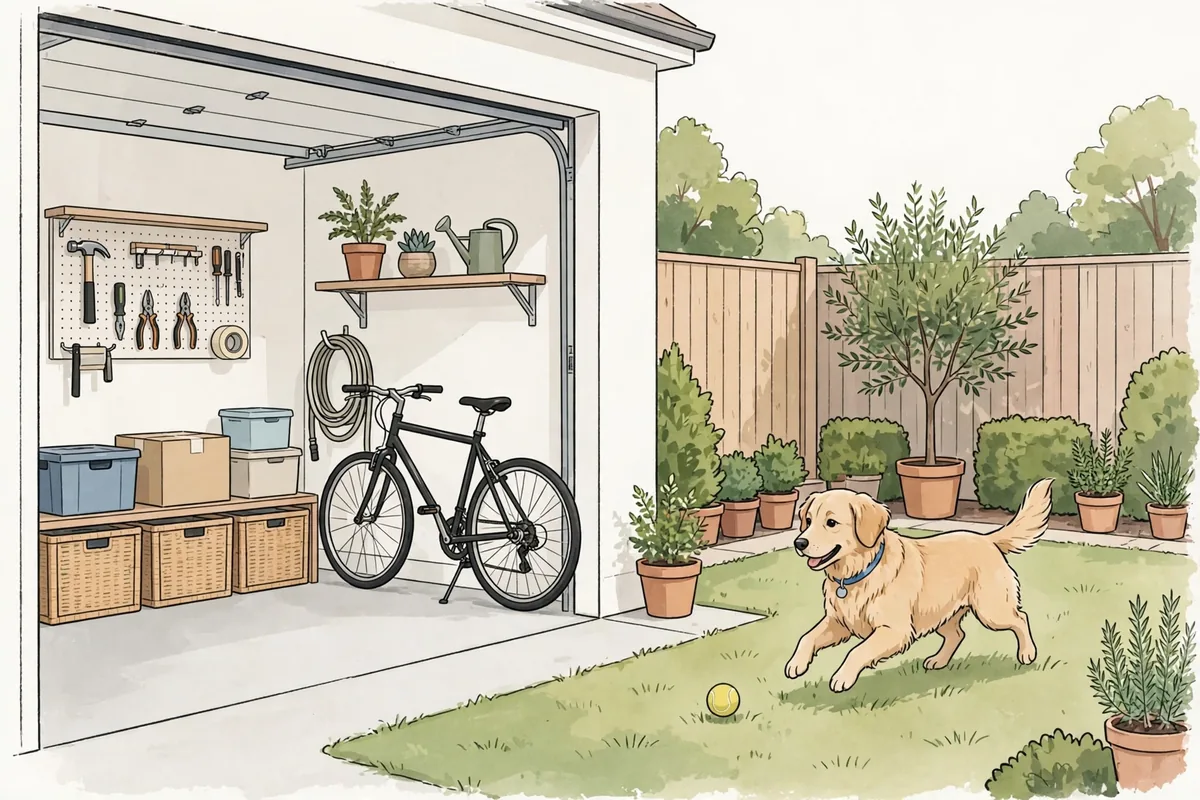
Dogs get bitten when they nose into spider territory: woodpiles, cluttered garages, basements, crawl spaces, sheds, and rock or log piles in the yard. Reduce risk by decluttering storage areas, moving firewood away from the house, sealing cracks around doors and foundations, and shaking out or checking dog bedding stored in garages or sheds. In endemic regions, consider professional pest control and keep your dog leashed away from rock piles and dense brush on walks. Regular grooming also helps — running your hands over your dog’s body catches early lumps, wounds, or tender spots before they escalate.
Warning signs: when to seek care #
Call your vet or an emergency animal hospital immediately if your dog shows any of these red flags: muscle tremors, rigidity, or cramping; difficulty breathing; drooling with restlessness or vocal pain; weakness, collapse, or seizures; a bite wound that darkens, blisters, or forms a bull’s-eye pattern; blood in the urine; fever with lethargy; or any rapidly worsening skin lesion. Suspected black widow or brown recluse bites are emergencies even when early symptoms look mild, because serious effects can develop over hours.
Call your regular vet the same day for any bite with spreading redness, heat, pus, or a foul smell — these suggest infection regardless of which spider was involved. Photograph the wound at first notice and again before the appointment so the vet can judge how fast it is changing.
Frequently asked questions #
How do I know if my dog was bitten by a spider? #
Usually you do not see it happen. Clues include sudden limping, a red or swollen spot found during petting, restlessness, or your dog chewing at one area. If you saw a spider near the dog, note its description. A vet visit is the reliable way to sort a spider bite from the many look-alikes.
Are most spider bites dangerous to dogs? #
No. The majority of spiders dogs encounter have venom too weak to cause significant harm, and most suspected bites heal on their own or were never spider bites at all. The two US exceptions are the black widow and the brown recluse — both warrant prompt veterinary care.
What does a brown recluse bite look like on a dog? #
It often starts as mild redness, then within 2 to 8 hours develops a blister or ulcer with a bull’s-eye pattern — a white or purple center ringed by redness. The center darkens as tissue dies, and the wound may widen into a deep sore. The key tell is progression: it gets worse over hours and days instead of better.
Can I treat a spider bite on my dog at home? #
For a mild, non-worsening bite, a cool compress and observation are reasonable — but only after a vet has ruled out dangerous spiders or if you are certain the spider was harmless. If the lesion changes, darkens, blisters, or your dog develops fever, vomiting, tremors, or lethargy, home care is not enough. Call your vet.
Medical and editorial note #
This guide is general information about pet first aid, not veterinary advice. Spider bites are frequently misidentified, and only a veterinarian examining your dog — and the wound’s progression — can make a reliable diagnosis. When a bite is worsening or your dog shows systemic signs, contact your veterinarian or an emergency animal hospital without delay.


