
You flipped on the bathroom light and watched something silvery dart for cover — and now you’re asking “do silverfish bite humans?” Here’s the honest answer: no. Silverfish don’t bite people or pets. Their jaws are too weak to pierce human skin, they carry no venom, and they’re not interested in you at all. What they ARE interested in — your books, wallpaper, and stored papers — is a different story, and that’s what this guide covers.
The Honest Answer: Silverfish Don’t Bite #
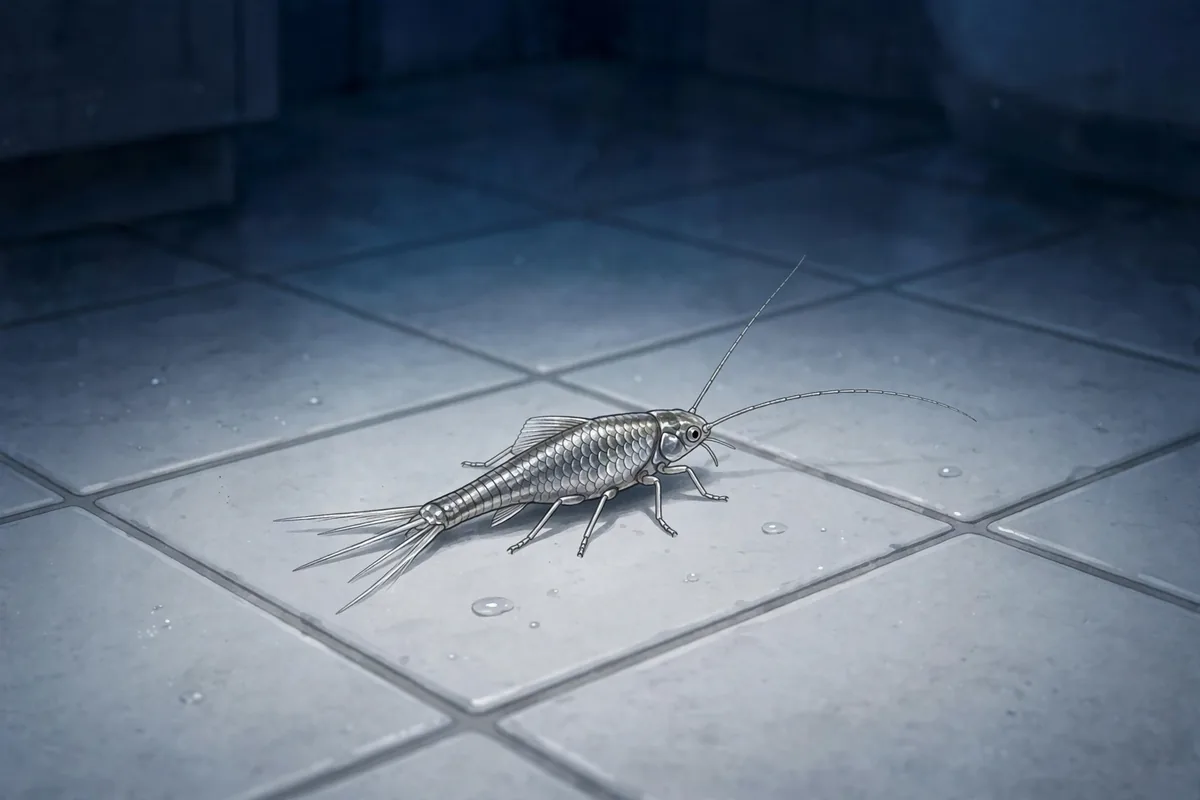
The common silverfish (Lepisma saccharina) is a small, wingless, silvery-gray insect, roughly half an inch long, with a tapered, torpedo-shaped body and three distinctive bristle-like tails. It looks prehistoric because it nearly is — silverfish are among the most ancient insect lineages still crawling around our homes.
Why they can’t bite you:
- Weak, scraping mouthparts. Silverfish have chewing mouthparts designed to scrape and grind soft, starchy materials — not to pierce skin. Scientists describe their feeding as more of a long drag or scrape than a bite. Human skin is simply beyond their equipment.
- No venom, no stinger. Nothing in a silverfish’s biology is built for attacking animals.
- No interest in blood or flesh. Their diet is starches, sugars, cellulose, and protein: paper, glue, book bindings, wallpaper paste, natural fabrics, dry pantry goods, even dandruff and dead insects. You are not food; your bookshelf is.
- They actively avoid you. Silverfish are nocturnal and shy. They scatter from light and vibration. An insect trying this hard to avoid you is not plotting to bite you.
They’re also not known to carry or transmit diseases to people. The one health footnote: like dust mites, their shed skins, scales, and droppings contain proteins that can trigger allergic-type reactions (runny nose, itchy eyes) in sensitive individuals — a 2008 laboratory study suggested possible respiratory effects in people already allergic to common indoor allergens, though the evidence remains limited. That’s an allergy issue, not a biting issue.
What Silverfish Actually Do to Your Home #
Silverfish are a property pest, not a personal pest. An established population works quietly, mostly at night, and the damage accumulates:
- Books, documents, and photographs. They graze on paper surfaces and eat the starch-based glues in bindings, leaving irregular holes, notched edges, and surface etching. Libraries, archives, and anyone with stored paperwork are prime targets.
- Wallpaper and its paste. They feed on both the paper and the starchy adhesive behind it — in damp bathrooms, wallpaper damage is often the first visible sign of an infestation.
- Cardboard boxes and stored items. Attics and basements full of cardboard are silverfish buffets; the boxes themselves are food and shelter in one.
- Natural fabrics and clothing. Linen, cotton, and silk — especially starched fabrics — can show feeding damage. They generally don’t cause moth-level destruction, but over time the wear adds up.
- Dry pantry goods. Cereals, flour, oats, and other starchy foods in unsealed packaging can attract them.
- Yellow staining. Their feeding and droppings leave yellowish marks on paper and fabric — often the first clue homeowners notice, since the insects themselves hide so well.
A few silverfish are a nuisance; a large, long-ignored infestation can genuinely damage valuable books, documents, and wallpaper. The insects prefer darkness and can go undetected for months — if you see them regularly when you turn on lights, the population is already established.
If Something Is Biting You, It’s Probably Not Silverfish #
This is the most useful section for anyone who landed here with itchy marks: because silverfish don’t bite, any real bite marks point to a different culprit. Don’t waste weeks treating for silverfish while the actual biter goes unaddressed. Common suspects:
- Bed bugs. Bites often appear in lines or clusters on skin exposed during sleep, with telltale signs around the mattress seams and headboard (dark spots, shed skins).
- Fleas. Small, intensely itchy bites concentrated around the ankles and lower legs, especially if you have pets.
- Mosquitoes. Raised, itchy welts appearing after time outdoors or near standing water, often on exposed skin.
- Mites. Depending on your environment, various mites can cause itching and rashes — bird mites, for example, after birds nest near windows.
Our photo-based guide to identifying an insect bite from a photo walks through the visual differences, and our spider bite vs. flea bites comparison helps rule out two more common suspects. Match the marks first, then treat the right pest.
Getting Rid of Silverfish: Moisture Control First #
Silverfish need two things: humidity and starch. Remove those, and you remove the silverfish. Work in this order:
- Dry it out. This is the highest-impact step. Run a dehumidifier in damp basements and keep indoor humidity low. Fix plumbing leaks, improve bathroom and kitchen ventilation, and eliminate condensation. Silverfish thrive in dampness; dryness drives them away.
- Remove the food. Store important papers, photos, and keepsakes in sealed plastic containers rather than cardboard boxes. Keep dry pantry goods (flour, cereal, oats) in airtight containers. Declutter basements, attics, and closets — fewer hiding spots, fewer silverfish.
- Seal the shelter. Caulk cracks and crevices along baseboards, around pipes, and behind fixtures where silverfish hide and lay eggs. Repair torn window screens.
- Vacuum regularly. Vacuuming along baseboards, under appliances, and in storage areas removes silverfish, their eggs, and the starchy debris they feed on.
- Use traps to monitor. Sticky traps placed where you’ve seen activity tell you whether the population is shrinking. A simple jar trap — a glass jar wrapped in masking tape with a bit of bread inside — lets them climb in but not out.
- Targeted products if needed. Food-grade diatomaceous earth dusted in dry cracks and crevices kills by dehydration rather than poison. For persistent problems, EPA-registered insecticide products applied per label directions to cracks and crevices can help — always read the label, keep products away from children and pets, and consider a licensed professional for large infestations.
Skip the panic: silverfish don’t reproduce explosively like some pests, and a steady moisture-control program usually turns the tide within weeks.
When to Call a Pest Professional #

Most silverfish situations are DIY-manageable, but bring in a licensed pest control professional when:
- You’re seeing them daily in multiple rooms despite weeks of moisture control and decluttering.
- Valuable collections — rare books, archives, artwork on paper — are at risk and you want the infestation eliminated quickly and safely.
- You can’t find or fix the moisture source (hidden pipe leak, groundwater seepage, chronic condensation).
- You suspect the “silverfish” might be something else — a pro’s identification beats guessing, especially before you spend money on treatments.
A good professional won’t just spray; they’ll help you find the moisture sources sustaining the population, because without that fix, any treatment is temporary.
Warning signs: when to seek care #
Call 911 immediately if you develop trouble breathing or swallowing, swelling of the face, lips, tongue, or throat, widespread hives, dizziness or fainting, or a racing heartbeat after any insect encounter — these are signs of a severe allergic reaction (anaphylaxis). If you carry an epinephrine auto-injector, use it first, then call 911.
Silverfish themselves don’t trigger these emergencies — this is the standard safety baseline for any insect-related concern. For non-emergency issues, see your doctor if you develop persistent respiratory or allergy symptoms you suspect are linked to indoor pests, or if any skin marks show spreading redness, warmth, pus, or red streaks (possible infection from scratching — but remember, silverfish didn’t make those marks; find the real biter).
Frequently asked questions #

Do silverfish crawl in ears? #
No. This rumor — that silverfish crawl into ears to eat brains or lay eggs — is pure myth. Silverfish are shy, avoid humans entirely, and are interested in your paper products, not your body. They don’t eat blood and don’t seek out people.
Are silverfish dangerous to pets? #
No. Silverfish don’t bite animals, carry no venom, and aren’t known to transmit diseases. A cat that catches and eats one may find it a crunchy snack with no ill effects. The chemicals you’d use against a heavy infestation are a bigger pet concern than the insects — always follow label directions and keep pets away from treated areas.
How long do silverfish live? #
Silverfish are surprisingly long-lived for household insects — they can live several years, continuing to molt throughout their lives (unlike most insects, which stop molting as adults). Those shed skins accumulating in undisturbed areas are part of what can trigger dust-like allergies in sensitive people.
I only see one or two. Do I have an infestation? #
Possibly the start of one. Silverfish are nocturnal and hide well, so visible ones usually mean more are hidden. But a couple of strays wandering in from outside isn’t a crisis — start with moisture control and monitoring traps, and escalate only if sightings continue or increase.
Medical and editorial note #
This guide is general information about silverfish and household pest management, not medical advice. Silverfish don’t bite humans and pose no direct health threat — if you have unexplained bite marks, focus on identifying the actual biting pest, and see a healthcare professional if any skin condition worries you or shows signs of infection.


