
Found a creepy-crawly with tail pincers in your bathroom and wondering “do earwigs bite humans?” Here’s the straight answer: earwigs don’t really bite people — but they can give you a defensive pinch with the pincer-like appendages on their rear end. The pinch is startling, briefly uncomfortable, and essentially harmless. Let’s sort out what’s actually happening.
The Direct Answer: Pinch, Not Bite #
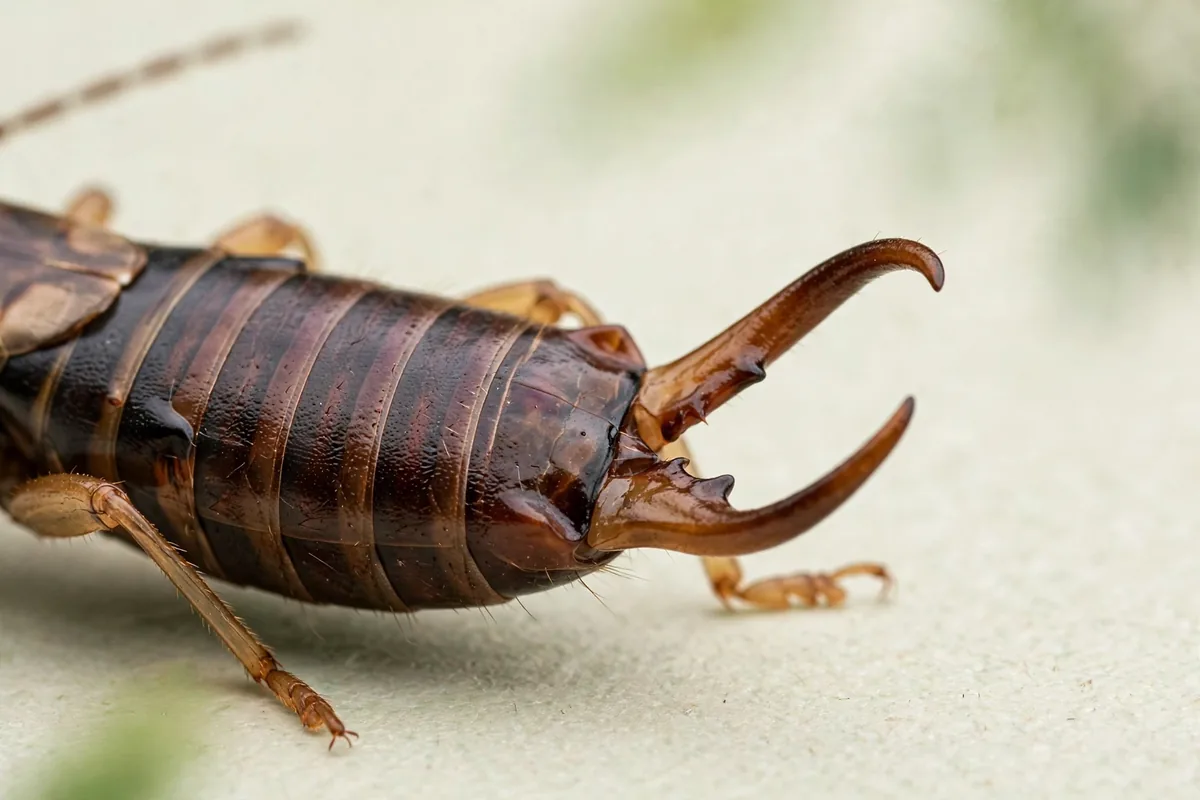
Earwigs belong to the insect order Dermaptera (about 2,000 species worldwide; the one you’re most likely meeting is the European earwig, Forficula auricularia). At the end of their abdomen they carry a pair of forceps-like appendages called cerci — the “pincers” that make them look so menacing.
Here’s the distinction that matters:
- A true bite uses mouthparts to break skin. Earwigs have chewing mouthparts, but they’re built for munching plant matter, decaying organic material, and small soft-bodied insects — not for piercing human skin. Genuine earwig bites on people are practically nonexistent.
- A pinch uses the rear cerci defensively. If you pick up an earwig, trap one against your skin in clothing or bedding, or sit on one, it may squeeze with those pincers. That’s what almost everyone means when they report an “earwig bite.”
Three reassuring facts: earwig pincers carry no venom, earwigs spread no diseases to people, and a pinch rarely breaks the skin. Most encounters are more startling than painful — the insect is defending itself, not attacking you.
Males tend to have more curved pincers while females’ are straighter, but both sexes can pinch if handled. Either way, the result is the same: a brief squeeze, then the earwig wants nothing more than to get away from you.
What an Earwig Pinch Looks and Feels Like #
If an earwig pinches you, here’s what to expect:
- The sensation: a brief, sharp little squeeze — surprising more than painful — that fades within minutes.
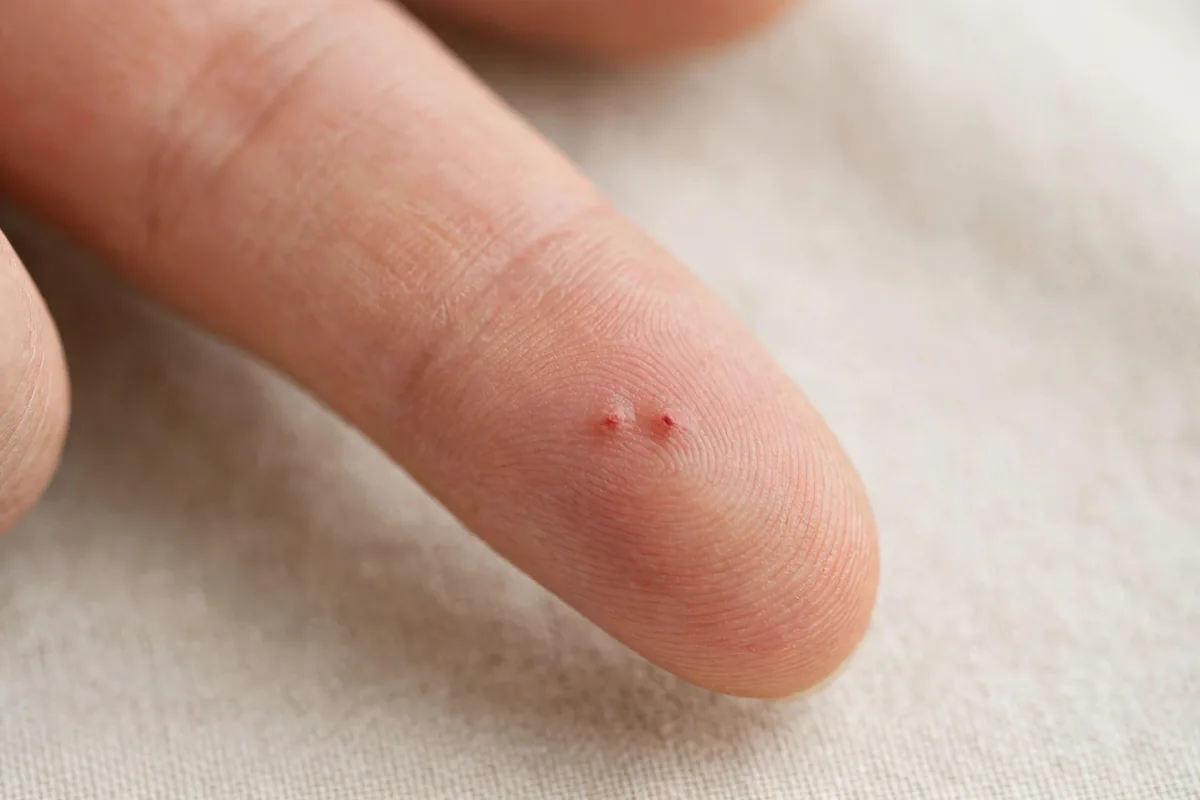
- The marks: one or two small red marks close together where the pincers gripped. Because they come in pairs, they’re sometimes mistaken for a spider bite — but an earwig pinch happens only on direct contact, usually while gardening, handling mulch or firewood, or when one crawls into clothing, shoes, or bedding.
- Afterward: mild redness or a tiny welt that fades within a day or two. Occasionally a minute scratch or pinprick of blood if the skin was thin or the squeeze was firm.
- What’s NOT normal: significant swelling, spreading redness, or pain lasting more than a day or two. Those point to something else — a different insect, a skin infection, or an unrelated irritation that the earwig is getting blamed for.
Earwigs don’t seek out humans at all. They don’t drink blood and don’t feed on living tissue — they’re after damp hiding spots and decaying plant matter. A pinch only happens when the insect feels trapped or threatened, which is why most pinches occur when people unknowingly press one against their skin.
The Ear Myth (and Other Earwig Myths) #
The name “earwig” comes from Old English ēare (ear) + wicga (insect) — and from an ancient, persistent myth that earwigs crawl into sleeping people’s ears to lay eggs or burrow into the brain. Let’s bury it:
- Earwigs do not target human ears. They want dark, moist hiding places like mulch and leaf litter — your ear canal offers them nothing to eat and nowhere to nest.
- They can’t reach your brain. The anatomy doesn’t allow it; the eardrum is a solid barrier.
- Could one wander in accidentally? Like any tiny insect that likes tight, dark spaces, an earwig could theoretically blunder into an outer ear on an extraordinarily rare occasion — but it would be trying to escape, not attack, and couldn’t maneuver its pincers to pinch inside the narrow canal.
Other myths worth clearing:
- “Earwigs are poisonous.” False. They have no venom glands, no stinger, and no toxins. When threatened, some species release a foul-smelling defensive liquid — unpleasant, but harmless to humans.
- “Earwig pinches get infected easily.” The pinch itself doesn’t introduce anything harmful. Infection risk only exists if the skin is broken and then gets dirty — the same as any minor scratch — which is why basic cleaning is the whole treatment.
- “They’re aggressive.” Earwigs are defensive, not aggressive. Given any escape route, they take it. The pinch is a last resort.
Simple First Aid for a Pinch #
An earwig pinch needs about as much treatment as a paper cut — basic hygiene and a little patience:
- Wash the area with soap and water. This is the single most important step; it handles the (very small) infection risk if the skin was broken.
- Apply a cold compress for a few minutes if the spot stings or feels tender.
- If the skin broke, dab on a thin layer of over-the-counter antibiotic ointment and cover with a small bandage until it closes.
- For itching, an oral antihistamine per label directions or a dab of hydrocortisone cream usually settles it.
- Watch, don’t worry. Check the spot over the next day or two. Spreading redness, increasing warmth, swelling, or pus would merit a call to your doctor — but these are uncommon after a simple pinch.
Don’t squeeze the marks, try to “draw out” anything, or apply home remedies like toothpaste or bleach. There’s nothing to draw out — no venom, no stinger, no mouthparts left behind. Clean skin heals on its own.
Keeping Earwigs Out of Your Home #
Earwigs come indoors chasing what they love: moisture, darkness, and tight hiding spots. Make your home less inviting:
- Dry things out. Fix leaky faucets and pipes, improve drainage so water flows away from the foundation, and run a dehumidifier in damp basements. Moisture control is the highest-impact step.
- Seal entry points. Caulk cracks around windows, doors, and the foundation. Install or repair door sweeps — earwigs slip under doors easily.
- Clear the perimeter. Pull mulch, leaf litter, grass clippings, and woodpiles back from the house foundation. Earwigs nest in exactly this debris and then wander inside.
- Declutter damp hiding spots. In basements and crawl spaces, get storage off the floor, reduce cardboard (which holds moisture), and keep the area tidy.
- Trap the stragglers. Roll up damp newspaper or corrugated cardboard, leave it overnight where you’ve seen earwigs, and discard it (or shake it into soapy water) in the morning. Shallow containers of vegetable oil sunk to rim level in garden beds also trap them.
- Targeted pesticide as a last resort. If numbers are high, an exterior perimeter treatment per label directions can help — but without moisture and habitat fixes, they’ll be back.
Remember: earwigs are primarily garden pests (they can damage seedlings, fruit, and flowers), not a household health threat. A few indoors are a nuisance signal pointing to moisture or entry gaps worth fixing anyway.
Warning signs: when to seek care #
Call 911 immediately if you develop trouble breathing or swallowing, swelling of the face, lips, tongue, or throat, widespread hives, dizziness or fainting, or a racing heartbeat after any insect encounter — these are signs of a severe allergic reaction (anaphylaxis). If you carry an epinephrine auto-injector, use it first, then call 911.
An earwig pinch essentially never causes these reactions — they’re listed because any insect encounter deserves the same safety baseline. For non-emergency concerns, see your doctor if a pinch site shows spreading redness, increasing pain or swelling after 24–48 hours, warmth, pus, or red streaks (possible infection), or if you develop a fever. And if you keep getting “bites” with no earwig in sight, the real culprit is likely a different pest — our guide to identifying an insect bite from a photo can help you sort out what’s actually biting.
Frequently asked questions #

Do earwigs bite dogs or cats? #
The same rules apply to pets: earwigs don’t bite animals, but a curious pet that mouths or steps on one could get a defensive pinch. It’s harmless — no venom, no disease. If your pet seems bothered by insects outdoors, the biters to worry about are fleas, ticks, and mosquitoes, not earwigs.
Why do I keep finding earwigs in my bathroom? #
Bathrooms offer exactly what earwigs want: moisture, darkness, and tight gaps. Check for plumbing leaks, improve ventilation (a bathroom exhaust fan helps enormously), and seal gaps around pipes where they enter. Reducing humidity is more effective than any spray.
Are earwigs dangerous to babies or children? #
No more than to adults. A pinched finger might startle a child and leave a small red mark, but there’s no venom and no disease risk. Teach kids not to pick up unfamiliar insects, wash the spot with soap and water, and move on.
What’s the difference between an earwig pinch and a spider bite? #
An earwig pinch happens only on direct contact and leaves paired pinch marks that fade within a day or two with no venom involved. True spider bites are also uncommon, but they come from fangs, can occur without you seeing the spider, and occasionally need more attention. If you’re unsure what caused a mark, compare the possibilities in our spider bite vs. flea bites guide.
Medical and editorial note #
This guide is general information about earwigs and minor skin contact, not medical advice. Earwig pinches are minor and self-limiting for the vast majority of people — if a skin mark worries you, looks infected, or isn’t healing as expected, see a healthcare professional for an in-person evaluation.


