
A dragonfly brushed your arm and you flinched. Fair enough — but do dragonflies bite humans? Almost never. These aerial hunters chase flying insects, not people, and they carry no venom and no stinger. A nip only happens in rare defensive moments, and it is minor. Here is the full picture, plus what to do on the off chance one nips you.
Why Dragonflies Almost Never Bite People #
Dragonflies are built for hunting insects in midair — not for tangling with humans.
You are not on their menu. Dragonflies prey on mosquitoes, small flies, butterflies, and other dragonflies. Healthline notes they can eat hundreds of mosquitoes a day, making them welcome garden allies. Humans are far too large to register as prey, and dragonflies rarely land on people at all.
Their first instinct is to fly away. Dragonflies are not aggressive toward people and will usually leave when approached. They are far more interested in catching their next meal than in bothering you, and they do not chase or target humans.
Their jaws are sized for insects. A dragonfly’s mandibles are designed to grasp and crush small flying prey. As animal experts explain, these jaws are not shaped for piercing thick human skin — in most cases a bite would not even break the skin.
They have no venom and no stinger. Unlike bees, wasps, or hornets, dragonflies lack a venom sac and any stinging organ. There is nothing they can inject, so even contact causes no spreading pain, numbness, or chemical reaction. If you want to understand the broader distinction, our guide on bite vs sting differences breaks it down clearly.
Spend time around dragonflies without worry — most people who garden, fish, or walk near ponds their whole lives are never bitten.
When a Defensive Nip Can Happen #
A dragonfly nip is possible, but the circumstances are narrow and always defensive.
It takes being grabbed or trapped. Nips happen when a dragonfly feels physically threatened — for example, when it is grabbed, held tightly in a hand, caught in hair, or trapped inside clothing. It is a startled reaction, not an attack.
It may mistake skin for a perch. In rare cases, a dragonfly landing on bare skin might close its mandibles as it tries to grip, producing a brief pinch. This is a clumsy grab, not a deliberate bite.
It feels like a small pinch. People who have been nipped describe a quick, mild pinch or nip, sometimes compared to a light scratch. The sensation usually fades within minutes. Large dragonflies can pinch a little harder than small ones, but the discomfort stays minor.
The mark is tiny and short-lived. A nip may leave a small red dot, very mild swelling, or light itching, and in rare cases a tiny amount of bleeding. It does not blister, spread, or become intensely painful, and serious reactions are extremely rare.
You can avoid it entirely. Do not catch dragonflies with bare hands, swat at them, or trap them against your skin. Let them land and leave on their own terms.
They Do Not Sting: Explaining the Tail Myth #

The “dragonfly sting” is one of nature’s most persistent myths — and it comes from a simple case of mistaken anatomy.
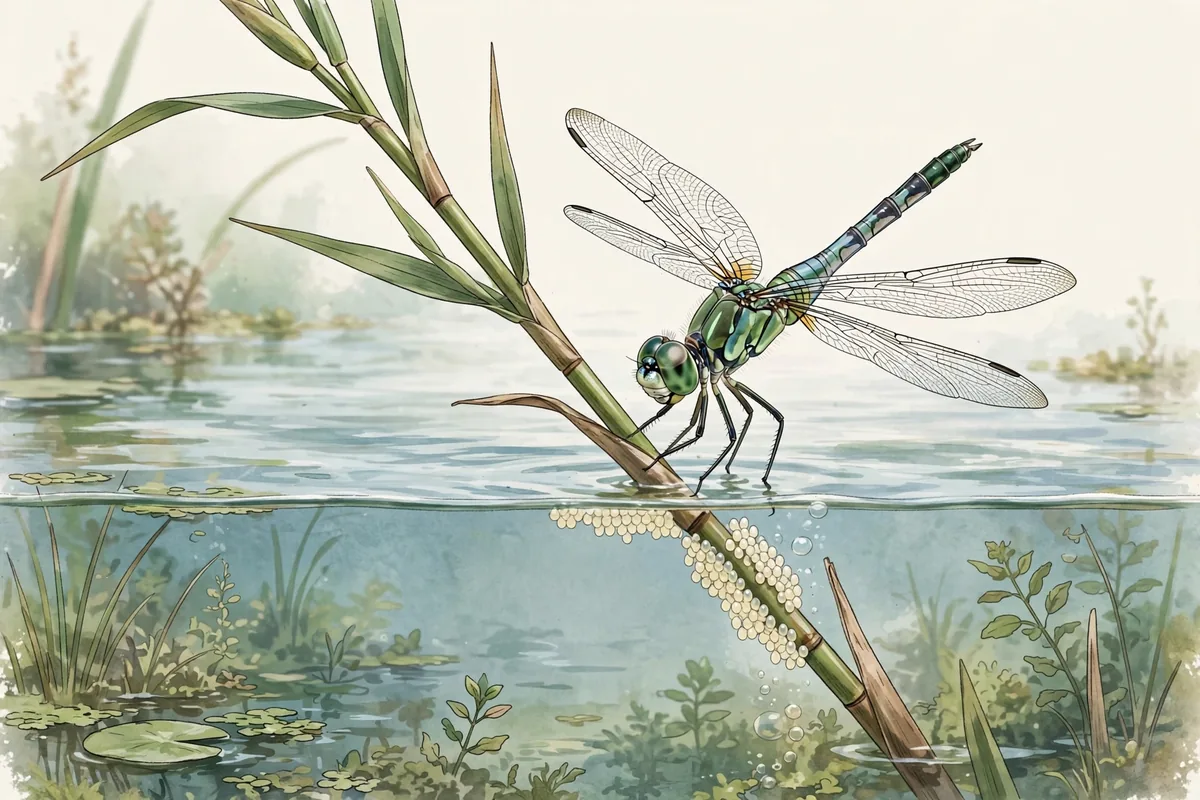
What looks like a stinger is an ovipositor. The long, needle-like structure at the tip of a female dragonfly’s abdomen is a reproductive organ used to lay eggs in or near water. It is delicate, tube-shaped, and purely for egg-laying — not a defensive weapon. Unlike a bee or wasp stinger, it cannot pierce skin or inject anything.
The folklore made it worse. In some regions, traditional names for dragonflies translate to things like “horse stinger” or “devil’s needle.” These are colorful folk names only, not descriptions of real behavior. Dragonflies do not sting, and they have no defensive chemicals of any kind.
Males cannot sting either. Male dragonflies lack even the ovipositor — they have claspers at the abdomen tip used during mating. Neither sex carries anything capable of stinging a person.
Why the myth sticks. A large dragonfly’s size — some species span several inches — and fast, darting flight can look threatening. But that agility is for catching prey midair, not for attacking people. Once you know the “stinger” is an egg-laying tool, dragonflies lose their menace entirely.
Simple First Aid for a Dragonfly Nip #
On the rare occasion a dragonfly nips you, basic first aid is all it takes.
Wash the spot gently. Clean the area with mild soap and lukewarm water and pat it dry. This is the single most important step — it keeps the tiny mark from picking up bacteria.
Cool it if it stings. A cool, damp cloth held on the spot for a few minutes eases any lingering pinch sensation or mild itching. A cloth-wrapped ice pack works just as well.
Keep it clean and leave it alone. Avoid tight bandages. If clothing rubs the spot, a loose adhesive bandage is fine. Watch the area once over the next day; a fading red dot is normal.
Do not scratch or squeeze. Scratching a nip breaks the skin and invites infection, turning a trivial mark into a real problem. Keep nails short if you are prone to scratching, and read up on why you should not scratch or squeeze a bite — the habit matters far beyond dragonflies.
Use gentle relief if itchy. A cool compress usually settles itching. If it persists, an oral antihistamine per the label directions may help — ask your doctor or pharmacist if you take other medicines.
No venom means no antidote, no emergency, and no follow-up treatment for the vast majority of nips.
Living Happily Alongside Dragonflies #
Rather than fearing dragonflies, most gardeners actively welcome them.
They are mosquito control. A single dragonfly eats large numbers of mosquitoes and biting flies daily. More dragonflies around your pond or yard usually means fewer biting insects bothering you.
They are harmless to kids and pets. Dragonflies have no venom, no sting, and no interest in people. Children can watch them safely — just teach kids to observe without grabbing, which is the one thing that could earn a defensive nip.
Make your yard dragonfly-friendly. Ponds, water features, and native plants near water attract them. Avoid broad-spectrum insecticides near ponds, since these harm the beneficial insects along with the pests.
Appreciate, do not handle. If one lands on you, stay still and enjoy the moment — it will leave on its own. The golden rule with dragonflies is simple: look, admire, and let them hunt.
Warning signs: when to seek care #
Call 911 (or your local emergency number) right away if you notice: trouble breathing or swallowing; swelling of the face, lips, tongue, or throat; widespread hives; dizziness, fainting, or confusion; a racing or irregular heartbeat. If you carry an epinephrine auto-injector, use it at the first sign of anaphylaxis and call 911 even if you feel better — symptoms can return.
A dragonfly nip itself almost never causes a medical emergency — dragonflies have no venom and no sting. Still, seek urgent care or call your doctor the same day if any mark from any insect shows spreading redness, red streaks, pus, or increasing pain, or if you develop a fever. Nips near the eye or inside the mouth also deserve prompt medical attention. If a mark is not clearly improving after a few days, get it checked to rule out a skin infection.
Frequently asked questions #

Can a dragonfly bite through clothing? #
Essentially, no. Reported nips happen on exposed skin — fingers, hands, arms, or the face — when a dragonfly is grabbed or trapped. They do not bite through fabric, and they do not seek out covered skin.
Do dragonflies sting with their tails? #
No. The long structure on a female’s abdomen is an ovipositor for laying eggs, not a stinger. It cannot pierce skin or inject venom. Male dragonflies have no such structure at all.
Are dragonfly bites poisonous? #
No. Dragonflies have no venom, no venom sac, and no defensive chemicals. A nip causes only brief, local discomfort — there is nothing toxic to worry about and no risk of disease transmission from their mouthparts.
Should I worry if a dragonfly lands on me? #
No. A dragonfly landing on you is harmless — it is resting or investigating a perch. Stay still, enjoy the close-up view, and let it fly off on its own. Trying to grab it is the one thing that might earn you a defensive pinch.
Medical and editorial note #
This guide provides general information only and is not medical advice. Dragonflies do not sting and almost never bite; the rare defensive nip is minor and needs only basic first aid. If any insect mark shows signs of infection or you notice any of the warning signs above, contact a healthcare professional or your local emergency number promptly.


