
Every few years, billions of noisy cicadas emerge at once, and one question always follows them: do cicadas bite humans? The short answer is no. Cicadas do not bite or sting people in the defensive sense — they have no stinger, no venom, and no reason to attack you. This quick-reference guide explains what is really happening when someone reports a “cicada bite,” and what to do if one lands on you.
Why cicadas cannot bite or sting #
Cicadas are built for drinking tree sap, not for biting people. Understanding their mouthparts clears up the confusion.
The mouthparts are made for plants. A cicada’s feeding tube is a slender, straw-like beak designed to pierce bark and woody stems so the insect can drink plant sap. It is not hinged or strong enough for combat, and it carries no venom. Unlike a wasp or bee, a cicada has no stinger at all — there is simply no structure in its body capable of stinging.
They have no venom and no defensive instinct. Biting and stinging insects do so to feed on blood or to defend themselves or a colony. Cicadas feed on trees, live solitary adult lives, and protect nothing worth attacking you over. When a cicada lands on you, it is resting, confused, or mistaking your warm skin for a surface — never mounting an attack.
Cicadas do not spread disease to people. Periodical and annual cicadas are not known vectors of human illness. They do not feed on blood, so they cannot move pathogens between people the way mosquitoes or ticks can. A cicada landing on your arm is a startling encounter, not a health threat.
The honest exception. If you pick up or trap a cicada against your skin, it may probe with its feeding tube — a brief, pinprick-like poke. This is not a bite in the defensive or feeding sense; it is the insect testing a surface the way it tests a twig. It feels more like a sharp scratch than a true insect bite and does not inject anything.
The ovipositor: what gets mistaken for a bite #
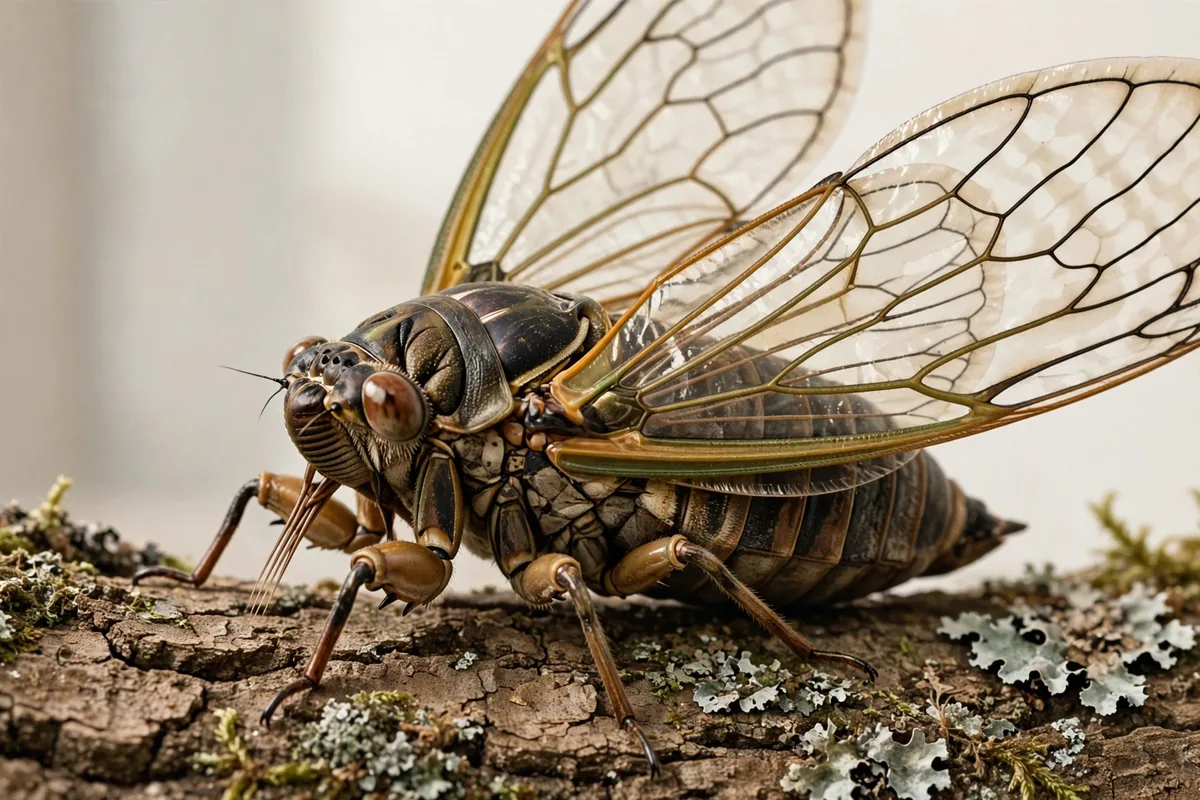
Most “cicada bite” stories actually involve the female’s egg-laying organ, not her mouth.
What an ovipositor does. Female cicadas carry a blade-like ovipositor at the rear of the abdomen, used to slice thin slits into small tree twigs and lay eggs inside. This tool is strictly for cutting wood and depositing eggs — it cannot inject venom, and it is not aimed at you.
Why skin gets probed. A female cicada held in a hand or pressed against a wrist may use the ovipositor the way she would use it on a twig — pressing it against the surface to test whether it is suitable. The sensation is a sharp, brief prick, often described as a thorn scratch. There is no puncture-and-feed cycle, no saliva injection, and no venom delivery.
How it differs from a real bite. A true bite or sting from a wasp, bee, or mosquito produces a localized reaction: pain followed by redness, swelling, and often itching that lasts hours to days. A cicada probe produces momentary discomfort and nothing more — no swelling, no spreading redness, no welt. If you develop a genuine bite-like reaction after a cicada encounter, the culprit was almost certainly a different insect present at the same time, such as a mosquito or biting fly. If you want to compare reactions across insects, the guide on how to identify an insect bite from a photo walks through the visual clues.
If a cicada probes your skin: what to do #
The protocol is short, because there is almost nothing to treat.
Stay calm and brush it off. Do not squeeze or crush the cicada against your skin — pressure is what triggers the probing in the first place. Gently flick it away or let it fly off on its own.
Inspect the spot. Look for any mark. Most probing leaves nothing at all. If you see a tiny red dot, that is a surface scratch, not a bite.
Clean the area. Wash gently with soap and water, the same basic hygiene you would give any minor skin scratch. For a refresher on the general sequence, the bite and sting first aid checklist covers the priorities in order.
Skip the heavy treatments. There is no venom to neutralize and no allergy risk specific to cicadas, so antihistamines, steroid creams, and home remedies are unnecessary for a probe. A dab of plain moisturizer is more than enough if the skin feels dry.
Watch briefly, then move on. If a red spot appears and fades within an hour or two, that was a minor scratch. If a genuine welt develops over hours, reassess — another insect did that, and you should treat it as a standard bite.
Cicada season safety checklist #
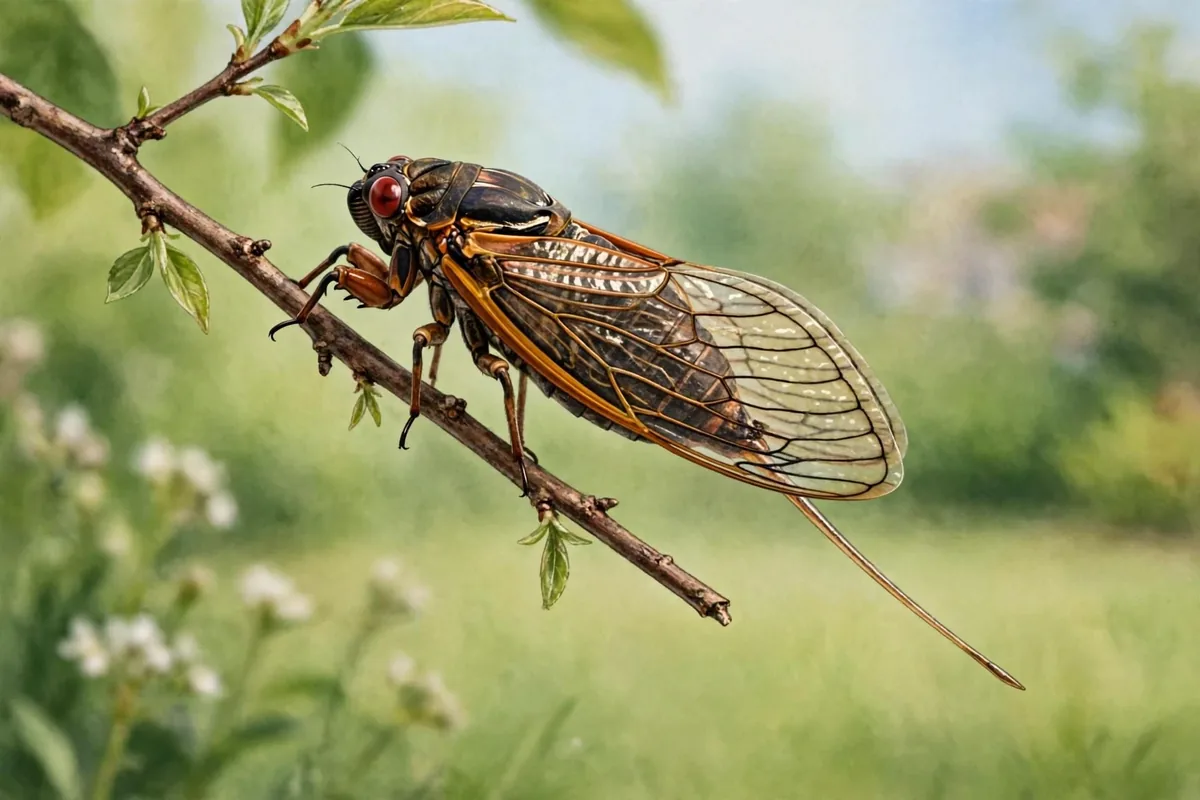
Brood emergences are spectacular and harmless. A few habits make them more comfortable.
Around the house and yard.
- Let them be. Cicadas do not damage homes, and adult cicadas are harmless to people and pets. They only risk harming very young tree saplings, where egg-laying slits can weaken twigs.
- Keep windows screened if the sheer numbers bother you — cicadas are clumsy fliers and blunder indoors by accident.
- Supervise curious pets. Dogs that gorge on cicadas can get an upset stomach from the crunchy exoskeletons, but this is a digestion issue, not a bite or sting issue.
Outdoors during an emergence.
- Brush, do not squeeze. If one lands on you, brush it off with an open hand instead of trapping it between your fingers.
- Wear a hat if cicadas dive-bombing your head makes you uneasy — they fly erratically but they are not targeting you.
- Teach kids to observe. Cicadas are a fantastic nature lesson: loud, harmless, and short-lived. Show children how to let one walk on a finger without pinching it.
Warning signs: when to seek care #
Call 911 immediately if you develop trouble breathing or swallowing, swelling of the face, lips, tongue, or throat, widespread hives, dizziness or fainting, or a racing heartbeat after any insect encounter. If you have been prescribed an epinephrine auto-injector, use it first, then call 911 — epinephrine buys time but does not replace emergency care.
Cicadas themselves do not trigger allergic reactions the way stinging insects can, so emergency signs after a cicada encounter are extraordinarily unlikely. Still, seek urgent care or call your doctor if you notice spreading redness, red streaks, pus, or increasing pain around any skin mark; fever; or swelling that worsens after 24 hours. Those are signs of a different problem — most often a skin infection from a scratch — not a cicada reaction.
Frequently asked questions #
Can a cicada bite you? #
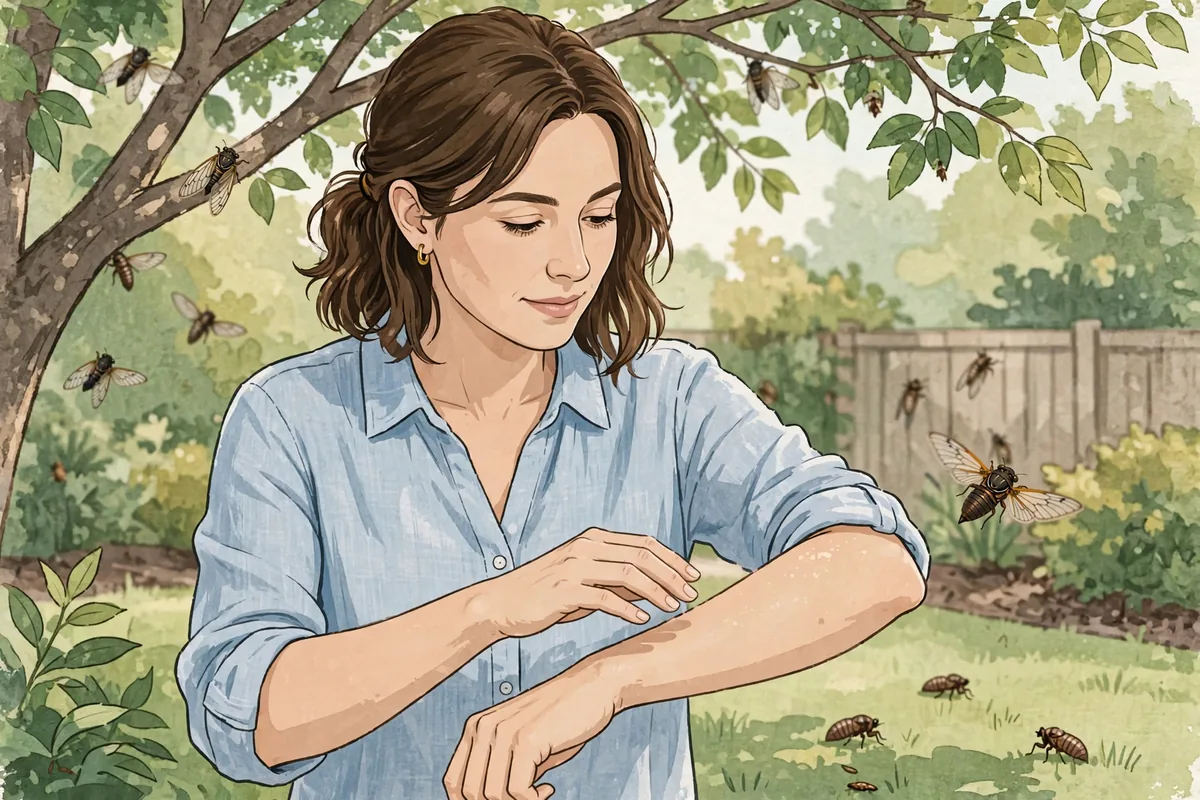
No. Cicadas do not bite humans in the defensive or feeding sense. Their mouthparts are built for piercing tree bark to drink sap, not for biting skin. If handled roughly, a cicada may probe with its feeding tube or a female may press her egg-laying tube against the skin — a brief prick, not a true bite, and nothing is injected.
Can cicadas sting? #
No. Cicadas have no stinger and no venom. Stinging is a feature of wasps, bees, and ants; cicadas simply do not have the anatomy for it.
Do cicadas carry diseases? #
Cicadas are not known to transmit diseases to people. They feed on plant sap, not blood, so they lack the transmission route that makes mosquitoes and ticks dangerous. You cannot catch an illness from a cicada landing on you.
Are cicadas dangerous to pets or children? #
No. Cicadas are harmless to children and pets. The one practical concern is dogs eating large numbers of them, which can cause vomiting or stomach upset from the indigestible exoskeletons — a dietary issue, not a toxic one.
Medical and editorial note #
This guide is general information about cicadas and is not medical advice. Cicadas do not bite or sting in the defensive sense and pose no known health threat to people. If you are unsure about a skin reaction, have a known venom allergy, or feel unwell after any insect encounter, contact a healthcare professional promptly rather than relying on this reference alone.


