
Yes. Do carpenter ants bite humans? They can and will — but only in self-defense. Carpenter ants are not aggressive hunters of people; bites happen when you press one against your skin, trap it in clothing, or disturb a nest during yard work or home repairs. Here is what to expect and what to do.
What a Carpenter Ant Bite Feels Like #
Carpenter ants are among the largest ants you will meet in a US home — workers can reach about half an inch — and their jaws match their size.
- The bite itself: a sharp pinch as the strong mandibles grip the skin. Large workers can break the skin.
- The follow-up burn: many carpenter ants spray formic acid into the bite wound, which adds a burning or stinging sensation lasting a few minutes. This is the part people remember.
- The aftermath: a small red bump, mild swelling, and itching or tenderness — similar in size to a pimple. Symptoms usually fade within 24 to 48 hours.
- How bad is it, really? Painful for a moment, but far less severe than a fire ant sting or a bee sting. Carpenter ants do not inject venom and are not known to transmit diseases to people.
Bites are uncommon because the ants would rather flee. The classic scenarios: you lean your bare hand on a deck rail where foragers are trailing, you handle firewood harboring a nest, or one gets inside your shirt while you work in the garden.
Carpenter Ant Bite or Something Else #
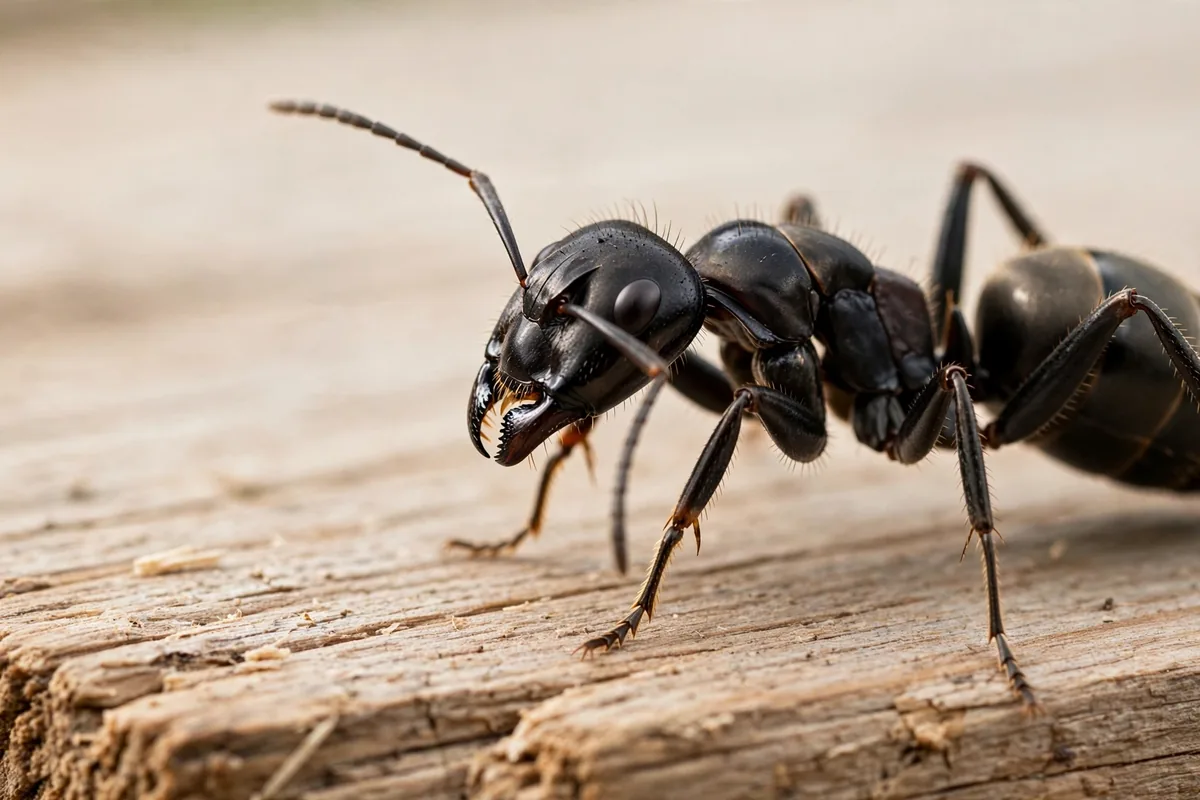
Not every ant bite is a carpenter ant bite. A fast ID check:
| Clue | Carpenter ant | Fire ant | |—|—|—| | Size | Large — up to 1/2 inch, usually black or dark red-black | Small — about 1/8 to 1/4 inch, reddish-brown | | Attack style | Bites with jaws, may spray formic acid; single defensive bite | Stings repeatedly with venom from the abdomen, often several ants at once | | Pain | Sharp pinch plus brief burn | Immediate burning sting, famously painful | | The mark | Small red bump | White pustule (pimple-like) within a day — the fire ant signature | | Where | Near wood: decks, trees, firewood, damp framing | Near mounds in soil, lawns, playgrounds |
If your “ant bite” turns into a pus-filled pimple, you are likely dealing with fire ants, not carpenter ants — and the care differs. Our article on fire ant bite treatment covers that scenario in detail.
Also note: winged carpenter ants (swarmers) are often mistaken for termites. Swarmers signal a mature colony nearby — worth knowing, but they are not the ones biting you.
First Aid for a Carpenter Ant Bite #
Simple and quick — most bites need nothing more than this:
- Wash the area with soap and water right away.
- Apply a cold pack wrapped in a cloth for about 10 minutes to reduce pain and swelling.
- Leave it alone. Do not scratch, squeeze, or try to “draw out” anything — the formic acid dissipates on its own.
- Calm the itch with calamine lotion or a plain anti-itch cream if needed.
- An oral antihistamine per label directions can help if swelling or itching spreads beyond the bite.
- Watch it for a day or two. Normal healing means the bump shrinks and the tenderness fades.
If the bump becomes hard, increasingly painful, or develops into a lump that lingers, see our doc on bug bite hard lump to sort normal healing from something that needs a clinician.
Keep Them Off You (and Out of Your House) #
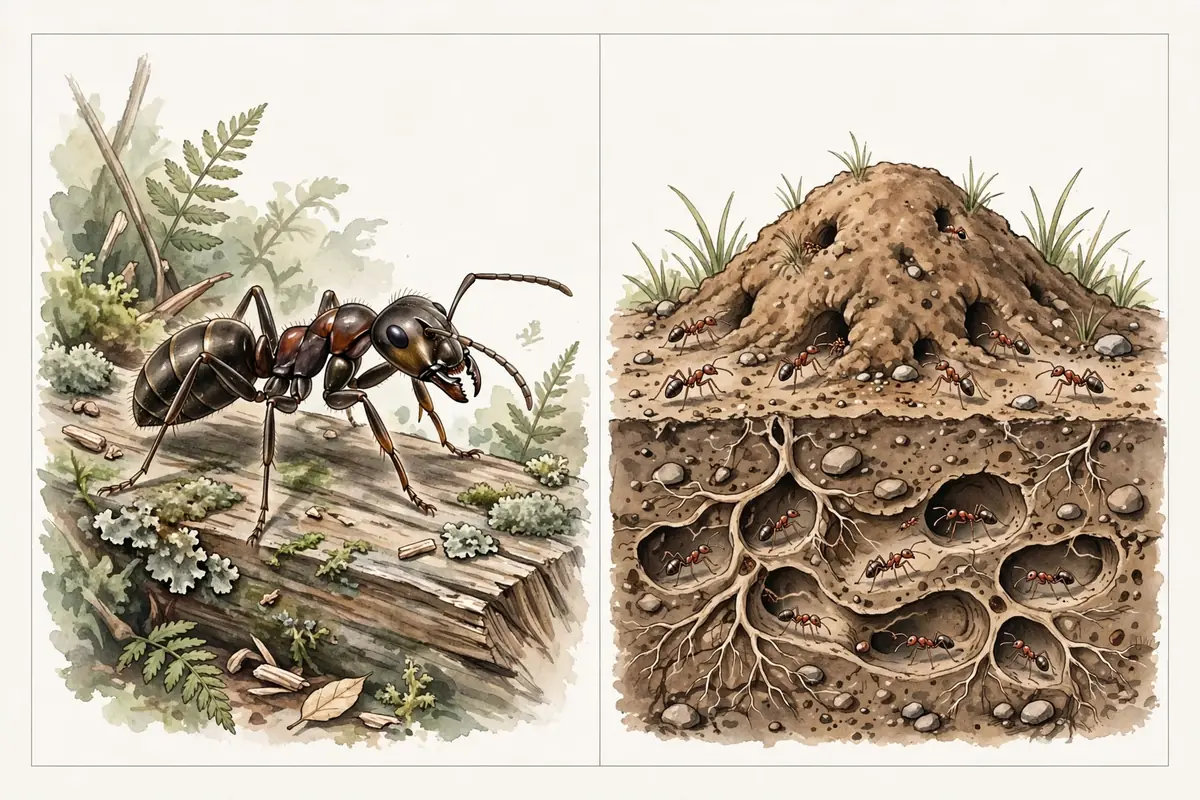
Carpenter ants do not eat wood — they excavate it to build nests, which is why they love damp or decaying timber. Prevention works on two fronts:
- On you: wear gloves for firewood, deck, and garden work; shake out work gloves before putting them on; avoid leaning bare skin on rails, stumps, or logs where ants trail.
- In your home: fix roof and plumbing leaks (moisture is the invitation), trim tree branches touching the house, store firewood away from walls and off the ground, and seal gaps around pipes and vents.
- The telltale sign of a nest: small piles of sawdust-like shavings (frass) beneath wooden structures, or faint rustling inside walls at night. A nest in your home is a pest-control job, not a DIY bite-prevention project.
Warning signs: when to seek care #
Call 911 immediately if you develop trouble breathing or swallowing, swelling of the face, lips, tongue, or throat, widespread hives, dizziness or fainting, or a racing heartbeat after any bite or sting. If you carry prescribed epinephrine, use it first, then call for help.
Most carpenter ant bites are harmless, but see a doctor promptly if: swelling spreads well beyond the bite area; the bite shows pus, red streaks, or increasing pain after a day or two; you develop fever; or you have a known severe insect allergy and were bitten or stung.
Frequently asked questions #

Are carpenter ant bites dangerous? #
For most people, no. They are painful for a few minutes and leave a small bump that heals in a day or two. They do not transmit diseases. The main risk is a secondary skin infection from scratching, or a rare allergic reaction.
Do carpenter ants sting like fire ants? #
No. Carpenter ants bite with their jaws and may spray formic acid; they have no stinger. Fire ants sting with venom injected through a stinger at the rear — a completely different mechanism and a more painful injury.
Why did it burn after the pinch? #
That is the formic acid. Carpenter ants spray this defensive chemical into the bite wound, which causes the burning sensation on top of the mechanical pinch. It is unpleasant but not dangerous, and it fades within minutes.
Should I worry about an infestation if one bit me? #
One foraging ant outdoors is normal. But carpenter ants trailing inside your home — especially near damp wood, or piles of sawdust-like frass — suggest a nest. Since they excavate wood, an indoor colony can damage framing, decks, and beams over time. That is a job for a pest professional.
Medical and editorial note #
This guide is general information, not medical advice. Carpenter ant bites are minor for most people, but individual reactions vary. If a bite worsens instead of improving, shows signs of infection, or triggers any allergy symptoms, see a healthcare professional promptly.


