
You will know a deer fly bite when it happens — it feels like a hot needle jab, not a mosquito’s quiet sip. For deer fly bite treatment, start with soap and water, then a cold compress for 10–15 minutes, then an oral antihistamine or pain reliever per label directions for the itch and ache. Most bites heal in a few days, but deer flies can also transmit a rare bacterial disease, so there is one infection to watch for. Details below.
What a deer fly bite looks and feels like #
Deer flies (Chrysops species) are chunky, fast flies about the size of a housefly, with dark bands across their wings and often iridescent eyes. Only the females bite — they need a blood meal to develop eggs — and they feed by slicing the skin with scissor-like mouthparts, then lapping up the blood that wells out. That cutting bite is why it hurts so much more than a mosquito bite.
The typical bite:
- Immediate sharp pain — a stabbing or burning sensation at the moment of the bite. Many people feel it instantly and slap at the fly, which is exactly why deer flies are so hard to catch: they bite and dart away.
- A red bump or welt that develops within minutes to hours, often with a visible central puncture.
- Swelling and warmth around the site, sometimes spreading wider than you would expect from the tiny fly.
- Intense itching that can persist for days. Some people develop large local reactions — several inches of red, swollen, hot skin — especially after repeated summer bites.
- Bleeding at the bite is common because the fly literally cuts the skin; a small drop of blood is normal and not a danger sign by itself.
Where they bite. Deer flies hunt by sight and are drawn to movement, dark colors, and carbon dioxide. They are most active on warm, sunny, calm days, typically from late spring through summer, near woods, wetlands, pastures, and anywhere livestock or wildlife gather.
Treatment and relief: step by step #
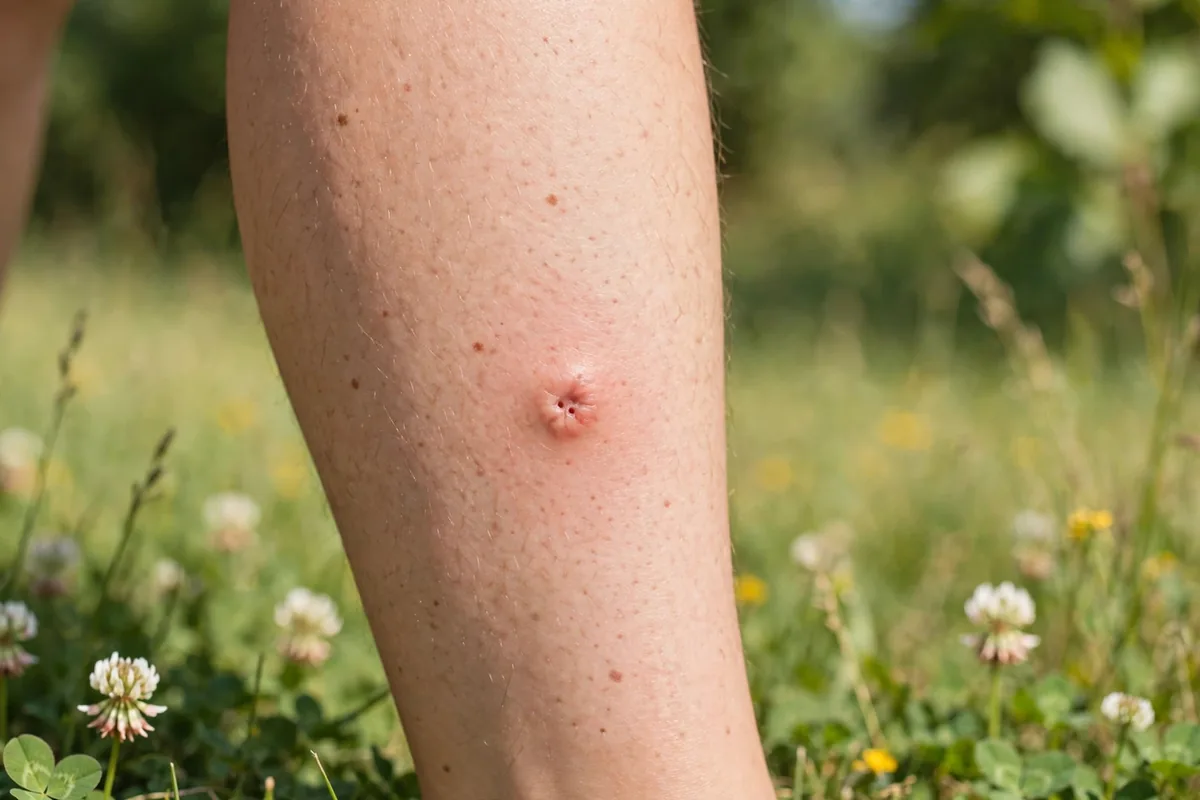
The cutting bite leaves an open wound, so cleaning matters more here than with a mosquito bite.
- Stop the bleeding first. Press a clean cloth or tissue on the bite for a minute or two. A small amount of blood is normal given how the fly feeds.
- Wash thoroughly. Clean the area with soap and water — not just a rinse. The open cut is an entry point for bacteria, and deer fly bites that get scratched are prone to secondary infection.
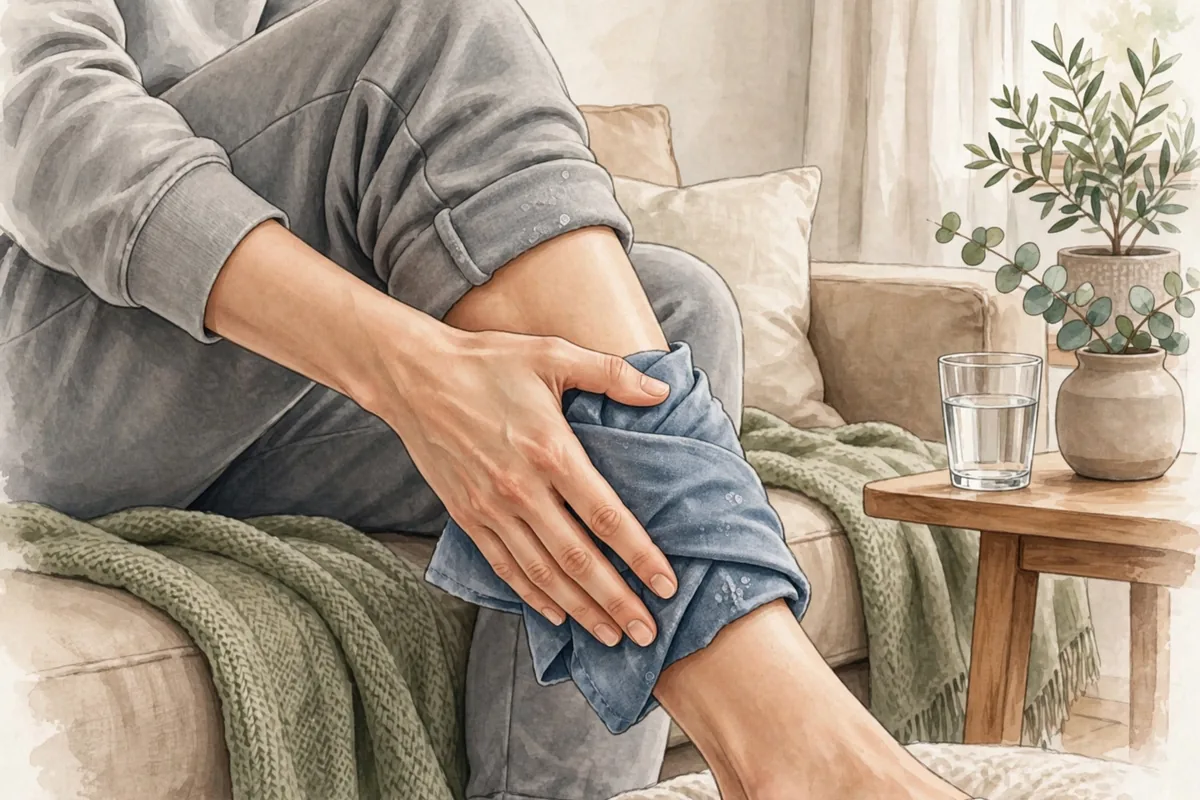
- Apply cold. Press a cold compress or ice wrapped in cloth on the bite for 10–15 minutes. Repeat several times through the day. Cold narrows blood vessels, limits swelling, and numbs the pain. For the best technique, see how to use a cold compress on bites and stings.
- Calm the itch. An oral antihistamine per label directions helps with itching and swelling. On the skin, hydrocortisone cream or calamine lotion can soothe the area. A baking-soda-and-water paste is a common home alternative.
- Ease the pain. A pain reliever per label directions for the throbbing, especially if the bite is on a hand, foot, or other sensitive spot.
- Keep it clean and dry. Pat the area dry after washing. Avoid tight bandages — air helps healing. Change any dressing if you do cover it.
- Do not scratch. This is the hardest rule and the most important. Scratching a deer fly wound introduces bacteria and is the main route to cellulitis. Keep nails short; consider covering the bite loosely at night if you scratch in your sleep. More on why in why you should not scratch or squeeze a bite.
Tularemia: the one thing to watch for #
Deer flies are documented vectors of tularemia (“rabbit fever”), a bacterial disease caused by Francisella tularensis. Transmission to humans from deer flies is less common than from tick bites or handling infected animals, but it is real — particularly in endemic areas of the Great Plains, Oklahoma, and the Ozark region, with cases possible anywhere deer flies are active.
How you would know. This is a separate infectious concern from the bite reaction itself, and it shows up later:
- Timing: symptoms usually appear 3–5 days after the bite (range up to 14 days).
- The pattern: a skin ulcer forms at the bite site — a slow-healing sore that does not look like a normal bite — plus swollen regional lymph nodes, fever, headache, muscle aches, and weakness. This ulcer-plus-swollen-glands pattern (ulceroglandular tularemia) is the classic presentation after a deer fly or tick bite.
- What it is not: it is not transmitted person to person, and it is not the itchy bump from day one.
What to do. Tularemia is treated with antibiotics and responds well when diagnosed early — so the message is not “panic,” it is “do not ignore.” If a fever plus an ulcerating bite wound develops within two weeks of deer fly exposure, seek prompt medical evaluation and mention the deer fly bite. Tularemia is a nationally notifiable disease in the US, and clinicians report cases to public health authorities.
Perspective. Tularemia is rare. The vast majority of deer fly bites are just painful, itchy wounds that heal on their own. Watchful waiting for 3–5 days — not anxiety — is the right posture.
Preventing deer fly bites #
Deer flies are visual hunters, which makes them unusually hard to repel — but several tactics genuinely help.
Clothing and timing.
- Wear light-colored clothing. Deer flies are strongly attracted to dark objects and movement. Light colors make you less of a target.
- Cover up in fly country. Long sleeves and pants in woods, wetlands, and pastures during peak season (June–August).
- Avoid peak hours. Deer flies are daytime biters, most active on warm, sunny, calm days. Mornings and evenings are relatively safer; midday sun is their prime time.
Repellents and barriers.
- Use an EPA-registered repellent (DEET, picaridin, or oil of lemon eucalyptus) per label directions on exposed skin. Repellents help but are less reliable against deer flies than against mosquitoes — manage expectations.
- Head nets are the gold standard for serious exposure (fishing, trail work, gardening near wetlands). They look silly; they work brilliantly.
- Screens and fans. Deer flies are weak fliers in moving air — a strong patio fan dramatically reduces bites at outdoor gatherings.
Yard and behavior.
- Keep moving. Deer flies target stationary or slow-moving people and animals; they struggle to land on someone walking briskly.
- Trap options. Commercial deer fly traps (sticky ball traps, canopy traps) placed away from gathering areas can reduce local pressure, though they will not eliminate the problem.
For the general outdoor playbook, the outdoor bite prevention checklist covers the habits that work across biting species.
Warning signs: when to seek care #
Call 911 immediately if you develop trouble breathing or swallowing, swelling of the face, lips, tongue, or throat, widespread hives, dizziness or fainting, or a racing heartbeat after a bite. If you have been prescribed an epinephrine auto-injector, use it first, then call 911. Deer fly saliva can trigger anaphylaxis in sensitive people, so treat systemic symptoms as an emergency.
See a doctor or urgent care promptly if you develop fever plus a skin ulcer at the bite site and swollen lymph nodes 3–5 days after the bite (possible tularemia — mention the deer fly exposure); if redness spreads well beyond the bite or you see red streaks; if there is pus, increasing pain after the first day, or fever; or if the bite does not improve after a week. Bites on the eyelid, in the mouth, or on the genitals also deserve professional evaluation. General bite and sting warning signs apply to the local wound itself.
Frequently asked questions #

How long do deer fly bites last? #
The pain fades within hours, and the bump, swelling, and itching usually resolve within 3–7 days. Large local reactions can take 1–2 weeks. If a bite is getting worse after the first day instead of better — more pain, spreading redness, pus, or fever — that is a sign of infection, not normal healing.
Can deer flies transmit diseases? #
Yes — deer flies are documented vectors of tularemia (rabbit fever), caused by the bacterium Francisella tularensis. It is rare, but real, particularly in parts of the Great Plains, Oklahoma, and the Ozarks. Watch for fever, a skin ulcer at the bite site, and swollen lymph nodes 3–5 days after the bite. There is no credible evidence that deer flies transmit Lyme disease.
Why do deer fly bites hurt so much? #
Because the fly cuts the skin. Deer flies feed by slicing the skin open with scissor-like mouthparts and drinking the blood that pools out, unlike mosquitoes, which pierce with a needle-like proboscis. The cut plus the anticoagulant saliva produces immediate sharp pain and a stronger inflammatory response.
What is the best cream for deer fly bites? #
For itching and swelling, hydrocortisone cream or calamine lotion on the skin are the standard options, and an oral antihistamine per label directions helps from the inside. Keep the wound clean first — a deer fly bite is an open cut, so soap and water before any cream. Avoid applying anything to broken skin that is not meant for wounds.
Medical and editorial note #
This guide is general information about deer fly bites and is not medical advice. Reactions vary between individuals, and infections like tularemia, while rare, require professional diagnosis and prescription treatment. If you are unsure about a bite, develop fever or an ulcerating wound afterward, or feel unwell, contact a healthcare professional promptly.


