
Two days after that grassy walk, your sock line is ringed with red, insanely itchy bumps. Classic chigger bites on feet and ankles — the single most common place these tiny mites strike. The good news: chiggers don’t burrow into your skin, they’re usually gone before you ever itch, and the right care settles the misery within days.
Why feet and ankles are chigger magnets #
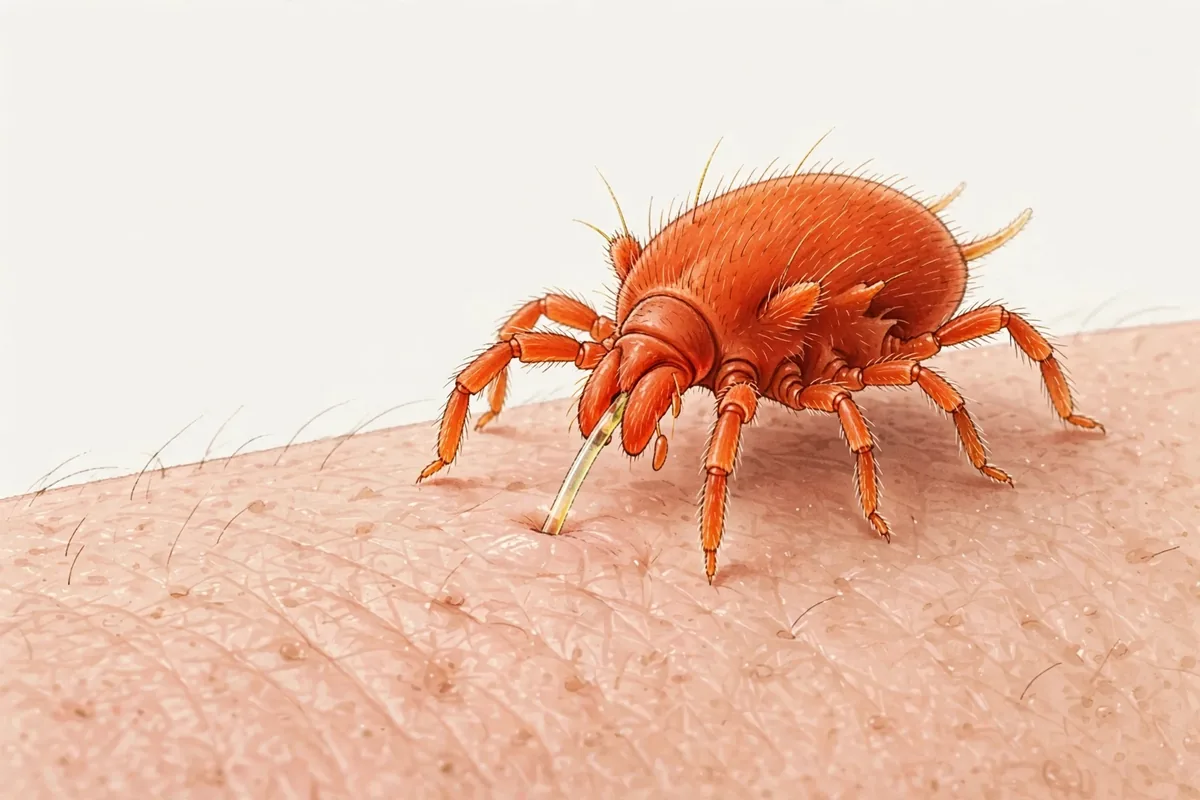
Chiggers are the larval stage of trombiculid mites — barely visible, about the size of a pinhead speck. They wait on grass blades, brush, and low vegetation, then climb aboard when you brush past. From there, they crawl upward until something stops them.
Your socks are the trap. Chiggers migrate up the leg and get blocked by tight clothing — sock cuffs, shoe collars, boot tops. Stuck, they settle in and feed right there, which is why the bites form a neat ring exactly where your socks sat. Waistbands, bra lines, and behind the knees work the same way, but feet and ankles get hit first because they’re the entry point.
Thin skin helps them. Ankles and the tops of feet have relatively thin skin that’s easy for their tiny mouthparts to pierce. Areas with thicker skin or heavy hair are less appealing.
Timing tricks you. The itch doesn’t start for hours — often 24 to 48 hours after exposure. So you blame yesterday’s hike, or this morning’s yard, when the real culprit was the tall grass two days ago. That delay also means the chiggers themselves are almost always gone by the time you’re miserable. Scratching at “the bugs” is pointless; there’s nothing left to remove.
If you walked through tall grass, sat on a grassy bank, or gardened in shorts and sneakers, and now your ankles are on fire — chiggers are the prime suspect.
What chiggers actually do: no burrowing #

Let’s kill the biggest myth first: chiggers do not burrow into your skin. They don’t lay eggs in you, and they’re not hiding under the surface waiting to be smothered.
Here’s what really happens. The larva pierces the skin with its mouthparts, injects digestive enzymes that liquefy skin cells, and then feeds through a hardened tube of dead skin cells called a stylostome — essentially a tiny drinking straw. It feeds on dissolved tissue (not blood), then drops off after a few days to continue its life cycle in the soil. Nymphs and adults are harmless predators of small soil organisms — only the larvae bite people.
The bump is your immune system, not the mite. The red welt, the itching, the occasional small blister — that’s your body’s reaction to the enzymes and the stylostome left behind. The itch typically peaks in the first 24–48 hours and fades over the next week or so, with full resolution sometimes taking up to two weeks.
Why this matters for treatment: remedies aimed at “killing” or “smothering” the chigger — nail polish, bleach, alcohol dousing — miss the point completely. The mite is already gone. What needs treating is your skin’s inflammatory reaction, and that’s handled with gentle soothing care, not chemical warfare. For general itch-relief methods that work on any bite, see the guide to reduce bite itching.
Calm the itch: treatment that works #
Wash first. As soon as you suspect exposure — or when the itching starts — wash the area thoroughly with soap and warm water. This won’t undo bites that already happened, but it removes any mites still wandering and cleans the irritated skin.
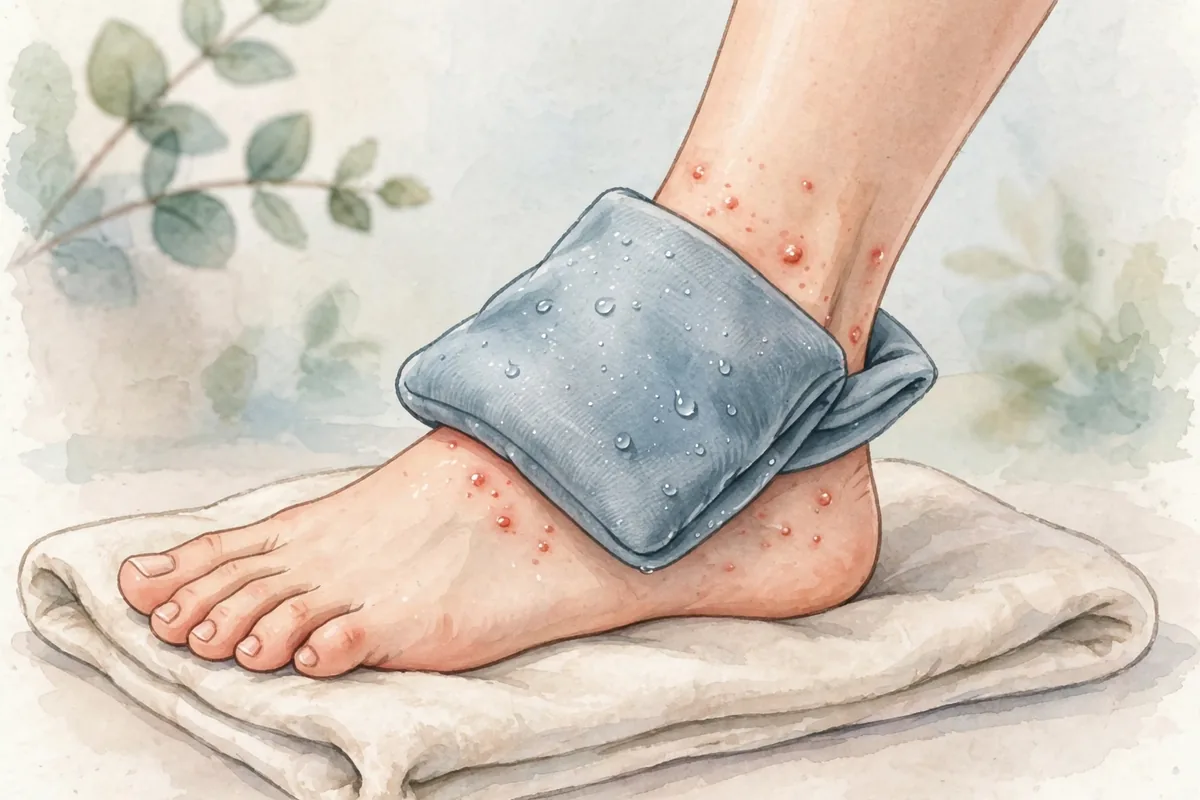
Cool it down. A cool compress or a cloth-wrapped ice pack on the ankles for 10–15 minutes at a time is the fastest drug-free relief. Cold numbs the itch and calms inflammation. Cold compresses on bites and stings are simple, safe, and surprisingly effective.
Use anti-itch products as directed. Over-the-counter hydrocortisone cream or calamine lotion, applied per label directions, takes the edge off. An oral antihistamine per label directions can help too, especially at bedtime when itching feels worse and keeps you awake.
Do not scratch. This is the hardest and most important rule. Scratching feels satisfying for three seconds and then makes everything worse — it intensifies the itch cycle and, crucially, breaks the skin. Broken skin around the ankles, an area that collects dirt and sweat, is an infection waiting to happen. Keep nails short, and consider light cotton socks or gloves at night if you scratch in your sleep.
Leave blisters alone. Some chigger bites develop small vesicles. Don’t pop them — they’re part of the healing reaction, and opening them invites bacteria in.
Most people turn the corner within a few days, even though full fading of the marks can take up to two weeks. If the itching is severe enough to disrupt sleep for multiple nights despite these measures, talk to your doctor or pharmacist about stronger options.
Keep them off next time: prevention checklist #
Dress like a barrier. Long pants tucked into socks, closed shoes or boots, and long sleeves in chigger territory. It looks unfashionable; it works.
Use repellent properly. An EPA-registered repellent on exposed skin, and permethrin-treated clothing for serious brush-busting, are the evidence-backed options. Apply repellent to socks and pant cuffs, not just bare skin — that’s where chiggers climb.
Choose your terrain. Chiggers thrive in tall grass, brush, woodland edges, and damp shady spots. Stick to mowed paths and the center of trails. Avoid sitting directly on grass in peak season (late spring through early fall, until the first frost).
Shower and launder promptly. After potential exposure, shower with soap and wash your clothes in hot water. Chiggers still on clothing or skin get removed before they settle in to feed. This single habit prevents more bites than any remedy treats.
Tend your yard. Keep grass mowed short, trim brush and overgrowth, and clear leaf litter where chiggers shelter. Sunny, dry, short grass is poor chigger habitat — they’re creatures of damp shade and tall cover.
None of this requires chemicals on your skin beyond standard repellent. Prevention is a clothing and habit game, and it’s far more effective than any after-the-fact treatment.
Warning signs: when to seek care #
Call 911 immediately if you develop trouble breathing or swallowing, swelling of the face, lips, tongue, or throat, widespread hives, dizziness or fainting, or a racing heartbeat. True severe allergy to chigger bites is uncommon, but any of these signs after bites means emergency care now. If you carry an epinephrine auto-injector, use it right away — but still call 911, because epinephrine buys time and does not replace emergency care.
See a doctor or urgent care if redness spreads well beyond the bite cluster, red streaks extend from the area, the bites become increasingly painful, hot, or swollen after the first couple of days, pus drains from them, or you develop fever or chills — those point to a secondary skin infection from scratching, which is the real risk with chigger bites. Also seek care if the itching is so severe you can’t sleep for several nights running, or if bites near the eyes or genitals are involved.
Frequently asked questions #
Should I put nail polish on chigger bites? #
No. The nail-polish trick was based on the myth that chiggers burrow under the skin and need smothering. They don’t burrow — they feed from the surface and are usually gone before you itch. Polish just irritates the skin and traps moisture. Soothe the reaction with cool compresses and anti-itch products instead.
How long do chigger bites last on ankles? #
The intense itching usually peaks within 24–48 hours and eases over the following week. The red marks themselves can take up to two weeks to fade completely. Scratching stretches the timeline, so hands-off healing is the fastest healing.
Can chigger bites get infected? #
The bites themselves rarely cause problems, but scratching them open can absolutely lead to bacterial skin infections — especially on feet and ankles, which are exposed to dirt and sweat. Spreading redness, increasing pain, warmth, pus, or fever after the first day or two are infection signals, not normal bite healing.
Do I need to treat my clothes after chigger exposure? #
Washing is enough. Remove your clothes after potential exposure, wash them in hot water, and shower with soap. There’s no need for special sprays on laundry — chiggers on clothing are removed by a normal hot wash, and they can’t survive long off a host or vegetation anyway.
Medical and editorial note #
This guide is general information about chigger bites on the feet and ankles, not medical advice. Chigger reactions vary, and what looks like chigger bites can sometimes be another skin condition. If the rash spreads unusually, doesn’t follow the typical improving pattern, or worries you, see a healthcare professional for an in-person evaluation.


