
That big, loud bee hovering near your porch could be one of two insects, and the difference matters: in the carpenter bee vs bumblebee sting question, the answer depends on which bee and which sex. Male carpenter bees and male bumblebees cannot sting at all — but the females of both species can. Here is how to tell them apart in seconds and what to do if one stings you.
Carpenter bee vs bumblebee: side-by-side ID #
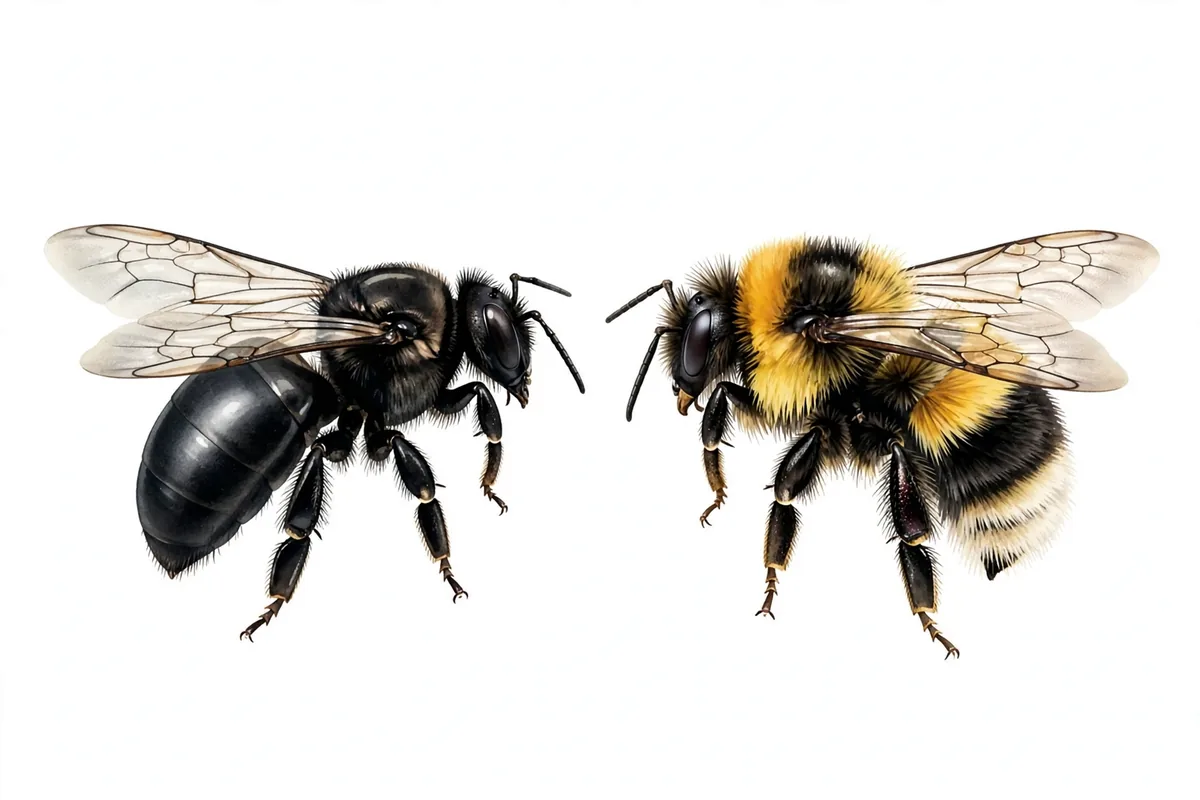
The fastest field ID is the abdomen. Everything else confirms it.
| Feature | Carpenter bee | Bumblebee | |—|—|—| | Abdomen (rear) | Shiny black, smooth, nearly hairless — looks almost metallic | Fuzzy all over, yellow and black hair on the abdomen too | | Thorax (mid-body) | Fuzzy, yellow-haired — the fuzz is on top | Fuzzy, with stripes continuing the body pattern | | Face markings | Males often have a white or yellow patch on the face | Usually all dark face; fuzzier overall | | Size | About 3/4 to 1 inch — large and robust | About 1/2 to 1 inch — large and robust | | Flight style | Erratic, hovering, darting — likes to hover in your face | Straighter, purposeful — flower to flower | | Nest | Tunnels bored into wood (eaves, rails, fascia, siding) | Ground cavities, rodent burrows, compost, wall voids — never drilled wood | | Nest evidence | Perfectly round holes, coarse sawdust piles, staining beneath holes | Multiple bees entering one hidden spot; no wood damage | | Colony | Solitary — one female per tunnel (though tunnels cluster) | Social — a queen with up to a few hundred workers |
The abdomen test works from several feet away. If the rear end gleams, it is a carpenter bee. If the rear end is fuzzy, it is a bumblebee. Color stripes alone can mislead you — some bumblebee species are mostly black — but the shiny-vs-fuzzy abdomen rule holds for the common US species.
Which bee stings — and which one cannot #
This is the part that surprises most people.
Carpenter bees.
- Males cannot sting. Male carpenter bees have no stinger. The ones hovering aggressively around your eaves, porch, and deck in spring are all males — they are guarding the tunnel entrance while the female works inside. They will buzz right up to your face and dart at intruders, but they physically cannot hurt you.
- Females can sting, but rarely do. Female carpenter bees have a painful sting, yet they use it almost exclusively when handled, trapped in clothing, or strongly threatened. They spend their energy boring tunnels, collecting pollen, and laying eggs — not attacking people. You can stand a few feet from an active tunnel entrance and the female will usually ignore you.
Bumblebees.
- Males cannot sting. Male bumblebees (drones) likewise lack stingers. A bee that lands on your hand and never stings may well be a male.
- Females can sting, and can do it more than once. Worker and queen bumblebees have smooth stingers that do not lodge in the skin, so unlike honeybees they survive the sting. They sting when trapped, squeezed, stepped on, or when the colony nest is disturbed. Bumblebee workers are more colony-defensive than carpenter bee females — a disturbed nest can produce multiple stings — but a lone forager on a flower is no threat.
What to do after a carpenter bee or bumblebee sting #
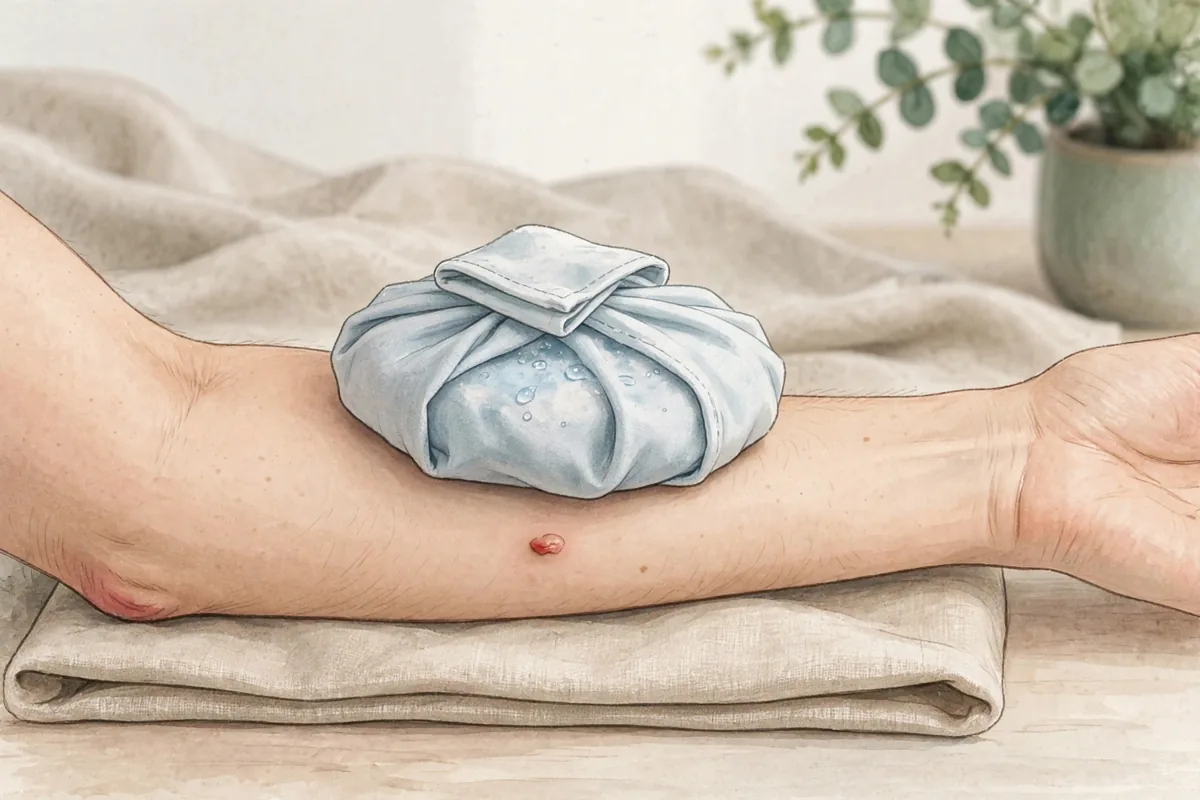
Both stings are treated the same way: cool, clean, calm, and watch. Neither bee leaves a stinger behind (bumblebees retract their smooth stingers; carpenter bee females rarely commit a sting at all), so there is no stinger-removal step as there is with honeybees.
Step-by-step:
- Leave the area calmly. Walk away from the nest site or wood structure. Do not swat at other bees — agitation spreads.
- Clean the site. Wash with soap and water, especially if you were gardening or working with wood.
- Apply cold. Press a cold compress or ice wrapped in cloth against the sting for 10–15 minutes. Repeat through the day for swelling.
- Soothe itching. An oral antihistamine per label directions, or hydrocortisone cream or calamine lotion on the skin, can calm itch and swelling. For quick relief, a cold compress on bites and stings reduces both pain and swelling.
- Ease pain. A pain reliever per label directions, or a baking-soda-and-water paste on the site, are common home options.
- Do not squeeze or scratch. Squeezing can push more venom in if any stinger fragment remains; scratching breaks skin and invites infection. For a fuller refresher, see the bite and sting first aid checklist.
Keeping carpenter bees off your deck #
Carpenter bees are a property problem, not a stinging problem. They reuse and extend wood tunnels year after year, so ignoring them lets the damage compound — and woodpeckers may join in, enlarging holes to reach the larvae inside.
Prevention (most effective):
- Paint or stain all exposed wood. Carpenter bees strongly prefer bare, untreated softwood — pine, cedar, redwood. A coat of exterior paint or a solid stain on eaves, fascia, rails, trim, and siding is the single best deterrent.
- Fill and seal old holes. After bees are done for the season (late fall through winter), pack holes with wood putty or dowels and paint over them.
- Use composite or PVC materials for new rails and trim where practical — bees do not bore into those.
- Avoid replacing wood with more bare wood. Weathered, silvered cedar is a carpenter bee magnet.
Dealing with active tunnels:
- Confirm activity first. Fresh, coarse sawdust beneath a round hole and bees coming and going means the tunnel is active.
Dealing with active tunnels: #
- Call a professional for structural situations — heavy infestations in load-bearing beams or siding deserve a pro, not guesswork.
Bumblebees need a different policy. Bumblebee colonies die out each fall, leaving only new queens to overwinter, so a ground nest only needs avoiding for a few weeks. Do not treat a bumblebee nest the way you treat carpenter bee tunnels — mark the spot, keep kids and mowers away, and let the season finish. For guidance on hidden nest situations generally, the yard-scan advice in mowed over yellow jacket ground nest explains how to spot ground-level entrances before equipment does.
Warning signs: when to seek care #
Call 911 immediately if you develop trouble breathing or swallowing, swelling of the face, lips, tongue, or throat, widespread hives, dizziness or fainting, or a racing heartbeat after a sting. If you have been prescribed an epinephrine auto-injector, use it first, then call 911.
Seek urgent care or call your doctor if the sting is in the mouth or throat or near the eye; if redness spreads well beyond the sting site or you see red streaks radiating outward; if pus, increasing pain after the first day, or fever develops; if swelling does not improve after 3–5 days; or if you have been stung multiple times at once. Anyone with a known venom allergy should have a reaction plan from their allergist — review the difference between a large local reaction and anaphylaxis before outdoor season.
Frequently asked questions #

Can a carpenter bee sting you? #
Only the female can, and she almost never does unless handled, trapped against skin, or seriously threatened. The males that hover in your face and dart at you cannot sting at all — they have no stinger. So the bee that looks aggressive is harmless, while the quiet one inside the wood is the one to respect.
Do bumblebees or carpenter bees sting worse? #
Both produce a sharp pinch followed by redness and swelling, and reactions vary more by person than by bee. Female carpenter bees are described by extension entomologists as having a notably painful sting, while bumblebee stings are similar to a honeybee sting in intensity. Either way, treat the sting the same: clean, cold, and watch for warning signs.
How do I tell a carpenter bee from a bumblebee quickly? #
Look at the abdomen (rear end): shiny and black means carpenter bee; fuzzy and striped means bumblebee. Then check the location: round holes in wood with sawdust beneath point to carpenter bees; bees entering a ground hole or compost pile point to bumblebees.
Will carpenter bees damage my house? #
Yes, over time. Each female bores tunnels that can run more than a foot long, and tunnels are reused and expanded year after year. A few holes are cosmetic; heavy, repeated tunneling in rails, fascia, or siding can weaken the wood, and woodpeckers often enlarge the holes. Painting exposed wood is the best long-term defense.
Medical and editorial note #
This guide is general information about carpenter bees and bumblebees and is not medical advice. Sting reactions vary between individuals, and venom allergies can develop over time. If you are unsure about a reaction or feel unwell after a sting, contact a healthcare professional promptly.


