
You are about to mow the lawn or clear the brush pile, and you are wondering whether your jeans count as armor. The direct answer to can wasps sting through jeans is: yes, they can — especially thin or worn denim. But that is not the whole story. Heavy, tightly woven denim slows a stinger down a lot, and the right clothing choices can turn a near-certain sting into a near miss.
The short answer: jeans help, but they are not sting-proof #
Wasp stingers are short — they have limited reach compared to, say, a mosquito’s piercing mouthparts — but they are sharp enough to get through many fabrics. Multiple pest-control and outdoor-safety sources agree on the essentials:
- Thin or worn jeans: a determined wasp (especially an agitated yellowjacket defending a nest) can sting through them.
- Thick, heavy denim: much harder to penetrate. The dense weave gives the stinger something to fight through, and the stinger’s short reach often runs out first.
- Loose fit matters as much as thickness. Baggy jeans hold fabric away from skin, adding an air gap the stinger cannot cross. Skin-tight jeans pressed against your leg give the wasp a perfect surface to push against.
Think of jeans as a seatbelt rather than a force field: they reduce your risk meaningfully, but they do not eliminate it. No single layer of ordinary clothing is reliably sting-proof. Only multiple layers or genuinely thick protective gear (like beekeeper suits) come close.
What determines whether a stinger gets through #
Several factors decide whether a wasp’s stinger reaches your skin:
- Fabric thickness and weave. Denim, canvas, and tightly woven synthetics protect far better than thin cotton, linen, or silk. Tightly woven threads physically block the stinger; loose knits let it slip between fibers.
- Layers. Wasps can sting through one layer of ordinary clothing but struggle with two or three. Each extra layer is a real upgrade.
- Pressure. A wasp trapped against your skin — under a waistband, inside a sleeve, beneath your body weight if you sit on one — can sting through fabric it could never penetrate from the outside. Damp clothing also makes penetration easier.
- The wasp’s mood. A calm foraging wasp is unlikely to sting at all. An agitated defender near a nest will try harder and repeatedly — and wasps, unlike honeybees, can sting multiple times.
- Species. Larger wasps and hornets have longer, stronger stingers. European hornets, for example, are noted for being able to penetrate thicker materials.
Bottom line: if a wasp is merely crawling on your jeans, you are probably fine. If you have disturbed a nest and wasps are landing on you repeatedly, no ordinary outfit is enough — your job is to get away, not to test your wardrobe.
Clothing choices that actually protect you #
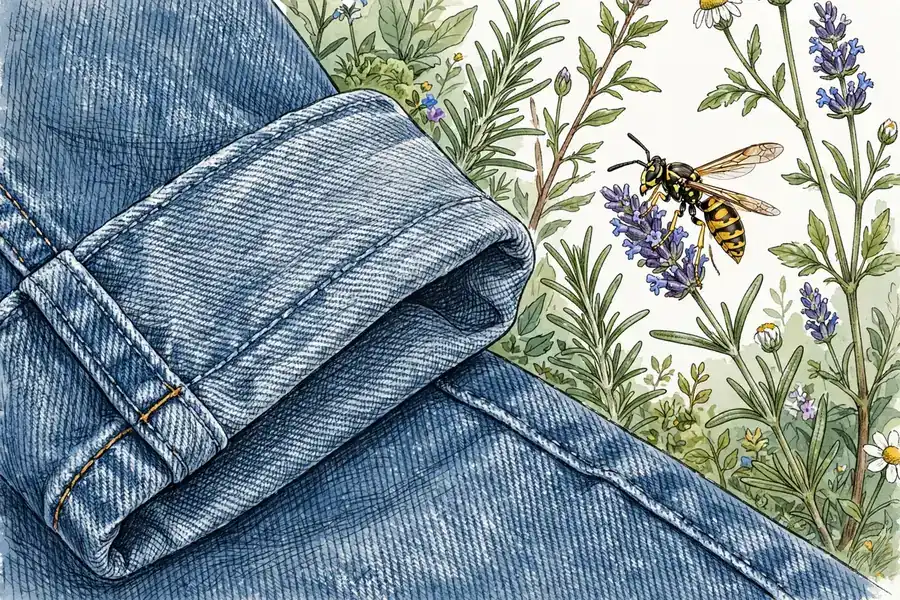
When you know you will be working or relaxing where wasps are active — late summer barbecues, yard work near fruit trees, trailheads — dress like this:
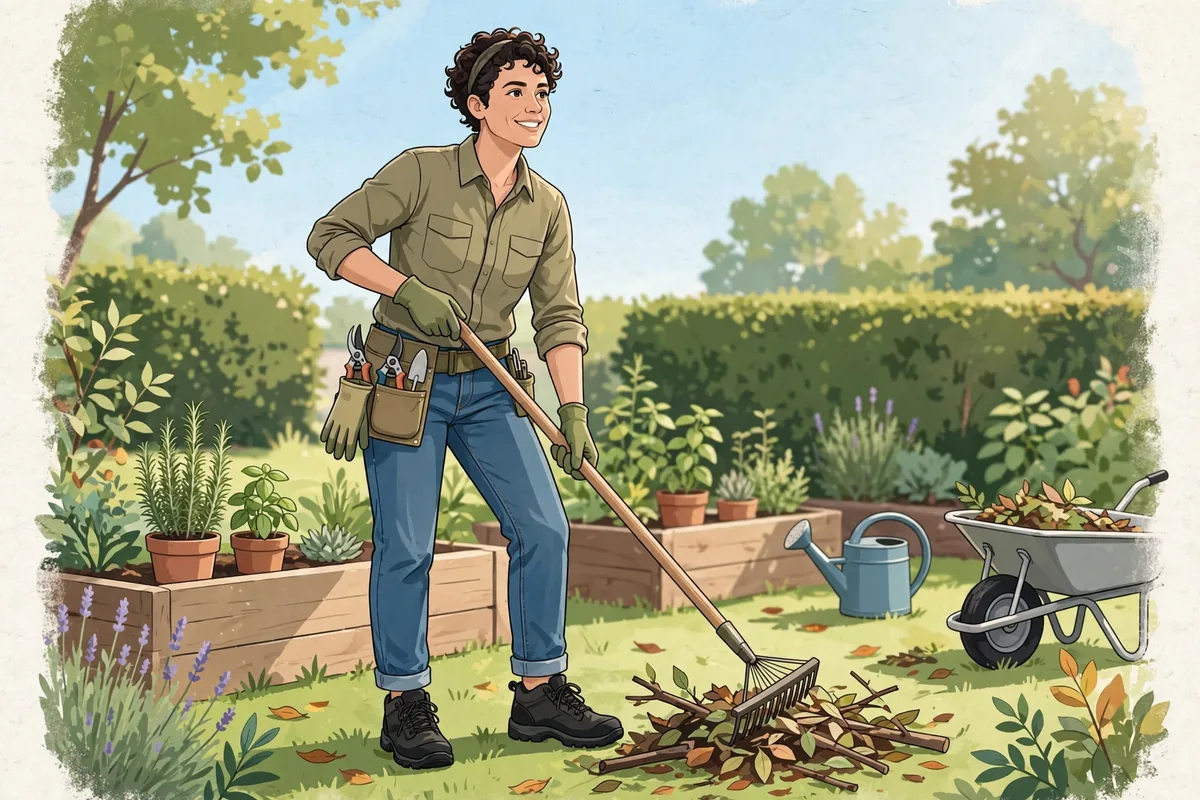
- Heavy jeans or canvas pants, not thin leggings or shorts. Tuck pant cuffs into boots or socks if you are near ground nests.
- Long-sleeved shirt in a thick, tightly woven fabric. A heavy cotton work shirt beats a thin tee by a wide margin.
- Closed-toe shoes. Wasps can sting through thin shoes and mesh sneakers; thick-soled boots are far safer.
- Light, smooth colors. Wasps are drawn to bright colors and dark, high-contrast clothing. Plain light clothing is less interesting to them.
- Minimal scent. Skip floral perfumes, scented lotions, and strongly scented sunscreen when wasps are around.
- Gloves for yard work, gardening, and nest-adjacent tasks — thick work gloves, not thin gardening gloves.
Cover your head and neck too — a hat or bandana closes one of the most vulnerable gaps. And if you know a nest is nearby, the best “clothing” is distance: leave the area rather than relying on fabric. For a broader seasonal strategy, pair these clothing choices with our prevention list: outdoor bite prevention checklist.
What not to wear around wasps #
Just as useful as the “wear” list is the “avoid” list, especially in late summer when yellowjackets are at their most aggressive:
- Thin leggings, yoga pants, or athletic tights. These are among the easiest fabrics for a stinger to pass through.
- Loose, flowy garments that flap. Billowing sleeves and skirts are more likely to trap a wasp against your skin — and a trapped wasp stings.
- Sandals, flip-flops, or going barefoot. Ground-nesting yellowjackets are the classic barefoot hazard.
- Bright floral prints. To a foraging wasp, they read as flowers.
- Fuzzy or highly textured fabrics. These can snag a wasp and agitate it.
If you were stung while doing everything right, do not blame the outfit — a nest defense response can overwhelm any clothing short of a professional suit. What matters is what you do in the next few minutes, which brings us to first aid.
Stung through clothing: what to do next #
A sting through fabric is still a normal sting — treat it the same way:
- Move away calmly. Get well away from the nest area before you stop to treat the sting. Walk quickly; do not run wildly or swat, which can attract more wasps. If they pursue you, here is what to do when wasps chase you.
- Wash the area with soap and water once you are safe.
- Apply cold. A cold pack or ice wrapped in cloth for 10–15 minutes reduces pain and swelling.
- Take an oral antihistamine per label directions for itching and mild swelling, or use a topical option your pharmacist recommends.
- Watch the spot. Normal pain and swelling peak within hours and improve over a day or two. A large local reaction (swelling over 4 inches, or swelling that keeps growing for 2–3 days) is common and usually not dangerous, but watch it closely.
Wasps rarely leave stingers behind (unlike honeybees), so there is usually nothing to scrape out — a small puncture mark is all you will see.
Warning signs: when to seek care #
Call 911 immediately if there is trouble breathing or swallowing, swelling of the face, lips, tongue, or throat, widespread hives, dizziness or fainting, or a racing heartbeat after a sting. Use epinephrine at the first sign of a severe reaction if you carry it, then call 911.
Seek urgent care or your doctor for: swelling that keeps expanding after 2–3 days, red streaks spreading from the sting, pus or increasing warmth and pain (possible infection), stings inside the mouth or throat, or many stings at once (a dozen or more, or any large number in a small child). If you have a known wasp allergy, any sting — even one through clothing — warrants prompt medical evaluation.
Frequently asked questions #

Can wasps sting through leggings? #
Yes — thin leggings are one of the easiest fabrics for a wasp stinger to penetrate. If wasps are active in your area, swap leggings for heavy jeans or canvas pants before yard work.
Can wasps sting through a jacket? #
It depends on the jacket. A thin windbreaker or hoodie offers little resistance; a heavy canvas work jacket, denim jacket, or layered clothing is much harder to sting through. Multiple layers are the key improvement.
Why didn’t it hurt if the wasp stung my jeans? #
It may have tried and failed — the stinger may not have reached your skin, or it only scratched the fabric. Check the skin underneath: if there is no mark and no pain, the jeans did their job. If there is a small puncture and burning pain, it got through.
Do wasps sting through beekeeper suits? #
Proper beekeeper suits — thick, layered, with sealed cuffs and a veil — are designed to be sting-resistant, which is exactly why professionals wear them near nests. Ordinary clothing does not offer the same protection, so do not try to handle a nest yourself in regular clothes.
Medical and editorial note #
This document is general information only and is not medical advice. Clothing reduces sting risk but cannot guarantee protection, and no outfit replaces keeping your distance from nests. If you are allergic to wasp stings, talk to your doctor about an emergency action plan and carrying epinephrine — prevention starts with preparation, not fabric.


