
You found a ring-shaped rash and your first thought was Lyme disease — but the story is not always that simple. A bullseye rash not lyme-related is genuinely common: ringworm, a lone-star-tick illness called STARI, immune reactions, and even drug side effects can all paint the same target on your skin. This guide compares the look-alikes so you can have a smarter conversation with your doctor.
Ring-shaped rashes compared: the quick table #
The classic Lyme “bullseye” is called erythema migrans: an expanding red area, sometimes with central clearing that creates the target look. But several other conditions mimic it closely. Compare them here, then read the details below.
| Feature | Lyme (erythema migrans) | STARI | Ringworm (tinea) | Erythema multiforme | Fixed drug eruption | |—|—|—|—|—|—| | Cause | Borrelia bacteria from blacklegged tick | Lone star tick bite (cause not fully known) | Fungal infection of the skin | Immune reaction, often after HSV infection or a medication | Reaction to a specific medication | | Timing | 3–30 days after bite | Usually within 7 days of bite | Days to weeks after exposure | Days after infection or new drug | Hours to days after taking the drug | | Look | Expanding red patch, sometimes with central clearing; usually one | Expanding red ring, often 8 cm+, usually single lesion | Scaly, itchy ring with raised edge; may be multiple | Multiple symmetric target lesions, often on hands/feet | Round or oval patch, recurs in the same spot | | Itch/pain | Usually not itchy | May itch mildly | Often itchy and scaly | Itchy or burning | May burn or itch | | Other symptoms | Fever, headache, fatigue, joint aches | Fever, headache, muscle pain, fatigue | Usually skin-only | Fever, malaise; sometimes mouth sores | Depends on the drug | | Key clue | Recent blacklegged tick bite | Lone star tick bite (southeastern/eastern US) | No tick bite; contact with people, pets, or gym surfaces | Multiple targets, recent cold sores or new medication | Same spot flares with each dose of the drug |
Context: many Lyme rashes are solid red patches, and a sizable share of Lyme patients never develop a rash at all. A bullseye does not prove Lyme, and no bullseye does not rule it out — get a prompt medical evaluation rather than self-diagnosing from the table.
STARI: the lone star tick look-alike #
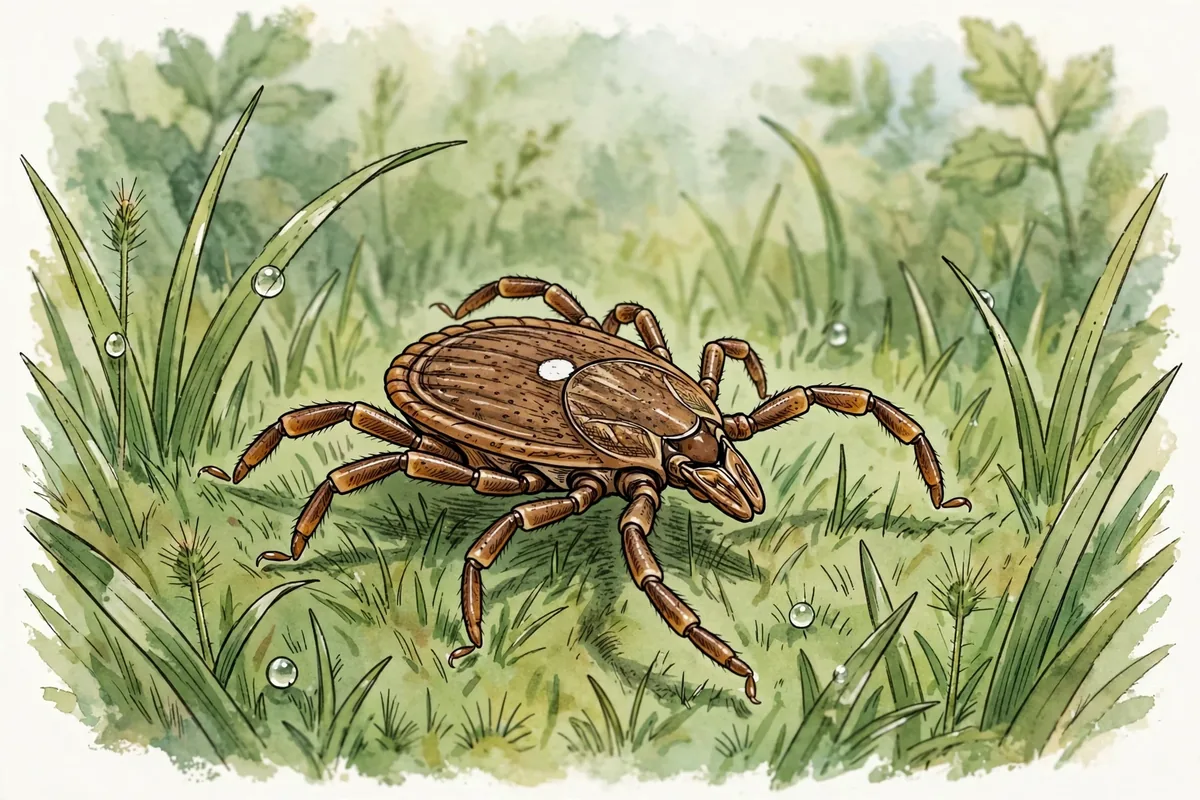
Southern tick-associated rash illness (STARI) is the closest Lyme mimic, and it starts with a tick bite too — just a different tick. The vector is the lone star tick (Amblyomma americanum), recognizable by the white dot on the female’s back, common across the southeastern US, Texas, Oklahoma, and up the East Coast.
How STARI differs from Lyme:
- Faster onset. The rash usually appears within 7 days of the bite — quicker than Lyme’s typical 3–30 day window.
- Usually a single lesion. STARI tends to produce one primary ring, often 8 centimeters or more across, while Lyme can produce multiple lesions.
- Different germ, different test. STARI was once linked to the spirochete Borrelia lonestari, but current research does not support that, and its exact cause remains unknown. Standard Lyme antibody tests do not detect it — a negative Lyme test does not rule STARI out.
- Generally milder. The illness is usually less severe than Lyme, with fever, headache, muscle pain, and fatigue that typically resolve. Doctors often treat it with antibiotics similar to Lyme, since the two cannot be distinguished clinically with certainty.
If a bullseye appears within a week of a lone star tick bite, tell your doctor exactly which tick it was — save it in a baggie for identification. Unsure whether your reaction is a true rash? See: tick bite rash vs local irritation.
Ringworm and other fungal rings #
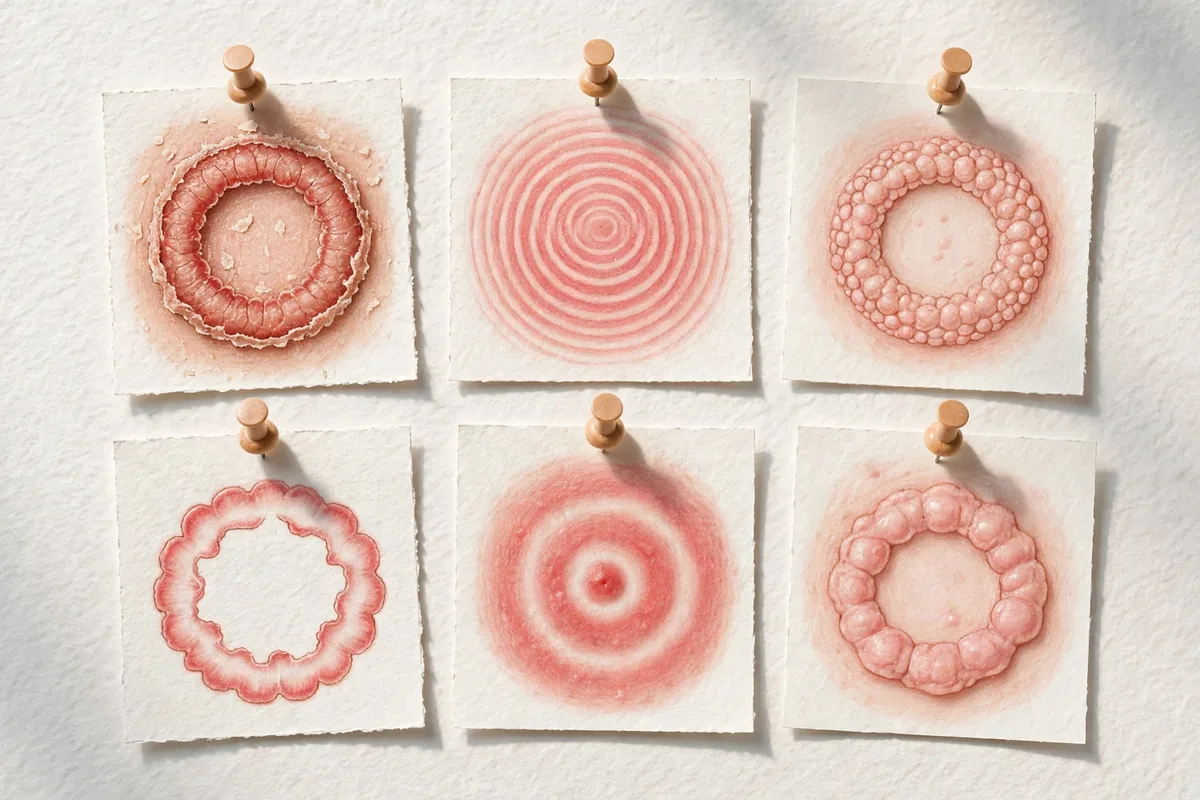
Ringworm has nothing to do with worms — it is a fungal skin infection (tinea corporis), and it is one of the most common reasons for a bullseye-shaped rash with no tick involved at all.
Clues that point to ringworm rather than Lyme:
- Itchy, scaly ring with a raised, bumpy edge and clearer skin in the center. Lyme’s rash is typically smooth and not itchy.
- No tick bite. Think instead about recent contact: shared gym equipment, wrestling mats, a new pet, or another person with a similar rash. Fungi that cause it include Trichophyton, Microsporum, and Epidermophyton.
- Multiple spots. Ringworm often appears in several places; a single expanding Lyme lesion is usually solitary at first.
- Hair loss if it is on the scalp.
Treatment is antifungal, not antibiotic — which is why the distinction matters. Nonprescription antifungal creams usually handle body ringworm, but see a doctor if it spreads, involves the scalp or nails, or does not improve. A clinician can confirm with a simple skin scraping.
Erythema multiforme and drug-related rings #
Two more mimics worth knowing, because they change what you should do next:
Erythema multiforme (EM). An immune-mediated hypersensitivity reaction that produces classic target lesions — a flat, dusky center with two concentric rings. Unlike Lyme, EM lesions are usually multiple and symmetric, favor the hands, feet, and trunk, and are often itchy or burning. The most common trigger is herpes simplex virus (even a mild cold sore); medications, other infections, and occasionally vaccines can also trigger it. Mild cases resolve in 1–4 weeks; severe cases with mouth sores or blistering need medical care.
Fixed drug eruption. This one is almost diagnostic by its behavior: a round or oval red-to-purple patch that appears in the exact same spot every time you take a particular medication — common culprits include antibiotics, NSAIDs, and anti-seizure drugs. It can look remarkably like a Lyme bullseye. If your ring appeared within hours to days of starting a new drug and sits where a previous spot once was, mention the medication timeline to your doctor prominently. Do not stop a prescribed drug without medical guidance, but do flag it urgently.
Your doctor may also consider hives (rings that come and go within hours), contact dermatitis, granuloma annulare, nummular eczema, or cellulitis (hot, painful, expanding, no central clearing).
What to do when you find a ring-shaped rash #
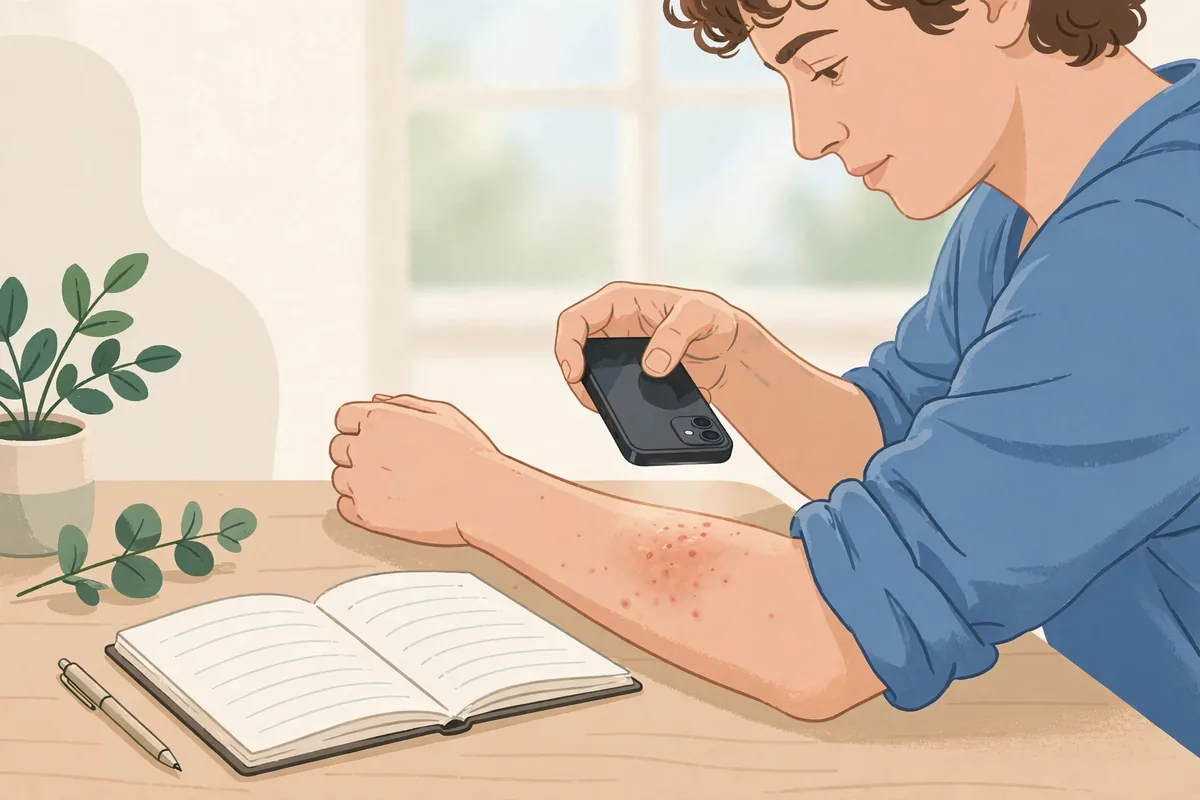
Do not try to settle the diagnosis yourself — the conditions above need different treatments, and only a clinician can sort them. Instead, do this:
- Photograph it today with a coin or ruler for scale — a day-one photo is gold for your doctor.
- Write down the timeline: when you noticed it, any tick bite or new medication, recent illnesses, new pets, gym or travel exposure.
- Note symptoms: itching, pain, burning, fever, headache, fatigue, joint aches.
- Do not wait for a Lyme test to “prove” it. Early tests are often negative; doctors frequently diagnose and treat on the rash and history alone.
- Save the tick in a sealed bag in the freezer for identification. Review the removal technique if needed: remove an attached tick safely.
- Call your doctor promptly, same day if possible. A new expanding ring-shaped rash after a tick bite is treated as potentially Lyme, and early treatment works best.
Warning signs: when to seek care #
Call 911 immediately if a rash is accompanied by trouble breathing or swallowing, swelling of the face, lips, tongue, or throat, widespread hives, dizziness or fainting, or a racing heartbeat — these suggest a severe allergic reaction, which can occasionally accompany drug eruptions or insect-related rashes.
Seek urgent or same-day care for: any expanding ring-shaped rash after a tick bite (do not wait to see if it fades); a rash with fever, severe headache, or neck stiffness; rapidly spreading redness, red streaks, or pus; blistering or peeling skin; sores in the mouth or on the genitals alongside the rash; or a fixed drug eruption with blistering or pain. A rash that keeps growing over days is never a “wait and see” situation.
Frequently asked questions #
Is STARI as serious as Lyme disease? #
STARI is generally milder than Lyme disease with fewer long-term complications. But because the two look alike and STARI’s cause is still not fully understood, doctors often treat a STARI-like rash with antibiotics as a precaution. Key differences: tick species, faster onset, negative Lyme test.
How can I tell ringworm from a Lyme rash at home? #
Best home clues: ringworm is usually itchy and scaly with a raised, bumpy border and no tick bite in the story; Lyme’s erythema migrans is typically smooth, not itchy, expands over days, and follows a tick bite by 3–30 days. These are clues, not a diagnosis — a clinician can confirm ringworm with a quick skin test.
My rash came back in the same spot after I took a pill — what is that? #
That pattern strongly suggests a fixed drug eruption: the same medication triggering a lesion in the same location each time. Tell your doctor or pharmacist immediately, bring the medication name and the timing, and do not take that drug again until you have medical guidance. Photograph the lesion while it is visible, since it may fade between doses.
Medical and editorial note #
This document is general information only and is not medical advice. Ring-shaped rashes have many causes that require different treatments, and misidentifying them can delay proper care. If you develop a new expanding ring-shaped rash — especially after a tick bite or a new medication — see a healthcare professional promptly rather than diagnosing it yourself.


