
A red line creeping outward from a bug bite is one of the few bite symptoms that should move you to action the same day. A bug bite with red streaks can indicate lymphangitis — inflammation of the lymph vessels — which often means a skin infection is spreading beneath the surface. Streaks are not always dangerous, but they are never something to watch passively. This guide shows you how to assess them in a minute and what to do next.
What Red Streaks Around a Bite Can Mean #
Thin red lines extending outward from a bite, usually heading toward the heart (up the arm toward the armpit, or up the leg toward the groin), are the classic sign of lymphangitis. It happens when bacteria — most often introduced through a scratch, a popped bump, or the bite puncture itself — begin traveling through the lymphatic channels under the skin.
A few important distinctions:
- Streaks are different from a red halo. A round ring of redness that stays put around a bite is usually just local inflammation. Streaks are linear — they look like thin red lines or branches radiating away from the bite.
- Streaks are different from a bruise. Bruises spread as flat patches of discoloration and change color over days. Streaks are raised or flat lines that appear within hours to a couple of days and tend to lengthen.
- Streaks can appear without a visible bite. Sometimes the entry point was a tiny scratch you never noticed. Do not dismiss streaks just because you cannot find the original bite.
- Not every streak is an emergency — but every streak needs a same-day clinical assessment. Lymphangitis can progress to a deeper infection or, rarely, to bloodstream infection if ignored. The earlier it is evaluated, the simpler the treatment.
How this differs from ordinary bite redness is covered in more detail in our guide to normal healing vs infection.
The 60-Second Self-Check #
Run through this checklist the moment you notice streaks. It takes one minute and gives you — and your clinician — clear facts.
- Trace the streaks. How many lines are there? How far do they extend? Are they heading toward the nearest lymph node area (armpit for arm bites, groin for leg bites)?
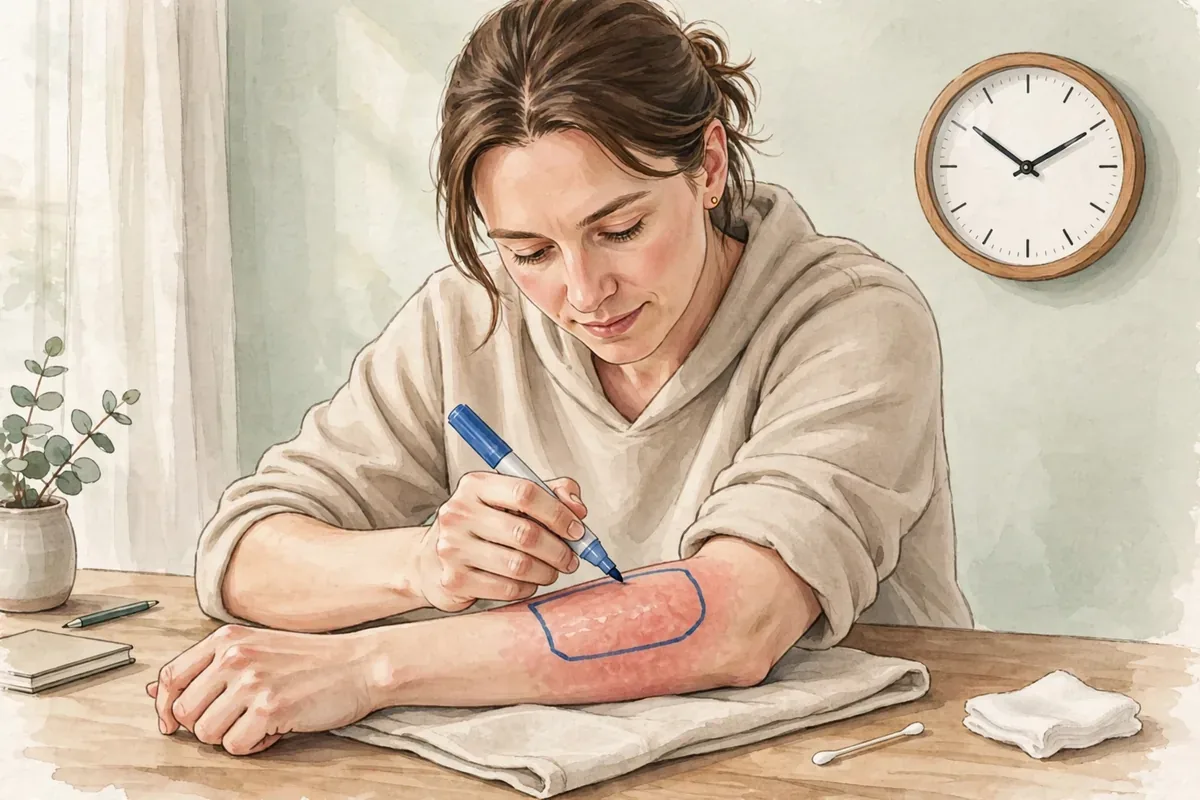
- Mark the border. Draw a light line with a washable marker at the far end of each streak, and write the time next to it. This is the single most useful thing you can do — it turns “is it spreading?” into a measurable fact.
- Check your temperature. Take it now. Fever alongside streaks strengthens the case for prompt care.
- Assess the bite itself. Is the bite increasingly painful, warm, swollen, or producing pus? Is the pain throbbing rather than itchy?
- Check your general state. Chills, feeling generally ill, or swollen tender lymph nodes near the streak’s path all raise the urgency.
- Photograph everything. Take a clear photo of the streaks with the time-marked lines visible. If you end up seeking care later, the photo timeline is invaluable.
If the streaks are lengthening visibly over a few hours, or if you have fever or chills, skip further self-monitoring and seek urgent care now.
What to Do Right Now #
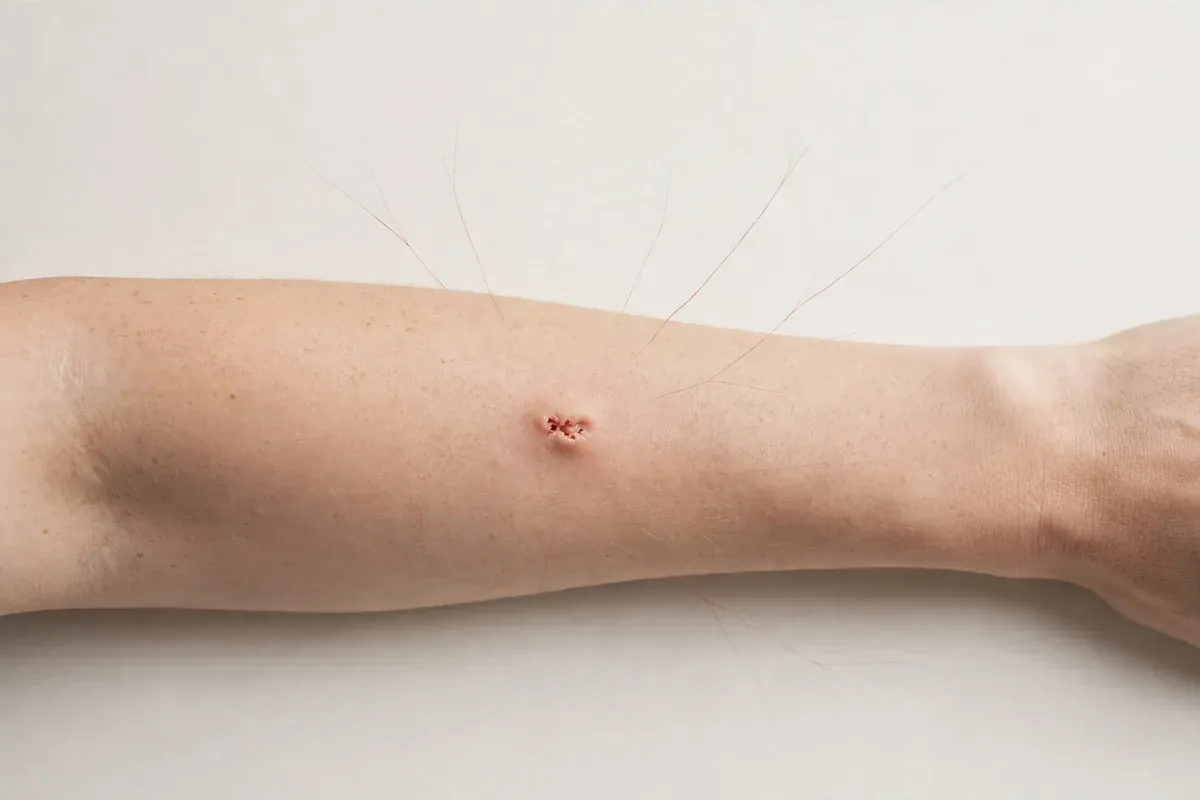
Streaks mean the situation has moved past home treatment — but there are still right and wrong moves while you arrange care.
- Do seek same-day medical evaluation. Call your clinician’s office, an urgent care clinic, or a nurse advice line. Describe the streaks, the marked borders, your temperature, and how fast things are changing.
- Do keep the area clean and covered. Wash gently with soap and water and cover with a clean bandage. This prevents new bacteria from entering.
- Do not scratch or squeeze. Pressing on an infected bite can push bacteria deeper.
- Do not apply heat and hope. Warm compresses are sometimes suggested for infections, but with spreading streaks, home measures are not a substitute for evaluation — go get checked first, then follow the clinician’s instructions.
- Do not wait to see if it gets better on its own. Lymphangitis sometimes does resolve, but the downside of waiting through a spreading infection is serious. Err on the side of the visit.
- Bring your log. The marked borders, timestamps, temperature readings, and photos turn a vague “it looks worse” into data your clinician can act on.
For context on how bite redness normally behaves in the first day, see our guide on a bite getting redder after 24 hours.
Tracking the Streak: A Simple Log #
Whether you are waiting for an appointment or monitoring after one, a short written log keeps the picture clear. Note each of the following every few hours:
- Time of each check.
- Streak length — measure against your marker lines or estimate in inches.
- New streaks — count them; new branches mean spread.
- Temperature — fever trend matters as much as any single reading.
- Pain level — note whether the bite area is getting more or less painful, and whether the pain is spreading.
- New symptoms — chills, swelling of nearby lymph nodes, redness expanding around the bite, or any discharge.
Improvement looks like this: streaks stop advancing, redness recedes toward the bite, pain eases, and temperature normalizes. Worsening looks like the opposite on every line. If you were prescribed treatment and the log is not improving within 24 to 48 hours — or is worsening at any point — contact your clinician again rather than waiting out the course.
Bites More Likely to Develop Streaks #
Any bite can become infected, but some situations carry higher risk:
- Bites that were scratched open. Fingernails carry bacteria directly into broken skin. This is the most common pathway.
- Bites that were popped or squeezed. Same mechanism, more force — a frequent story with fire ant pustules and “pimple-like” bites.
- Bites on the legs and feet. Lower-leg skin heals more slowly and is more infection-prone, especially in people with diabetes or circulation problems.
- Multiple bites in one area. More entry points mean more opportunity for bacteria.
- Bites in people with weakened immunity or diabetes. If this describes you, treat any streak as urgent rather than same-day — call sooner.
Prevention is straightforward: do not scratch, do not pop, keep bites clean and covered, and wash hands before touching them. Most streaks never happen when the skin barrier stays intact.
Warning signs: when to seek care #
Call 911 immediately if you develop trouble breathing or swallowing, swelling of the face, lips, tongue, or throat, widespread hives, dizziness or fainting, or a racing heartbeat after any insect exposure. Separately, seek emergency care for rapidly spreading streaks, high fever with chills, confusion, a racing pulse, or severe pain — these can signal a serious spreading infection.
For all other cases of red streaks from a bite: get a same-day clinical evaluation, even if you feel otherwise fine. Bring your marked borders, timestamps, and photos.
Frequently asked questions #

Do red streaks always mean infection? #
They usually indicate lymphangitis, which is most often caused by a spreading skin infection — but only a clinician can confirm it. Because the stakes of missing it are high, every case of streaking deserves professional evaluation rather than a wait-and-see approach.
Can I just use antibiotic ointment on the streaks? #
Topical ointment on the skin surface does not reach infection traveling through lymph vessels beneath it. A clinician needs to assess whether oral antibiotics or other treatment are warranted — which is why the visit matters more than the medicine cabinet.
How fast can streaks spread? #
It varies — some advance visibly over hours, others over a day or two. Speed of spread is one reason the marker-and-timestamp method matters: it replaces guesswork with evidence.
Will the streaks leave marks? #
Once the underlying infection resolves, streaks typically fade completely. Marks that linger are usually from the original bite healing, not the streaks themselves. Follow your clinician’s aftercare instructions and keep the area protected from sun while it heals.
Medical and editorial note #
This guide is general information about red streaks associated with bug bites, not medical advice. Red streaks can have causes other than infection, and only an in-person evaluation can determine what is happening. If you notice streaks spreading from a bite, seek same-day medical care.


