
If you stepped on a bee barefoot, the first thing to do is get the stinger out of the sole of your foot within seconds — scrape it off with a fingernail, a card edge, or gauze rather than pinching it. Then wash the foot with soap and water, apply a cloth-wrapped cold pack for 10 to 15 minutes, and sit down with the foot elevated. Most foot stings hurt sharply for 30 to 60 minutes and swell for a day or two, then fade.
Remove the stinger, clean the sting #
A bee stings the sole when it gets trapped and crushed underfoot, so a stinger left in the skin is common with this injury. Sit down before you do anything — hopping around on one foot after a sting is how second injuries happen. Lift the stung foot and look at the sole. The stinger looks like a tiny dark splinter with a small venom sac attached.
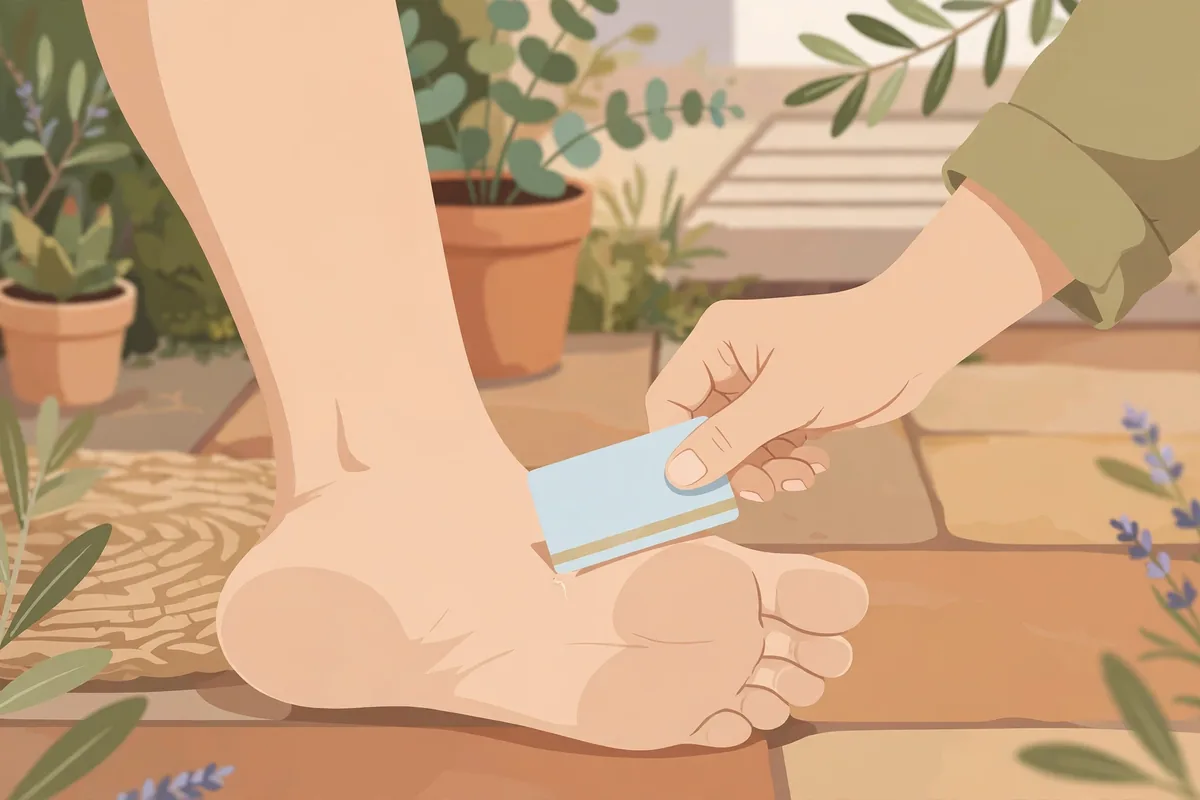
Scrape it out with a flat edge: a fingernail, the edge of a credit card, or a folded piece of gauze. Avoid pulling it out with tweezers or your fingertips if you can, because squeezing the venom sac injects more venom into the skin. Speed matters most — a stinger keeps pumping venom while it sits there, so remove it quickly even if your technique is improvised. For a detailed walkthrough, see how to remove a bee stinger.
Once the stinger is out, wash the whole sole with soap and lukewarm water. Feet pick up dirt and bacteria, and the small puncture from a sting is an entry point, so cleaning matters more here than for a sting on the arm. Rinse well, pat dry with a clean towel, and look once more for any fragment of stinger you may have missed — the thick skin of the sole can hide a small piece.
Ice, elevation, and pain relief for a foot sting #
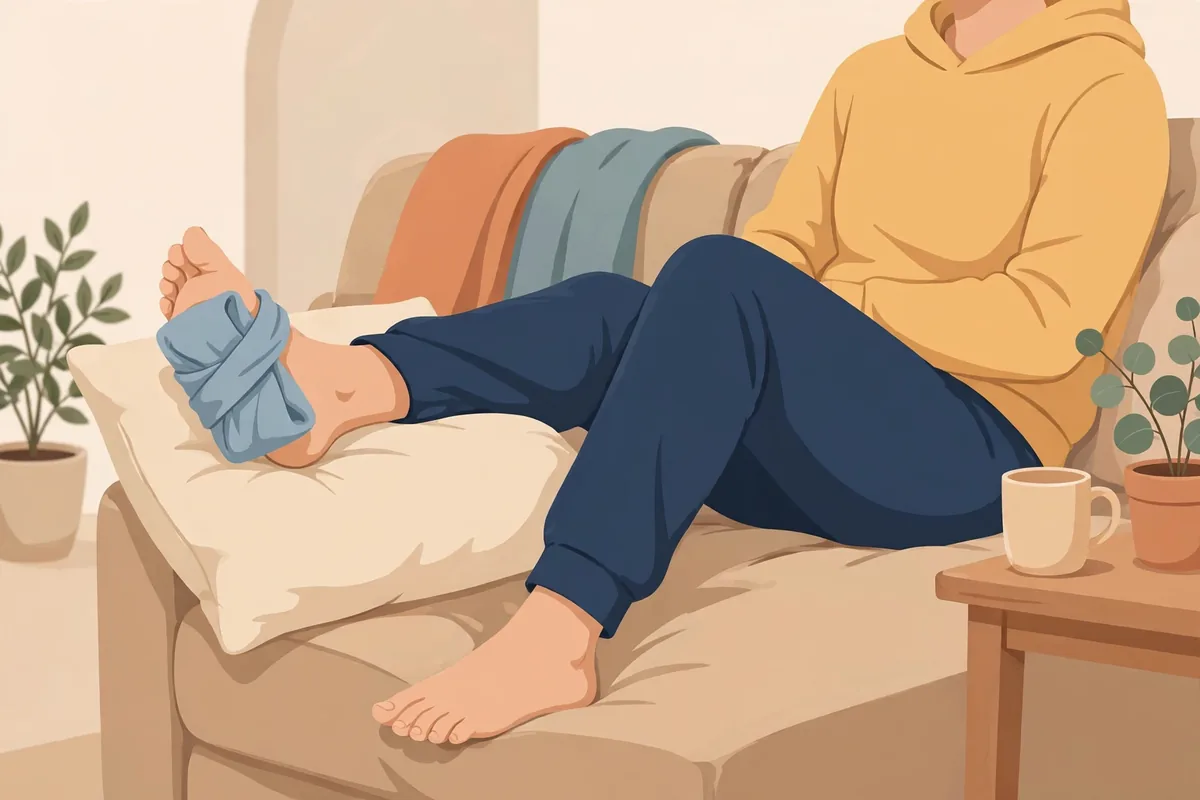
Cold is the most effective first treatment for foot sting pain and swelling. Wrap ice cubes or a cold pack in a thin towel and press it against the sole for 10 to 15 minutes, then take it off for 10 minutes, and repeat the cycle for the first hour or two. Never hold ice directly on the skin, and do not fall asleep with an ice pack on the foot. Keep the foot elevated on a pillow or the arm of the couch while you ice — elevation reduces the throbbing pressure that makes foot stings feel worse than they are. See also the cold compress guide for bites and stings.
Over-the-counter pain relief follows the label: ibuprofen or acetaminophen at the package dose typically takes the edge off within 30 to 45 minutes. An oral antihistamine such as cetirizine or loratadine can reduce itching and mild swelling, while hydrocortisone cream or calamine lotion on the sting site calms the skin. These are comfort measures, not allergy treatment — if any warning signs below appear, they do not replace emergency care.
Expect the pain pattern to run a predictable course. The sharp, burning pain usually peaks within the first 10 minutes and eases significantly by 30 to 60 minutes. Swelling and redness often build over the next 6 to 12 hours and are at their largest around the 24 to 48-hour mark. A tender, red patch the size of a quarter to a silver dollar on the sole is a normal local reaction.
Foot care for the next 48 hours #
The sole of the foot takes a beating, so protect it while it heals. Wear clean, loose socks and well-fitting shoes rather than going barefoot again — pressing a swollen sting site into the ground with every step re-aggravates the pain. If walking is uncomfortable, limit standing for the first day. Sandals with a soft footbed work well once the sharp pain fades, as long as the strap does not rub the sting site.
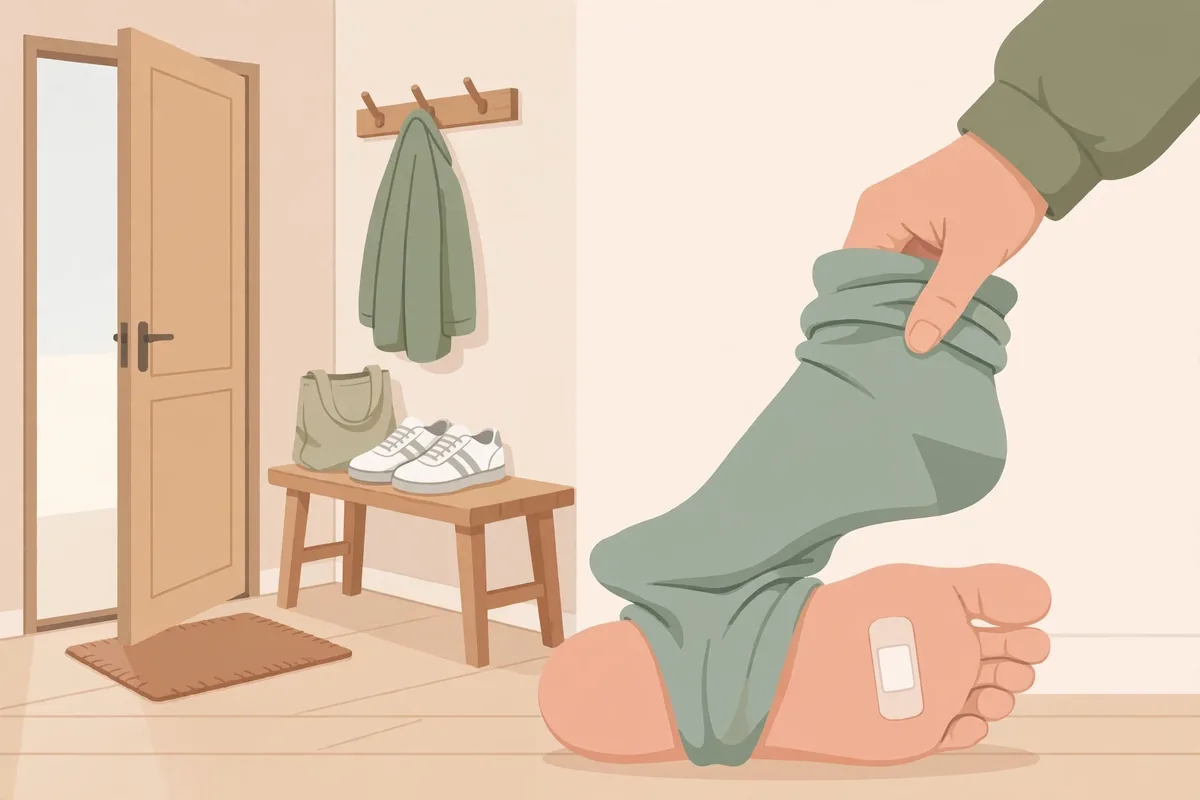
Keep the puncture clean and covered for the first day or two, especially if you will be outdoors, in a pool, or around animals. A small adhesive bandage changed daily is enough. Do not scratch the sting site as it itches — scratching breaks the skin on a part of the body that heals slowly and invites infection. Trim nails short if the itch is hard to resist, and keep calamine or hydrocortisone cream handy for the itchy phase that often arrives on day two.
Watch the redness each day. Normal healing looks like this: swelling and redness peak around day one or two, then shrink and fade over three to seven days. The skin may feel warm and look pink during this window — that is inflammation doing its job. Seek care if the red area keeps expanding after day two, if red streaks travel up the foot, if pain worsens instead of improving after 48 hours, or if the site oozes pus.
Warning signs: when to seek care #
Get emergency help immediately — call 911 or your local emergency number — if you develop any of these after a foot sting: trouble breathing, wheezing, or throat tightness; swelling of the lips, tongue, face, or throat; hives or a rash spreading beyond the foot; dizziness, faintness, rapid heartbeat, nausea, or vomiting. Even a sting on the foot can trigger a whole-body allergic reaction, and epinephrine — not antihistamines or ice — is the treatment. Also seek prompt care for signs of infection: expanding redness after day two, red streaks moving up the leg, increasing pain after 48 hours, pus, or fever.
Frequently asked questions #
Why does a bee sting on the foot hurt so much? #
The sole is packed with nerve endings and bears your full weight, so every step presses directly on the injured tissue. The venom itself is the same as a sting anywhere else, but the location magnifies the pain. Elevation and staying off the foot for the first day make a noticeable difference.
The stinger looks deep — should I dig it out? #
No. Digging at the thick skin of the sole risks pushing the stinger deeper and introducing infection. Scrape firmly across the surface with a flat edge; the stinger will come out. If a small fragment remains and you cannot scrape it free, clean the area and let your body expel it — see a clinician if the site stays red and tender after several days.
How long will my foot stay swollen? #
Most foot stings swell for one to three days, with the peak around 24 to 48 hours. The swelling usually resolves within a week. If swelling is still growing after day two, or the red area is larger than your palm, have it checked — that pattern can indicate a large local reaction or the start of infection.
Can I still exercise or run after a foot sting? #
Wait until walking is pain-free and swelling is clearly shrinking, usually two to three days. Running on a swollen, tender sole prolongs healing and risks tearing irritated tissue. Start back with short, easy walks before resuming running or sports.
Medical and editorial note #
This article is a general first aid reference and is not medical advice. It does not replace professional diagnosis or treatment. If you have a known allergy to bee or wasp stings, carry your prescribed epinephrine auto-injector and use it at the first sign of a systemic reaction. Consult a clinician or pharmacist about which over-the-counter products are appropriate for you, and seek care promptly for any warning sign listed above.


