
Nothing empties a patio faster than wasps working the burger platter. This backyard barbecue wasp safety checklist covers the pre-party property sweep, a wasp-smart cookout setup, calm handling of foragers, and fast sting treatment — so the only thing sizzling is the grill.
Before the Guests Arrive: Property Sweep #
Do this a day or two before the barbecue, not as guests are parking.
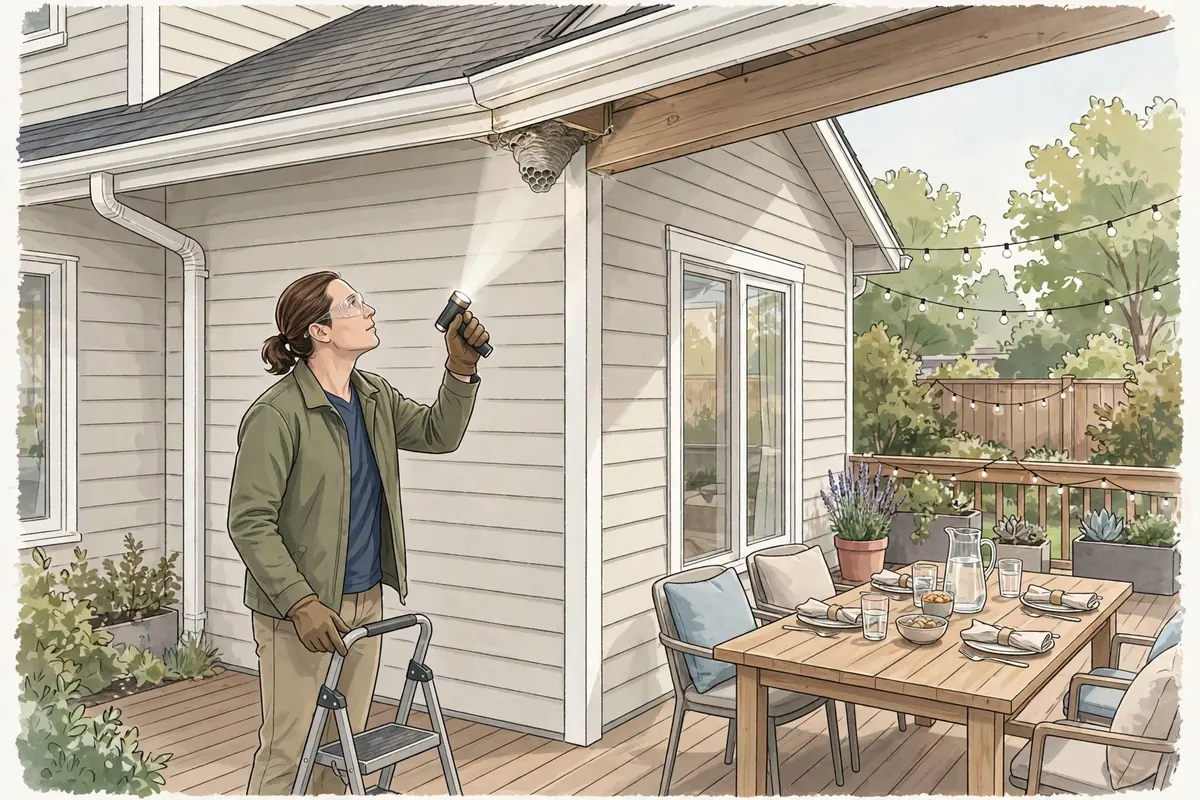
Find the nests. Walk your yard and check the classic wasp real estate: under eaves and deck railings, inside grill covers and sheds, under patio furniture, in dense shrubs, around compost bins, and in the ground along sunny slopes or retaining walls. Look for steady insect traffic — wasps flying a straight, purposeful line in and out of one spot. A single paper wasp nest under the deck umbrella can ruin the whole afternoon.
Deal with nests before the party, not during. Small, accessible nests are best handled in the evening when wasps are sluggish and most are home — but only if you are comfortable and the nest is small and reachable. Large nests, ground nests, or nests inside walls call for a professional pest controller. Never attempt nest removal with guests present, and never let a brave uncle try it as party entertainment.
Cut the attractants. Empty and rinse trash and recycling bins, secure their lids, and move them away from the seating area. Pick up fallen fruit under trees — fermenting fruit is a wasp magnet in late summer. Cover the compost bin. If you have a hummingbird feeder, expect wasps around it and consider moving it far from the party zone for the day. Learning how to find a wasp nest before the season starts makes this sweep routine instead of a scramble.
Running a Wasp-Smart Cookout #
Wasps come for the same food your guests do — meat, sweets, and sugary drinks. You cannot eliminate the attraction, but you can manage it:
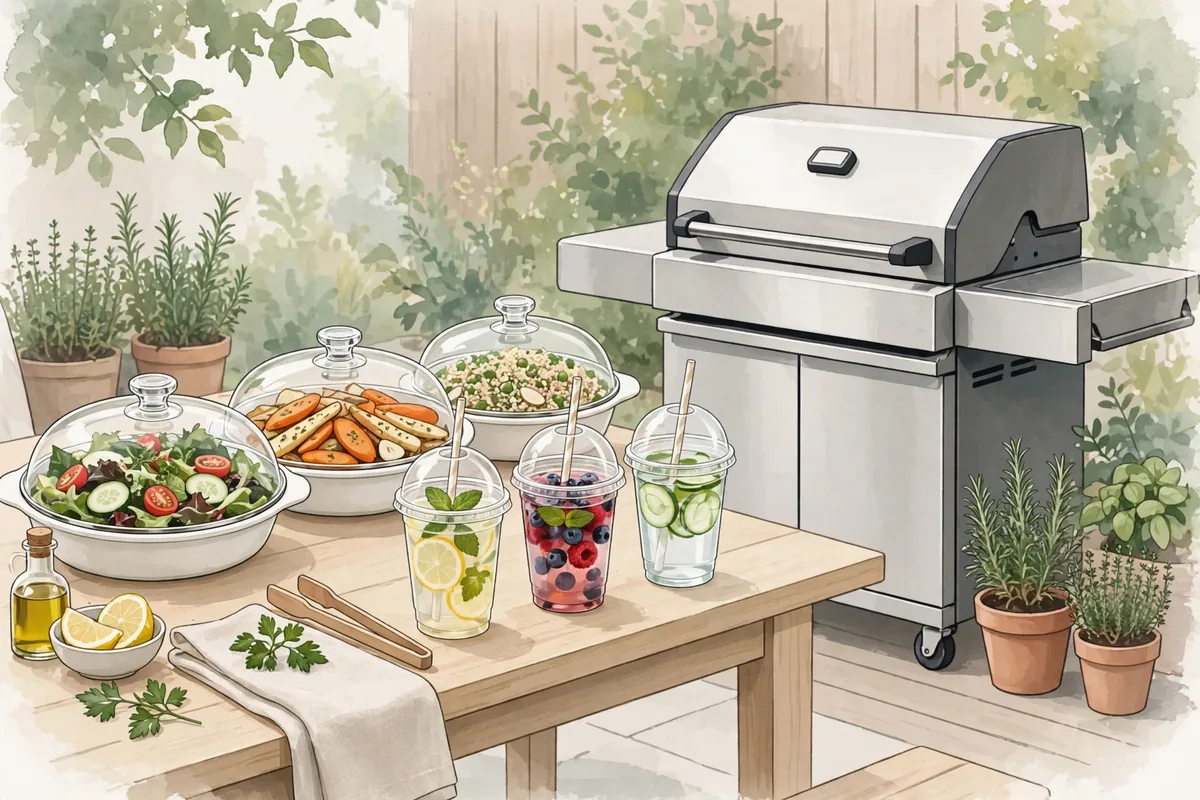
- Cover the spread. Keep side dishes, condiments, and desserts under mesh food covers or lids. Put out serving-size portions and refill from the kitchen rather than leaving everything exposed for hours.
- Manage the grill zone. Keep raw and cooked meat covered between flips. Wipe down prep surfaces — meat juices and sugary marinades on the side table broadcast scent.
- Lid every drink. Open cans and cups are the number-one route to mouth and throat stings. Use cups with lids and straws, and remind guests to check before sipping.
- Handle trash like it matters. Bag food waste immediately, tie bags shut, and use bins with tight lids placed away from seating. Assign the job to someone — unassigned trash duty means overflowing plates of wasp bait by dessert.
- Set a decoy station. Place a small dish of something sweet (diluted juice or overripe fruit) at the far corner of the yard, well away from guests. Foragers that find it first often recruit nestmates to the decoy instead of your table.
- Skip the floral perfumes and bright patterns if you are the host working the grill — strong scents and flower-like colors draw investigative visits.
Fans help more than people expect: a couple of oscillating fans around the seating area create air turbulence that makes it hard for wasps to fly steadily and land. It will not stop a determined forager, but it cuts casual visits noticeably.
When Wasps Show Up Anyway #
A calm, practiced response keeps a few foragers from becoming the main event:
- Do not swat. Swatting provokes defensive stinging, and a crushed wasp releases alarm pheromones that summon nestmates. Gently brush wasps away or stay still until they move on.
- Cover the food. Lids back on, dishes under covers. No reward, no reason to stay.
- Move the problem, not the party. If foragers are fixated on the serving table, relocate the table a few yards — wasps keyed to the old location will mill around it while guests eat undisturbed.
- Keep kids and dogs calm. Excited children flailing at wasps are the most common sting scenario at cookouts. Give kids the freeze-don’t-swat rule before the food comes out. Keep dogs away from the serving area — snapping at wasps earns muzzle stings.
- Know when to go inside. If you have clearly disturbed a nest — a sudden boiling cloud, multiple people stung at once — get everyone indoors promptly, covering faces. Do not go back out to “check” until activity dies down completely.
One useful piece of context for nervous guests: wasps can sting repeatedly without losing their stinger, unlike honeybees — why wasps sting more than once explains the difference and why calm retreat beats confrontation.
If Someone Gets Stung at the Barbecue #
Keep the response quick and boring — drama attracts an audience, not a solution:
- Move the person away from the food area if wasps are still active.
- Remove the stinger if there is one. Wasps and yellow jackets do not leave stingers; if a honeybee was the culprit, scrape it out sideways with a fingernail or card — do not squeeze it with tweezers.
- Clean with soap and water; pat dry.
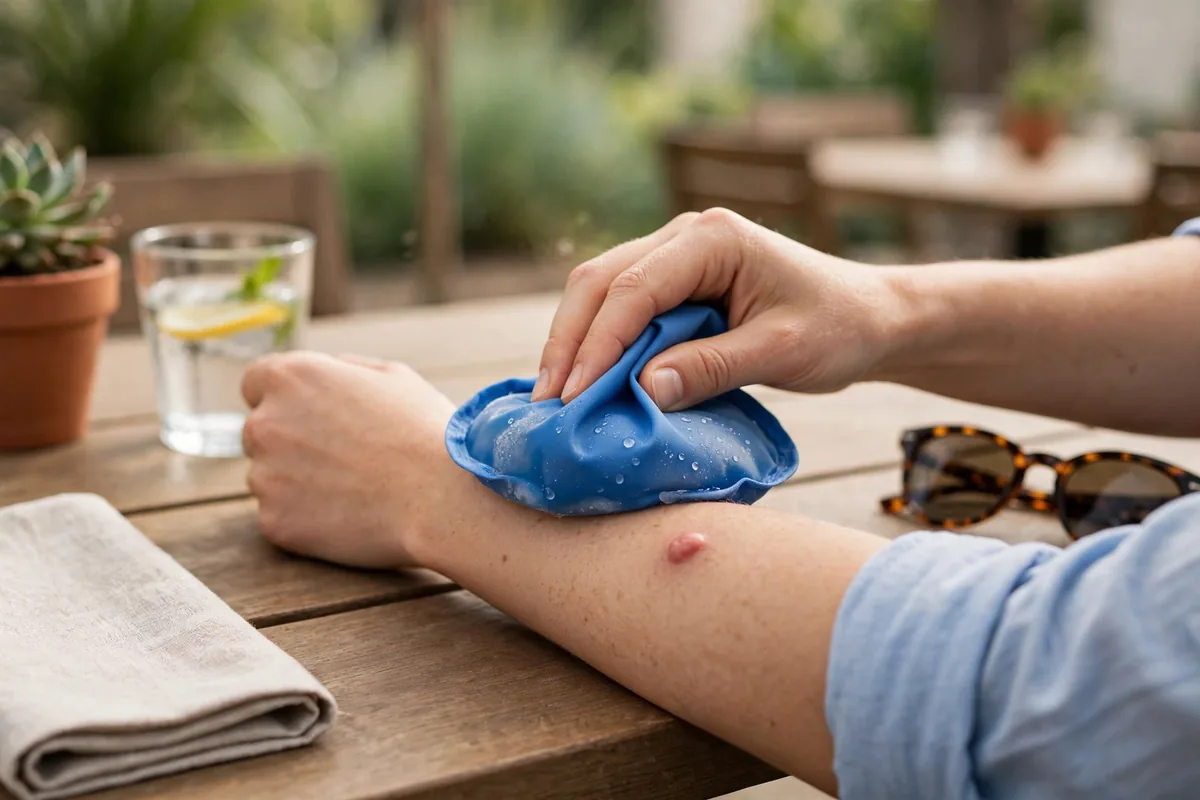
- Cool for 10 minutes — ice from the cooler wrapped in a cloth, or a cold can.
- Soothe with 1% hydrocortisone cream or calamine; an oral antihistamine per label directions helps itching and mild swelling.
- Watch for at least an hour. Trouble breathing, throat tightness, face/lip/tongue swelling, widespread hives, dizziness, or vomiting = call 911 and use a prescribed epinephrine auto-injector if the person has one.
Stings inside the mouth or throat (wasp in a drink) need urgent evaluation even if the person initially feels fine — internal swelling can progress quickly.
After the Party: Reset for Next Time #
Rinse bins, wipe down the grill and tables, and bring in any leftover food promptly — tonight’s residue is tomorrow’s wasp convention. Note where foragers concentrated; heavy, repeated traffic to one spot between parties suggests a nest you missed, and it is worth finding before the next cookout. If late summer is your peak entertaining season, consider scheduling the professional nest check in early summer, when nests are small and easy to handle, rather than fighting established colonies in August.
Warning signs: when to seek care #
Call 911 immediately if a stung person shows any of these red flags: trouble breathing or swallowing; swelling of the face, lips, tongue, or throat; widespread hives or rash; dizziness, fainting, or confusion; a racing heartbeat; or vomiting shortly after the sting. If the person carries a prescribed epinephrine auto-injector, help them use it right away — then still call 911, because symptoms can return in a second wave.
Get urgent care the same day for: stings inside the mouth, on the tongue, or near the eye; swelling that spreads well beyond the sting after 24 hours; red streaks, increasing pain, pus, or fever; or multiple stings at once.
Frequently asked questions #
What attracts wasps to a barbecue the most? #
Protein and sugar in combination — grilled meat, sweet sauces, soda, beer, desserts, and fallen fruit. Meat juices on prep surfaces and open trash amplify the signal. Covering food and managing trash removes most of the attraction.
Do citronella candles keep wasps away? #
Evidence is limited. Citronella may mildly deter some flying insects, but wasps motivated by food largely ignore it. Covered food, lidded drinks, fans, and trash management are far more effective than candles.
Should I spray wasps at the table with insecticide? #
No — spraying aerosol insecticide around food, guests, and children is unsafe, and agitated wasps sting more, not less. Remove the attractant, cover the food, and relocate the table instead. Save nest treatment for a calm evening with proper products and protective approach, or call a professional.
How do I tell if it is wasps or bees at my barbecue? #
Behavior is the giveaway: insects landing directly on meat and chewing off pieces are almost certainly yellow jackets or other wasps. Honeybees visit flowers and sugary spills but rarely work meat, and they are fuzzier and less aggressive around food. Either way, the safety steps are the same.
Medical and editorial note #
This guide is general information, not medical advice. Wasp sting allergies can be life-threatening — anyone with a known allergy should carry prescribed emergency medication and have a doctor-approved action plan. When a reaction looks serious, treat it as an emergency and call 911.


