
A lone star tick bite followed weeks later by hives or stomach pain after a burger dinner? That confusing pattern is alpha gal syndrome tick bite meat allergy in action — a food allergy to red meat and mammalian products that researchers link to tick bites. The allergy gets its name from galactose-alpha-1,3-galactose, a sugar molecule found in most mammals. Humans and other primates do not make it, so when the immune system starts flagging it, foods you have eaten safely for years can suddenly trigger reactions.
How Alpha-Gal Syndrome Develops #
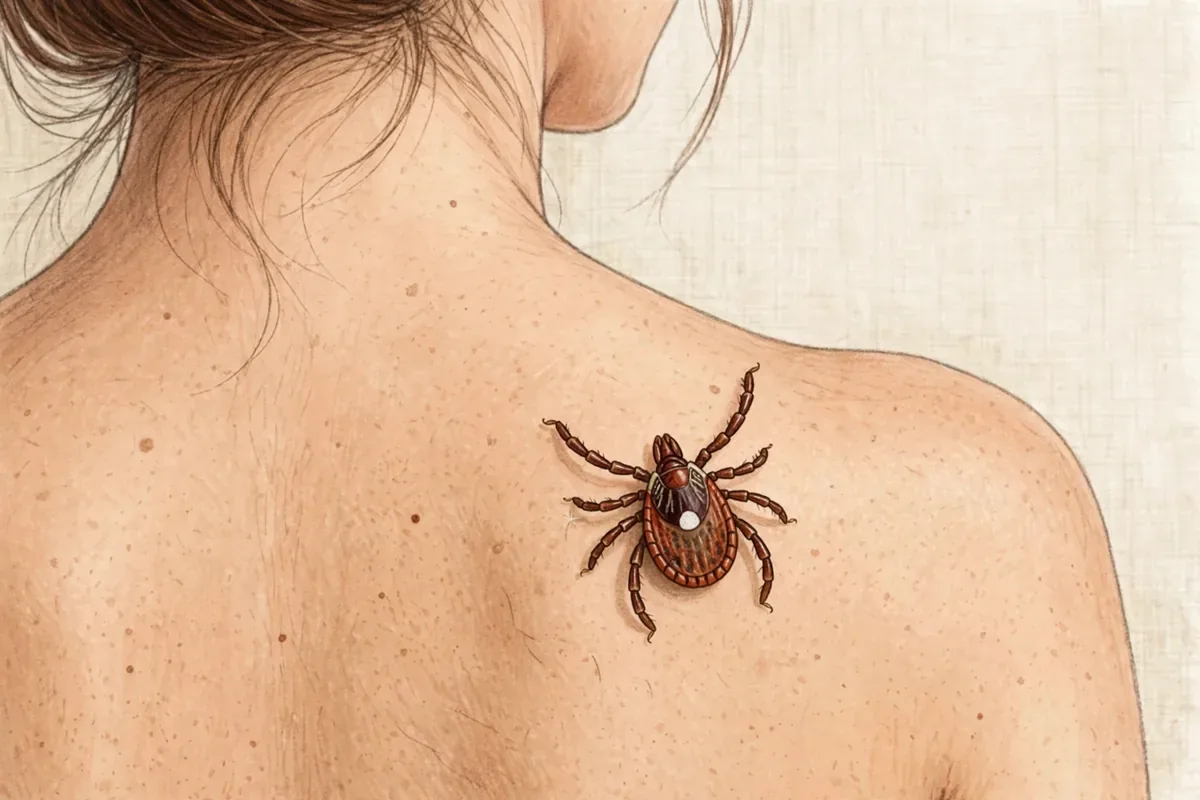
Scientists believe a tick bite can prime the immune system to react to the alpha-gal sugar. In the US, the lone star tick is the species most strongly associated with the syndrome, though researchers note other tick species may play a role. The female lone star tick is recognizable by a single white dot on her back; males have pale markings along the edges of the body instead.
The usual sequence:
- The bite. A tick bite introduces saliva components into the skin. Most people never notice the trigger event itself, because the allergy develops over the following weeks.
- Sensitization. The immune system begins producing IgE antibodies against the alpha-gal molecule. Blood levels can be measured, and many people are sensitized without ever developing symptoms.
- The first reaction. Typically weeks to months after the bite, eating beef, pork, lamb, or venison triggers symptoms — often in the middle of the night, hours after dinner.
- Escalation risk. Repeated tick bites can raise antibody levels and worsen reactions, which is why preventing further bites is part of management.
Alpha-gal is not an infection, and it is not contagious. You cannot catch it from someone who has it, and the bite itself is not “infected” — it is the immune response that changes. If you were bitten by a lone star tick, our guide on how to remove an attached tick safely covers proper removal, and tick bite aftercare for the next few weeks explains what to monitor afterward.
The Delayed Reaction Pattern #
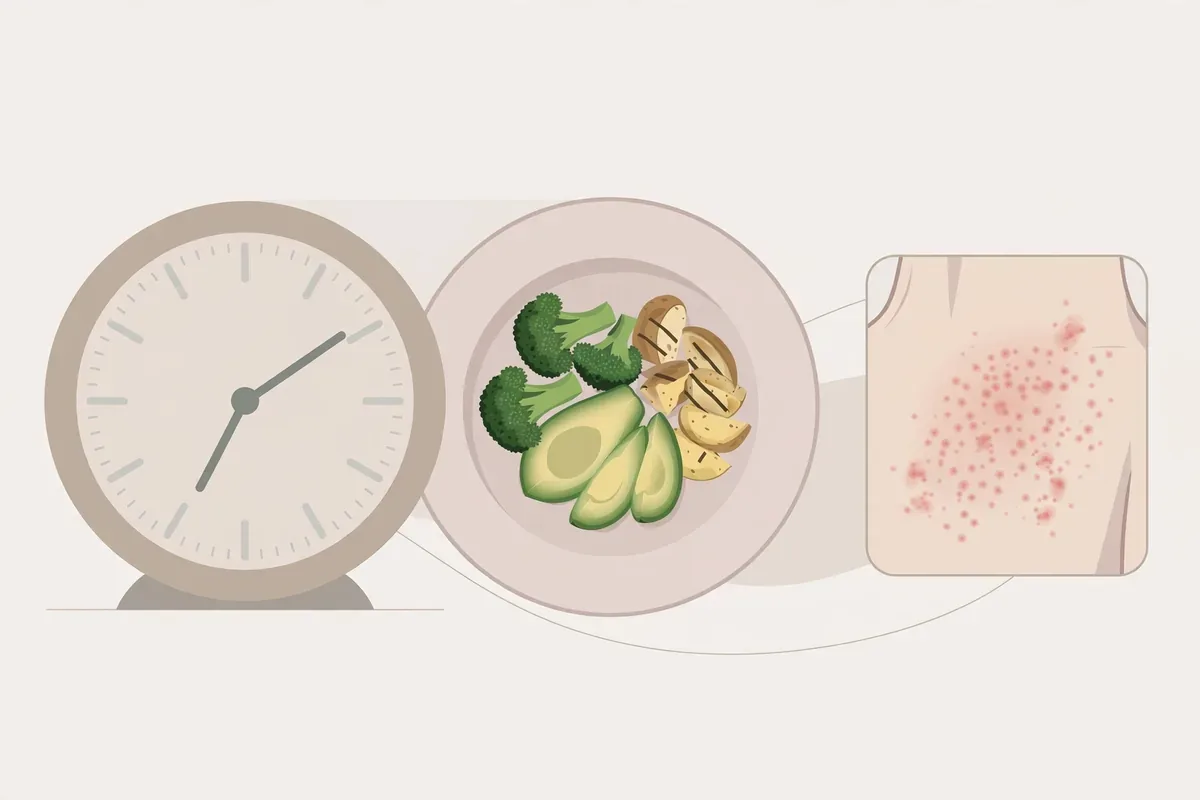
Alpha-gal reactions are famous for being delayed — symptoms usually begin 2 to 6 hours after eating, not during the meal. That delay is what makes the syndrome so confusing: you connect a rash or nausea at 2 a.m. with dinner at 7 p.m. only after it happens several times.
Common symptoms include:
- Hives or itchy rash. Raised, red welts that may spread across the torso and limbs. This is the most reported sign.
- GI distress. Stomach cramps, nausea, vomiting, or diarrhea — sometimes the only symptoms, which is why some cases get mistaken for a stomach bug or food poisoning.
- Swelling. Lips, face, or throat may swell. Any swelling of the lips, tongue, or throat is an emergency.
- Rarely, anaphylaxis. A small minority of people develop a full severe allergic reaction with breathing difficulty, dizziness, or blood pressure drop.
What contains alpha-gal? Beyond beef, pork, lamb, and venison, the molecule appears in some dairy products (in varying amounts), gelatin, and certain mammalian-derived medications or products. Sensitivity varies widely — some people react only to certain meats, others to dairy and gelatin too. Only your doctor and allergist can help you map your personal triggers; do not guess your way through this on your own.
One practical tip: keep a simple food-and-symptom log with timestamps. Because reactions are delayed, patterns only emerge when you can look back at what you ate 3 to 6 hours before each episode.
How Alpha-Gal Is Diagnosed #
There is no home test for alpha-gal syndrome. Diagnosis is a clinical process with your doctor.
What to expect:
- A history review. Your doctor will ask about tick bites, the timing of your symptoms relative to meals, and which foods seem connected. Bring your food-and-symptom log.
- A blood test. A lab test can measure alpha-gal-specific IgE antibodies. Elevated levels support the diagnosis, but the test is interpreted alongside your symptoms — a positive result alone does not always mean you will react.
- Ruling out other causes. Delayed hives and GI symptoms have many possible explanations, so your doctor may evaluate other conditions before settling on alpha-gal.
Do not start a strict elimination diet based on a guess. Cutting out all mammalian products without medical guidance can leave you nutritionally short and anxious. Get tested, then plan your diet with a professional.
Living With Alpha-Gal Day to Day #
There is no cure, so management means avoidance — but most people learn to navigate it well.
Diet adjustments:
- Swap proteins. Chicken, turkey, and fish are the usual staples, since poultry and seafood do not contain alpha-gal. Plant proteins work too.
- Read labels. Gelatin hides in gummy candies, marshmallows, and some medications. Dairy triggers vary by person — some tolerate hard cheeses or small amounts, others do not. Your allergist can help you test boundaries safely.
- Dining out. Call ahead or tell the server about the allergy. Grills that cook burgers and chicken on the same surface can cross-contaminate; ask for a clean surface or pan.
- Medications and products. Some drugs, vaccines, and medical products (such as certain heart valves or gelatin capsules) are mammalian-derived. Tell every doctor, dentist, and pharmacist about your alpha-gal status before any procedure or prescription.
Preventing repeat bites:
- Treat clothing. Permethrin-treated clothing is one of the most effective tick defenses for people who hike, hunt, or garden.
- Use repellent. EPA-registered repellents containing DEET, picaridin, or oil of lemon eucalyptus, applied per label directions, reduce bite risk.
- Do full-body tick checks. After any time outdoors, check ankles, waistline, armpits, scalp, and behind the ears.
Researchers estimate that hundreds of thousands of people in the US may be affected, and many cases likely go unrecognized. If your symptoms fit the delayed pattern, push for testing rather than suffering through unexplained episodes.
Warning signs: when to seek care #
Call 911 immediately if you experience trouble breathing or swallowing, swelling of the lips, tongue, face, or throat, widespread hives spreading fast, dizziness or fainting, a racing heartbeat, or a sense of impending doom. If you have been prescribed an epinephrine auto-injector, use it first, then call 911 — you may need more than one dose.
Seek urgent care or call your doctor promptly for hives or GI episodes that keep recurring after meals, any throat tightness that resolves but returns, or a known tick bite followed by new nighttime hives. If you have a confirmed diagnosis and your reactions are getting stronger — more foods triggering, shorter delays, harder-to-control hives — ask your allergist about an updated emergency plan. People with alpha-gal should discuss carrying an epinephrine auto-injector with their doctor, even if they have never had anaphylaxis.
Frequently asked questions #

How long after a tick bite does alpha-gal syndrome start? #
Symptoms typically appear weeks to a few months after the bite that triggers sensitization. There is no fixed timeline, and the delay makes it easy to miss the connection — many people never remember the specific bite. Researchers also note that additional tick bites can strengthen the immune response and make reactions worse, so bite prevention stays important even after diagnosis.
Can alpha-gal go away on its own? #
Evidence is limited, but some people’s antibody levels drop over time if they avoid further tick bites, and a few can eventually tolerate mammalian foods again. This should only be tested under an allergist’s supervision with repeat blood work — never by eating a steak to see what happens. There is currently no treatment that reliably reverses the allergy.
Is dairy safe if I have alpha-gal? #
It depends on the person. Dairy contains alpha-gal, but in smaller and more variable amounts than red meat. Some people react to milk, cheese, or ice cream; others tolerate dairy fine. Work through this with your allergist rather than assuming, and keep your food-and-symptom log going while you sort it out.
Which ticks are linked to alpha-gal in the US? #
The lone star tick is the species most strongly associated with alpha-gal syndrome in the United States — the adult female’s single white dot makes her easy to spot. Other tick species have been suggested in research from other parts of the world, but in the US, lone star ticks carry the strongest evidence. Any tick bite deserves proper removal and monitoring regardless of species.
Medical and editorial note #
This article is general information about alpha-gal syndrome and is not medical advice. If you suspect a tick bite has triggered new food reactions, talk to your doctor or an allergist about testing — only a healthcare professional can diagnose the condition and build your management and emergency plan.


