Deer tick bite vs paper wasp sting: Pictures, Key Differences, and What to Do
Direct answer: A deer tick bite is commonly painless and may involve an attached tick, while a paper wasp sting is usually immediately painful and can cause rapid redness and swelling. Severe allergic symptoms after a wasp sting are an emergency; a tick attachment should be removed promptly and followed for later tick-borne symptoms.
A deer tick is the common name often used for the blacklegged tick, Ixodes scapularis, in the eastern United States. The best evidence for a deer tick bite is an attached tick or a clearly documented tick exposure, not the appearance of a red bump after the tick is gone.
CDC recommends removing an attached tick as soon as possible with tweezers, grasping close to the skin and pulling upward with steady pressure. After removal, clean the skin and hands and watch for later symptoms. Rash or fever developing in the following days to weeks should be discussed with a healthcare professional.
Deer tick bite vs paper wasp sting: quick comparison
| Clue | Deer tick | Paper wasp |
|---|---|---|
| Immediate pain | Often absent | Usually sharp/burning |
| Behavior | May remain attached | Stings and flies away; can sting again |
| Exposure | Brush, woods, tall vegetation | Near exposed paper comb nests |
| Urgent risk | Later tick-borne illness | Anaphylaxis or multiple stings |
| First step | Remove tick | Leave nest area and assess allergic symptoms |
Paper wasp exposure clues
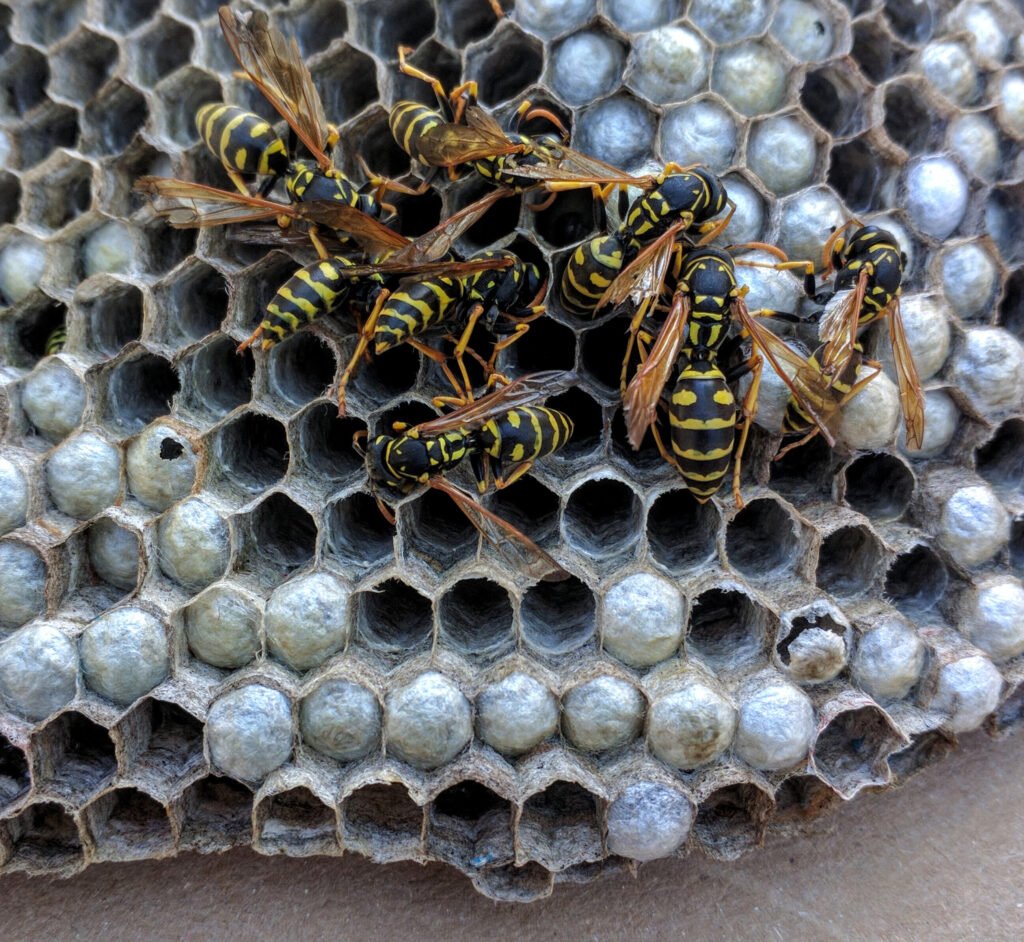
Paper wasps build exposed comb-like nests under eaves, railings, branches, and sheltered structures. They may defend the nest when disturbed. A sudden painful sting while working near such a nest strongly favors a wasp exposure.
Tick exposure clues
A tick can attach unnoticed after contact with vegetation. The bite itself may not hurt. Discovery of an attached tick is much more meaningful than the later skin spot.
Allergy warning signs
Breathing difficulty, facial or throat swelling, fainting, weak rapid pulse, or widespread hives can indicate anaphylaxis and require emergency treatment. A person with prescribed epinephrine should follow their emergency plan.
First aid
Leave the wasp area to prevent additional stings, wash the site, and use a cool compress. Most wasps do not leave a barbed stinger behind. For ticks, use tweezers and steady upward pressure for prompt removal.
A practical way to compare the exposure
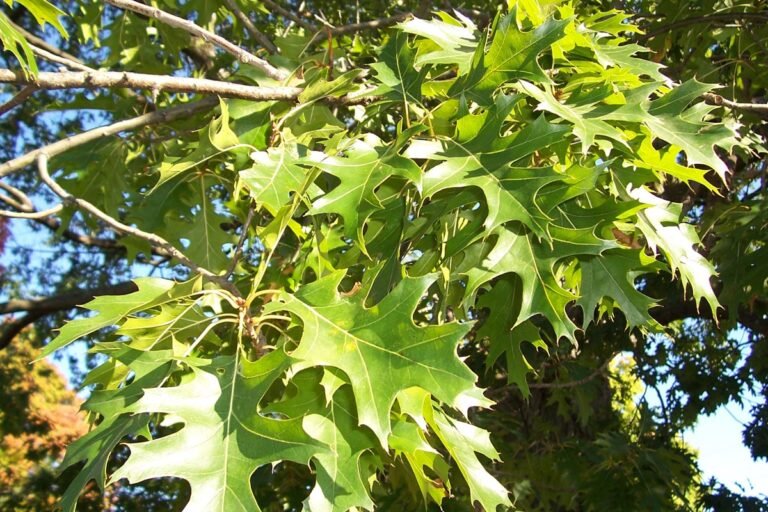
Start with what happened before the skin changed. Was an arthropod actually seen? Did it stay attached? Was there an immediate sharp pain? Were there several stings or bites? Did the exposure occur in brush, woods, around a nest, below oak trees, beside a building, or inside a bedroom? These clues often narrow the possibilities more effectively than color, swelling, or a single puncture mark.
For a possible deer tick exposure, note the date, geographic location, outdoor activity, where the tick was attached, and how long it may have been present. For a biting or stinging insect, note whether the insect was seen, whether the pain was immediate, whether multiple insects were present, and whether symptoms spread beyond the local site.
How skin reactions can evolve
A local reaction can become more noticeable during the first day. Swelling can increase after a sting, while an itchy papule can become redder after repeated scratching. This does not automatically mean the area is infected. Infection is more concerning when redness keeps expanding with increasing warmth, pain, pus, drainage, red streaks, or fever.
Tick-borne illnesses can follow a different timeline. The original tick-bite site may look minor while systemic symptoms develop later. A new expanding rash, fever, severe headache, facial weakness, palpitations, unusual fatigue, or joint symptoms after a recent tick bite should not be dismissed simply because the bite mark itself looks small.
Safe home care while the cause is uncertain
For a mild localized reaction, gently wash the area, apply a cool compress, avoid scratching, and use only label-directed over-the-counter products that are safe for the person. Do not cut, squeeze, burn, or apply bleach, concentrated essential oils, or other caustic substances to the skin. These approaches can cause additional injury and make the reaction harder to assess.
If a tick is still attached, removal takes priority over waiting for the redness to improve. If a flying insect or stinging arthropod is still nearby, leave the area to prevent additional stings rather than trying to capture it.
When to seek urgent or emergency care
Call emergency services for trouble breathing, swelling of the lips, tongue, mouth, or throat, fainting, confusion, weak rapid pulse, or widespread hives with other systemic symptoms. These can be signs of anaphylaxis after an insect sting. Multiple stings, a sting inside the mouth or throat, or rapidly progressive swelling also deserve urgent attention.
After a tick bite, urgent care may also be appropriate for severe neurologic symptoms, significant weakness, chest pain, severe shortness of breath, confusion, or other serious systemic illness. Persistent fever, rash, headache, or joint symptoms after a recent tick exposure should be evaluated even if they are not immediately life-threatening.
How to document the reaction
Take a photo in consistent lighting and include a ruler or other scale reference if possible. Record the date and whether the area is changing. A photo of the actual arthropod can be useful if it can be obtained safely, but do not delay tick removal or approach a nest just to get a better picture.
Photographs are most useful as a timeline. They do not replace a history, examination, or testing when a clinician thinks those are needed. Many unrelated bites, stings, and rashes share redness, swelling, papules, and itching.
Questions a clinician may ask
Be ready to describe the exposure location, date, whether an arthropod was attached, immediate pain versus delayed itching, number of lesions, fever, rash, dizziness, vomiting, breathing difficulty, facial swelling, headache, weakness, or joint symptoms. Travel matters because regional arthropods and infections differ.
Why a picture should not become a diagnosis
People naturally search online for bite pictures, but appearance alone has low specificity. A single red bump can follow a tick, mosquito, fly, mite, ant, spider, or minor skin irritation. A painful swollen site can follow many different stinging insects. Use pictures to understand broad patterns, then rely on exposure history, arthropod behavior, timing, and systemic symptoms to decide what to do next.
What the first few hours can tell you
The first few hours after an exposure can provide useful context. A tick may still be attached or may leave only a small local mark after removal. A venomous sting is more likely to be remembered because pain often starts at once, and a mite or other tiny biting arthropod may cause delayed itching without a visible culprit. Recording whether symptoms began in seconds, minutes, or many hours can help a clinician interpret the reaction later.
Immediate pain does not automatically mean a dangerous injury, and the absence of pain does not make an exposure harmless. The practical value of timing is that it helps distinguish mechanisms. Venom stings often create a fast inflammatory response. Tick-borne infections, by contrast, are not diagnosed from the immediate local spot and may cause systemic symptoms only after an interval.
What swelling means—and what it does not mean
Swelling is a normal inflammatory response to many bites and stings. A larger local reaction can look dramatic yet remain limited to the skin and nearby tissue. What matters is whether swelling is stable, improving, or rapidly progressing and whether it is accompanied by breathing difficulty, throat tightness, dizziness, fainting, vomiting, or widespread hives.
Swelling by itself does not identify the arthropod. A wasp sting, fire ant sting, deer fly bite, mite reaction, mosquito bite, and scratched tick site can all become red and swollen. That is why the article emphasizes the exposure story rather than a one-photo diagnosis.
How to reduce secondary skin infection risk
Repeated scratching can break the skin and introduce bacteria. Keep the area clean, trim fingernails, and avoid intentionally opening blisters or pustules. If clothing repeatedly rubs the area, use a clean loose covering when appropriate. Seek medical advice if the site becomes increasingly painful, hot, swollen, or starts draining pus, especially if fever develops.
Red streaking that travels away from a lesion, rapidly expanding redness with worsening pain, or systemic illness should be evaluated rather than repeatedly treated at home. An infection can occur after almost any break in the skin and should not automatically be blamed on venom or a tick-borne disease.
Why “treatment differences” usually start with the arthropod
If a tick is attached, the first treatment difference is simple: remove it. There is no equivalent removal step after a fly bite, mite exposure, ant sting, or most wasp stings once the insect has gone. Conversely, a severe allergic reaction after a sting requires immediate emergency management, while routine tick follow-up is usually focused on removal, exposure documentation, and monitoring for later symptoms.
These differences are more useful than trying to choose a cream based on appearance. Symptom-relief products can reduce itch or discomfort, but they do not identify the cause and they do not prevent every tick-borne or venom-related complication.
Medication cautions
Over-the-counter antihistamines, pain relievers, or topical anti-itch products are not appropriate for every person. Age, pregnancy, kidney or liver disease, other medicines, allergies, and chronic conditions can change what is safe. Follow package directions and ask a pharmacist or healthcare professional when there is uncertainty.
Do not use leftover antibiotics after a tick bite. CDC notes that post-exposure antibiotic decisions for Lyme disease apply only in certain circumstances and should be discussed with a healthcare provider. Similarly, people at risk for anaphylaxis should use prescribed epinephrine according to their emergency plan rather than relying on oral antihistamines as a substitute for emergency treatment.
Why children may need closer observation
Children may scratch more, have difficulty describing symptoms, or have a larger reaction relative to body size. Caregivers should pay attention to breathing, facial swelling, behavior changes, vomiting, fever, increasing pain, and the speed at which a reaction is changing. A sting inside the mouth or throat is particularly concerning because swelling can affect the airway.
For tick exposures, caregivers should perform a careful full-body check because a second small tick may be missed. Common hiding places include the hairline, behind the ears, armpits, waist, groin, behind the knees, and areas where clothing fits tightly.
Why older adults and people with chronic disease may need earlier advice
Older adults and people with cardiovascular disease, lung disease, immune suppression, or a history of severe allergy may tolerate systemic reactions less well. They may also take medicines that affect blood pressure, bleeding, or immune responses. A lower threshold for professional advice is reasonable when symptoms are more than mild and local.
What not to infer from a single puncture mark
People sometimes look for one puncture versus two punctures to identify a tick, ant, or spider. In real skin, puncture marks can be too small to see, obscured by swelling, changed by scratching, or caused by unrelated trauma. Counting punctures is therefore not a reliable diagnostic method.
The same caution applies to color. A red center, pale halo, dark scab, or swollen edge can have many causes. Use these features as descriptive information rather than as proof of a particular arthropod.
How geography and season change the odds
Blacklegged tick activity, fire ant range, deer fly abundance, wasp nesting cycles, and mite outbreaks vary by region and season. A reaction after yard work in the southern United States may have a different set of plausible causes than a reaction after hiking in the Northeast or raking oak leaves in the Midwest.
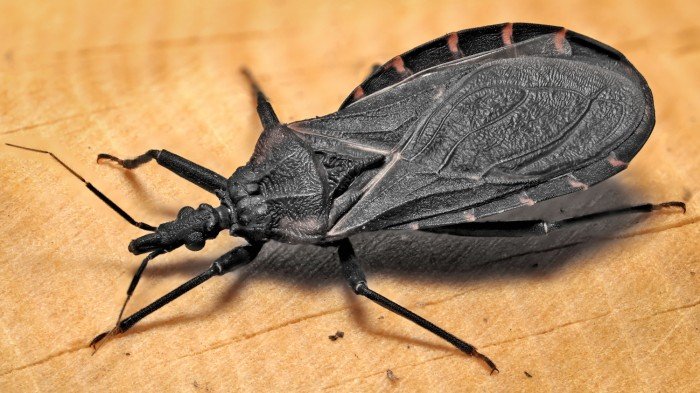
Travel history is especially important for kissing-bug and tick-borne disease concerns. Tell a clinician about recent trips, camping, hunting, gardening, outdoor work, and overnight stays in rural areas if those details are relevant.
When follow-up matters even after symptoms improve
A local bite or sting can improve while a later issue develops for an unrelated reason, so do not ignore new systemic symptoms simply because the skin looks better. After a documented tick bite, remember the exposure date if fever, rash, neurologic symptoms, or joint problems develop later.
After a severe allergic reaction, follow-up is also important because a clinician may recommend allergy evaluation, an emergency action plan, and access to epinephrine for future exposures.
Related StingHelp guides
- What Bit Me? identification guide
- Bite and sting first-aid hub
- Tick bite guides
- Bite warning signs and emergency red flags
Frequently asked questions
Do paper wasps leave a stinger behind?
Usually not. Paper wasps can sting repeatedly without leaving a barbed stinger like a honey bee typically does.
Which exposure hurts more immediately?
A paper wasp sting is much more likely to cause immediate sharp pain. Tick attachment is often painless.
Can both cause swelling?
Yes. Local swelling is possible after either exposure, so timing and arthropod behavior matter.
When is a wasp sting an emergency?
Breathing difficulty, throat or facial swelling, fainting, or widespread hives with systemic symptoms require emergency care.
What should I do with an attached deer tick?
Remove it promptly, clean the area, and watch for later rash or fever.
Can pictures identify the cause?
Not reliably. A witnessed wasp sting or attached tick is much more useful than a skin photo alone.
Authoritative references
- CDC — What to Do After a Tick Bite
- CDC — About Lyme Disease
- CDC — Treatment and Intervention for Lyme Disease
- Penn State Extension — Getting Rid of Paper Wasps, Yellowjackets, and Other Stinging Insects
- MedlinePlus — Wasp sting
- Mayo Clinic — Anaphylaxis first aid
Final self-check before you decide what happened
Before settling on an explanation, ask whether the proposed cause fits the exposure, timing, arthropod behavior, and symptom pattern together. If one of those pieces does not fit, keep the diagnosis open rather than forcing the skin reaction to match an online example. When symptoms are significant or the cause remains uncertain, professional evaluation is safer than repeated guessing.
Bottom line
A witnessed sudden sting near a paper-wasp nest and immediate pain favor a wasp. An attached arthropod after brush exposure favors a deer tick. Severe allergic symptoms are an emergency, while tick follow-up focuses on later rash, fever, and other systemic symptoms.
Educational information only. StingHelp cannot diagnose a bite, sting, allergic reaction, skin infection, or tick-borne disease from a photograph. Seek professional medical care for severe, rapidly worsening, unusual, or systemic symptoms.