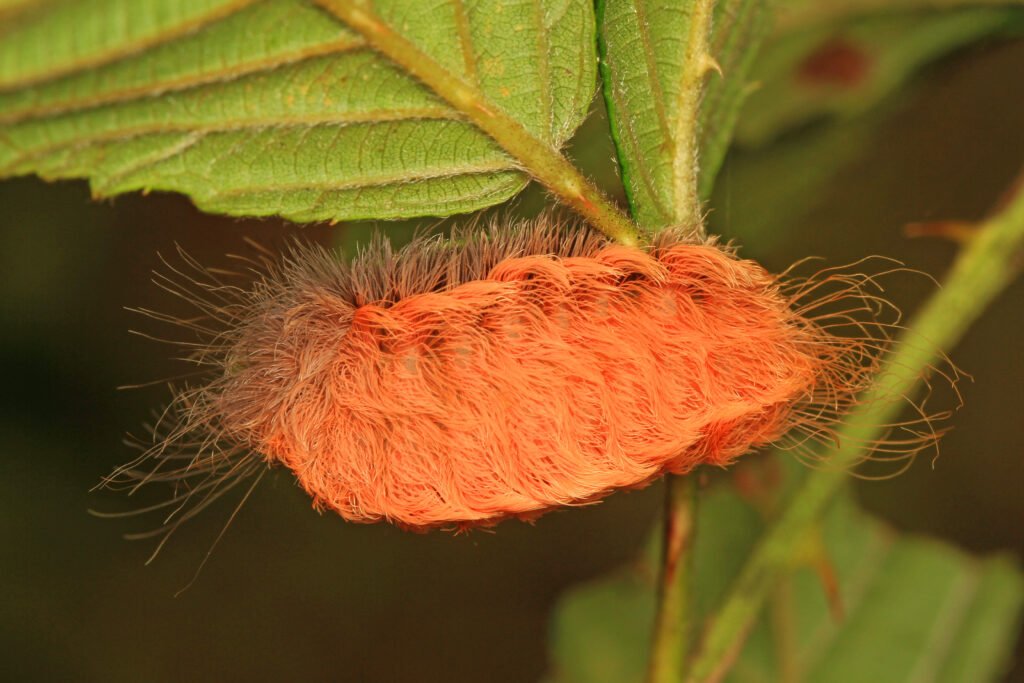
Direct answer: The biggest difference in culex mosquito bite vs puss caterpillar sting pictures is what caused the skin injury and what happens next. A culex mosquito feeds briefly and leaves rather than remaining attached. A puss caterpillar (asp) does not bite; venomous spines hidden beneath the hairs deliver venom when skin brushes or presses against the caterpillar. If the culprit was not seen, use exposure history, timing, pain versus itch, and systemic symptoms rather than diagnosing from a photo alone.
These two exposures can both leave a red spot, but the red spot is not a reliable species test. Many unrelated bites, stings, rashes, infections, and inflammatory skin conditions overlap visually. The safest approach is to identify the likely exposure, treat the skin gently, and watch for red flags.
Fastest practical clue
Culex mosquito: often evening or nighttime exposure near homes, yards, standing water, storm drains, and other mosquito habitat. Puss caterpillar (asp): trees, shrubs, yards, parks, outdoor furniture, clothing, or surfaces in areas where puss caterpillars occur, especially parts of the southern United States. If you saw the arthropod, save a clear photo if it can be done safely.
Culex mosquito bite vs puss caterpillar sting: quick comparison
| Clue | Culex mosquito | Puss caterpillar (asp) |
|---|---|---|
| How exposure happens | Feeds briefly and leaves rather than remaining attached. | Does not bite; venomous spines hidden beneath the hairs deliver venom when skin brushes or presses against the caterpillar. |
| Typical setting | Often evening or nighttime exposure near homes, yards, standing water, storm drains, and other mosquito habitat. | Trees, shrubs, yards, parks, outdoor furniture, clothing, or surfaces in areas where puss caterpillars occur, especially parts of the southern united states. |
| Typical skin clue | Small itchy red papules or wheals, sometimes several on exposed skin. | A painful burning or stinging rash at the contact area; linear or localized redness may reflect where the spines touched the skin. |
| Timing | Itch commonly appears soon after the bite and may persist for several days. | Pain is often immediate and can be intense, unlike the delayed itch typical of many mosquito bites. |
| Important risk | Some culex species can transmit west nile virus where infected mosquitoes circulate; the skin reaction itself cannot identify infection. | The injury is a venomous spine exposure, not a bite. severe pain, nausea, headache, muscle cramps, swollen lymph nodes, breathing difficulty, or a serious allergic reaction require medical attention. |
| First priority | Wash gently, cool the area, avoid scratching, and use label-directed itch relief when appropriate. | Avoid rubbing, use sticky tape to help lift visible residual spines when appropriate, wash the area, apply a cool pack, and seek medical advice for significant symptoms. |
What a culex mosquito exposure usually looks like
Small itchy red papules or wheals, sometimes several on exposed skin. The appearance can vary with a person’s immune response, scratching, prior exposures, age, and skin sensitivity. Because skin reactions overlap, a photo of the bump is less useful than a photo of the actual insect or arachnid and a clear account of where and when the exposure happened.
Itch commonly appears soon after the bite and may persist for several days. Some culex species can transmit west nile virus where infected mosquitoes circulate; the skin reaction itself cannot identify infection. This is why a dramatic-looking bump is not automatically more dangerous than a subtle one, and a small bump is not proof that an infection or systemic illness is impossible.
What a puss caterpillar (asp) exposure usually looks like
A painful burning or stinging rash at the contact area; linear or localized redness may reflect where the spines touched the skin. Pain is often immediate and can be intense, unlike the delayed itch typical of many mosquito bites. The skin can change over time, so compare symptoms at several time points rather than relying on one early photograph.
The injury is a venomous spine exposure, not a bite. severe pain, nausea, headache, muscle cramps, swollen lymph nodes, breathing difficulty, or a serious allergic reaction require medical attention. If a spider or caterpillar is seen, avoid handling it with bare hands. A clear photograph from a safe distance can be more useful than trying to capture it.
Appearance differences: what photos can and cannot tell you
For culex mosquito bite vs puss caterpillar sting pictures, pictures are best used to document progression and the actual arthropod when it is visible. They cannot reliably prove which species caused a lesion once the culprit is gone. Swelling, redness, puncture marks, blisters, and itching occur in many conditions.
Take a well-lit photo with a size reference, then repeat if the area changes. Mark the edge of expanding redness only if a clinician has advised that approach; do not draw conclusions from redness alone. Heat, pain, drainage, fever, or rapid progression are more important warning signs than exact color.
Pain vs itching: a useful clue
Culex mosquito reactions commonly emphasize itching or local swelling, while Puss caterpillar (asp) exposure may emphasize pain, burning, or other symptoms depending on the individual. However, this distinction is not absolute. Scratching can make an itchy bite sore, and mild venomous exposures can itch as they heal.
Pay special attention to severe or escalating pain that seems out of proportion to a small skin mark, new muscle symptoms, faintness, breathing trouble, or a rapidly worsening lesion. Those findings deserve medical evaluation rather than continued home comparison.
Exposure setting matters
Culex mosquito: Often evening or nighttime exposure near homes, yards, standing water, storm drains, and other mosquito habitat. Ask whether other people nearby had similar bites, whether repellents were used, and whether there was obvious insect activity.
Puss caterpillar (asp): Trees, shrubs, yards, parks, outdoor furniture, clothing, or surfaces in areas where puss caterpillars occur, especially parts of the southern united states. Consider clothing, bedding, stored equipment, firewood, gardening, and whether the skin was pressed against an object where the animal could have been hiding.
What to do immediately after a likely culex mosquito exposure
- Wash gently, cool the area, avoid scratching, and use label-directed itch relief when appropriate.
- Do not scratch, squeeze, cut, or repeatedly apply harsh disinfectants.
- Note the date, time, and location of exposure.
- Take a clear photo if swelling or redness is changing.
- Seek medical advice if symptoms become systemic, unusually painful, rapidly progressive, or associated with fever or neurologic symptoms.
What to do immediately after a possible puss caterpillar (asp) exposure
- Avoid rubbing, use sticky tape to help lift visible residual spines when appropriate, wash the area, apply a cool pack, and seek medical advice for significant symptoms.
- Remove rings, tight jewelry, or restrictive items near a rapidly swelling hand or limb.
- Do not apply a tourniquet, cut the skin, or try to suck out venom.
- If the animal can be photographed safely, do so without handling it.
- Call emergency services for breathing difficulty, collapse, severe weakness, confusion, or another life-threatening reaction.
When the comparison changes because symptoms are systemic
Once symptoms extend well beyond the skin, identifying the exact cause from the mark becomes less important than getting appropriate care. Systemic symptoms can include fever, severe headache, vomiting, widespread hives, facial or throat swelling, breathing difficulty, faintness, marked weakness, severe muscle pain or cramping, or neurologic symptoms.
A clinician may consider exposure history, geographic range, travel, medications, allergy history, infection risk, and alternative diagnoses. Do not delay evaluation while trying to make the photo “match” an internet example.
Could this be an infection instead?
Yes. Scratching can break the skin and allow bacteria to enter. Increasing warmth, tenderness, pus, spreading redness, red streaking, fever, or worsening pain can suggest infection and should be assessed, especially when symptoms are progressing rather than improving.
Not every red area is bacterial cellulitis, and antibiotics are not automatically needed for every bite. A healthcare professional should make that distinction when infection is a concern.
What not to do
- Do not diagnose a spider species or insect species from a red bump alone.
- Do not cut the skin, burn the area, or apply a tourniquet.
- Do not use leftover prescription medication or antibiotics without medical guidance.
- Do not ignore breathing difficulty, fainting, severe muscle symptoms, or rapidly progressive tissue changes.
- Do not handle a spider, caterpillar, or tick with bare hands just to obtain a better photo.
Prevention
For culex mosquito exposure: Repellent, screens, protective clothing, and standing-water control.
For puss caterpillar (asp) exposure: Do not touch fuzzy caterpillars, teach children to avoid handling them, and wear gloves when working around infested vegetation.
Reducing exposure is more reliable than trying to predict who will have a large local reaction. Keep living areas uncluttered, use screens and repellents appropriately, inspect stored gear, and teach children not to handle unknown arthropods.
Decision guide
Mild itch or small local bump only: gentle home care and observation may be reasonable.
Visible attached tick: remove promptly with fine-tipped tweezers and clean the area.
Immediate severe pain or venom-like symptoms: seek medical guidance rather than waiting for the skin mark to evolve.
Breathing difficulty, fainting, severe weakness, confusion, or rapidly worsening systemic symptoms: call emergency services.
Puss caterpillar injuries are spine envenomations
This distinction matters because the fuzzy-looking caterpillar does not need to bite. Venomous spines beneath the hairs can penetrate skin with brief contact. Rubbing the area can drive remaining spines deeper, so gentle decontamination is preferred.
Removing residual spines
Texas A&M guidance describes using adhesive tape to help lift stout residual spines from the skin. Afterward, wash gently and use a cold pack. Severe pain, breathing difficulty, widespread symptoms, or an allergic reaction warrants medical attention.
Why the pain pattern is different
A mosquito bite usually becomes itchy after the insect has left. Puss caterpillar contact often causes immediate burning or intense pain because venomous spines penetrate the skin. The discomfort may radiate beyond the contact area, and some people develop headache, nausea, swollen lymph nodes, or muscle symptoms.
First-aid sequence after caterpillar contact
- Do not rub the area.
- Use adhesive tape gently to lift residual stout spines if visible or suspected.
- Wash with soap and water.
- Apply a wrapped cold pack for comfort.
- Seek medical advice for severe pain or widespread symptoms, and emergency help for breathing difficulty or collapse.
Why children need special caution
Children may pick up fuzzy caterpillars because they look soft. Teach children never to handle unfamiliar hairy caterpillars. If a child has significant pain, vomiting, facial swelling, breathing difficulty, or widespread symptoms after contact, seek medical care promptly.
How to monitor the area over the next 24–72 hours
Take a clear baseline photograph in good lighting and note the approximate size. Recheck symptoms rather than repeatedly poking or squeezing the skin. Improvement in itch, redness, or tenderness is reassuring; rapidly increasing pain, expanding discoloration, drainage, fever, or new systemic symptoms are reasons to seek medical care.
Sleep, hydration, scratching, heat, exercise, and repeated topical products can all change how a lesion looks. Avoid switching among many creams because irritation from the products themselves can make the comparison harder.
Common mimics
Folliculitis, bacterial skin infection, contact dermatitis, hives, shingles, ingrown hairs, other arthropod bites, and minor wounds can all be mistaken for a bite or sting. When the culprit was not seen, keep the differential broad. A clinician may need to examine the lesion, ask about travel and exposures, and occasionally perform testing based on the overall presentation.
Special situations
Seek earlier advice for bites near the eye or mouth, large reactions in very young children, rapidly progressive symptoms during pregnancy, immune suppression, significant bleeding disorders, or severe chronic heart or lung disease. Medication allergies and current prescriptions can also affect which over-the-counter products are safe.
How to describe the exposure to a clinician
Give a short timeline: when the skin was normal, when the bite or sting was noticed, whether the culprit was seen, where the exposure happened, how quickly pain or itch began, and which symptoms appeared later. Mention travel, outdoor work, pets, stored clothing, gardening, firewood, and any similar symptoms in other household members.
Also list medicines, allergies, pregnancy status, immune suppression, diabetes, and prior severe reactions to bites or stings. These details can change the urgency and the safest treatment choices.
When telehealth may not be enough
A photo or video visit can be useful for mild stable symptoms, but in-person evaluation is more appropriate when vital signs, neurologic symptoms, severe pain, rapidly progressive swelling, tissue injury, dehydration, or breathing problems need assessment. If symptoms are severe or rapidly worsening, use urgent or emergency care rather than waiting for a routine virtual appointment.
Frequently asked questions
Can you identify a culex mosquito bite or puss caterpillar (asp) exposure from a picture?
Usually not with certainty. Pictures can document the pattern and progression, but the actual arthropod, exposure setting, timing, and symptoms are more reliable clues.
Which one is usually itchier?
Culex mosquito reactions commonly cause itching, while Puss caterpillar (asp) exposure may cause more pain or burning. Individual reactions vary, so symptom intensity alone is not diagnostic.
Which one is more dangerous?
Risk depends on the exact species, location, symptoms, medical history, and whether systemic illness develops. A small skin lesion can still deserve care if serious symptoms occur.
Should I use antibiotics?
Not automatically. Antibiotics treat bacterial infection, not the bite or venom itself. Seek medical evaluation when infection signs are developing.
When should I seek urgent care?
Seek urgent evaluation for severe or escalating pain, extensive swelling, fever with significant illness, muscle cramping, neurologic symptoms, rapidly worsening tissue changes, or other concerning systemic symptoms.
When is it an emergency?
Call emergency services for trouble breathing, throat or facial swelling, collapse, severe weakness, confusion, or another rapidly progressing life-threatening reaction.
Related StingHelp guides
- What Bit Me? Identification Guide
- Bite & Sting First Aid
- Mosquito Bite Warning Signs
- Tick Bite Warning Signs
Authoritative references
- Texas A&M — Puss Caterpillar or Asp
- Texas A&M — Puss Caterpillar Facts
- MedlinePlus — Insect Bites and Stings
- CDC — Preventing Mosquito Bites
- CDC — What to Do After a Tick Bite
Bottom line
For culex mosquito bite vs puss caterpillar sting pictures, start with the exposure story, not the color of the bump. Culex mosquito and Puss caterpillar (asp) differ in how exposure occurs, the typical timing of symptoms, and the red flags that matter most. Use gentle first aid, avoid harmful home remedies, document progression, and seek medical care when pain, swelling, fever, breathing problems, neurologic symptoms, or tissue changes are significant or worsening.
Educational information only. This article cannot diagnose a bite, sting, infection, allergic reaction, or venom exposure from a photograph and does not replace professional medical care.