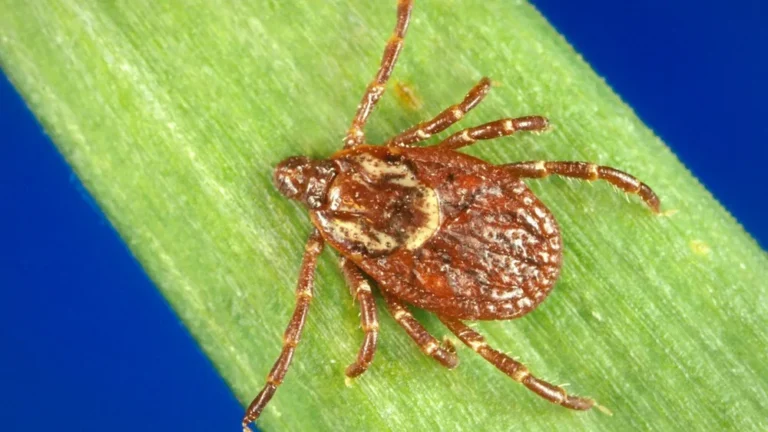
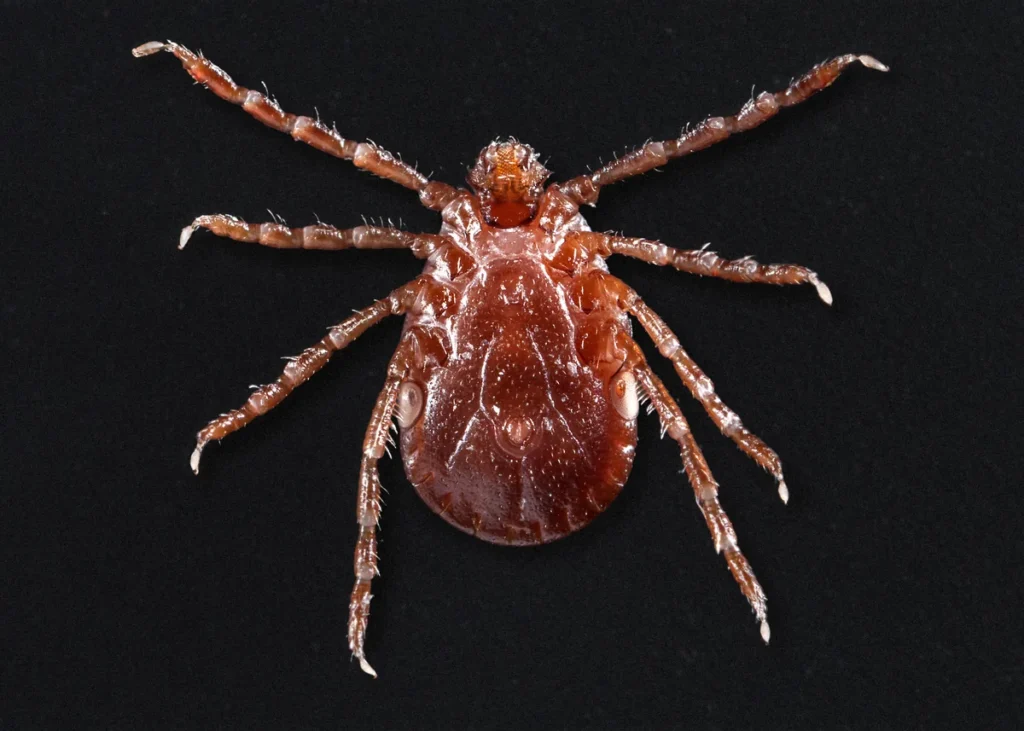
Direct answer: blacklegged (deer) tick and Asian longhorned tick can both leave a small red or irritated area, but they differ in species, geography, host-seeking behavior, and disease context. With blacklegged (deer) tick, the tick can attach and feed for hours or days before detaching or being removed. With Asian longhorned tick, the tick attaches and takes a blood meal over time; this species can reproduce rapidly in some environments. A skin mark alone cannot reliably identify which tick was involved.
The most useful comparison uses the actual tick, exposure location, body size and markings, attachment history, and regional distribution—not a photograph of the bite.
Quick comparison
| Clue | blacklegged (deer) tick | Asian longhorned tick |
|---|---|---|
| Type | hard tick species | hard tick species |
| Exposure setting | wooded, brushy, leaf-litter, yard, trail, pet, and wildlife exposure in regions where Ixodes scapularis occurs | pastures, livestock areas, yards, wildlife habitat, and outdoor settings in U.S. regions where Haemaphysalis longicornis has become established |
| Attachment | the tick can attach and feed for hours or days before detaching or being removed | the tick attaches and takes a blood meal over time; this species can reproduce rapidly in some environments |
| Best evidence | an attached or recovered tick is much stronger evidence than redness alone | a recovered tick identified as Asian longhorned tick plus compatible geography is stronger evidence than skin appearance |
| Risk context | blacklegged ticks can transmit Lyme disease, anaplasmosis, babesiosis, and other pathogens in relevant regions. Risk depends on geography, species confirmation, and exposure details. | public-health significance varies by region. In the United States, the species is monitored closely; disease risk must be interpreted using local surveillance and not assumed from a bite. |
Why the attached tick matters more than the bite mark
an attached or recovered tick is much stronger evidence than redness alone. For Asian longhorned tick, a recovered tick identified as Asian longhorned tick plus compatible geography is stronger evidence than skin appearance. Redness after removal is common and nonspecific. Color, swelling, a central dot, or mild itch cannot identify the species.
Where blacklegged (deer) tick is more plausible
wooded, brushy, leaf-litter, yard, trail, pet, and wildlife exposure in regions where Ixodes scapularis occurs. attachment is usually painless and may be missed. The exposure story should be interpreted together with geography and season.
Where Asian longhorned tick is more plausible
pastures, livestock areas, yards, wildlife habitat, and outdoor settings in U.S. regions where Haemaphysalis longicornis has become established. attachment may be painless and can be noticed only during a body check. Regional distribution and the recovered tick are stronger clues than lesion appearance.
How tick size and life stage can confuse identification
Ticks change size and appearance across larval, nymphal, adult, unfed, and engorged stages. Very small ticks can be difficult to identify without magnification. A photograph of the dorsal side of a recovered tick can be more useful than a photo of the skin.
What the skin reaction can and cannot tell you
A small red bump, mild tenderness, itch, or irritation can occur after many tick bites. These findings do not diagnose Lyme disease, ehrlichiosis, rickettsiosis, or another infection. A large or changing rash should be assessed in the context of timing, symptoms, geography, and known tick exposure.
First aid for blacklegged (deer) tick
remove an attached tick promptly with fine-tipped tweezers, clean the site, and document date and geographic location. Avoid twisting aggressively, burning, smothering, or coating the tick with chemicals in an attempt to make it release.
First aid for Asian longhorned tick
remove an attached tick with fine-tipped tweezers, clean the skin, and record location and date. Wash hands and the bite site afterward. Record when and where exposure likely occurred.
Should you save the tick?
A clear photograph can be useful, and some clinicians or local health departments may advise saving a removed tick depending on the circumstances. Do not delay medical care while arranging identification.
Disease context: blacklegged (deer) tick
blacklegged ticks can transmit Lyme disease, anaplasmosis, babesiosis, and other pathogens in relevant regions. Risk depends on geography, species confirmation, and exposure details. A bite is an exposure event, not a diagnosis.
Disease context: Asian longhorned tick
public-health significance varies by region. In the United States, the species is monitored closely; disease risk must be interpreted using local surveillance and not assumed from a bite. Symptoms and local epidemiology matter more than anxiety about the bite itself.
When to seek medical care after a tick bite
Contact a clinician for high fever, severe headache, neurologic symptoms, an expanding or unusual rash, significant weakness, repeated vomiting, or rapidly worsening illness after credible tick exposure. Tell the clinician the exact exposure date and geographic location.
When emergency care is appropriate
Call emergency services for severe breathing difficulty, fainting, confusion, major neurologic symptoms, or other rapidly progressive life-threatening symptoms. Exact tick identification should never delay urgent care.
Inflammation versus infection at the bite site
Local redness and tenderness immediately after removal can be inflammatory. Increasing pain, pus, red streaking, fever, or progressive warmth can suggest secondary bacterial infection and deserve evaluation.
A practical monitoring plan
Note the date, body location, estimated attachment time if known, geographic location, outdoor setting, and any photo of the tick. Over the following days and weeks, pay attention to fever, headache, rash, unusual fatigue, muscle aches, neurologic symptoms, or a meaningful change at the bite site.
Children, pregnancy, older adults, and immune compromise
The basic removal method is the same, but medication choices and thresholds for medical advice can differ. Pregnant people, immunocompromised people, and those with serious chronic illness should contact a clinician sooner if systemic symptoms develop.
Prevention for blacklegged (deer) tick
use EPA-registered tick repellents, protective clothing, body checks, pet checks, and showering after outdoor exposure.
Prevention for Asian longhorned tick
use standard tick precautions, pet/livestock checks, repellents, and habitat management.
Common mistakes to avoid
- Do not diagnose tick species from the skin mark.
- Do not burn or smother an attached tick.
- Do not crush a tick with bare fingers.
- Do not take antibiotics solely because a red bump appeared.
- Do not assume every circular rash is the same condition.
- Do not ignore systemic symptoms because the bite site looks small.
Frequently asked questions
Can blacklegged (deer) tick and Asian longhorned tick bites look identical?
Yes. The local skin response often overlaps. The tick itself, geography, and exposure context are more useful.
Does attachment duration identify the species?
No. Attachment duration may affect some transmission risks but does not identify the tick species.
Can I tell infection risk from how swollen the bite is?
No. Local swelling does not measure pathogen transmission.
What information should I bring to a clinician?
Bring the exposure date, geographic location, a photo of the tick if available, estimated attachment details, and a list of new symptoms.
Related StingHelp guides
Authoritative references
Why these two tick species are medically different
Blacklegged ticks (Ixodes scapularis) are established human-biting vectors in the United States, especially across the eastern half of the country. CDC lists several pathogens they can transmit, including the agents of Lyme disease, anaplasmosis, babesiosis, hard tick relapsing fever, ehrlichiosis caused by Ehrlichia muris eauclairensis, and Powassan virus disease. That does not mean every blacklegged tick bite causes disease, but the species has a well-established role in human tick-borne infections.
The Asian longhorned tick (Haemaphysalis longicornis) is an invasive species. USDA APHIS reports that it has spread across many areas in the eastern United States and can form large infestations on animals. Its public-health significance in the United States is not identical to that of the blacklegged tick. The species is important for surveillance and animal health, but a person should not assume that a bite has the same disease profile as a blacklegged tick bite.
Current U.S. distribution is a practical identification clue
CDC describes the blacklegged tick as widely distributed across the eastern United States. The risk of encountering it is especially relevant in wooded, brushy, grassy, and leaf-litter habitats. Nymphs and adult females are the stages most likely to bite people. Distribution maps and local surveillance are more useful than skin appearance when deciding whether this species is plausible.
USDA APHIS reports Asian longhorned ticks in numerous areas of the eastern United States, extending from New York south toward Georgia and west toward Missouri. Because the species continues to be monitored, local and state reports may change over time. For a U.S. reader, the county or state of exposure can therefore be an important piece of the identification puzzle.
Why an Asian longhorned tick infestation can look unusual
Asian longhorned tick populations in the United States are parthenogenetic, meaning a female can reproduce without mating. This allows populations to build rapidly under suitable conditions. Large numbers can be found on livestock, pets, wildlife, and in the surrounding environment. A person who encounters one Asian longhorned tick may therefore be in an area where additional ticks are present.
This biological feature does not diagnose the tick from a bite mark. It matters mainly because it explains why heavy infestations can develop and why animal owners, farmers, veterinarians, and public-health agencies may take the species seriously even when a human bite causes only a small local reaction.
What the actual tick can tell you that the skin cannot
Both species are hard ticks and both can leave a small, nonspecific attachment site. A red papule, central punctum, mild swelling, or itch does not reliably distinguish them. Identification is more useful when based on the recovered tick’s morphology, life stage, location, and expert or public-health resources.
If the tick is safely available, take clear photographs of the dorsal and ventral sides with a size reference. Do not crush the tick with bare fingers. A clinician does not need perfect species identification before treating serious symptoms, so do not delay medical evaluation while trying to obtain an expert identification.
Blacklegged tick disease context
CDC identifies the blacklegged tick as a vector of multiple human pathogens. Lyme disease is one of the best-known concerns, but it is not the only one. Babesiosis, anaplasmosis, Powassan virus disease, hard tick relapsing fever, and other infections can also be relevant depending on geography and exposure. Disease risk varies with the pathogen, tick stage, region, and feeding circumstances.
The appearance of the local bite site cannot tell whether transmission occurred. A person who develops fever, an expanding or unusual rash, severe headache, marked fatigue, weakness, neurologic symptoms, or other systemic illness after a credible exposure should contact a healthcare professional and mention the tick bite and location.
Asian longhorned tick disease context in the United States
USDA APHIS emphasizes that the Asian longhorned tick is an important invasive pest and a major animal-health concern. It can spread pathogens affecting livestock, including Theileria orientalis Ikeda in cattle. APHIS also notes that U.S. Asian longhorned ticks are not competent vectors of Borrelia burgdorferi, the primary agent of Lyme disease, or Anaplasma phagocytophilum, the agent of human granulocytic anaplasmosis.
CDC has reported laboratory evidence that Asian longhorned ticks can be competent vectors for Heartland virus under experimental conditions, while also noting uncertainty about their role in natural human transmission in the United States. That distinction is important: laboratory competence does not automatically mean that a bite in the community represents the same human disease risk as a known, established vector.
What to do after either tick is removed
CDC recommends prompt removal of attached ticks. Grasp the tick close to the skin with clean fine-tipped tweezers and pull upward with steady, even pressure. Clean the bite area and your hands afterward. Check the rest of the body because another tick may be attached, especially after time in grassy, brushy, or wooded environments.
Avoid petroleum jelly, heat, nail polish, or similar methods intended to make the tick detach. These approaches can delay removal. If mouthparts remain and cannot be removed easily, the skin will often heal while the body gradually expels them. Seek medical advice if the site becomes increasingly painful, drains pus, develops red streaking, or is associated with fever.
Why commercial tick testing is not a treatment decision
CDC generally advises against using commercial testing of the removed tick to decide whether a person needs treatment. A positive pathogen result in a tick does not prove transmission to the person, while a negative result can create false reassurance. If illness develops, clinical symptoms and exposure history should guide medical evaluation rather than waiting for a tick-testing report.
When many ticks are present
Multiple attached ticks increase the importance of a careful full-body check and source control. With blacklegged ticks, repeated outdoor exposure in a high-risk habitat can lead to more than one attachment. With Asian longhorned ticks, large environmental or animal infestations can occur. Inspect pets and livestock when relevant and follow veterinarian or pest-management guidance rather than applying animal pesticides directly to human skin.
Numerous tick attachments, difficult removal from the eyelid or another sensitive area, or systemic symptoms after exposure justify earlier medical advice. The number of bites does not identify the species, but it can change the practical urgency of checking for ongoing exposure.
Questions that help a clinician interpret the exposure
- Where did the exposure occur—state, county, or travel destination?
- Was the tick attached, and was an attachment duration estimated?
- Was one tick found or were many present?
- Is there a clear photograph or retained specimen?
- Did fever, headache, rash, muscle aches, unusual fatigue, weakness, or neurologic symptoms develop?
- Was there exposure to livestock, pets, wildlife, brush, leaf litter, or tall grass?
Updated authoritative sources
- CDC: What to Do After a Tick Bite
- CDC: Where Ticks Live
- USDA APHIS: Asian Longhorned Ticks
- CDC: Heartland Virus Causes and Spread
Bottom line
blacklegged (deer) tick and Asian longhorned tick should be distinguished using the recovered tick, geographic range, setting, and later clinical course. The bite mark by itself is not a reliable species test.
Educational information only; not a diagnosis or substitute for individualized medical care.