
Do Cluster Flies Bite? Fall Home Guide
Mid-October brings a familiar scene: big, sluggish flies crawling across the windowsills, buzzing heavily when disturbed, and gathering in sunny rooms. The instinctive question…
You are getting bitten indoors, you cannot find the culprit, and the bites seem to come out of nowhere, often at night. When the usual suspects do not fit, the…
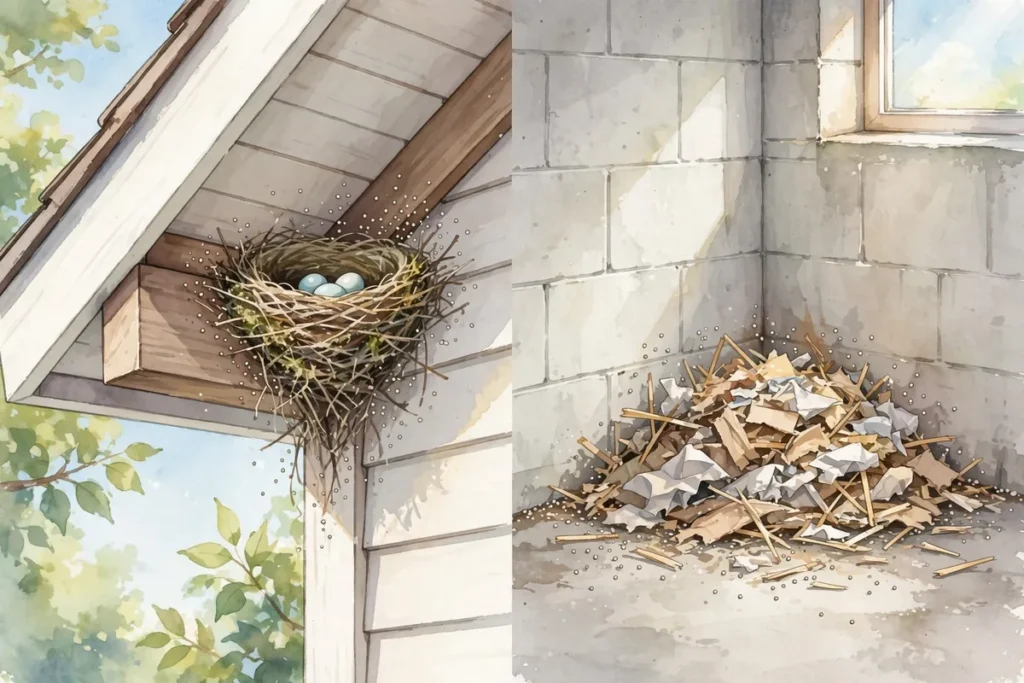
You are getting bitten indoors, you cannot find the culprit, and the bites seem to come out of nowhere, often at night. When the usual suspects do not fit, the question bird mites vs rodent mites: bites and clues is worth asking. These are two different groups of tiny mites that end up biting people for the same reason: their normal hosts are gone, and humans are the nearest warm body.
Here is the direct answer: bird mites normally feed on birds and invade homes from nests in eaves, attics, vents, or chimneys, usually after the birds leave or die. Rodent mites normally feed on rats and mice and show up where rodents are or were active, in wall voids, basements, and around warm pipes. The bites feel similar, small itchy welts, often where clothing is snug, but the way you tell them apart is not the bite at all. It is the source: find the host’s address, and you have identified the mite.
This article explains why source-first identification works, profiles each mite group, compares them side by side, walks you through a room-by-room clue hunt, and lays out safe next steps. It does not include indoor pesticide instructions or rodent poison guidance: those jobs belong to licensed pest professionals, and this article will tell you exactly when to call one.
With most biting pests, you identify the insect and then find where it lives. With bird and rodent mites, the reliable order is reversed: find where the host lived, and the mite identifies itself.
The reason is biological. These mites are barely visible to the naked eye, often well under a millimeter, and the species that bite humans look nearly identical without high-power microscopy. Even professionals need an expert with taxonomic keys to separate them with certainty. But their ecology is distinctive: bird mites arrive from bird-associated sites, rodent mites from rodent-associated sites. The Illinois Department of Public Health’s guidance on mites affecting humans groups them exactly this way, by host, because that is the practically useful distinction.
There is a second reason the source matters more than the bite. Neither bird mites nor rodent mites can sustain themselves on human blood. They bite people opportunistically while searching for a proper host, and the infestation ends when the source is resolved and the mites die off, which typically takes a couple of weeks. That means your investigation has a finish line: find the nest or the rodent activity, address it properly, and the biting stops. Chasing the mites themselves, with sprays or foggers, treats the symptom while the source keeps producing.
A final framing point: these mites do not hop or fly. They crawl, and they usually travel only a few yards from the nest. Bites concentrated in certain rooms, especially rooms adjacent to the source, are themselves a clue pointing back toward it. Our bite and sting clue checklist can help you log which rooms are affected and when, which turns a vague complaint into a map.
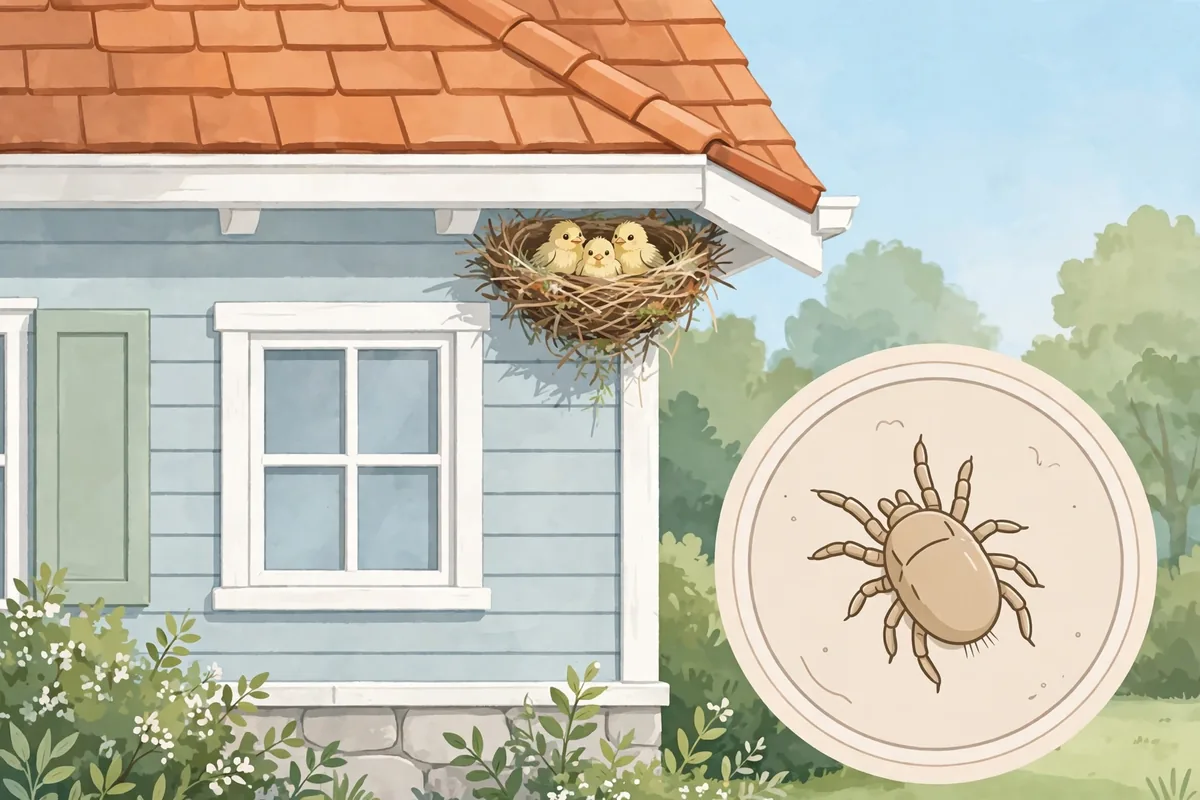
Bird mites are mites that normally parasitize birds: chickens, pigeons, sparrows, and starlings are the common wild-bird hosts in American homes. The species most often involved are the northern fowl mite (Ornithonyssus sylviarum), the tropical fowl mite (Ornithonyssus bursa), and the chicken mite (Dermanyssus gallinae), sometimes called the red poultry mite.
Their habits differ in ways that matter for your search. The northern fowl mite lives on its host bird and can bite day or night; it survives off the host for only about two to three weeks. The chicken mite is the opposite: it hides in cracks and crevices near the nest during the day and feeds at night, and it is a champion survivor, able to endure starvation for many weeks, with some sources documenting survival up to 34 weeks. That endurance is why a long-abandoned nest can still be producing biters months later.
The classic bird mite scenario runs like this. Birds nested in your eaves, attic, chimney, wall void, or a vent in spring. The young fledged and the adults left, or a bird died in the nest. The mites, suddenly hostless by the thousands, disperse through the structure, often dropping down wall voids or traveling along framing into the rooms below or beside the nest. The greatest impact is felt in rooms closest to the entry point. Bites often appear where clothing fits snugly: waistline, underarms, sock lines, bra lines.
Timing gives bird mites away. Problems often start in late spring through fall, tracking the bird nesting calendar, and they frequently begin shortly after you notice the birds are gone. If your mystery bites started a week or two after the starlings left the attic vent, that timing is diagnostic weight, not coincidence.
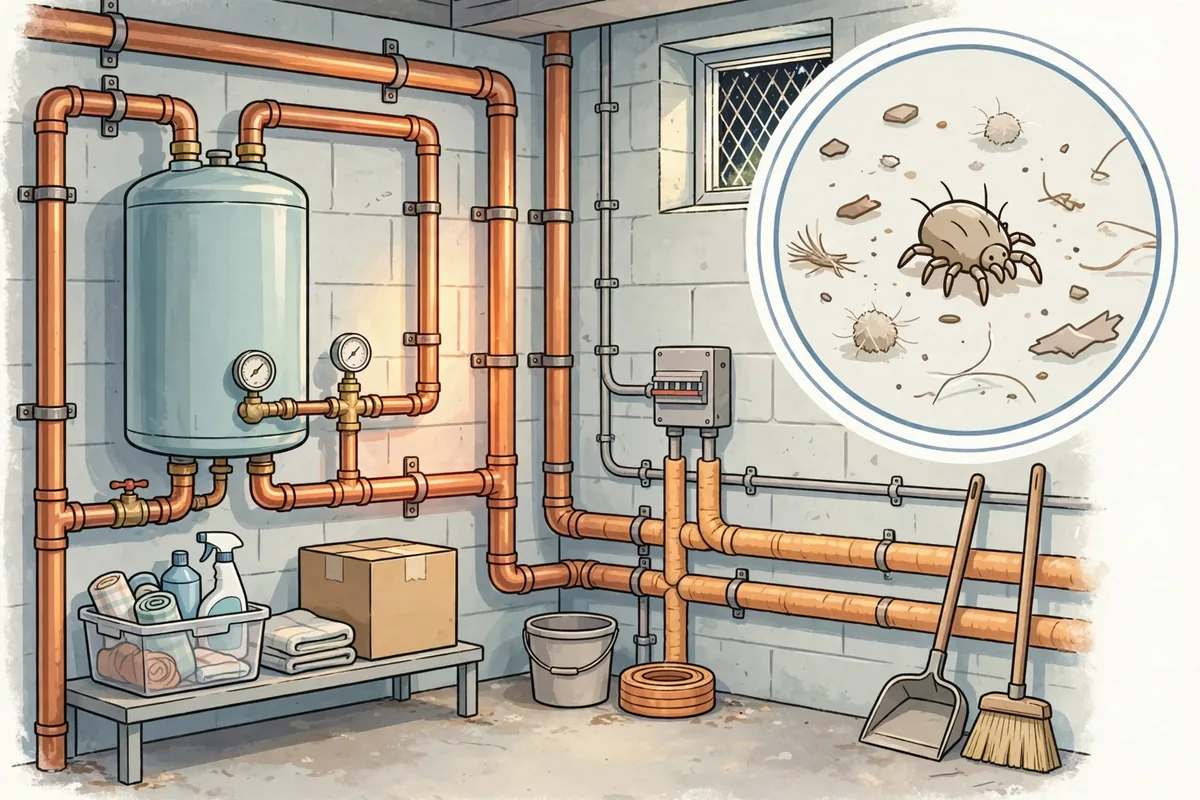
Rodent mites are the parallel story with a different host. The species that readily bite humans are the tropical rat mite (Ornithonyssus bacoti), the house mouse mite (Liponyssoides sanguineus), and the spiny rat mite (Laelaps echidnina). The tropical rat mite is the one vector-control districts report identifying most often in homes, and its presence almost always indicates rodent activity in the building.
Tropical rat mites do not live on the rats; they live in the nests and in cracks and crevices near them. When the rats die or abandon the nest, sometimes because of a control effort elsewhere in the building, the mites leave the nest seeking a new host, and that is when people get bitten. They are most active at night, and like the bird mites, they cannot sustain themselves on human blood: they generally die off within two to three weeks after the rodents are gone.
The house mouse mite prefers mice and favors warm places where rodents live: around pipes, furnaces, and water heaters. Its bite often produces a rash around the bite site. The spiny rat mite feeds on rats at night and hides by day in cracks near rat nests and resting places.
The classic rodent mite scenario: mice or rats have been active in wall voids, the basement, the crawl space, or the attic. You may have heard scratching, found droppings, or noticed gnaw marks, or a previous occupant dealt with rodents and the mites are the leftover. Then the itching starts, often at night, concentrated in rooms near the rodent harborages. Fall is prime season, as rodents move indoors seeking warmth, which is why this question peaks in autumn.
| Feature | Bird mites | Rodent mites |
|---|---|---|
| Normal hosts | Birds: pigeons, sparrows, starlings, chickens | Rats and mice |
| Key species | Northern fowl mite, chicken mite, tropical fowl mite | Tropical rat mite, house mouse mite, spiny rat mite |
| Source sites | Nests in eaves, attics, chimneys, vents, wall voids | Rodent nests in wall voids, basements, attics, near warm pipes |
| Trigger event | Birds fledge, migrate, or die in the nest | Rodents die, leave, or are removed |
| Off-host survival | 2 to 3 weeks for northern fowl mite; chicken mite far longer | About 2 to 3 weeks after rodents are gone |
| Active hours | Varies: northern fowl mite day or night; chicken mite nocturnal | Mostly nocturnal |
| Bite pattern | Anywhere on body; often where clothing is snug | Anywhere on body; often where clothing is snug |
| Seasonal peak | Late spring through fall, tracking nesting | Fall, tracking indoor rodent movement |
| Rooms affected | Closest to the nest entry point | Closest to rodent harborages |
| Identification | Expert microscopy; species nearly identical to the eye | Expert microscopy; species nearly identical to the eye |
Notice how similar the bite rows are. That similarity is the whole argument for source-first identification: the bites will not separate these groups, but the address of the nest will.
Let us be honest about the limits. Bird and rodent mite bites typically appear as small, red, itchy bumps or welts. Unlike flea bites, which favor the ankles and lower legs, mite bites can appear anywhere on the body, often where clothing constricts: waistbands, underarms, around socks and undergarments. The itching can be intense, and scratching can break the skin.
What the bites cannot tell you is which mite is responsible. They also cannot reliably distinguish mites from several other small biters: bed bugs, scabies, and even strong reactions to other insects can look similar. This is why dermatologists and pest professionals alike ask about the environment before the skin. If someone offers you a confident species identification from a bite photo alone, treat that confidence as the warning sign it is.
What the bites can tell you is timing and geography. Nighttime predominance fits both mite groups, since several key species feed at night. Room concentration is genuinely informative: bites limited to the bedroom under the attic, or to the rooms above the basement utility area, point toward the source above or below. New bites appearing after the source event, birds fledging or rodent activity ceasing, fit the hostless-mite dispersal story. Log all of it: dates, rooms, times of night. Patterns emerge from logs that memory smooths over.
One more honest note on health risk. Bird mites are not considered significant transmitters of disease to humans; the problem is the dermatitis and the secondary infections from scratching. For rodent mites, the evidence linking them to human disease transmission is limited: the house mouse mite has been associated in rare reports with rickettsialpox, but this is uncommon, and the evidence base is thin. Neither group is in the same risk category as ticks. The medical priority is managing the skin and stopping the source, not fearing infection.
Work this like an investigator, from the outside in.
Start outside. Walk the perimeter and look up. Check eaves, soffits, gutters, and rooflines for old nests or nesting debris. Look at vents, dryer exhausts, and chimney caps for feathers, droppings, or nesting material. Check window air-conditioner units and the gaps around them. Note any place birds were active this year even if they are gone now; an empty nest is still a source until it is dealt with.
Check the attic and upper voids. With a flashlight, look for abandoned nests, feathers, and droppings near the eaves and around vent penetrations. Note which rooms sit below or beside any nest site; those are your predicted bite rooms, and the prediction should match your bite log.
Check the basement, crawl space, and utility areas. Look for rodent evidence: droppings, gnaw marks, nesting material like shredded paper or insulation, rub marks along walls, and food caches. Pay attention to warm zones around furnaces, water heaters, and pipe chases, favored by the house mouse mite. Listen for scratching at night.
Check wall voids indirectly. You cannot see inside walls, but you can map them. Bites concentrated on one side of a room, or in rooms sharing a wall with a chimney chase or pipe run, suggest the void between. A pest professional has tools, borescopes, monitors, for confirming what you suspect.
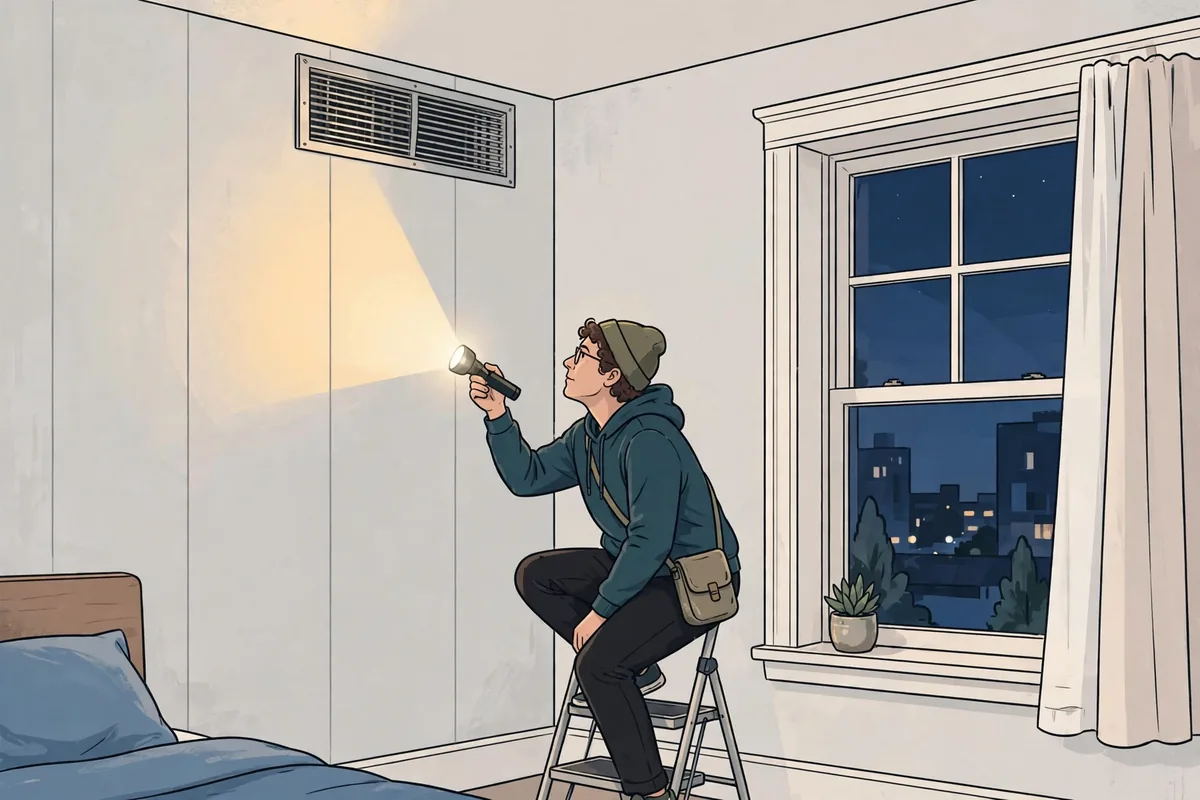
Inspect at night with a flashlight. Several of these mites are nocturnal feeders that retreat to cracks by day. Examining walls near heat sources, heating ducts, and bedding areas after dark, when they are active, is the standard detection advice from vector-control agencies. Look for movement: tiny specks crawling on light-colored surfaces near the suspected source.
Collect, do not squash. If you find specimens, press clear tape over them gently, mount the tape on white paper, and label it with the date and location. A taped sample lets a professional or extension entomologist identify the mite under magnification. Crushed smears are much less useful.
The response follows the source, and the two paths diverge here.
If the source is an abandoned bird nest: the nest needs to go, but timing and method matter. Do not disturb an active nest with eggs or chicks; many bird species are legally protected, and the humane and legal move is to wait until the nest is genuinely abandoned. Once abandoned, removal is a job for a pest professional or wildlife operator, who can also treat the void appropriately and advise on exclusion: screening vents, capping the chimney, sealing the eave gaps the birds used. After proper source removal, the remaining mites die off within weeks because they cannot live on humans.
If the source is rodent activity: this is professional territory. Do not handle rodent carcasses, droppings, or nesting material with bare hands, and do not deploy poisons yourself; poisoned rodents die in wall voids and create exactly the hostless-mite scenario you are trying to end, along with odor and secondary pest problems. A licensed pest professional handles rodent exclusion and removal, and addresses the mite aftermath as part of the job. Sealing entry points, gaps around pipes, foundation cracks, and utility penetrations is the long-term fix that prevents recurrence.
What you can safely do yourself: vacuum thoroughly and often in affected rooms, focusing on edges, crevices, and upholstery, and seal and discard the bag or empty the canister outdoors immediately. Launder bedding in hot water and dry on high heat. Reduce clutter near the suspected source to deny hiding places. These measures suppress the biters while the source is being resolved; they do not replace source resolution.
What not to do: do not apply insecticides indoors on your own, especially total-release foggers, which scatter mites deeper into voids and expose your household to chemicals without reaching the nest. Do not tear open walls yourself. And do not assume the problem is delusional just because you cannot see the mites; they are genuinely near-microscopic, and the dispersal pattern after host loss is well documented by public health agencies.
For bite symptom care while the source is being addressed, our bird mite bite treatment guide covers soothing measures and the signs that a bite needs clinical attention.
Mite bites themselves are a dermatitis problem, but skin that is repeatedly scratched can develop complications. See a clinician promptly if you notice:
Call 911 for difficulty breathing, facial or throat swelling, or dizziness after any bite or sting, which can signal anaphylaxis. For a broader map of bite warning signs beyond mites, our straw itch mite warning signs page covers a related tiny-biter scenario with similar escalation rules.
How long will the biting last after the birds or rodents are gone?
Typically two to three weeks for most of these species, because they cannot sustain themselves on human blood and die off without their proper host. The chicken mite is the exception that proves the rule: it can survive starvation far longer, so an unresolved nest site can keep producing biters for months. If biting continues well past three weeks with no new host activity, the source probably has not been fully resolved, or the source was misidentified.
Can bird or rodent mites infest my hair or live on my body?
No. Unlike lice, these mites do not live on humans. They visit the skin to feed and retreat to cracks, crevices, and nesting material. You will not find a breeding population in your hair or on your body, and treatments aimed at the person rather than the source miss the point. The infestation lives in the structure, not on you.
Will the mites spread to my neighbors or my car?
Unlike bed bugs, these mites are not known for hitchhiking on people or belongings to new locations. They crawl short distances from the nest and do not colonize new buildings the way bed bugs do. The risk is essentially confined to the structure containing the source. That said, in multi-unit buildings, mites can travel through shared wall voids to adjacent units, which is worth mentioning to neighbors and the building manager.
Can I see bird or rodent mites without a microscope?
Barely. They are at the edge of naked-eye visibility: under good light, on a light surface, you might perceive them as tiny moving specks, sometimes described as pepper-like dots. Positive identification to species requires high-power microscopy by someone trained in mite taxonomy. For practical purposes, you do not need the species name; you need the source address, which your investigation can establish without ever seeing a mite clearly.
Do I need to throw away my mattress or furniture?
Almost certainly not. Because these mites live in and around the host’s nest site rather than in your belongings, discarding furniture is an expensive response to the wrong target. The documented resolution path is source removal plus time: once the nest is gone or the rodents are excluded, the mites die off within weeks. Save the replacement budget; spend it on the professional who finds the source and seals the entry points.
Medically reviewed by Dr. Sarah Jones, MD.
This article is for informational purposes only and isn’t medical advice. If you’re worried about a bite or sting, talk to a healthcare professional.
Dr. Jones oversees StingHelp’s clinical verification process. Every guide is systematically evaluated against active Centers for Disease Control and Prevention (CDC), Environmental Protection Agency (EPA), and American Academy of Allergy, Asthma & Immunology (AAAAI) medical consensus standards to ensure symptom distinctions and care recommendations are clinically sound.
Explore physician-reviewed first-aid procedures, identification clues, and symptom comparisons for other common outdoor bites and stings.
Mid-October brings a familiar scene: big, sluggish flies crawling across the windowsills, buzzing heavily when disturbed, and gathering in sunny rooms. The instinctive question…
You found something tiny and white, and now the question is bed bug eggs vs flea eggs: identification guide territory. Getting this right matters…
Intense itching in the pubic area is distressing, and the first question most people ask is what is causing it. Two parasites sit at…