The reasoning is tempting. Professional exterminators use heat to kill bed bugs, and a hair dryer produces heat, so why not aim one at the mattress seams? The question does a hair dryer kill bed bugs gets asked constantly on pest forums, and the honest answer is more nuanced than a simple yes or no.
A hair dryer can kill bed bugs it directly heats to lethal temperatures. But “can kill” and “controls an infestation” are very different things. The method is unreliable, it scatters bugs into new hiding places, and it carries genuine fire and electrical hazards. Cornell University’s entomology program publishes a cautious, carefully limited protocol for the technique, and even that protocol treats it as a supplemental tool, never a standalone strategy. This article separates the three heat tools people confuse (clothes dryer, hair dryer, heat gun), walks through Cornell’s measured protocol, and explains the risks nobody mentions.
The Logic Behind the Question
The question is reasonable because the underlying science is sound. Heat kills bed bugs. Unlike many folk remedies, which rely on invented mechanisms, the hair dryer idea starts from a real lethal mechanism: sustained high temperature denatures the proteins in an insect’s body, and no bed bug population has ever developed resistance to being cooked. Professional whole-room heat treatments, which raise a space to around 140 degrees Fahrenheit and hold it there with monitoring equipment, are among the most reliable bed bug interventions in existence.
The leap from professional heat treatment to a handheld hair dryer is where the trouble starts. A professional rig delivers controlled, measured, sustained heat to an entire room, with temperature probes verifying that the coldest hiding places reach lethal levels. A hair dryer delivers a narrow jet of hot air to one spot at a time, with no measurement, no sustained exposure, and a powerful fan that can blow insects into new territory. The principle is the same. The execution is not.
Understanding this gap matters because the internet tends to flatten it. “Heat kills bed bugs” becomes “my hair dryer kills bed bugs” becomes “I don’t need an exterminator.” Each step in that chain drops a critical qualification, and the final version is the one that leaves people with a bigger infestation and, in the worst cases, a fire.
The Heat That Kills Bed Bugs: The Numbers
Lethality is a function of temperature and time together, not temperature alone. The key thresholds, drawn from published entomology research, are worth knowing precisely.
Adult bed bugs begin dying at around 113 degrees Fahrenheit with sufficient exposure. Eggs are tougher: they need roughly 118 to 122 degrees Fahrenheit to die reliably. This gap matters enormously, because any heat method that kills adults but leaves eggs alive has only pruned the infestation, not ended it. Professional treatments target about 140 degrees Fahrenheit sustained for hours, measured at the hardest-to-heat spots, precisely to guarantee that eggs in the deepest harborages are destroyed.
Why the Numbers Make Hair Dryers Tricky
A hair dryer on high can easily produce air above 140 degrees Fahrenheit at the nozzle. That sounds sufficient until you consider what happens between the nozzle and the bug. Hot air cools rapidly as it spreads and mixes with room air. A crack in a bed frame a few inches from the nozzle may receive far less heat than the thermometer reading at the outlet suggests. Wood, fabric, and stuffing absorb heat and shield the insects inside them. The bug at the bottom of a seam experiences a fraction of the temperature you think you are delivering.
This is why Cornell’s protocol insists on measuring the actual temperature at a realistic working distance, not trusting the dryer’s settings. Heat that is not measured is heat you are guessing about, and guessing is not a pest control strategy. If you are still confirming what is biting you, review how long insect bites usually last to match your symptoms to the pest before investing effort in any heat method.
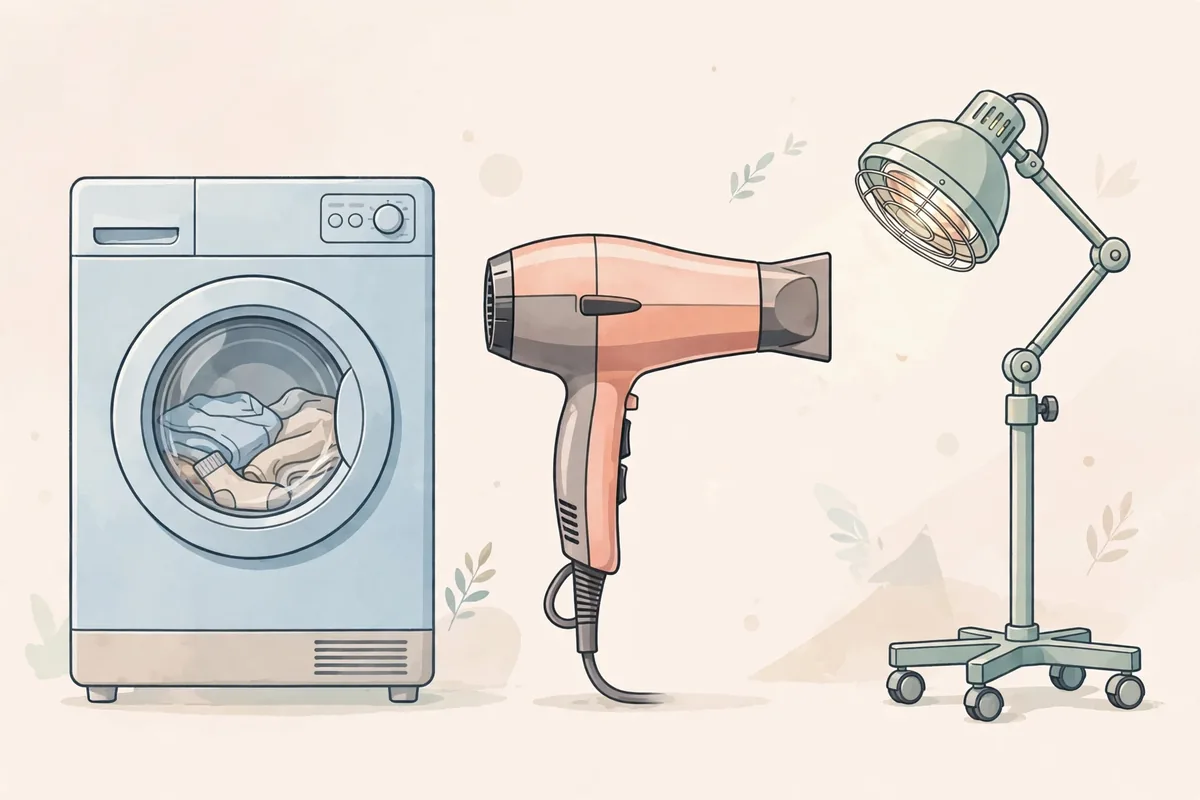
Three Heat Tools, Three Very Different Verdicts

Most confusion around this topic comes from treating all heat tools as interchangeable. They are not. Each has a distinct verdict based on effectiveness and safety.
| Tool | How it delivers heat | Effectiveness vs bed bugs | Safety profile | Verdict |
|---|---|---|---|---|
| Clothes dryer (high, 30+ min) | Heated tumbling air, enclosed | Excellent: kills all stages incl. eggs in fabrics | Very safe when used normally | Best DIY heat method |
| Hair dryer (low speed, high heat) | Narrow jet of hot air | Unreliable: kills only bugs directly heated; misses eggs in deep harborages | Moderate: burn, electrical, and fire risks | Supplemental spot tool only |
| Heat gun | Extremely hot concentrated air (often 500F+) | Dangerous overkill | Severe: ignites fabrics, melts materials, causes burns | Never use for bed bugs |
| Professional whole-room heat | Controlled sustained heat with probes | Most reliable single intervention | Handled by trained technicians | Gold standard for whole spaces |
The clothes dryer deserves emphasis because it is the heat tool people underuse while overusing the hair dryer. A dryer encloses the items, tumbles them so heat reaches all surfaces, sustains temperature for the full cycle, and requires no skill or measurement. Thirty minutes on high kills every life stage in the load. It cannot treat a mattress or a room, but for everything that fits inside it, the dryer is the most effective do-it-yourself heat method available.
The heat gun deserves its explicit warning. Heat guns, the paint-stripping tools that look like heavy-duty hair dryers, produce air hot enough to ignite fabric, melt synthetic mattress materials, and scorch wood. Cornell’s bed bug heat guide states the prohibition plainly: never a heat gun. Anyone suggesting one for bed bugs is giving dangerous advice.
Cornell’s Cautious Protocol, Step by Cautious Step
Cornell University’s integrated pest management program publishes a detailed hair dryer protocol for bed bugs. It is worth walking through because its cautions are as instructive as its instructions. Note what the protocol is for: treating small, movable items and specific cracks and crevices, such as luggage, headboards, and hard furniture, in situations where a dryer or iron is impractical. It is not a room treatment.
Test Your Dryer First
Before treating anything, Cornell instructs you to verify the actual heat output. Turn the dryer to low speed and high heat, hold a meat thermometer about two inches from the nozzle, wait one minute, and read it. The protocol calls for temperatures over 140 degrees Fahrenheit at that distance. If your dryer cannot reach that, it cannot do the job, and no amount of extra time compensates for insufficient temperature at the working distance. This single step eliminates most of the guesswork that makes improvised heat treatment fail.
Treat Slowly and Watch for Escapees
With the dryer on low speed and high heat, move it slowly along cracks and crevices, lifting seams and pocket flaps for access. The slower the pass, the better the heat penetration. Cornell specifically warns to watch for escaping bugs: the airflow will dislodge some insects, and those need to be squished, vacuumed, or picked up with a lint roller on the spot.
For small movable items, Cornell recommends working inside a dry bathtub or on top of a white sheet. This is the blow-off precaution: any bugs blasted loose land somewhere visible where they can be dealt with, instead of vanishing into the room to found a new harborage. The protocol even notes that bugs blown off outdoors are no longer a threat, a quiet acknowledgment that scattering is a real and expected side effect.
What the Protocol Does Not Promise
Read the Cornell page carefully and you will notice what is missing: any suggestion that this method alone resolves an infestation, any claim about reaching eggs deep in harborages, and any timeline for success. The protocol is a supplemental technique for accessible items, presented with careful boundaries. Treating it as a standalone strategy means ignoring the boundaries that make it responsible advice.
Why It Still Is Not a Control Strategy
Even performed exactly to Cornell’s specifications, a hair dryer cannot do what an infestation requires. The limitations are structural.
The first is coverage. An infestation hides bugs in dozens of harborages: screw holes, outlet boxes, baseboard gaps, carpet edges, and the interior of the box spring. A hair dryer treats one narrow strip at a time, and each strip takes slow, careful passes. Covering every harborage in a bedroom this way would take hours, and the bugs you miss, which will be most of them, keep breeding.
The second is eggs. Eggs are glued into the tightest seams, exactly where hot air penetrates least. A method that kills visible adults while leaving eggs untouched produces the classic rebound: a quiet week or two, then fresh bites as the new generation hatches. This is why professionals time follow-up visits to the egg cycle rather than declaring victory after one treatment.
The third is the scatter problem described above. Forced air dislodges bugs, and dislodged bugs do not always land where you can see them. Some land behind furniture, inside wall voids, or in adjacent rooms. A treatment that redistributes the population while killing a fraction of it can leave you worse off than careful, non-scattering methods like vacuuming and encasement would have. For bite care while you work through proper methods, a cold compress helps manage itching and swelling.
The Fire and Electrical Hazards Nobody Mentions
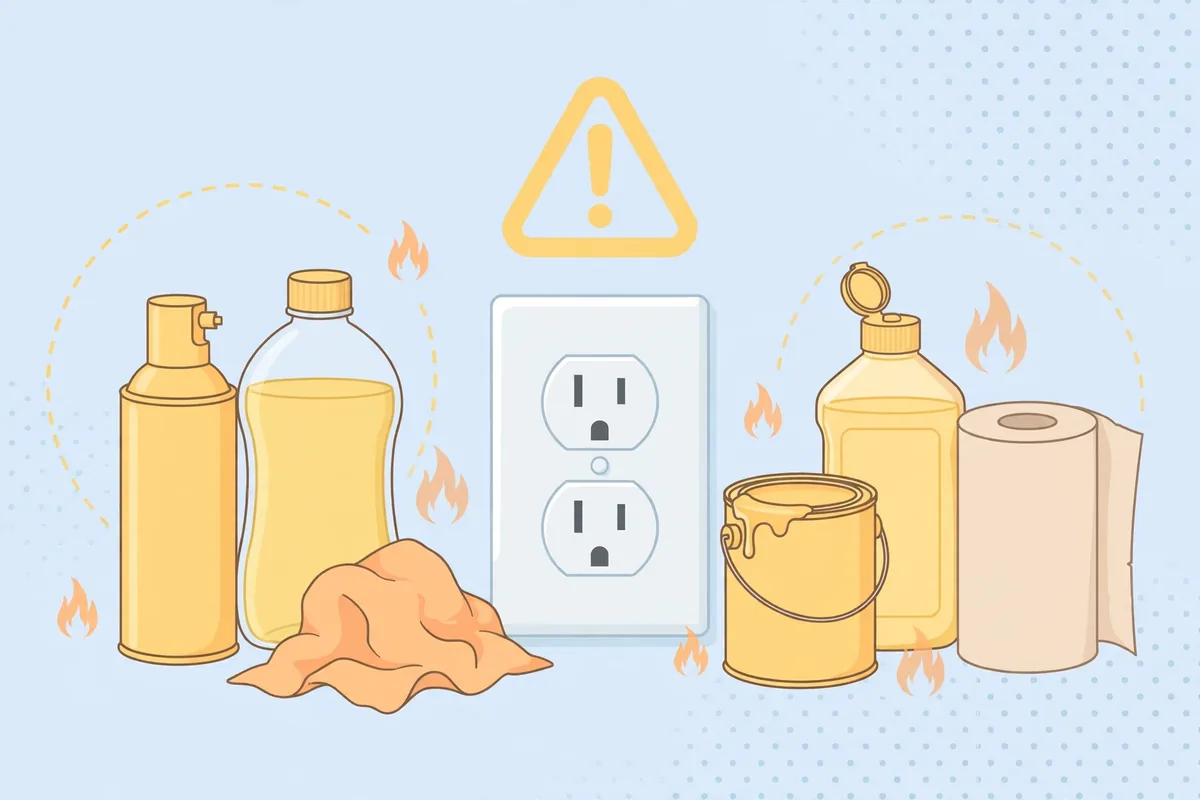
The safety dimension of this method gets far less attention than it deserves. A hair dryer is an electrical heating appliance being operated for extended periods, inches from bedding, in a bedroom, by someone focused on bugs rather than on the appliance.
Hair dryers draw substantial current, and running one continuously for the long sessions this method requires can overheat both the dryer and the outlet, especially on older wiring or through extension cords. Directing high heat at one spot on a mattress or upholstered furniture for too long can scorch or ignite fabric. Bedrooms contain exactly the materials you do not want to overheat: synthetic mattress ticking, foam, curtains, and clutter.
The heat gun warning bears repeating because the two tools look similar and the confusion is genuinely dangerous. A heat gun is not a stronger hair dryer; it is a different class of tool that can start a fire in seconds on household materials. Cornell’s “never a heat gun” is not a suggestion. If anyone in a forum thread recommends upgrading to a heat gun when the hair dryer “isn’t working,” that is the moment to close the thread.
There is also a subtler hazard: the method feels safe because the tool is familiar. People use hair dryers on their heads daily, which creates a false sense of security about running one for an hour against a mattress seam. Familiarity is not a safety rating. Treat the extended, close-range use this protocol requires with the same respect you would give any sustained high-heat work indoors.
What Actually Works Against Bed Bugs
The reliable approach combines the best heat method with physical tactics and, when needed, professional help.
Start with the clothes dryer, the heat tool that actually earns its reputation: 30 minutes on high for all bedding, clothing, and anything fabric that fits. Vacuum mattress seams, frame joints, and baseboards with a crevice tool, sealing and discarding the contents outside. Encase the mattress and box spring in bed-bug-proof covers for at least a year. Place interceptor traps under bed legs to monitor the population honestly.
Use the hair dryer only as Cornell intends: a supplemental spot tool for specific accessible items and cracks, with the temperature verified, the speed low, the passes slow, and the blow-off precaution in place. If you are wondering whether bed bugs can bite through clothes, the answer informs how you dress and sleep while treatment proceeds.
For anything beyond a small, early infestation, hire a licensed pest management professional. Professionals bring EPA-registered residual products applied directly to harborages, follow-up visits timed to egg hatching, and, for severe cases, whole-room heat treatment with temperature probes proving every hiding place reached lethal levels. That is what “heat kills bed bugs” looks like when it is done as a strategy rather than a hope.
When to See a Doctor for a Bug Bite
Bed bugs are not known to transmit disease, but their bites can still require medical attention.
Call 911 or seek emergency care for severe allergic reaction signs: difficulty breathing, swelling of the face, lips, tongue, or throat, dizziness or fainting, or a rapid heartbeat with widespread hives. Serious reactions to bed bug bites are rare but documented.
See a doctor promptly for infection signs: bites that grow redder, warmer, more swollen, or more painful after the first day or two, red streaks spreading outward, pus or drainage, or fever. Cellulitis from scratched bites is the most common complication and needs treatment.
See a doctor for very numerous or blistering bites, bites unimproved after two weeks of basic care, or itching that disrupts sleep and daily functioning. Children with widespread bites and immunocompromised individuals should seek care earlier. The full bite and sting warning signs checklist details every red flag.
Frequently Asked Questions
Does a hair dryer kill bed bugs?
It can kill individual bugs that it heats directly to lethal temperatures, roughly 113 degrees Fahrenheit and above for adults, higher for eggs. But it is unreliable as a control method: it misses hidden bugs, rarely reaches eggs in deep harborages, and the airflow scatters survivors into new hiding places.
What temperature does Cornell recommend for the hair dryer method?
Cornell’s protocol calls for verifying over 140 degrees Fahrenheit measured with a meat thermometer held about two inches from the nozzle after one minute, using the low speed and high heat setting. If your dryer cannot reach that at working distance, the method will not work.
Can I use a heat gun instead for better results?
Absolutely not. Heat guns produce air hot enough to ignite fabrics, melt synthetic materials, and cause severe burns. Cornell’s guide explicitly says never use a heat gun for bed bugs. This is a firm safety boundary, not a suggestion.
Why not just use the hair dryer on the whole room?
Coverage, eggs, and scatter make it impractical. Treating every harborage in a room with slow passes would take hours, eggs glued in deep seams would survive, and the forced air would blow survivors into wall voids and adjacent rooms. Whole-room heat treatment requires professional equipment with temperature monitoring.
What is the best heat method I can do myself?
The clothes dryer: 30 minutes on high heat kills all life stages, including eggs, in everything that fits inside. For items that cannot go in the dryer, dry steam above 200 degrees Fahrenheit applied slowly to seams is the next best option. Reserve the hair dryer for small supplemental spot work done exactly to Cornell’s cautious protocol.
Medically reviewed by Dr. Sarah Jones, MD.
This article is for informational purposes only and isn’t medical advice. If you’re worried about a bite or sting, talk to a healthcare professional.