A homeowner in Georgia watches a huge dark wasp with oddly bright yellow-tipped legs hovering around the hummingbird feeder. In Florida, another resident sees a big hornet with a reddish head working over a fallen apple. Both insects look menacing, and both could be either the invasive yellow-legged hornet or the long-established European hornet. Confusing them is easy, and it matters, because one of these species should be reported to state authorities while the other simply needs to be left alone.
This guide answers yellow-legged hornet vs European hornet from a health-first angle: how to tell them apart at a glance, how their sting risk compares, what each one does around homes and yards, and exactly what to do if you think you have seen the invasive species. You will also find first-aid steps for any hornet sting and clear red flags for when to get medical help.
Why This Comparison Matters Right Now
The yellow-legged hornet (Vespa velutina nigrithorax) is an invasive species from Asia that reached Georgia in 2023 and has been the target of an intensive state eradication effort ever since. Georgia’s agriculture teams trapped at least 866 yellow-legged hornets and eradicated 44 nests in 2026 according to mid-year reports, and September alone brought another surge with crews finding 1,310 hornets and 33 nests. By early October 2026, the state had destroyed 119 nests in a single year, a sign of both the pressure on the pest and its persistence. The species has been confirmed in Bryan, Bulloch, Chatham, Effingham, and Liberty counties, and officials credit continued public reports with helping crews locate nests before colonies grow.
The threat is not just theoretical for people outside Georgia. UF/IFAS extension materials and the Florida Department of Agriculture and Consumer Services warn residents what to watch for — a suspected yellow-legged hornet in Florida can be reported to dpihelpline@fdacs.gov or the state hotline at 1-888-397-1517, and NC State Extension documented a nest in York County, South Carolina in December 2025, noting the species can be mistaken for many other insects. That mistaken-identity problem is the heart of this comparison. The yellow-legged hornet is frequently confused with the European hornet, a species that has lived in the eastern United States for well over a century and that residents encounter far more often. When every large hornet gets reported as the invasive one, officials waste time chasing the wrong insect. When the actual invasive hornet gets dismissed as “just a European hornet,” real nests go unreported.
The Stakes for Your Health and Your Yard
From a health perspective, the two species demand different responses. The European hornet is a defensive stinger with a painful sting, capable of stinging repeatedly, and it deserves the same caution you would give any large social wasp. The yellow-legged hornet is also a large social hornet that will defend its nest, and its sting is a medical concern for anyone, especially people with venom allergies. Neither species should be considered safe to handle. But only the yellow-legged hornet triggers a duty to report. Correct identification protects both you and the agricultural effort: it keeps you from approaching a nest you should not touch and keeps the reporting system pointed at the real target.
Identifying the Yellow-Legged Hornet
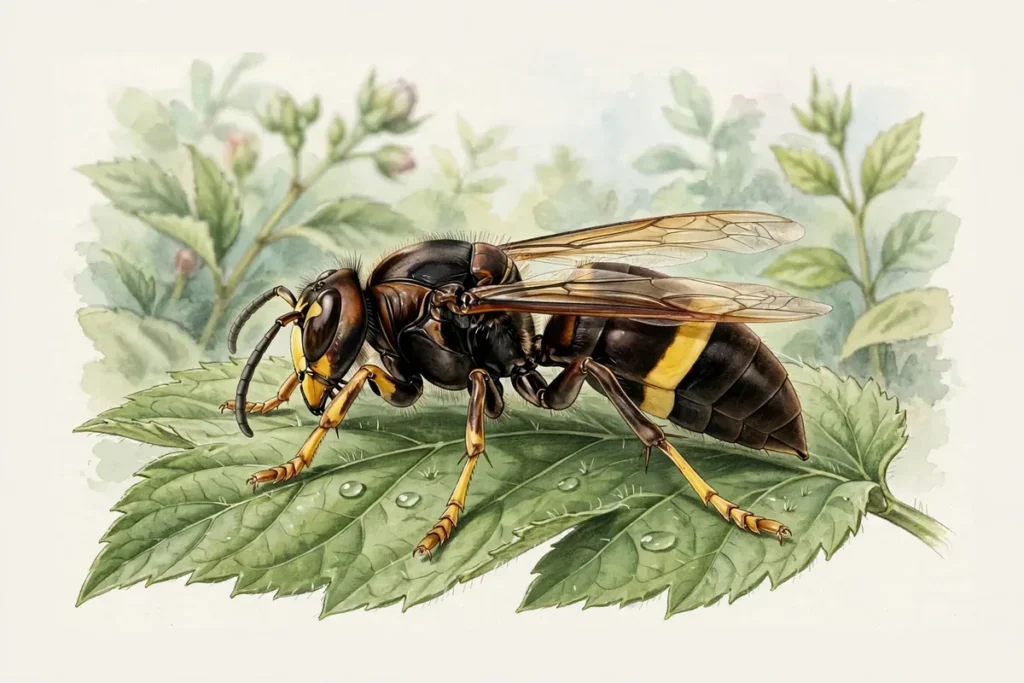
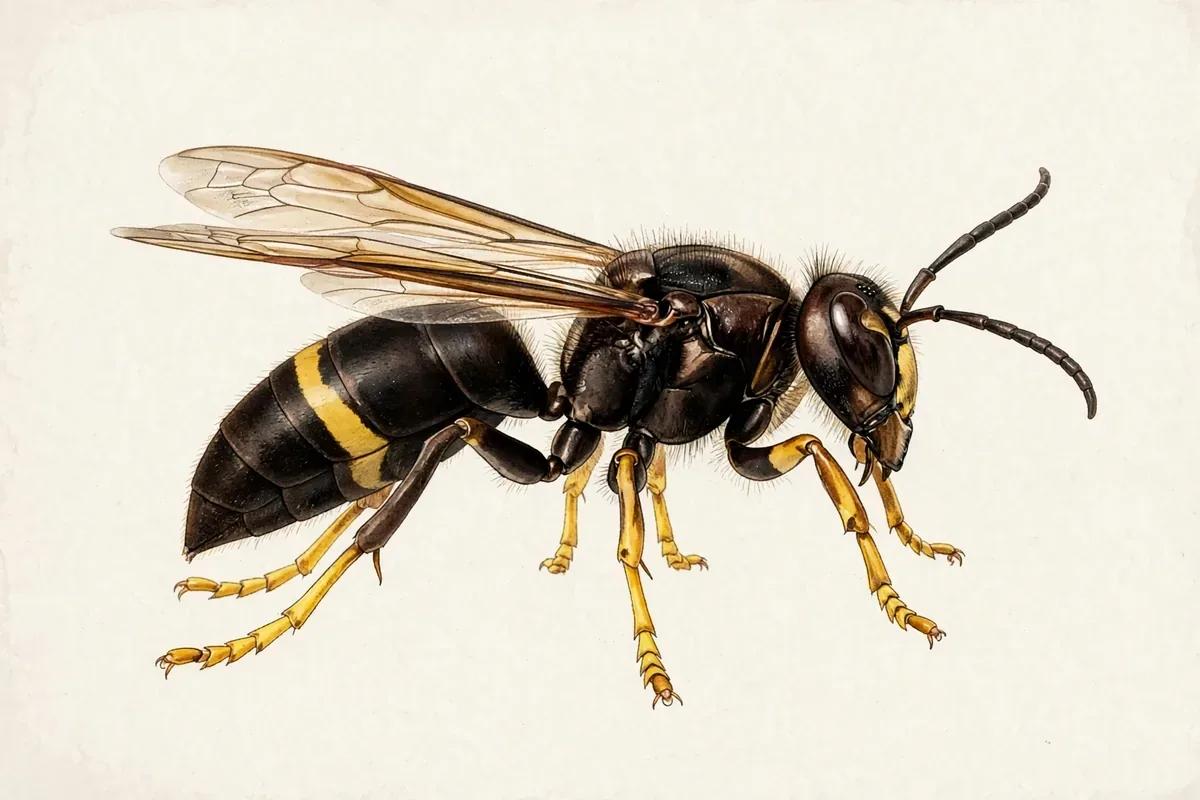
The yellow-legged hornet earns its name from its most reliable field mark. Workers are about 0.8 inches (2 cm) long, roughly the size of a typical yellowjacket, while queens reach about 1.2 inches. The legs look dipped in yellow paint at the tips, a feature entomologists sometimes call “yellow socks.” The thorax, the middle segment behind the head, is dark to black, and the abdomen is mostly dark with a single yellow band on the fourth segment. The face is orange-yellow, which gives the front of the head a warm tint against the otherwise dark body.
Where You Are Likely to See It
This species is a predator of honeybees and other pollinators, so watch for hornet behavior called “hawking,” in which the insect hovers near a beehive entrance and picks off returning foragers. Georgia officials have asked residents, particularly in the five confirmed counties, to watch for hawking activity around hives in the morning hours and after 5 p.m. Yellow-legged hornets also gather at sweet attractants: ripe and fallen fruit, sugary drinks, hummingbird feeders, and flowering plants. Its nests are large, egg-shaped paper structures, usually gray or brown and made of layered paper-like material, built high in trees or on buildings. Colonies can grow to as many as 6,000 workers, which is why an established nest is a job for professionals only.
Key Caution on Identification
Many large dark insects get mistaken for this species, including native mud daubers, bald-faced hornets, and especially European hornets. A useful rule from extension guidance is simple: European hornet samples should not be submitted to authorities, because sending the wrong insect slows down the eradication program. When in doubt, take a clear photo from a safe distance rather than collecting the insect, and let officials make the call.
Identifying the European Hornet
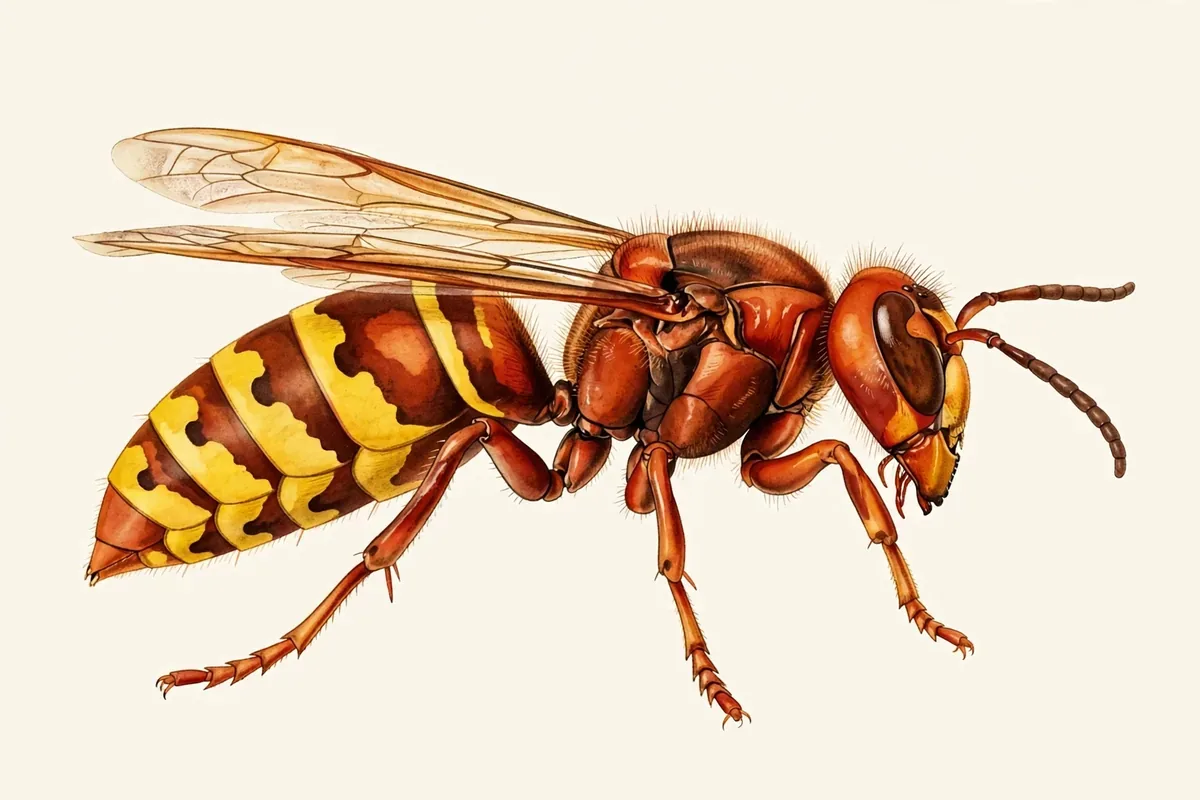
The European hornet (Vespa crabro) is the big hornet most Americans have actually seen. It was introduced from Europe long ago and is now widespread across the eastern United States. Workers are also about 0.8 inches, but the queens are noticeably larger than those of the yellow-legged hornet, reaching about 1.5 inches, and they are among the biggest wasps you will encounter in the country. The overall look is very different from the yellow-legged hornet once you know what to check: the head and thorax are reddish-orange rather than dark, the legs are light-colored rather than yellow-tipped, and the abdomen carries sinuous yellow bands across multiple segments instead of a single band.
Behavior Around Homes
European hornets are nocturnal foragers in a way most wasps are not, which is why they show up at porch lights and lit windows on summer and fall evenings. They nest in hollow trees, wall voids, sheds, and occasionally attics, and their paper nests can be sizable by late summer. Like all social hornets, they defend the colony, and they can be aggressive near the nest entrance. They are less inclined to hover around beehives than the yellow-legged hornet, though they do visit the same sugary foods in the fall. Because they are an established species, there is nothing to report to authorities when you see one; the correct response is simply to give the nest space and call a pest professional if a nest threatens a walkway, entrance, or play area.
Head-to-Head Identification Table
When the insect is in front of you, compare what you see against these field marks. No single trait is perfect, so weigh several features together before deciding what you have.
| Feature | Yellow-Legged Hornet (Vespa velutina nigrithorax) | European Hornet (Vespa crabro) |
|---|---|---|
| Size (worker) | About 0.8 in (2 cm) | About 0.8 in |
| Size (queen) | About 1.2 in | About 1.5 in, clearly larger |
| Legs | Yellow-tipped, “yellow socks” look | Light-colored, no yellow tips |
| Thorax (midsection) | Dark to black | Reddish-orange |
| Abdomen pattern | Mostly dark, single yellow band on the 4th segment | Sinuous yellow bands across segments |
| Face | Orange-yellow | Yellowish with reddish tones |
| Origin/status | Invasive; first confirmed in Georgia in 2023 | Long-established; present for 150+ years |
| Report if seen? | Yes, to state agriculture authorities | No, no reporting needed |
If the legs do not have the yellow-tipped look, or the thorax is clearly reddish, you are probably looking at a European hornet. If you see the yellow “socks” on a dark-bodied hornet, photograph it and report it rather than collecting it.
Sting Risk Compared: Pain, Venom, and Aggression
Neither species deserves to be called safe. Both are large social hornets with smooth stingers, which means they can sting more than once, and both defend their colonies when they feel threatened. People describe hornet stings generally as sharply painful with immediate burning, swelling, and redness, and you can read more about the typical course of symptoms in our guide to hornet sting symptoms.
Which Is More Dangerous to People?
On pure sting terms, the difference between the two is smaller than the headlines suggest. Both inject venom that causes local pain, swelling, and redness, and both can cause anaphylaxis in people with venom allergies. The European hornet’s larger queen and established habits around homes mean it is the species residents are most likely to be stung by in practice. The yellow-legged hornet’s danger to people comes less from a nastier sting and more from the way colonies behave around beehives and the sheer size colonies can reach, up to 6,000 workers, which makes accidental encounters with a defended nest a serious event.
Aggression Patterns
Yellow-legged hornets defend their large secondary nests vigorously, and extension officials explicitly warn residents not to approach or attempt to remove nests. European hornets defend nests built close to human activity, often without the homeowner knowing the nest is there, and they sting readily when the nest cavity is disturbed. With both species, the riskiest moments are accidental: bumping a nest with lawn equipment, disturbing a cavity in a tree or wall, or trapping hornets between a lit window and an open door at night. Deliberately handling or swatting at either species raises the chance of multiple stings.
Multiple Stings Change the Math
A single hornet sting is a painful but usually manageable local injury for non-allergic people. Multiple stings are a different matter. Large numbers of stings can cause systemic effects such as nausea, vomiting, and feeling faint even without an allergy, because of the total venom load. This is why both nests and swarms should be left strictly alone, and why anyone who disturbs a nest and receives many stings should seek medical evaluation promptly, even if they have no history of allergy.
What to Do If You Spot a Yellow-Legged Hornet
The single most important rule is to keep your distance and do not try to remove a nest yourself. Georgia’s agriculture commissioner has asked residents who believe they have found a yellow-legged hornet nest to contact the Plant Protection Division at yellow.legged.hornet@agr.georgia.gov or a licensed pest management professional, rather than attempting removal, so that the queen is properly eliminated. If you live in Florida, report sightings to dpihelpline@fdacs.gov or the state hotline at 1-888-397-1517. In other states, start with your state department of agriculture or cooperative extension office.
How to Report Well
Good reports help crews find real nests faster. Note the exact location, what the insect looked like (especially the legs), what it was doing (hawking near a hive, feeding on fruit, or carrying prey), and when you saw it. A clear photo from a safe distance is more useful than a specimen, and trying to capture the hornet puts you at risk of a sting for no added benefit. Extension guidance specifically notes that European hornet samples should not be submitted, so a photo-first approach protects both you and the program’s time. If you see a large paper nest high in a tree in late summer or fall, report the location and stay away.
If You Find a European Hornet Nest
No reporting is needed, but the same hands-off rule applies to the nest itself. Do not try to remove a large hornet nest on your own. If the nest is in a hollow tree away from activity, the simplest plan is often to leave it until winter, when the colony dies off naturally. If the nest threatens an entrance, walkway, deck, or play area, call a licensed pest management professional. For more on how the first minutes after any sting should be handled, see our guide to the first 10 minutes after a sting.
First Aid After Any Hornet Sting

Hornet stings do not leave a stinger behind the way honeybee stings do, so there is nothing to scrape out. Move away from the area calmly so you are not stung again, then wash the site with soap and water. Apply a cold pack for 10 to 15 minutes at a time to limit pain and swelling, and keep the area clean. Our step-by-step wasp sting first aid walkthrough covers these basics in more detail, since wasp and hornet first aid follows the same principles.
Over-the-counter pain relievers and oral antihistamines are commonly used for comfort, following the package directions, but avoid scratching the site, which can break the skin and invite infection. Watch the sting over the next 24 to 48 hours. Increasing redness, warmth, streaks spreading outward, or swelling that keeps expanding after a day or two are signs to have a clinician take a look. People who carry prescribed epinephrine for venom allergy should follow their allergy action plan and use it at the first sign of a systemic reaction, then call emergency services regardless of how they feel afterward.
When to See a Doctor for a Sting
Call 911 immediately if you notice any signs of anaphylaxis: trouble breathing or wheezing, swelling of the lips, tongue, or throat, widespread hives, dizziness or fainting, rapid heartbeat, or a sense of impending doom. Anaphylaxis is the emergency that makes every sting a potential crisis for allergic people, and epinephrine should be used without delay when these signs appear. Learn the full list of warning signs in our guide to anaphylaxis sting warning signs.
- Multiple stings, especially more than a handful, even without allergy symptoms
- A sting inside the mouth or throat, or any swelling that affects breathing or swallowing
- Swelling that keeps expanding after 48 hours, or redness with increasing pain, warmth, or red streaks (possible infection)
- Pus, fever, or a sting site that looks worse instead of better after a few days
- A sting near the eye or on the eyelid that affects vision or causes severe swelling
- People with known venom allergies, heart conditions, or immune-compromising conditions who are stung should contact a clinician promptly
- Any systemic symptoms such as nausea, vomiting, widespread hives, or feeling faint
Frequently Asked Questions
Can a yellow-legged hornet sting kill you?
Any hornet sting can be life-threatening for a person with a venom allergy, and multiple stings can cause serious systemic effects even without an allergy. There is no evidence that the yellow-legged hornet’s venom is uniquely more dangerous to humans than other hornets; the species is feared mainly because it devastates honeybee colonies and because its nests can house thousands of defenders. If you are allergic to wasp or hornet venom, carry your prescribed epinephrine and treat any hornet sting as an emergency.
Is the European hornet dangerous?
It can be. The European hornet is a large, defensive social wasp with a painful sting, and it will defend its nest if disturbed. Queens are about 1.5 inches long, among the largest wasps in the country. It is not an invasive pest to report, and it plays a normal role in the ecosystem, but a nest near human activity should be handled by a pest professional, not by the homeowner.
How do I tell a yellow-legged hornet from a European hornet quickly?
Check the legs first. Yellow-tipped legs on a dark-bodied hornet point to the yellow-legged hornet. Reddish-orange head and thorax with light-colored legs point to the European hornet. Also compare the abdomen: a single yellow band on a mostly dark abdomen suggests the invasive species, while wavy yellow bands across the segments suggest the European hornet. When in doubt, photograph from a safe distance and ask your state agriculture department.
What should I do if I find a large paper nest high in a tree?
Do not approach or disturb it. Note the location and, if you are in Georgia, email yellow.legged.hornet@agr.georgia.gov or use the state’s online reporting form. In Florida, contact dpihelpline@fdacs.gov or call 1-888-397-1517. Elsewhere, contact your state department of agriculture or cooperative extension. A licensed pest management professional, not a homeowner, should handle any large hornet nest.
Are yellow-legged hornets worse for beekeepers than other hornets?
Yes, in a specific way. The yellow-legged hornet hunts honeybees by hovering at hive entrances, a behavior called hawking, and sustained predation can weaken or destroy colonies. European hornets also prey on insects and visit beehives opportunistically, but they are not known for the same systematic hawking pressure. Beekeepers in affected states should follow state guidance on trapping and reporting.
Medically reviewed by Dr. Sarah Jones, MD.
This article is for informational purposes only and isn’t medical advice. If you’re worried about a bite or sting, talk to a healthcare professional.