Opening day arrives, the air finally carries a cold snap, and you climb into the box blind you haven’t visited since August. You settle in, reach for your thermos, and hear it: a low, angry buzzing inches from your ear. Wasps in deer stands and hunting blinds fall hunting season for the same reason you do — the structure offers shelter as temperatures drop. A permanent blind left alone all summer can house a paper wasp nest the size of a grapefruit on the ceiling, and an eight-foot drop from a ladder stand leaves no room for a panicked mistake. Hunters get stung in these situations every season, and many of those stings happen while the hunter is fifteen feet off the ground, far from the truck, and sometimes alone.
This guide covers what the forum threads and hunting-magazine anecdotes don’t: a health-first protocol for wasps around stands and blinds. You’ll learn which wasps to expect in fall, how to inspect a stand before you climb in, what to do if you get stung at height without panicking, and exactly what belongs in a sting first-aid kit built for remote locations. Nobody can guarantee a sting-free season, but the right habits make the difference between a scare and an emergency.
Why Wasps Love Deer Stands and Hunting Blinds in Fall
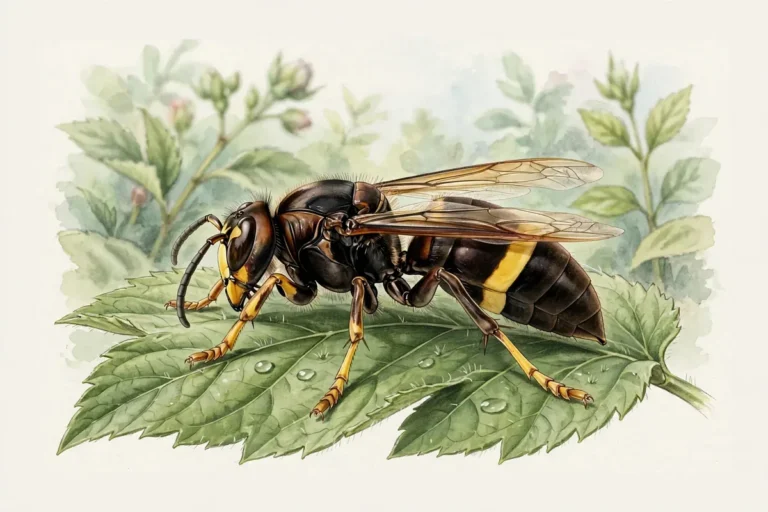
A deer stand is, from a wasp’s perspective, excellent real estate. Ladder stands, tripod stands, and box blinds all provide the three things stinging insects want most: a solid overhead surface for nest attachment, protection from rain and wind, and warmth from sun-baked walls and roofs. A blind that sat empty from July through September is effectively an abandoned building in miniature. Paper wasps build open-comb nests that hang like small umbrellas from ceilings, eaves, and window frames — exactly the anatomy of a box blind. Yellowjackets, which nest in cavities, love the hollow walls, hollow corner posts, and even the space inside a seat cushion of a neglected blind. By October and November, those colonies are at their largest and, critically, at their most defensive.
Fall changes wasp behavior in ways that raise the risk for hunters. As natural food sources fade, yellowjackets shift from hunting live insects to scavenging — and a hunter field-dressing a deer is running a wasp buffet. Protein and sweets both attract them: venison, energy bars, apple cores, and even the residue in a soda can pull workers from nearby nests. Hunting publications carry the same caution every season — permanent blinds are well-known wasp hideouts — and hunters have recounted opening a box-stand door onto a ceiling nest and falling in the panicked rush to escape. These aren’t freak stories — they’re the predictable result of wasps and hunters converging on the same shelters at the same time of year.
Cold snaps add one more twist. When temperatures drop into the 40s and 50s, wasps become sluggish — and sluggish wasps are easy to mistake for dead wasps. A hunter who slaps at a slow-moving wasp on a cold November morning may discover it is very much alive and capable of stinging. Yellowjackets also get bolder about entering enclosed spaces as it gets colder, seeking warmth inside blinds. Understanding this seasonal behavior is the foundation of every safety step that follows: fall wasps are numerous, food-hungry, shelter-seeking, and easily provoked.
Which Wasps You’ll Meet at the Stand
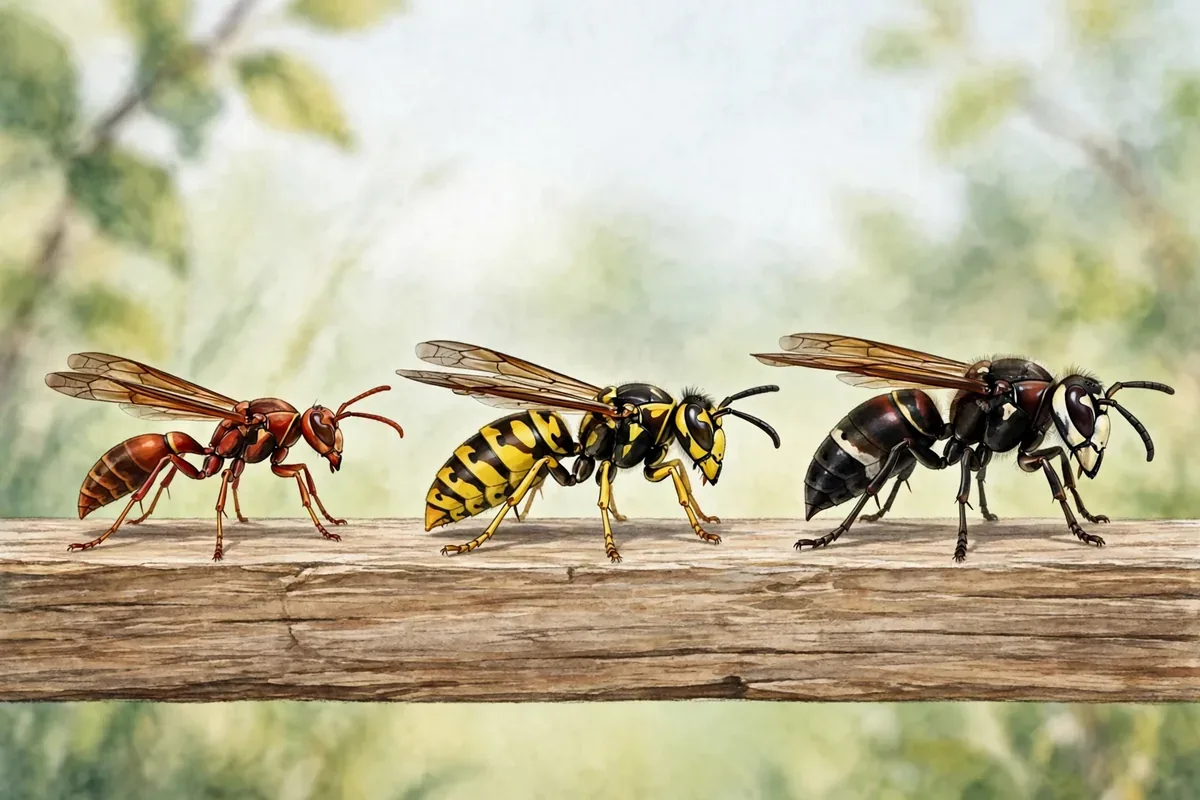
Not all wasps behave the same way, and knowing which species is buzzing around your stand shapes your response. Three groups account for nearly all stand-and-blind encounters in fall.
Paper Wasps
Red or mahogany-colored paper wasps are the classic blind ceiling squatters. Their nests are unmistakable: open, gray, papery combs shaped like inverted umbrellas, often attached to the underside of roofs, window headers, and overhangs. A colony may hold a few dozen workers by late summer. Paper wasps are generally less aggressive than yellowjackets — they defend the nest itself rather than roaming for trouble — but reaching blindly above a window frame or grabbing the blind’s roof edge to pull yourself up can put your hand directly into a nest. Because the nest is visible and compact, paper wasps are also the species most often removed by hunters themselves, which is exactly what you should not do from a ladder or platform (more on that below).
Yellowjackets
Yellowjackets are the scavengers that crash your field dressing and your lunch. In fall, ground-nesting and cavity-nesting species send workers out in aggressive foraging mode. They are drawn to meat, fruit, and sweet drinks, and they can sting repeatedly without losing their stingers. Unlike paper wasps, yellowjackets will pursue — several workers may zero in on the same food source and defend it. Their nests are often hidden: inside hollow blind walls, under the blind floor, in the ground at the base of a ladder stand, or inside an old stump the stand is strapped to. A hunter who steps on a ground nest at the base of a ladder can be stung dozens of times before reaching the truck. Learn the bald-faced hornet sting warning signs and general wasp reaction patterns before season, because yellowjacket encounters escalate fast.
Bald-Faced Hornets
Bald-faced hornets build large, enclosed, football-shaped gray nests in trees and shrubs, sometimes close enough to a stand to matter. Their sting is famously painful, and — this is the important part — they mount a coordinated defense. Disturb a nest and multiple hornets respond at once, spraying venom on the target to mark it for others. Any nest of this species within striking distance of your stand is a call-a-professional situation, not a DIY project. Fall is when these nests are at maximum population, and the hornets are defending developing queens for next year.
| Species | Nest you might find at the stand | Fall temperament | Main hunter risk |
|---|---|---|---|
| Paper wasp | Open umbrella comb under roof/window frame | Defensive of nest only | Hand into nest while climbing or reaching |
| Yellowjacket | Hidden in hollow walls, ground at stand base | Aggressive foragers, swarm food | Stings at field dressing; stepped-on ground nests |
| Bald-faced hornet | Gray football nest in nearby trees | Coordinated mass defense | Multiple stings; never a DIY removal |
The Pre-Climb Inspection Protocol
Every safe hunt begins before your boot touches the ladder. A two-minute inspection habit, done in the gray light before dawn, prevents the vast majority of stand stings. Build it into your routine the way you check your safety harness.
Step 1: Walk the perimeter first. Circle the stand or blind slowly and look up. Scan tree branches for gray football nests (bald-faced hornets) within 20 feet. Look at the ground around ladder bases for flight traffic — yellowjackets flying in and out of a hole in the earth at a steady pace mean a ground nest, and that stand is off-limits until a professional handles it. Check blind walls for entry points where workers stream in and out.
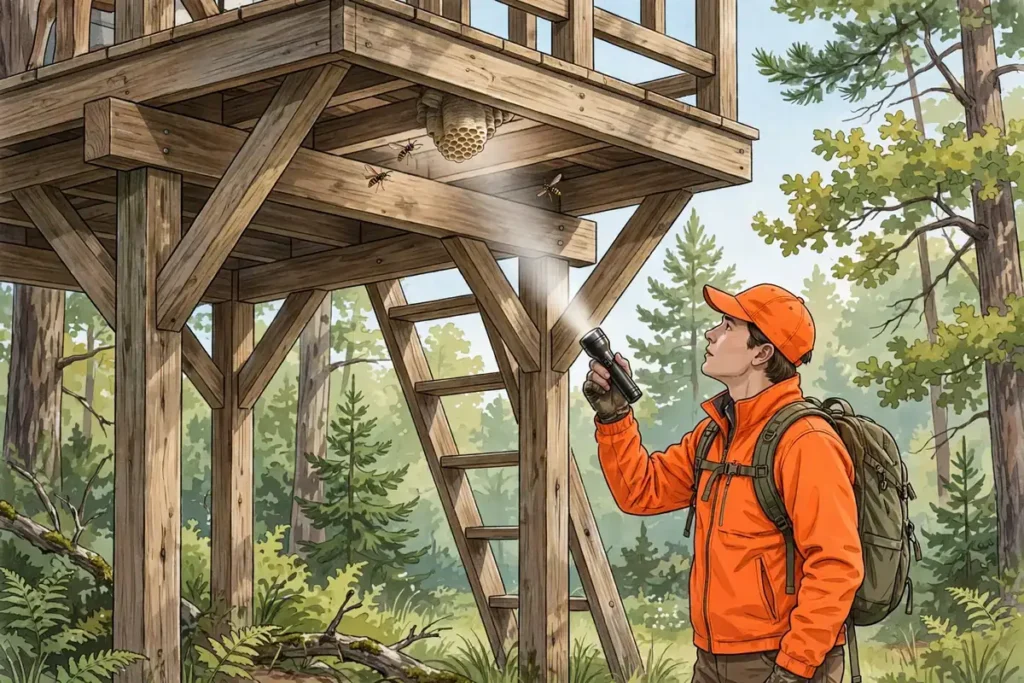
Step 2: Light up the interior before entering. Never walk into a dark box blind blindly. Use a headlamp or flashlight to sweep the ceiling, all four window frames, corners, and the underside of the roof. Paper wasp nests are visible in light but invisible in pre-dawn dark. Open the door slowly and stand back for a moment — let any disturbed insects exit rather than meeting you face to face.
Step 3: Inspect ladder stands from the ground. Before climbing, use binoculars or your headlamp to check the platform underside, the seat, and the shooting rail for nests. Red wasps favor the undersides of platforms. If you spot an active nest, do not attempt removal while standing on the ladder or platform — one swat from an awkward position and you’re choosing between a fall and a swarm. Mark the stand off-limits and deal with the nest from the ground later (or have a pest professional handle it).
Step 4: Check scented gear. Food wrappers, apple-scented cover scents, sweet drink cans, and even scented hand warmers attract fall yellowjackets. Keep food sealed, crush cans immediately, and never leave an open drink in the blind. This matters as much at a tailgate cookout as in the woods — the same backyard barbecue wasp safety habits that protect a cookout protect a hunt.
Safe Stand Habits During the Season
Inspection gets you in safely; habits keep you safe all day. Fall wasps are food-motivated, so treat your stand like a no-picnic zone. Eat and drink away from the stand when possible, and if you must snack in the blind, keep everything sealed between bites. Wipe hands and face after eating — a sticky thumb near a yellowjacket foraging party is an invitation. Avoid swatting. A wasp batted away often returns, angrier, and may release alarm pheromones that recruit nestmates. If a wasp lands on you, stay still or brush it off gently with a slow sweep; sudden violent movement is what triggers stings.
Dress defensively. Light-colored, smooth clothing attracts fewer wasps than dark, textured fabrics. Tuck pants into boots and keep sleeves down — most stand stings land on hands, forearms, and the neck. A light head net weighs almost nothing and is cheap insurance for an enclosed blind with a known wasp problem. If your blind has a persistent low-level wasp presence you can’t fully clear, a battery-powered fan set near a window disrupts their flight patterns; wasps are weak fliers and avoid moving air.
When field dressing, the rules change because you cannot avoid attracting yellowjackets to fresh venison. Work quickly, keep the carcass covered when you’re not actively cutting, and designate a wasp-watcher if you hunt with a partner — one person works while the other keeps a spray bottle of water handy (a mist of water confuses and disperses foragers without the chemical chaos of insecticide around meat). Wear gloves, not just for hygiene but because hands are the most-stung body part during field dressing. If yellowjackets arrive in numbers that make the work dangerous, stop. Walk away from the carcass, wait, and resume — no deer is worth a dozen stings.
First Aid After a Sting When You’re Alone and Elevated
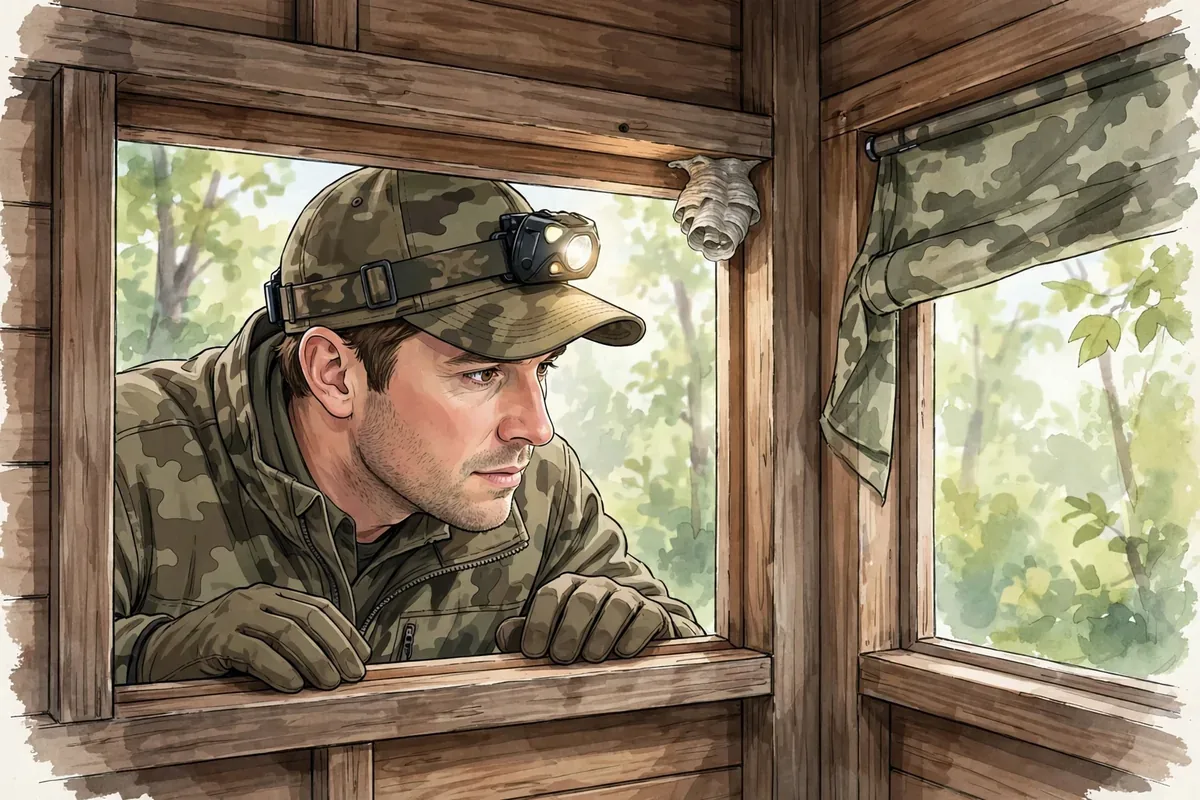
Getting stung at ground level is unpleasant. Getting stung on a platform fifteen feet up, at dawn, possibly alone, is a different category of event — and this is the scenario that deserves its own plan. The danger multiplies: the sting itself, the startle response near an edge, and the distance to help.
Rule one: do not rush. The instinct after a sting at height is to get down immediately and fast. A fast, panicked descent is how hunters fall. Stay clipped into your safety harness — you are wearing one, always — take three slow breaths, and assess. One or two stings from a paper wasp with no allergy history is painful but not an emergency. Scrape the stinger out if one is present (wasps usually don’t leave stingers; bees do), wash the area with water if available, and apply a cold pack or cold water bottle from your kit.
Rule two: know your personal risk before the season. If you have any history of allergic reactions to stings — hives beyond the sting site, swelling of the lips or tongue, wheezing, dizziness, or any prior episode that needed emergency care — you should be carrying an epinephrine auto-injector on every hunt, and your hunting partner should know where it is and how to use it. In a remote location, an auto-injector is not optional equipment; it is the bridge between a reaction and the emergency room. Review the anaphylaxis sting warning signs with your hunting party before opening day so everyone recognizes trouble early.
Rule three: descend on purpose, not in panic. If you feel anything beyond local pain — itching spreading across your body, tightness in the throat or chest, lightheadedness, nausea, or swelling far from the sting — get down from the stand immediately but under control, harness still on, and use your auto-injector at the first sign of a systemic reaction. Then get to the truck and call 911. Anaphylaxis can progress in minutes, and cell coverage in hunting country is unreliable — if you have a satellite communicator or your partner does, this is the emergency it exists for. Do not drive yourself if symptoms are progressing; wait for help or have your partner drive.
Rule four: treat the sting properly once you’re safe. Cold compress for 10 to 15 minutes reduces pain and swelling. An oral antihistamine can help with itching. Keep the area clean and watch it over the next few days — increasing redness, warmth, swelling after 24 to 48 hours, red streaks, or pus suggest infection (cellulitis), which needs medical care. The first 10 minutes after a sting are when the most important decisions get made; practice the sequence before you need it.
What to Pack: A Hunter’s Sting First-Aid Kit
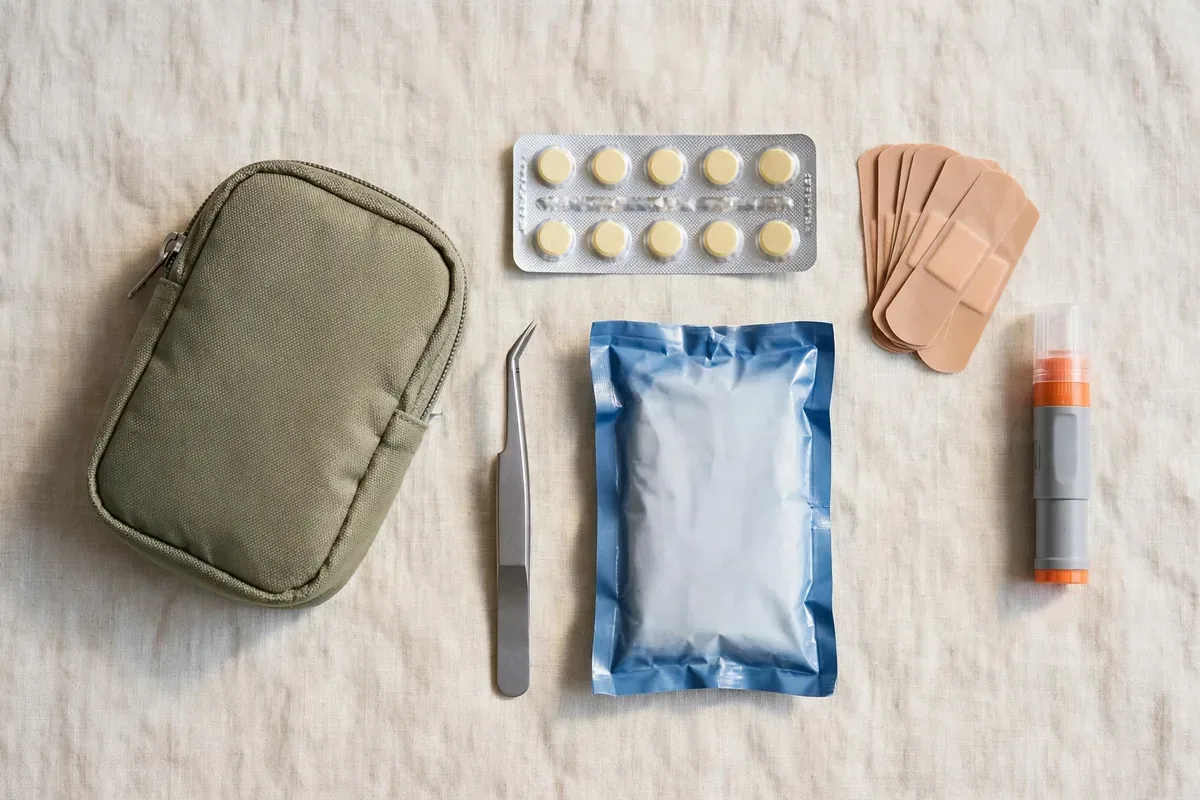
Your truck first-aid kit and your hunting pack are two different things, and the hunting pack version needs to assume you are a long walk from the truck. Keep the sting module small enough that it actually comes with you every time. A quart-size zip bag or small dry pouch works.
- Epinephrine auto-injector (if prescribed — plus a backup if your doctor recommends it). Check expiration dates before season; replace expired units.
- Instant cold pack — the chemical kind that activates with a squeeze, since you won’t have ice at the stand.
- Oral antihistamine tablets in a sealed blister or pill pouch (kept dry and within date).
- Tweezers or a sting-removal card — useful for ticks and splinters too.
- Antiseptic wipes and adhesive bandages for cleaning sting sites and minor cuts.
- A small bottle of water — for washing a sting site and for the field-dressing wasp-mist trick.
- A headlamp — doubles as your pre-climb inspection light and your after-dark signal.
- A printed emergency card with your allergies, medications, emergency contacts, and your stand’s GPS coordinates or access-road description for 911 dispatchers.
Store the kit in the same pocket every hunt so you can find it one-handed. Tell your hunting partners where it is. And once a season, empty it and check every expiration date — an expired auto-injector in October is a decoration, not a rescue device.
How Stings Differ: Normal Pain vs. Dangerous Reaction
Every wasp sting hurts. Sharp, burning pain that fades over an hour or two, with local redness and swelling under about four inches, is the normal course — uncomfortable but not dangerous. A large local reaction — swelling that spreads across a joint or covers much of a limb — is alarming to look at but usually still not life-threatening; it deserves a call to your doctor, especially if it limits movement.
A systemic allergic reaction is the line that changes everything. Hives or itching in areas far from the sting, swelling of the lips, tongue, or throat, wheezing or trouble breathing, a feeling of doom, dizziness, fainting, or a racing weak pulse are emergency signs. These symptoms can begin within minutes and worsen fast. If any appear, use epinephrine immediately and call 911. Do not wait to see if it gets worse — anaphylaxis rewards speed and punishes hesitation. People who have never reacted before can still develop an allergy; a first severe reaction is always a surprise, which is why every hunter should know the signs.
When to See a Doctor for a Sting
- Call 911 immediately for any sign of anaphylaxis: trouble breathing or wheezing, throat or tongue swelling, dizziness or fainting, widespread hives, rapid weak pulse.
- Seek same-day medical care for a sting inside the mouth or throat (swelling can block the airway), multiple stings (a dozen or more), or stings to the eye area.
- See a doctor within a day or two if swelling keeps spreading after 48 hours, redness and warmth increase, red streaks appear, pus develops, or you develop fever — these suggest infection.
- Mention any known sting allergy to your doctor before hunting season to discuss whether an auto-injector prescription and an allergy referral are right for you.
- Hunters with known allergies: schedule an annual review of your emergency plan and make sure your hunting partners know it.
Frequently Asked Questions
Can I spray a wasp nest in my deer stand myself?
If the nest is small, inactive (late fall after hard freezes, no wasp traffic), and reachable from the ground, careful removal may be reasonable — but never attempt nest removal while standing on a ladder or platform. An elevated position removes your escape route and turns a defensive swarm into a fall risk. For active nests, large nests, or anything involving bald-faced hornets, call a pest professional. The cost of a service visit is trivial next to an ER bill.
Why are wasps worse around my stand in October than in August?
Fall colonies are at peak population and peak defensiveness as they raise next year’s queens. Meanwhile natural food is disappearing, so yellowjackets switch to scavenging — your lunch, your drinks, and your field-dressed deer. Cold snaps also drive wasps into the shelter of blinds. Every factor that makes fall good hunting makes it peak wasp season.
I was stung last year and just had swelling. Am I safe this year?
Probably, but not certainly. Sting allergies can develop over time, and a history of only local reactions doesn’t guarantee the next one will be local too. If you’ve ever had hives beyond the sting site, breathing difficulty, or dizziness after a sting, talk to an allergist before the season. Everyone else should still learn the anaphylaxis signs and carry basic first aid.
What’s the safest way to keep wasps out of a box blind between hunts?
Seal entry points: caulk gaps around window frames, cover vents with fine mesh, and keep the door closed and latched. Remove the blind’s wasp appeal by clearing food trash and drink containers after every hunt. Some hunters hang a fake wasp nest, but evidence for deterrence is limited — physical exclusion beats gimmicks. A pre-season inspection and cleaning in late summer, before colonies peak, is the single most effective step.
Can cold weather kill the wasps in my blind so I can skip inspection?
A hard freeze kills many workers, but don’t count on it. Wasps can shelter in the insulated walls of a blind and survive light frosts, and sluggish cold-weather wasps still sting. Queens overwinter in sheltered spots and emerge in spring. Always inspect before the first hunt of the season regardless of recent temperatures — “it got cold” is not an inspection.
Medically reviewed by Dr. Sarah Jones, MD.
This article is for informational purposes only and isn’t medical advice. If you’re worried about a bite or sting, talk to a healthcare professional.