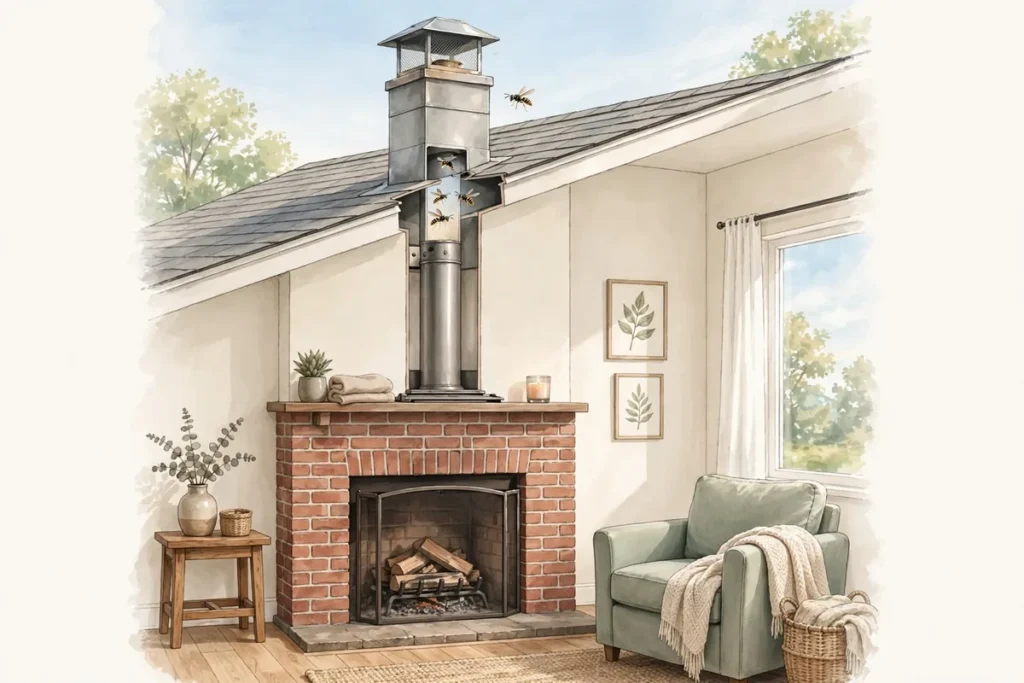
The first cold snap hits, you light the season’s first fire, and within minutes there’s a furious buzzing from the fireplace — then wasps, alive and angry, pouring down the chimney into your living room. Wasps in chimney first fireplace fire fall is one of the season’s most alarming homeowner surprises, and chimney professionals say the calls spike every November: fireplace and gas-log owners reporting wasps and bees coming down the flue. The instinct — throw another log on and burn them out — is exactly what you must not do. A nest dropped into the flames doesn’t quietly incinerate; singed, enraged survivors scatter through the living room looking for something to sting.
This guide walks through why wasps colonize chimneys, how to check yours before the first fire, the exclusion fixes (caps, damper seals) that prevent a repeat, what to do when wasps come down the flue alive, and first aid for the indoor stings that result. If you haven’t lit your fireplace yet this year, read this first.
Why Wasps Choose Chimneys
From a wasp’s perspective, an unused chimney is prime real estate. It’s tall, sheltered from rain and wind, warmed by the sun on the masonry, and — critically — undisturbed for months. A chimney that sits cold from April through October is an open invitation, and several species accept it.
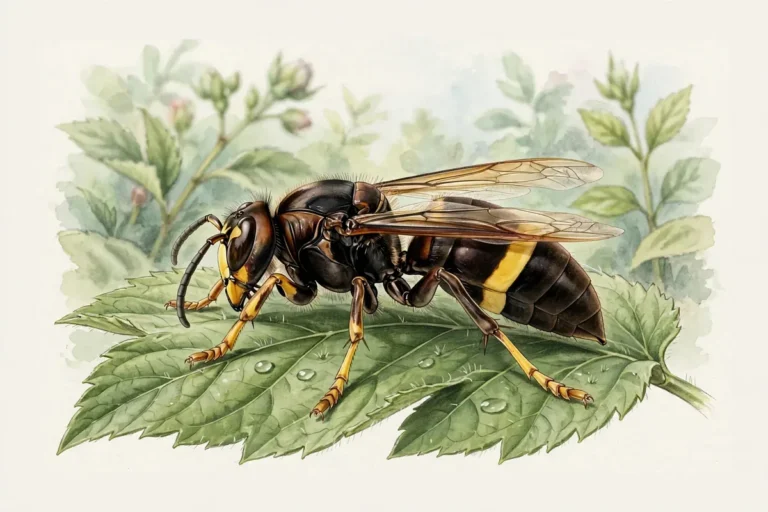
Paper wasps are the most common chimney squatters. They build their open umbrella combs attached to the inner flue walls, often just above the damper or smoke shelf, where the masonry offers solid anchoring. A nest the size of a teacup can hold dozens of workers by late summer. Yellowjackets favor chimneys with structural quirks — gaps in the masonry, hollow chase spaces around a metal flue, or the void behind a fireplace surround — building enclosed nests in the cavities. In warmer regions, even honeybees occasionally colonize chimneys, though bees are a different management problem (and often a protected-relocation one).
Fall is when the situation turns dangerous, for two converging reasons. First, colonies are at maximum size and maximum defensiveness, guarding the queens that will found next year’s nests. Second, it’s first-fire season. All summer the nest sat undisturbed above a closed damper; the first fire sends heat and smoke straight up into it. Wasps don’t politely evacuate upward through the cap — many drop down, fleeing the heat, past the damper and into the firebox and living room. Chimney professionals describe the nightmare scenario: a nest dropping into the flames and singed survivors swarming the living room. Homeowner forums carry the same story in dozens of variations every fall.
There’s a secondary fall mechanism too: as temperatures drop, wasps and other insects seek warmth, and a chimney — even an unused one — radiates residual heat and offers shelter. Late-fall wasps found drowsy in the firebox may have wandered down from a nest higher in the flue, or in from the cap. Either way, a wasp in the fireplace in November means the flue needs attention before the next fire.
The Pre-Season Inspection: Before You Light the First Fire
Every chimney authority — most notably the Chimney Safety Institute of America (CSIA), the industry’s standard-setting body — recommends annual chimney inspection, and the pre-season window is the time to do it. A CSIA-certified chimney sweep doesn’t just check for creosote; the inspection covers the flue interior, the cap, the damper, and the masonry — which is exactly where wasp nests hide. If you’ve never had the chimney inspected, or it’s been years, schedule it before first-fire season, not after the wasps arrive.
Between professional visits, you can do a homeowner pre-check:
Step 1: Look before you light.
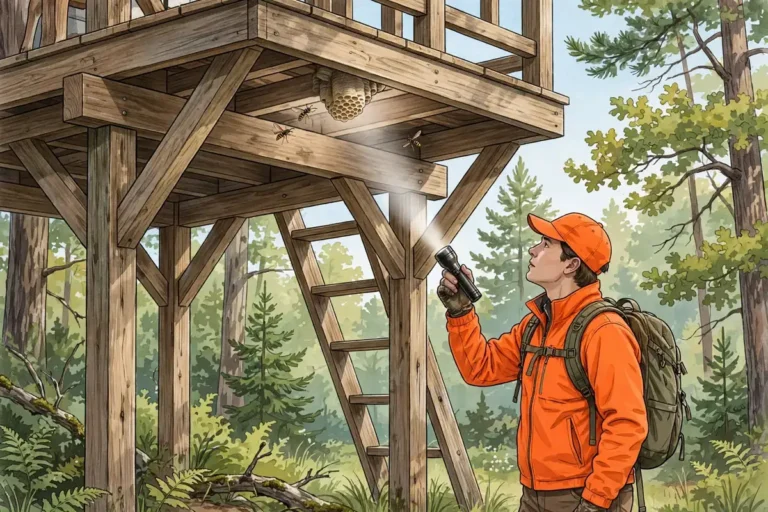
Open the damper in daylight and shine a bright flashlight up the flue. Look for papery gray comb structures attached to the flue walls, steady wasp traffic in and out of the flue, or a visible mass above the smoke shelf. Binoculars from the ground can spot traffic at the cap — wasps flying purposefully in and out of the chimney top on a warm fall afternoon mean an active colony.
Step 2: Listen.
On a quiet day, stand in the firebox with the damper open and listen. A faint but steady buzzing or rustling from above suggests occupants. This sounds folksy, but chimney sweeps use it as a genuine diagnostic.
Step 3: Check the cap and crown.
From the ground with binoculars (not from the roof unless you’re equipped and comfortable), check whether the chimney has a cap at all. An uncapped flue is an open door — not just for wasps, but for birds, raccoons, and rain. Note any visible damage to the crown or missing mortar.
Step 4: Test the damper seal.
Close the damper and check for light or air gaps around its edges. A damper that doesn’t seal is a wasp highway into the living room even without a fire. If daylight shows through around a closed damper, it needs adjustment or replacement — and until it’s fixed, wasps that wander down the flue have a direct path inside.
If the inspection reveals an active nest, do not light a fire “to deal with it.” The next section explains why, and what to do instead.
Never Burn Out an Active Nest
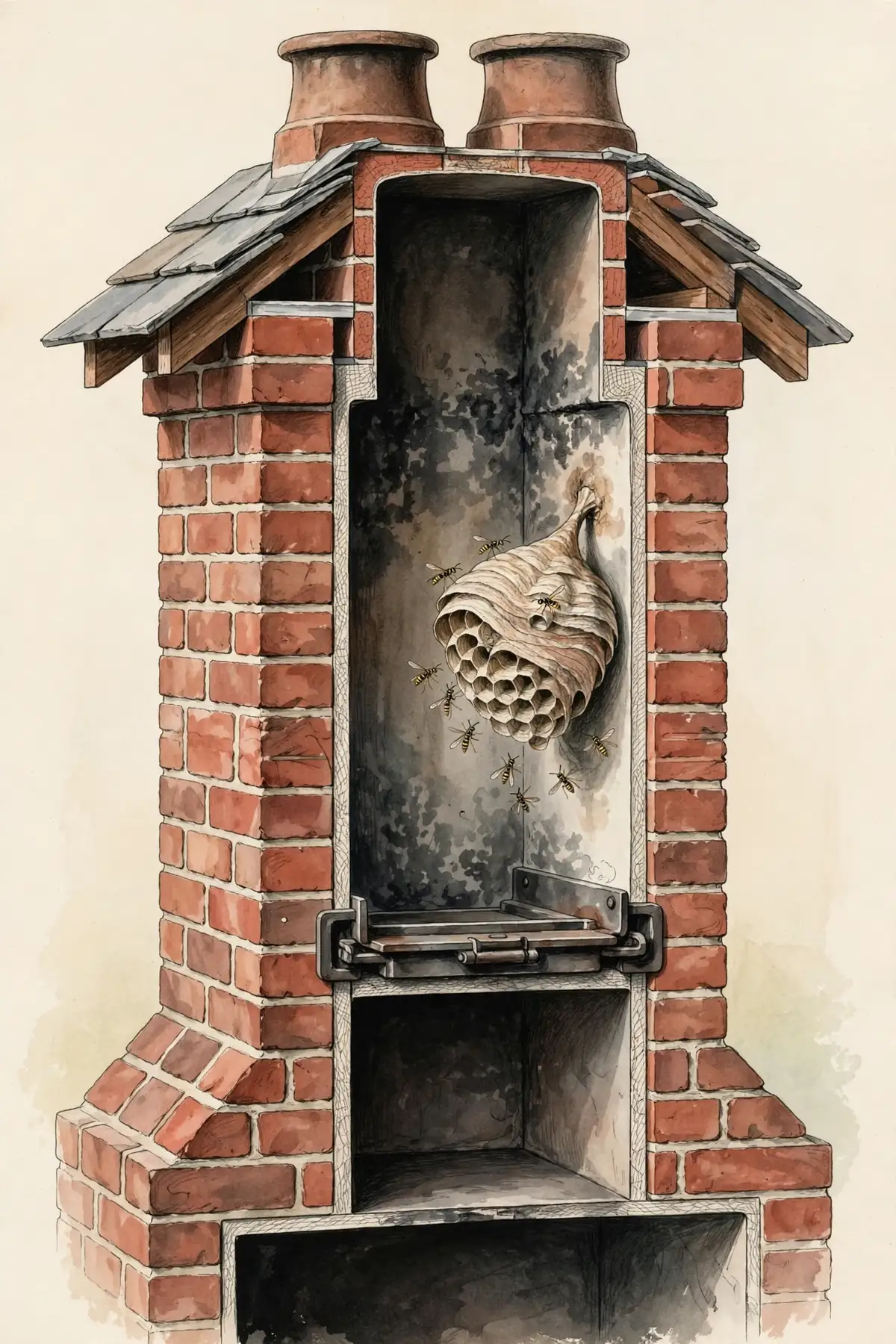
This is the mandatory warning, stated as plainly as possible: do not attempt to burn, smoke, or heat a wasp nest out of your chimney. It is the most common dangerous impulse in this scenario, and it fails in the worst way.
A wasp nest is papery and flammable-looking, which is exactly why the idea is tempting. But nests inside a flue don’t burn cleanly away. What actually happens: the fire’s heat agitates the colony before it destroys it. Wasps flee downward — away from the heat rising past them is impossible, so they go down, through the damper, into the firebox, and out into the room. The survivors are heat-stressed, disoriented, and maximally aggressive. Instead of one contained nest, you now have dozens of angry wasps loose in your living room, plus family members and pets in the line of fire. The chimney-magazine nightmare scenario — singed survivors swarming the living room — is not a freak occurrence; it’s the predictable physics of the situation.
The same prohibition applies to the improvisations: don’t spray wasp killer up the flue and then light a fire (chemical residues plus open flame plus a masonry flue is a toxic combination), don’t stuff burning newspaper up the chimney, and don’t seal the damper shut with an active nest above it and hope for the best (trapped wasps find alternate routes — often into wall voids or the attic).
What to do instead: If there’s an active nest in the flue, call a pest-management professional. They can treat the nest appropriately — usually in the evening when wasps are home and calm — and a chimney sweep can then remove the dead nest material so it doesn’t attract next year’s queens (old nest pheromones and residues are attractants). For nests in structural cavities around the chimney, the same professional route applies. The cost of a service call is trivial compared to a living room full of wasps or a flue fire from burning debris.
Wasps Coming Down the Flue: Containment, Not Combat
Sometimes there’s no warning — the first sign is wasps in the living room. Whether they came down ahead of a fire or wandered through a bad damper seal, the protocol is containment.
Step 1: Close the damper.
If it’s open, close it — carefully, without putting your face or hands near the firebox opening. This cuts off reinforcements.
Step 2: Isolate the room.
Close the fireplace doors or screen if you have them. Shut interior doors to keep wasps from spreading through the house. Move people and pets out of the room calmly — no running, no screaming, no swatting. Fast movement and alarm pheromones from a squashed wasp escalate everything.
Step 3: Give them an exit.
Wasps want out, not a fight. If the room has a window away from the fireplace, open it and close the curtains or blinds on other windows — wasps fly toward light, and a single bright exit concentrates them. Turn off interior lights near the fireplace so the window is the obvious beacon.
Step 4: Remove stragglers mechanically.
A vacuum with a hose attachment is the safest indoor removal tool — no chemicals, no swatting, no close contact. For one or two wasps, a cup and stiff paper works. Do not use wasp spray indoors around the fireplace: the spray is flammable, the fumes in an enclosed room are a health hazard, and agitated wasps in a living room are worse than calm ones near a window.
Step 5: Find the entry.
Once the room is clear, investigate: damper seal, missing cap, gaps in the masonry. The wasps got in through a specific failure, and until it’s fixed, they’ll keep coming. This is the moment to schedule both the pest professional (if a nest is active in the flue) and the chimney sweep (for the cap and damper work).
Prevention: Caps, Seals, and Timing
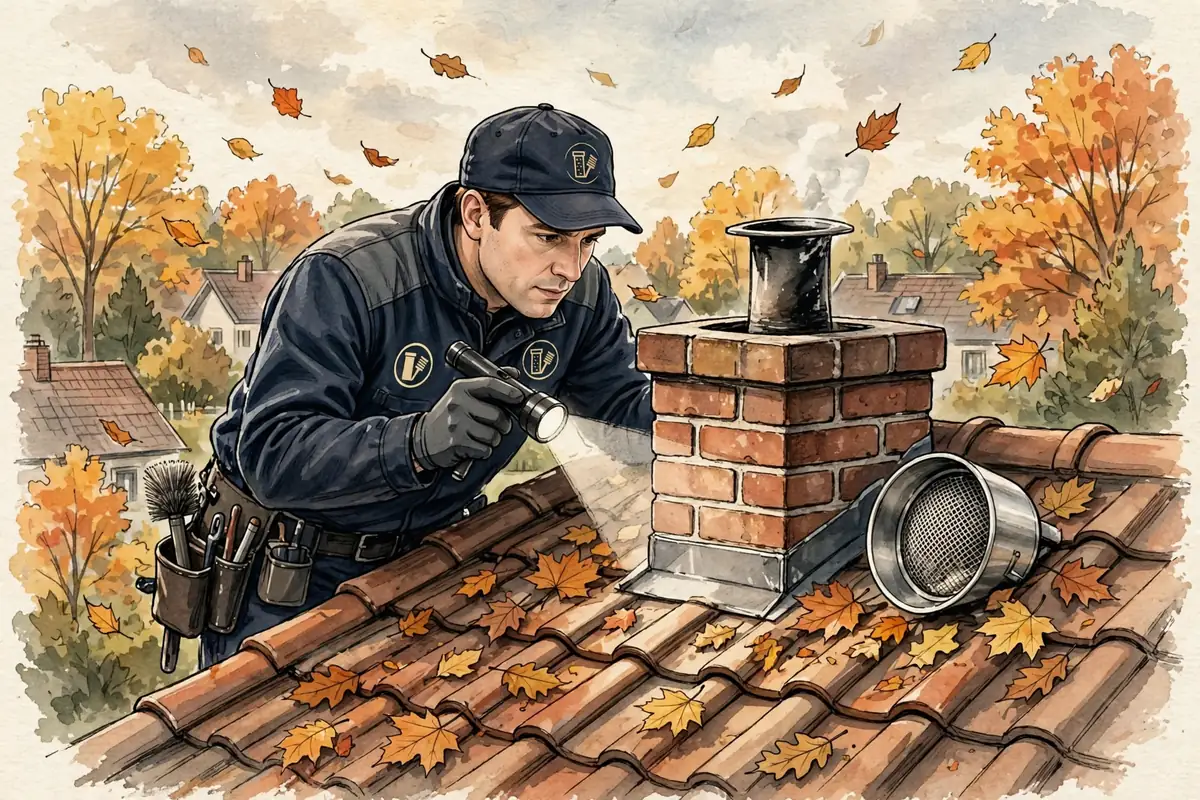
The permanent fix is exclusion, and it’s straightforward. A quality chimney cap — stainless steel mesh with openings small enough to exclude insects but large enough to vent properly — is the single highest-value investment. It keeps out wasps, birds, raccoons, rain, and debris simultaneously. If your chimney is uncapped, capping it is not optional maintenance; it’s the difference between a chimney and a wasp condominium.
Damper integrity comes next. A top-sealing damper (mounted at the flue top, operated by a cable) seals far better than an old throat damper and doubles as a secondary barrier. At minimum, your existing damper should close fully with no visible gaps. Fireplace doors or a tight-fitting screen add another layer for the months the fireplace isn’t in use.
Timing matters: do the exclusion work in late summer or early fall, before first-fire season and before colonies reach peak defensiveness — but after confirming no active nest is inside (capping a chimney with a live nest inside just redirects the wasps into your walls). The ideal annual rhythm: late-summer inspection and exclusion, professional CSIA inspection on schedule, first fire only after the all-clear.
| Measure | What it does | When to do it |
|---|---|---|
| Chimney cap (stainless mesh) | Blocks wasps, birds, animals, rain at the flue top | Late summer; never over an active nest |
| Damper seal check/repair | Closes the indoor entry route | Pre-season, before first fire |
| Professional nest treatment | Eliminates active flue nests safely | Evening; by a licensed pro, not DIY |
| CSIA inspection | Catches nests, creosote, structural issues | Annually, pre-season |
| Fireplace doors/screen | Extra indoor barrier in off-months | Anytime |
First Aid for Indoor Stings
An indoor wasp sting usually happens during the chaos of containment — a wasp lands on an arm, someone swats reflexively, and the sting follows. Treat it promptly and calmly.
Wash the area with soap and water. Wasps rarely leave stingers (that’s bees), but check anyway and scrape off anything embedded — don’t squeeze. Apply a cold pack for 10 to 15 minutes to reduce pain and swelling; the standard cold compress approach for bites and stings applies indoors exactly as it does outdoors. An oral antihistamine can help with itching and minor swelling.
Watch the sting over the next 24 to 48 hours. Increasing redness, warmth, swelling, red streaks, or pus suggest infection and deserve medical attention. And know the systemic signs cold: hives spreading beyond the sting, swelling of the lips or tongue, wheezing or trouble breathing, dizziness — any of these mean epinephrine (if prescribed) and 911 immediately. Indoor stings feel scarier than outdoor ones because they happen in what should be a safe space, but the medical response is identical. For a fuller walkthrough of sting aftercare, the bite and sting first-aid checklist covers the sequence step by step.
Multiple stings change the calculus: a dozen or more stings, even without allergy signs, warrant same-day medical evaluation because of the venom load. And a sting inside the mouth or throat — from a wasp in a drink can, a classic indoor-outdoor crossover — is an emergency regardless of allergy history, because swelling can compromise the airway.
When to See a Doctor for a Sting

- Call 911 immediately for anaphylaxis signs: trouble breathing or wheezing, throat/tongue swelling, dizziness or fainting, widespread hives, rapid weak pulse.
- Seek emergency care for any sting inside the mouth or throat, or for a large number of stings at once.
- Get same-day medical care if a sting is near the eye, or if pain and swelling are severe and worsening after the first hours.
- See a doctor within a day or two for infection signs: spreading redness, increasing warmth, red streaks, pus, or fever developing 24-72 hours after the sting.
- Talk to your doctor about whether a wasp-sting allergy evaluation is warranted if you’ve had any systemic symptoms — and keep an epinephrine auto-injector accessible at home if prescribed, not buried in a drawer.
Frequently Asked Questions
Can I just light a small fire to smoke the wasps out?
No — this is the single most dangerous impulse in this scenario. Heat agitates the colony before destroying it, and wasps flee downward into your living room: singed, disoriented, and aggressive. Smoke doesn’t calm a nest inside a flue the way beekeepers calm hives; it creates a living-room emergency. Active nest in the flue means calling a pest professional.
How do I know if the buzzing in my chimney is wasps or bees?
Watch the traffic at the cap on a warm afternoon. Wasps fly in direct, purposeful lines; honeybees are fuzzier, more golden, and carry pollen. Paper wasp nests visible in the flue are gray papery combs; honeybee colonies build wax comb. The distinction matters because honeybees are often relocated rather than exterminated — a beekeeper or pest professional can advise once you’ve got a look.
Will a chimney cap really keep wasps out?
A properly fitted stainless-steel mesh cap is the most effective single prevention measure — it physically blocks entry at the flue top while venting normally. Pair it with a sealing damper and you’ve closed the two main routes. No cap on the market compensates for an active nest already inside, though: inspect first, then cap.
The wasps only show up when I light a fire. Can’t I just not use the fireplace?
You can, but the nest is still there — growing, and sending foragers down through damper gaps all fall and winter. An unused fireplace with an active wasp colony is a problem deferred, not solved, and next year’s queens will emerge from it in spring. Get the nest treated and the chimney capped regardless of whether you use the fire.
I got stung taking the trash past the chimney. Is that related?
Possibly. Wasp traffic in and out of the cap means dozens of foragers using the airspace around your chimney — and the roofline, gutters, and yard below it. Until the nest is treated and the chimney capped, give the chimney’s airspace a wide berth, keep windows near it closed, and check that your cap and damper projects are scheduled.
Medically reviewed by Dr. Sarah Jones, MD.
This article is for informational purposes only and isn’t medical advice. If you’re worried about a bite or sting, talk to a healthcare professional.