
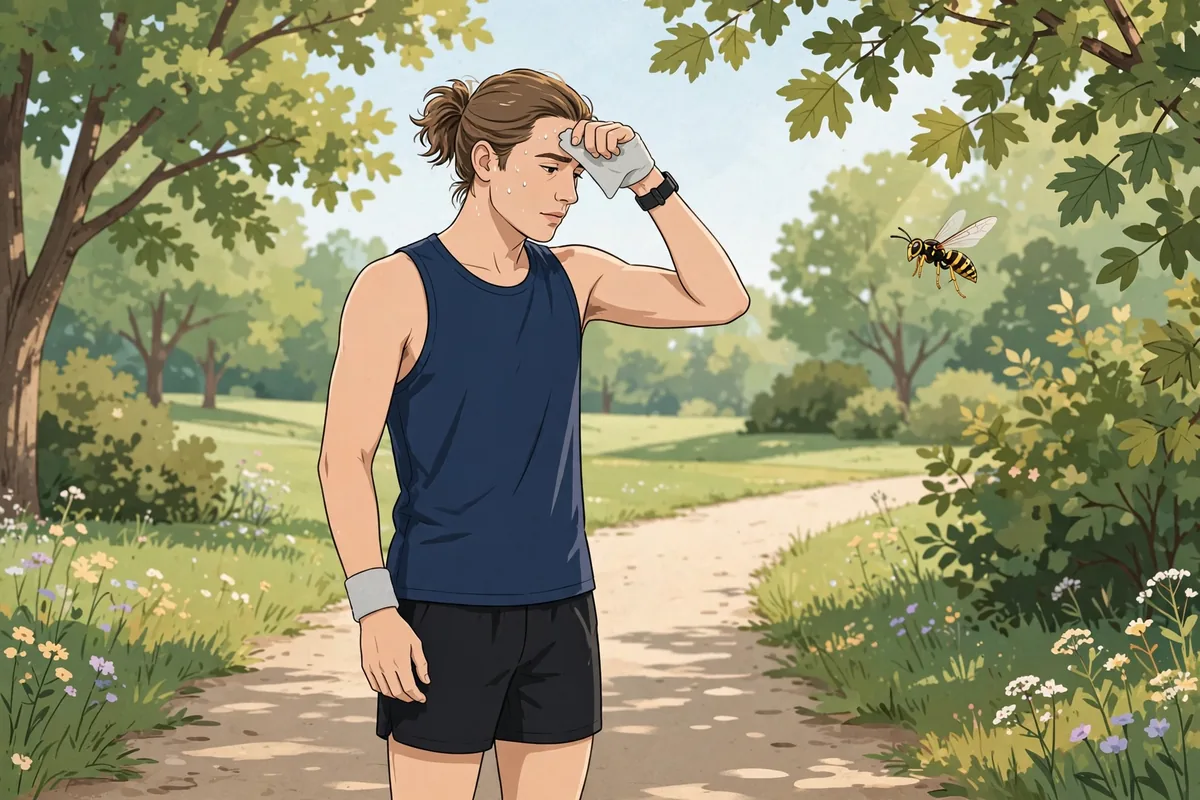
You finish a run, mow the lawn, or carry groceries up the driveway on a hot day, and suddenly wasps are circling. So does sweat attract wasps? The honest answer is yes — perspiration is one of several human scents that can draw yellow jackets and wasps closer. Medical and pest-control sources agree that sweaty people get more attention from these insects than freshly showered ones. The evidence is largely observational rather than from rigorous trials, so this guide sticks to what is credibly known, separates the sweat question from its cousin (the sweat bee), and gives you a practical routine to reduce the odds of a sting.
Why perspiration gets their attention #
Wasps navigate by smell as much as by sight, and human sweat carries a cocktail of signals they can detect.
- Salt and minerals. Sweat contains sodium, potassium, and other minerals. Foraging wasps seeking nutrients will investigate strong salt sources.
- Volatile organic compounds. Perspiration releases compounds like lactic acid and other byproducts of exertion. Wasps detect these airborne chemicals with the sensitive receptors on their antennae, and stress-related scent changes appear to put them on higher alert.
- Heat and carbon dioxide. A sweating, breathing, moving person is a warm, CO2-emitting target — two cues that active insects home in on. Heavy breathing after exercise produces more of both.
- Movement. Flailing arms and quick movements are read as threats. A sweaty jogger who is also swatting is combining two attractants at once.
One frequently cited observation: yellow jackets are more likely to bother a sweaty person than someone who has recently showered. Physicians who advise on sting prevention specifically recommend rinsing off perspiration after vigorous exercise and using unscented deodorant rather than heavily fragranced products. Note what this evidence is not — controlled experiments on wasp attraction to human sweat are sparse. The guidance rests on consistent field observation and expert consensus, not on lab-grade proof. Treat it as sensible precaution, not certainty.
Sweat bees vs wasps: do not confuse them #
If insects are landing on your sweaty skin, check which insect you are actually dealing with — the answer changes the risk level completely.
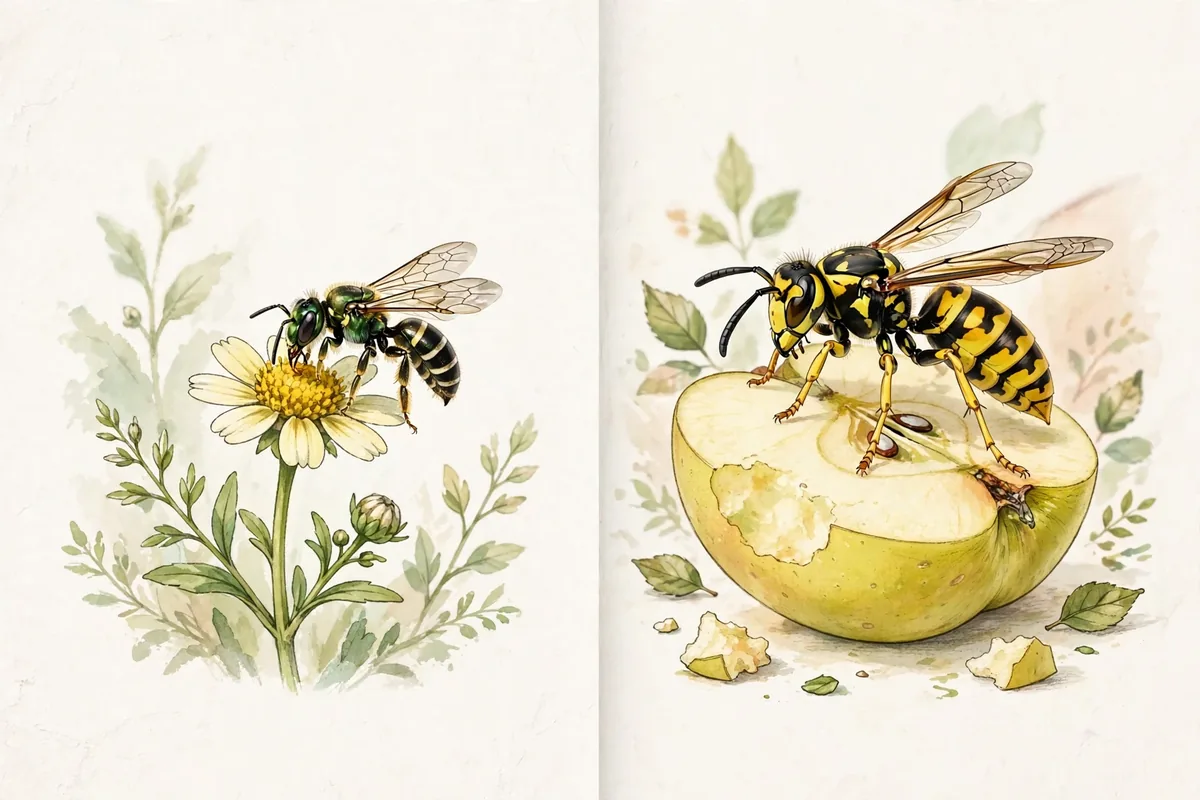
Sweat bees (halictid bees) are small, often metallic green or dark, and land specifically to lap up salt from perspiration. They are solitary or primitively social, docile, and rarely sting — their presence is passive mineral-seeking, not aggression. Brushing one away gently is enough.
Yellow jackets and paper wasps are larger, brighter yellow-and-black, and far more assertive. They investigate sweat too, but their interest is broader — food, sugar, protein, territory — and they can sting repeatedly without losing their stinger. A wasp circling your sweaty arms in late summer is often scouting for food, not for you personally, but the sting risk is real.
The key difference: sweat bees come for the salt and ignore everything else; wasps come for the salt, the sugar on your hands, the sandwich nearby, and get defensive about all of it. Knowing why wasps can sting more than once explains why a calm response matters more with wasps than with sweat bees.
The post-workout sting-avoidance checklist #
Whether you run, garden, or work outdoors, this routine cuts your scent profile and visibility:
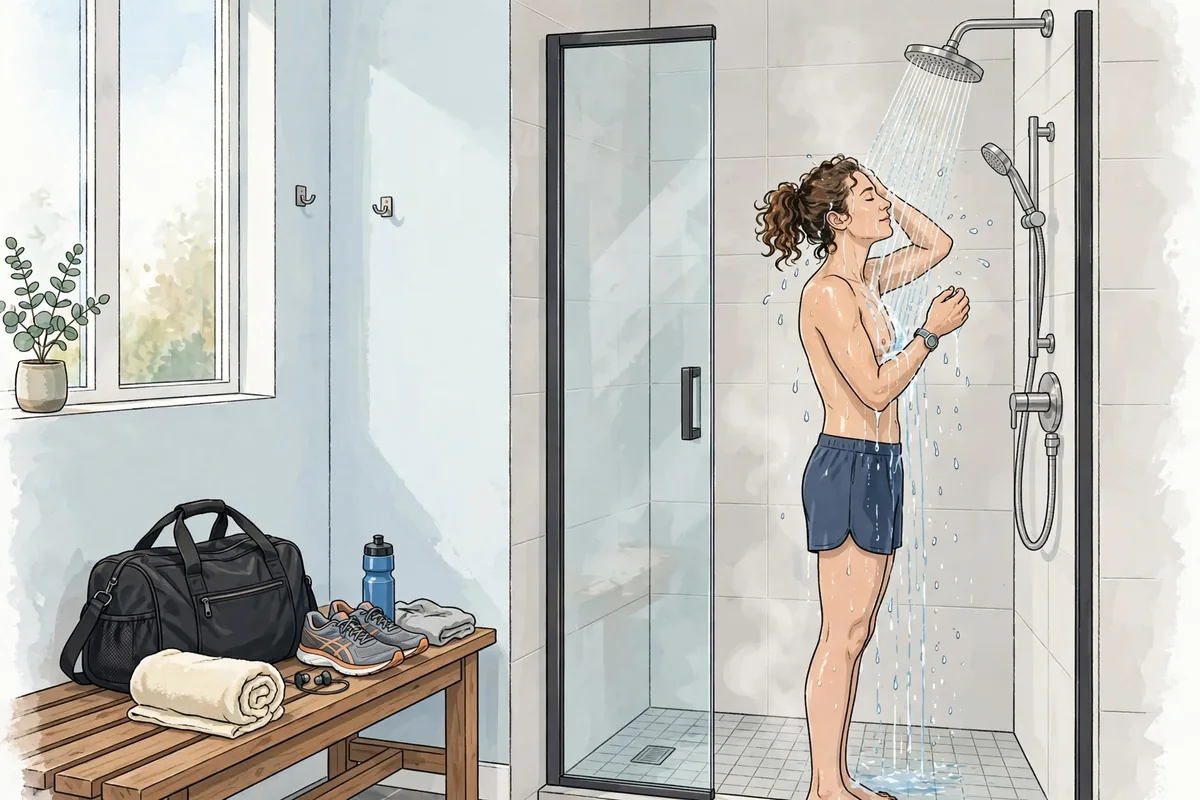
- Rinse off promptly. Shower or at least wipe down with water after heavy sweating. This single step removes the strongest attractant.
- Use unscented deodorant. Fragranced deodorants, perfumes, colognes, and scented lotions are documented wasp attractants. Unscented is always the safer choice before outdoor activity.
- Wear white or light colors. Dark clothing and floral patterns draw more insect attention; white and light solids draw less. Skip yellow, a near-universal insect attractant.
- Avoid sudden movements. If a wasp approaches, stay still or move away slowly and calmly. Swatting is the single most common trigger for a sting.
- Do not blow at them. Exhaled carbon dioxide can act as an alarm signal for wasps — blowing on a wasp may make it more aggressive, not less.
- Cover food and drink. Sweaty hands handling a sports drink or protein bar combine two attractants. Keep containers sealed and wipe your hands.
- Check the route. Lawns, trash areas, and fallen-fruit spots in late summer harbor ground nests. Mowing or running directly over a nest entrance is the classic multiple-sting scenario.
If one does land on your arm: freeze, stay calm, and let it walk off or gently brush it away with a piece of paper. Most landings are investigations that end on their own within seconds.
If you get stung despite precautions #
Move away from the area calmly — there may be more wasps nearby, especially near a nest. Wash the sting with soap and water, apply a cold compress, and watch the reaction. A localized sting with pain, redness, and swelling that peaks within a day or two is typical.
Review wasp sting first aid steps for the full routine. Stings on the face, mouth, or throat, or any signs of a whole-body reaction, are a different category — see the warning signs below.
Warning signs: when to seek care #
Call 911 immediately if you develop trouble breathing or swallowing, swelling of the face, lips, tongue, or throat, widespread hives, dizziness or fainting, or a racing heartbeat after a sting — these are anaphylaxis red flags. If you carry an epinephrine auto-injector, use it per your action plan.
Seek urgent care or call your doctor if: swelling spreads well beyond the sting site or keeps worsening after 2–3 days; you see red streaks, pus, or increasing warmth; you develop a fever; you were stung many times at once; or the sting is inside the mouth or throat. People with known sting allergies should always have an emergency plan and carry epinephrine when outdoors in wasp season.
Frequently asked questions #
Does sweat attract wasps more than perfume? #
Both are attractants, and strong fragrances may actually be the stronger draw. Sweat adds salt and exertion scent to the mix. The safest combination before outdoor activity is a shower plus unscented products — removing one attractant while adding another nets you nothing.
Are wasps more aggressive toward sweaty people? #
They appear more likely to approach and investigate sweaty people, and stress-scent changes may put them on alert. Whether that translates into more actual stings depends mostly on your reaction — calm stillness prevents most stings regardless of how sweaty you are.
Do wasps follow you because of sweat? #
Usually they follow because of movement, food smells, or defensive behavior near a nest. Sweat can be part of the initial attraction, but persistent following most often means you are near a nest or carrying food odors. Walk away calmly and do not swat.
Will deodorant keep wasps away? #
No — deodorant is not an insect repellent. But unscented deodorant avoids adding a fragrance attractant on top of your sweat, and rinsing off perspiration removes the scent wasps investigate. Think of it as reducing invitation, not creating a barrier.
Medical and editorial note #
This article is general information, not medical advice. Direct experimental evidence on wasp attraction to human sweat is limited; the guidance here reflects expert consensus and consistent field observation. If you have a known sting allergy or are worried about a reaction, talk to a healthcare professional about an emergency action plan.


