
Waking up with bites always leads to the same urgent question: do bed bugs spread disease? The short answer is no. The CDC states that bed bugs are not known to spread diseases to people, and the EPA says no cases or studies indicate that bed bugs transmit diseases between humans. That is genuinely reassuring — but it does not mean bed bugs are harmless. Their bites can cause painful allergic reactions, infected scratch wounds, lost sleep, and serious anxiety. This guide separates what is proven from what is rumored, so you know exactly what you are dealing with.
What the CDC and EPA say: the direct answer #
Bed bugs (Cimex species) feed on blood while people sleep, and scientists have looked hard at whether they pass along infections in the process. After decades of investigation — including research into blood-borne pathogens like HIV and hepatitis viruses — no conclusive evidence has ever demonstrated disease transmission by bed bugs. The CDC puts it plainly: bed bugs are not known to spread diseases to people.
The EPA’s bed-bug myth page is even more direct: “There have been no cases or studies that indicate bed bugs transmit diseases between humans.” This puts bed bugs in the same category as head lice — blood-feeding parasites that annoy and irritate but are not disease vectors. It is a meaningful distinction: their cousin, the body louse, does transmit serious diseases, so the assumption that bed bugs must too is understandable but wrong.
Here is the nuance that matters: “not known to transmit” is a statement about the current state of evidence, not a guarantee that science will never change its mind. Public health agencies update guidance as evidence evolves, and the current consensus has held for many years across multiple continents of research.
What bed bugs can do to your health #

Ruling out disease transmission does not rule out harm. Bed bugs are officially classified as pests of significant public health importance by the EPA and CDC, and that label is based on real, documented effects.
Allergic reactions. Most people develop itchy red welts from bed bug saliva. Reactions range from nothing at all to large swollen patches. In rare cases, people experience severe whole-body reactions. Each person’s response differs, and sensitivity can increase with repeated bites over time.
Secondary skin infections. This is the most common serious complication, and it comes from you, not the bug. Intense itching leads to scratching, which opens the skin and lets ordinary bacteria in. The result can be impetigo (honey-colored crusts), ecthyma, or lymphangitis — infections that genuinely need medical treatment.
Sleep loss and mental health. The CDC and EPA joint statement documents reported effects including anxiety, insomnia, and stress in people living with infestations. The psychological toll of being bitten in your own bed night after night is well documented and deserves to be taken seriously.
Anemia (rare). Severe, long-standing infestations with hundreds of nightly bites have been associated with iron-deficiency anemia in vulnerable people, such as the elderly or malnourished. This is uncommon but real.
If you wake up with itchy bites after travel or notice the tell-tale rust-colored spots along your mattress seams, learning what to do when you find bed bugs in your hotel room is a smart next step — the problem is easiest to stop early.
Myth vs fact: the quick table #
| Claim | Verdict | |—|—| | Bed bugs transmit HIV, hepatitis, or other infections | Myth. Extensively studied; no conclusive evidence of transmission. | | Bed bugs only live in dirty homes | Myth. They are attracted to warmth, blood, and carbon dioxide — five-star hotels get them too. | | Bed bug bites alone spread infection to others | Myth. Scratching can infect your own wound with skin bacteria, but the bite does not carry contagious disease. | | Bed bugs are not a real health problem | Myth. The EPA and CDC classify them as pests of significant public health importance due to allergies, infections, and mental health effects. | | If you do not react to bites, you have no bed bugs | Myth. Many people show no reaction, especially at first — lack of welts proves nothing. | | Keeping lights on at night stops them biting | Myth. They prefer darkness but will feed in light if hungry. |
If bites are already causing problems: action checklist #
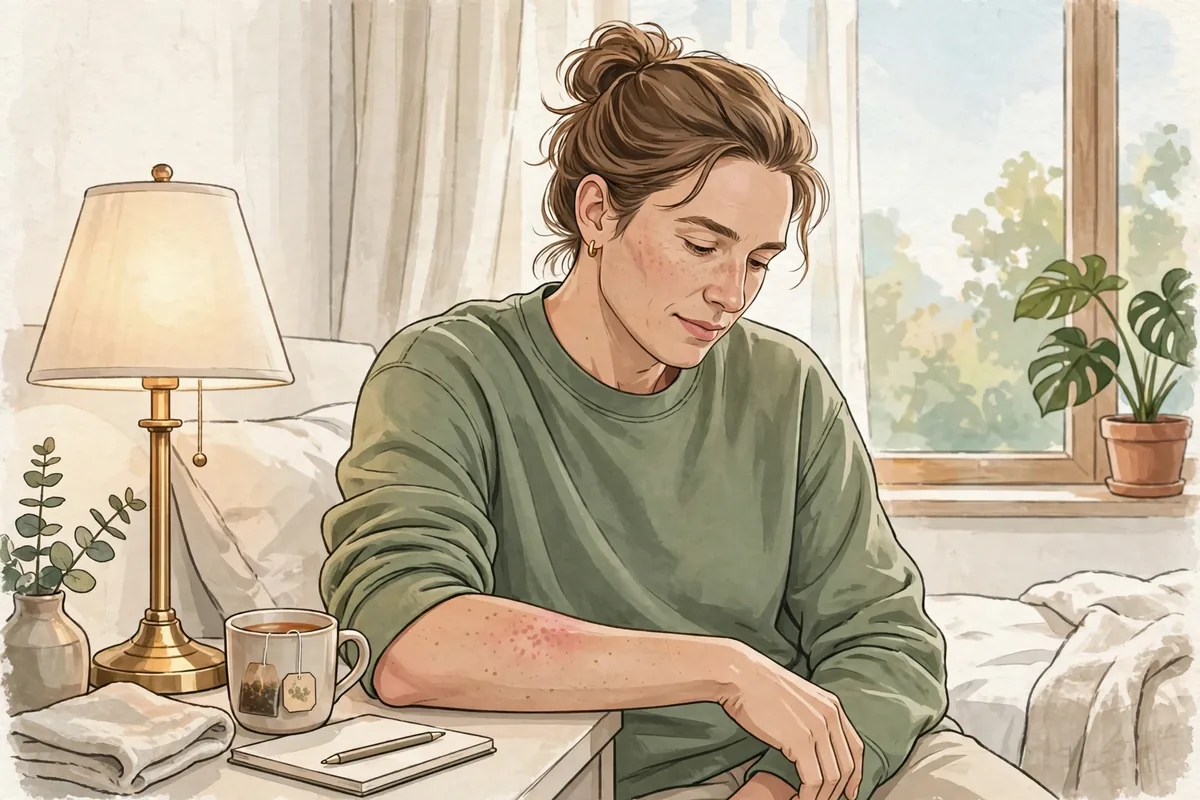
The bites themselves cannot give you a disease, but the complications above are worth managing carefully.
- Resist scratching. Cover bites with a bandage if you scratch in your sleep. Keep nails short and clean.
- Calm the itch safely. A cool compress and an oral antihistamine per label directions can reduce itching and swelling. Talk to your pharmacist if you take other medicines.
- Watch for infection. Redness spreading outward, increasing warmth, swelling that worsens after a few days, pus, or red streaks mean the wound may be infected.
- Document the bites. Phone photos with dates help you and your doctor track whether marks are new, spreading, or healing.
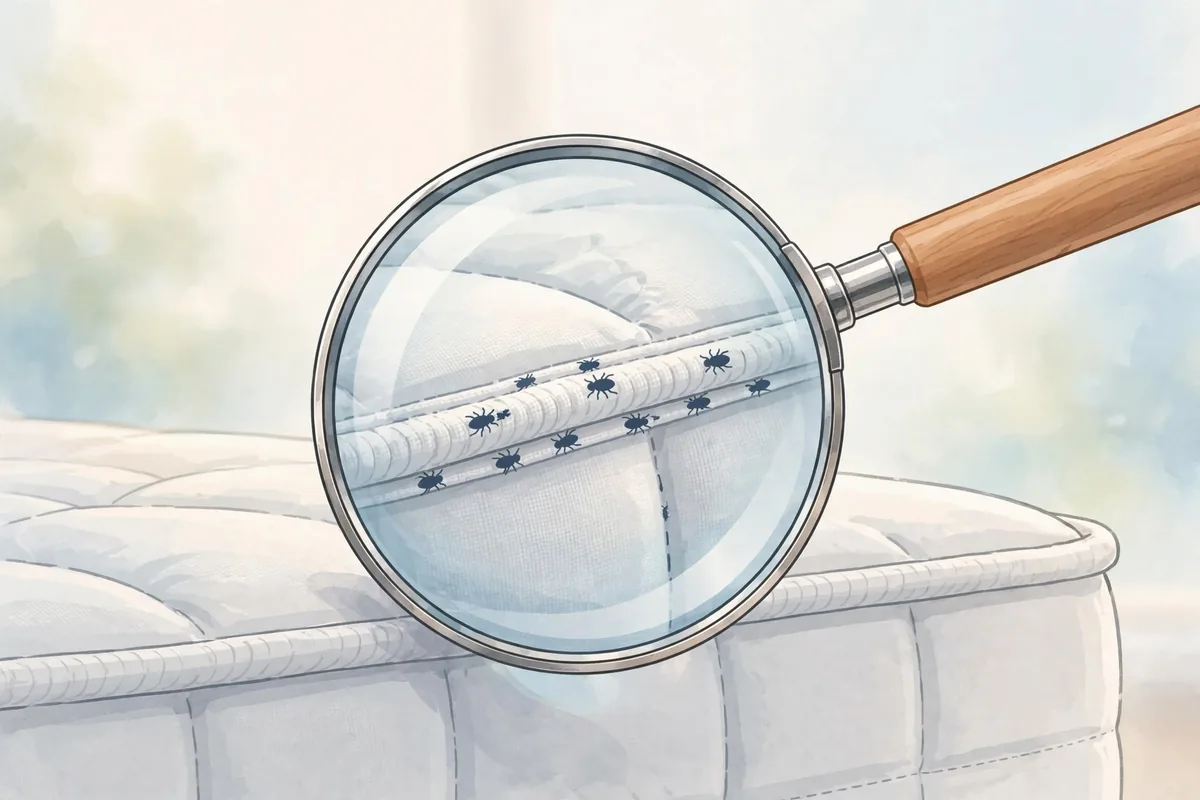
- Inspect the bed. Check mattress seams, box springs, headboard, and nearby furniture for tiny rust-colored insects, shed skins, or dark spots.
- Do not overuse insecticides. The CDC has noted people becoming sick from misusing bed bug sprays — overuse or sleeping on freshly treated bedding. A licensed pest professional is safer for treatment.
For step-by-step wound care once bites appear, see the first-aid steps for bed bug bites.
Warning signs: when to seek care #
Call 911 immediately if you develop trouble breathing or swallowing, swelling of the face, lips, tongue, or throat, widespread hives, dizziness or fainting, or a racing heartbeat after bites — these are signs of a severe allergic reaction. If you carry an epinephrine auto-injector, use it per your action plan.
Outside of emergencies, see a doctor or urgent-care clinic if: redness is spreading, the area feels hot, or red streaks are moving outward; you see pus or the bite is draining; you develop a fever; swelling keeps worsening after 3–4 days instead of improving; bites cluster around the eyes or on a young child’s face; or itching is severe enough to disrupt sleep despite home care. Tell the clinician you suspect bed bug bites and mention any infestation at home.
Frequently asked questions #
Can bed bugs give you Lyme disease or West Nile virus? #
No. Bed bugs have been investigated for transmissibility of numerous infectious agents, including blood-borne pathogens, and no conclusive evidence of disease transmission has been found. Lyme disease comes from ticks and West Nile from mosquitoes — different insects entirely.
If bed bugs do not spread disease, why do health agencies take them seriously? #
Because “no disease transmission” is not the same as “no harm.” The EPA and CDC recognize allergic reactions (rarely severe), secondary skin infections from scratching, sleep disruption, anxiety, and economic costs as genuine public health impacts worth controlling.
Can scratching bed bug bites make them worse? #
Yes. Scratching breaks the skin and lets bacteria in, which can cause impetigo, ecthyma, or cellulitis-type infections. Keeping the area clean, covered, and unscratched is one of the most useful things you can do.
Should I see a doctor for bed bug bites? #
Most bites heal on their own within a week or two. See a clinician if you notice infection signs (spreading redness, warmth, pus, red streaks, fever), a severe allergic reaction, or bites that are not improving. Bring photos and note when the bites appeared.
Medical and editorial note #
This article is general information, not medical advice. Bed bugs are not known to transmit disease, but bite reactions and secondary infections vary by person. If you are worried about bites, a spreading infection, or an allergic reaction, see a healthcare professional for advice about your specific situation.


