
A bee sting on the scalp is hard to deal with for one reason: the stinger hides in hair. The first job is always finding and removing it — a honeybee’s barbed stinger keeps pumping venom as long as it stays in the skin, and hair makes it invisible. Once the stinger is out, scalp stings follow the same healing path as anywhere else, with one quirk: the scalp’s rich blood supply can make the area tender and puffy for a few days.
Finding and removing the stinger through hair #
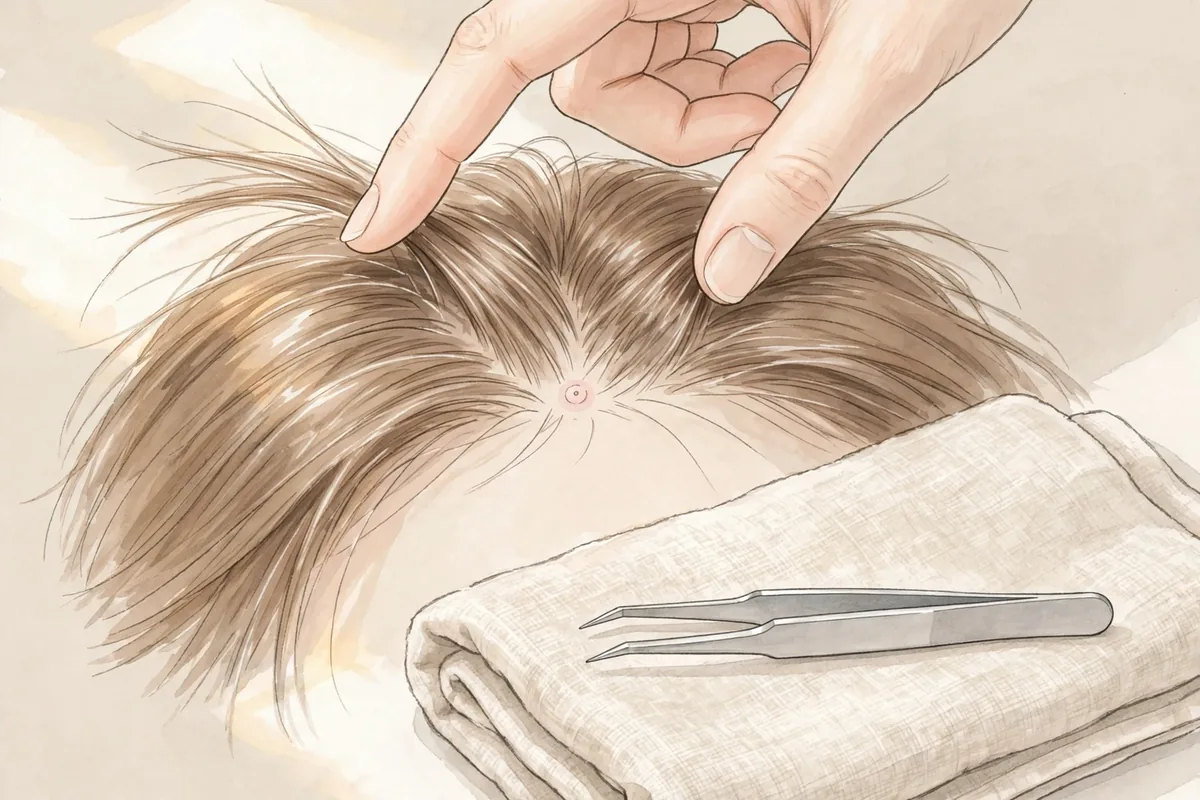
Part the hair and feel for the spot. The sting usually hurts in one precise place. Use your fingertips (not nails) to part the hair around the sore point until you can see or feel the skin. A small red dot or raised bump marks the entry point. If someone else can help, two sets of eyes beat one — have them hold the hair apart while you work.
Remove the stinger by scraping, not squeezing. The classic method — scraping sideways with a fingernail, a bank card, or a piece of gauze — is harder in hair because the strands get in the way. The key principle stays the same: do not pinch the stinger’s venom sac with tweezers, which can inject more venom. Options that work through hair:
- A fine-tooth comb dragged flat across the parted skin can catch and flick the stinger out.
- A credit card or stiff card pressed flat against the scalp and scraped across the spot.
- Gauze or a damp cloth wiped firmly across the spot in one direction.
- Fingernails pinching the skin around the stinger (not the stinger itself) to lift it free.
If a tiny piece remains embedded and you cannot get it out cleanly, do not dig. The body will often expel a small fragment on its own like a splinter. The venom sac is the part that matters most — if the sac is gone, urgency drops. A retained fragment that stays red and sore for more than a day or two is a reason to see a doctor.
Wash the spot. Once the stinger is out, clean the area with soap and lukewarm water. Hair and scalp harbor bacteria, and the sting puncture is a tiny open door — gentle washing is your best infection prevention. The full stinger-removal technique in more detail lives in the remove bee stinger guide.
Immediate first aid after the stinger is out #
Cold compress. Press a cloth-wrapped ice pack or a cool damp cloth against the scalp for 10 to 15 minutes. Cold reduces swelling and numbs the ache. On the scalp, a bag of frozen peas wrapped in a towel molds to the head better than rigid ice.
An oral antihistamine per label directions helps with the swelling and itching that build over the next few hours. Topical creams are less useful here — hair keeps them from reaching the skin — so oral treatment does the heavy lifting for scalp stings.
Do not scratch. Scalp itch under hair is maddening, but scratching with nails tears the healing puncture and invites infection. Press the cool cloth against the spot instead of scratching, or tap the area firmly with your fingertips — tapping satisfies the itch reflex without breaking skin.
Leave the hair alone for a day. Skip tight ponytails, buns, braids, and hats that press on the sting site for the first 24 hours. Pressure on a fresh sting increases throbbing and can push swelling wider.
Scalp swelling: what is normal #
The scalp is one of the most vascular areas of the body, so swelling and tenderness there can feel out of proportion. Normal for a scalp sting:
- A tender, puffy patch around the sting that is sore to touch and to lie on — expect a sore spot on the pillow for a night or two.
- Swelling that grows over the first 24 to 48 hours, then shrinks daily.
- Itching as pain fades, peaking around day 2 to 3.
- A small scab at the puncture point that falls off on its own within a week.
Because the scalp is hidden, it is easy to miss changes. Use your fingertips daily to check the patch: is it getting smaller and less tender? That is healing. Is it getting bigger, hotter, or more painful after day 3? That is the wrong direction. The cold compress guide covers icing technique if swelling needs ongoing management.
One specific scalp concern: swelling that spreads toward the forehead, eyes, or behind the ears. The scalp’s loose tissue lets swelling migrate. A puffy forehead a day after a scalp sting is usually migrating fluid, not an allergy — but swelling that reaches the eyelids or is paired with allergy symptoms needs medical evaluation.
Aftercare: hair, washing, and healing #
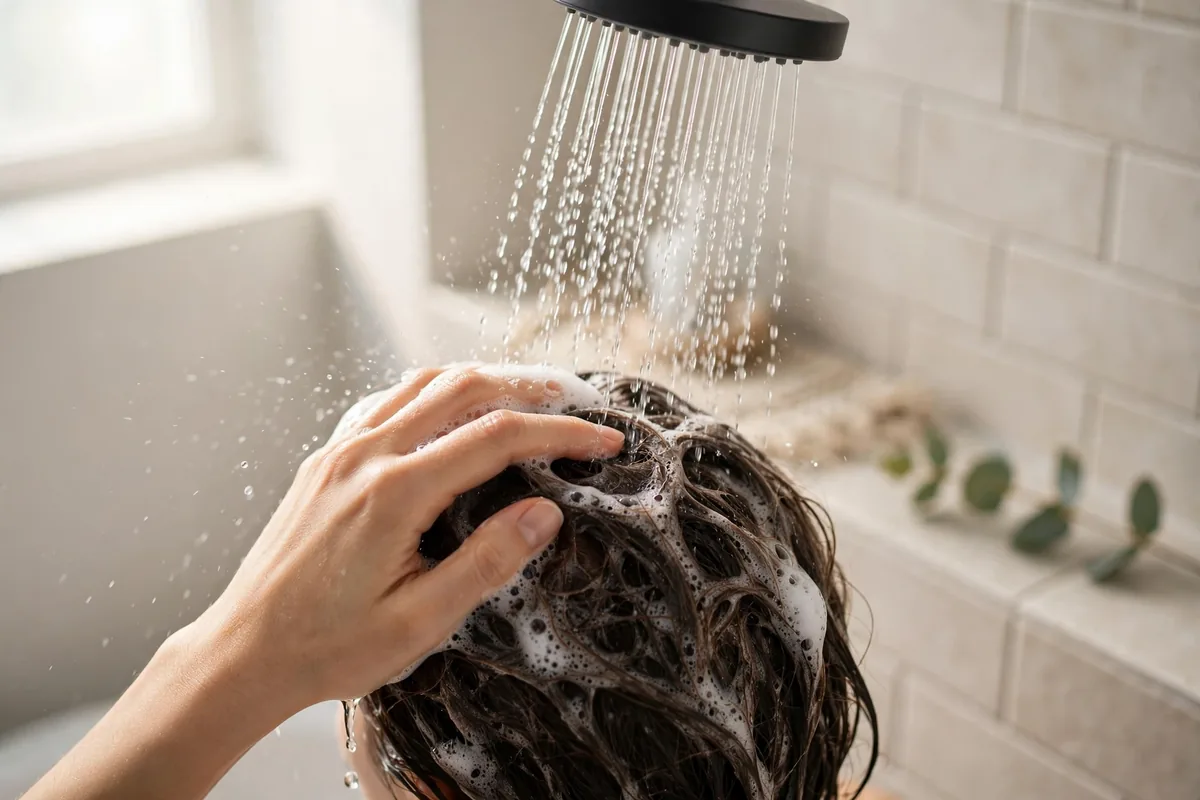
When can I wash my hair? You can wash gently the same day once the stinger is out and the area is cleaned — there is no need to wait. Use lukewarm (not hot) water, a mild shampoo, and your fingertips rather than nails. Rinse thoroughly; shampoo residue on a fresh sting can irritate it.
What about styling products? Skip hairspray, gel, dry shampoo, and anything with strong fragrance on or near the sting for a few days. They are chemical irritants on broken skin. A little plain conditioner on the lengths (away from the scalp) is fine.
Combing and brushing. Brush gently around the spot, not through it. If the puncture scabs, brushing the scab off restarts the healing clock — let it fall away naturally. A wide-tooth comb is kinder than a brush for the first few days.
Watch for infection through the week. Scalp infections from stings are uncommon but possible, and hair hides the early signs. Each day, part the hair and look: increasing redness spreading outward, warmth, pus, or a sore that stays open rather than scabbing are infection signs. Fever or tender swollen lymph nodes in the neck after a scalp sting also warrant a call to the doctor.
Warning signs: when to seek care #
Call 911 immediately if you notice any of these after a sting: trouble breathing or swallowing, swelling of the lips, tongue, or throat, widespread hives or rash beyond the sting site, dizziness or fainting, or a racing heartbeat. These are red flags for anaphylaxis. If you carry epinephrine, use it first and still call 911.
See a doctor or urgent care the same day for: a stinger fragment you cannot remove that stays sore; swelling that keeps growing after 48 hours or spreads toward the eyes; increasing pain, warmth, pus, or red streaks; fever or swollen neck lymph nodes; or any reaction in someone with a known severe sting allergy.
Frequently asked questions #
How do I find a bee stinger in thick hair? #
Feel for the most tender point, then part the hair in sections around it. Having someone else hold the hair back while you look works best. A fine-tooth comb dragged flat across the parted skin often catches the stinger even when you cannot see it.
Is it bad if part of the stinger stays in my scalp? #
Try to get the venom sac out — that is the part that keeps injecting venom. A tiny remaining fragment behaves like a splinter and often works its way out on its own. If the spot stays red, sore, or swollen beyond a couple of days, have a doctor remove it.
Why does my whole head ache after a scalp sting? #
Referred tenderness is common — the scalp’s dense nerve network means pain radiates beyond the sting point, and sleeping on the spot makes it worse. It should ease as the swelling shrinks over a few days. Persistent or worsening head pain after day 3 deserves medical attention.
Can I put hydrocortisone cream on a scalp sting? #
It can help if you can get it to the skin, but hair makes application difficult. Trim nothing — just part the hair, dab a small amount of 1% hydrocortisone cream directly on the spot, and let the hair fall back. An oral antihistamine per label directions is usually the more effective option for scalp stings.
Medical and editorial note #
This document is general information about bee stings to the scalp, not medical advice. The priority is always fast stinger removal, then standard sting care adjusted for hair. If you are worried about a retained stinger, spreading swelling, infection signs, or any allergy symptoms, see a healthcare professional promptly.


