
Nothing rattles a parent like finding red marks on a baby’s skin. The good news about bed bug bites on babies: they are not known to transmit diseases, and most heal on their own within a week or two without treatment. The bad news is that infant skin reacts more dramatically than adult skin — bites can look swollen, spread-looking, or infected when they are actually just a strong local reaction. This guide shows you how to recognize the marks, what you can safely do at home, what to keep away from baby skin, and exactly when to call the pediatrician.
What bites look like on infants #
Bed bug bites on babies tend to appear as small red bumps or welts, often in clusters or a rough line along exposed skin — arms, legs, neck, and face. On infants, three things make them look worse than they are:
- Bigger reactions. Baby skin is thinner and more reactive, so a bite that would be a small dot on you can become a large red welt on them, sometimes with a fluid-filled center.
- Delayed appearance. Marks often show up a day or two after the bite, and new-looking welts can keep appearing for days even after the bugs are gone.
- Easy confusion. Infant bites are routinely mistaken for eczema, hives, heat rash, or viral rashes. A line or cluster pattern on skin that was uncovered during sleep points more toward bed bugs; a rash that is symmetrical or all over the body points elsewhere.
Look for supporting evidence before concluding: tiny rust-colored spots, shed skins, or dark fecal specks along crib mattress seams and nearby furniture. If you are unsure what you are seeing, a visual guide to bed bug bite identification and key clues can help you compare.
One reassurance worth repeating: bed bugs do not transmit diseases to people, per the CDC. The marks are an allergic skin reaction to bug saliva — unpleasant and itchy, but not an infection in themselves.
Safe home care: what you can do #
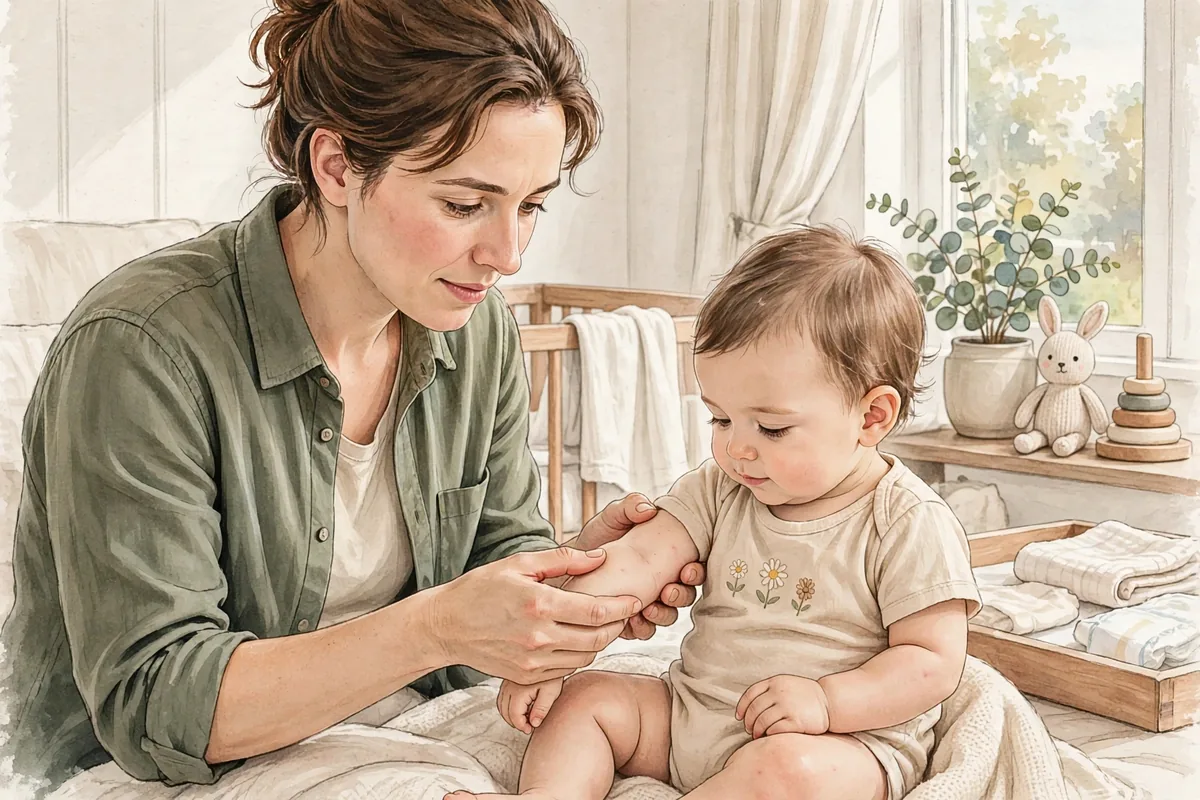
For typical bites on a baby, less is more. Most marks fade on their own within 7–14 days.
- Wash gently. Clean the area once with mild soap and lukewarm water, then pat dry. Do this once — repeated scrubbing irritates infant skin.
- Cool the itch. A cool, damp cloth held on the bite for a few minutes can calm itching and swelling. A cool (not cold) bath works for widespread marks.
- Prevent scratching. Keep nails trimmed short. Soft cotton mittens or a light onesie over the area stops overnight scratching, which is how most bite complications start.
- Oatmeal bath. A lukewarm colloidal oatmeal bath can soothe itchy skin all over. Keep it brief and rinse well.
- Moisturize. Plain, fragrance-free moisturizer on intact skin helps the barrier recover. Skip it on open or weepy spots.
- Medication — ask first. Do not apply adult creams, essential oils, or home remedies to infant skin, and do not give oral medicines without checking with your pediatrician or pharmacist. For persistent itching, your pediatrician can recommend an age-appropriate option and the correct way to use it.
For broader guidance on bite wound care across ages, see safe treatment and home care for bites on babies.
What NOT to do on baby skin #
Infant skin absorbs more and reacts more. Avoid all of these:
- Adult-strength creams. Hydrocortisone, antihistamine creams, and “maximum strength” itch products are formulated for adults. Do not improvise with them on babies.
- Essential oils and home remedies. Tea tree oil, vinegar, baking soda pastes, and toothpaste can burn or severely irritate infant skin.
- Hot water or ice directly. Lukewarm is the rule. Ice straight on the skin can injure delicate tissue.
- Tight bandages or picking. Do not squeeze, pop, or pick at welts — that is the fastest route to a secondary infection. If you cover a bite, use a loose, breathable bandage.
- Bug spray on the baby. Insecticides and most repellents are not for young infants. Handle the bugs with laundering, vacuuming, and (if needed) a licensed pest professional — never by spraying near the crib.
Making the crib a harder target #
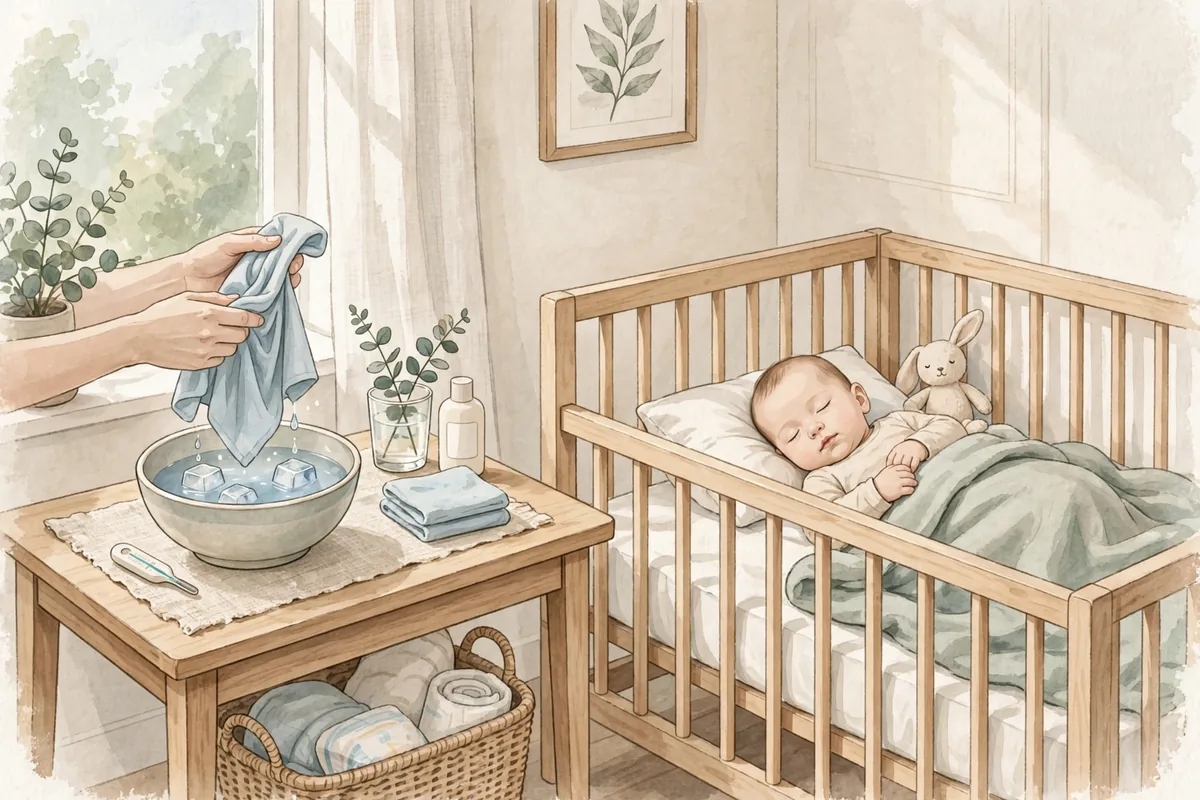
Bed bugs feed at night near where people sleep, and a crib is no exception. While you deal with the infestation itself:
- Strip and hot-launder all crib bedding, blankets, and nearby soft items on the hottest safe setting, then dry on high heat.
- Vacuum the crib frame, mattress seams, and surrounding floor thoroughly; empty the vacuum outside immediately.
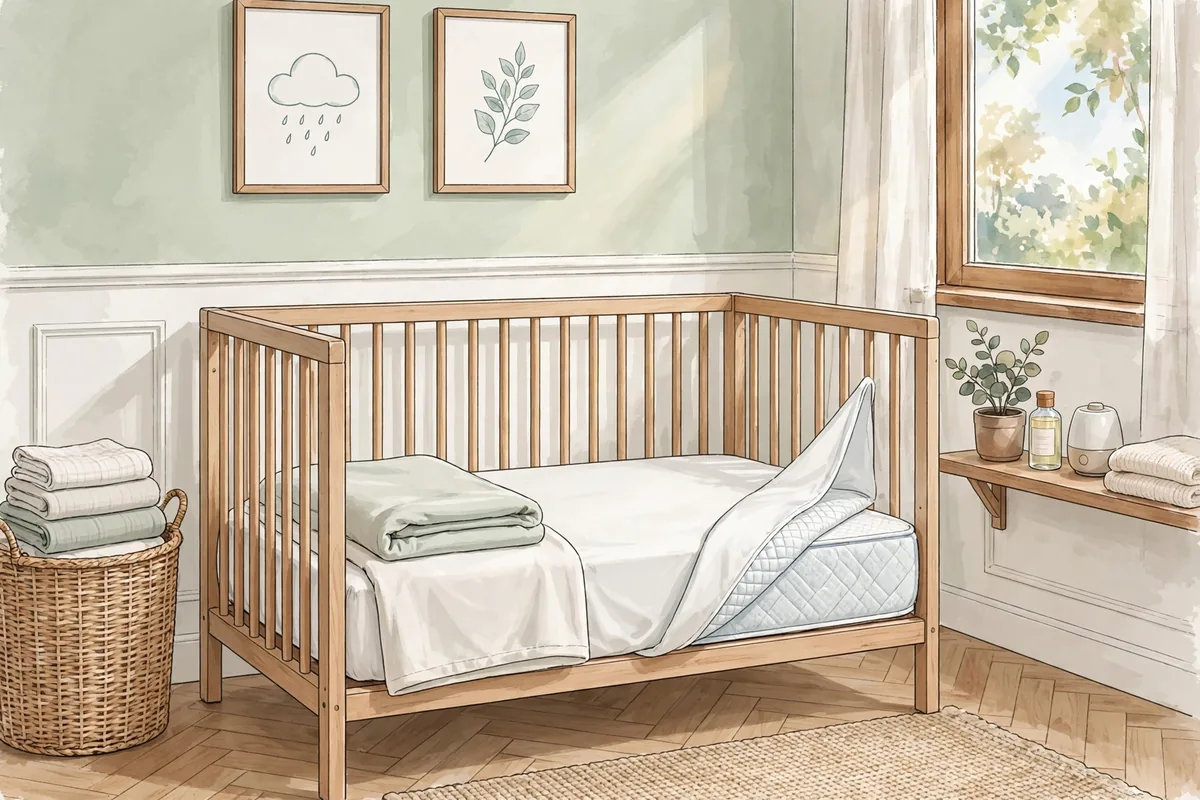
- Use a smooth mattress encasement rated for bed bugs — it traps any bugs inside and makes new ones visible on the surface.
- Reduce hiding spots: pull the crib a few inches from the wall, declutter around it, and avoid storing soft toys in the crib during an infestation.
- Inspect nightly for a week after treatment. New bites appearing after two weeks suggest the infestation is still active and needs professional follow-up.
Do not move the baby to sleep on the couch or in another room as a workaround — bed bugs travel with people and bedding, and you risk spreading them through the house.
Warning signs: when to seek care #
Call 911 immediately if your baby develops trouble breathing, swelling of the face, lips, or tongue, widespread hives, unusual limpness or unresponsiveness, or a bluish color around the lips after bites — these are severe allergic reaction red flags in infants.
Call your pediatrician promptly if: any bite area shows spreading redness, increasing warmth, swelling that worsens after several days, pus, yellow crusts, or red streaks; your baby develops a fever; the baby is scratching constantly, not sleeping, or unusually fussy; bites are clustered around the eyes; or marks are not improving after two weeks. Mention suspected bed bugs so the doctor can distinguish a local reaction from a secondary skin infection, which may need prescription treatment.
Frequently asked questions #
How long do bed bug bites last on babies? #
Most fade within 7–14 days. Because infant skin reacts strongly, the redness may look dramatic for the first few days before improving. Marks that are still worsening after a week, or new welts appearing for weeks, deserve a pediatrician visit and a re-check of the home.
Can bed bug bites make my baby sick? #
Bed bugs are not known to transmit diseases. What can make a baby unwell is a secondary bacterial infection from scratching, or a severe allergic reaction (rare). Keeping the skin clean, covered, and unscratched prevents almost all complications.
Should I treat the whole house or just the crib? #
Treat the whole problem, not just the crib. Bed bugs hide in nightstands, baseboards, and nearby furniture. Launder and vacuum the sleeping area thoroughly, and call a licensed pest professional for the infestation itself — DIY sprays around a baby’s sleep space are risky and often ineffective.
My baby has no bites but my older child does. Why? #
Reactions vary enormously between people — some show no reaction at all, especially at first, while others welt up dramatically. Lack of visible bites on the baby does not prove the baby was not bitten, nor does it prove there are no bed bugs. Base the infestation check on physical evidence (bugs, shed skins, spots), not on who has marks.
Medical and editorial note #
This article is general information, not medical advice. Infant skin reactions vary, and only a clinician who examines your baby can diagnose a rash or infection. If you are worried about bites, spreading redness, fever, or your baby’s comfort, contact your pediatrician promptly.


