
Woke up with new bites and wondering whether it was bed bugs or mosquitoes? The bed bug bite vs mosquito bite question is one of the most common bite-identification puzzles, and the answer matters: one points to your mattress, the other points to last night’s open window. The fastest clues are the pattern of the bites and when they appeared.
Side-by-side: bed bug bite vs mosquito bite #
| Feature | Bed bug bites | Mosquito bites | |—|—|—| | Pattern | Groups of 3–5 in a line or zigzag (“breakfast, lunch, dinner”) | Scattered single bites, random placement | | Location | Exposed skin during sleep — arms, shoulders, neck, face | Any exposed skin, wherever bitten | | Timing | Appear overnight, often discovered in the morning | Appear within minutes to hours of the bite | | Size | Small red bumps, roughly uniform in size | Larger, puffier welts, vary in size | | Center | Often a small red dot at the center of each bump | Usually no distinct center dot | | Itch | Intense, can feel worse over days | Intense at first, fades faster | | How long they last | Up to a week or two; similar for both | Up to a week or two; similar for both |
No single feature is a fingerprint — bite reactions vary a lot between people — but the combination of pattern plus timing is the strongest identifier you have. Several small, similar-sized bumps in a row that showed up overnight lean bed bug. One big puffy welt that appeared right after you were outside leans mosquito.
The line-and-cluster clue #
The line pattern is the single most useful visual difference. A bed bug feeds, moves a short distance, and feeds again — often probing a few times in one night. That produces the classic line or cluster of 3 to 5 similar bumps. Mosquitoes usually bite once and leave, so their bites land wherever the mosquito happened to land: an ankle, an elbow, a wrist — scattered and unrelated.
Why does this work better than anything else? Because your own reaction can fool you. Some people barely react to bed bug bites and others welt up dramatically; the same range exists for mosquitoes. A giant mosquito welt can look “worse” than a mild bed bug bump. Pattern cuts through that noise because it reflects insect behavior, not your immune system.
One caution: the line pattern is not guaranteed. A single bed bug bite can happen, and sleeping position can make clusters overlap into one patch. If you want a structured walk-through, the guide on bites in a line or cluster breaks down what arrangements mean.
Timing and location tell the story #
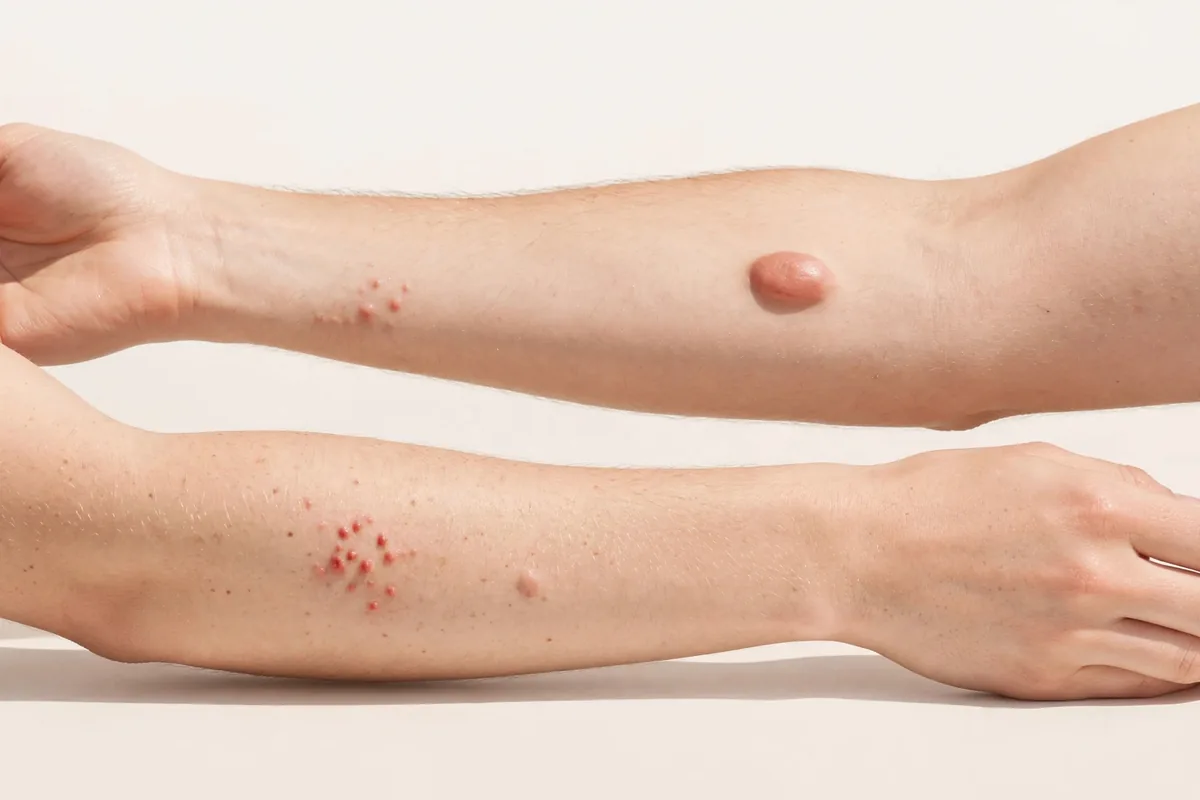
When did the bites appear? Bed bugs feed at night and their bites are usually noticed in the morning — flat, red bumps on skin that was uncovered while you slept. Mosquito bites usually announce themselves within minutes to hours: you feel the itch while you are still awake, often right after being outdoors or near an open window.
Where on the body? Bed bug bites concentrate on skin exposed during sleep — arms, shoulders, neck, face, hands. If you slept in a long-sleeve shirt and only your neck and hands have bumps, that is a bed-bug-shaped clue. Mosquito bites cluster where skin was exposed at the time of the bite — ankles at dusk, arms at a barbecue — and can appear anywhere.
Does the itch pattern differ? Both itch, sometimes badly. Mosquito itch typically peaks early and fades over a few days. Bed bug itch can ramp up over the first couple of days and feel relentless. Neither difference is diagnostic on its own, but together with pattern and timing they build a picture. A slower way to confirm is to run through the evidence systematically with the bite and sting clue checklist.
Check the room, not just the bites #
Bites alone are a weak way to diagnose bed bugs — skin reactions mimic each other too easily. The EPA notes that bite marks are a poor indicator of infestation and that physical evidence is far more reliable. If your clues point toward bed bugs, look for the bugs themselves:
- Mattress seams and box-spring edges — check folds and piping for live bugs (apple-seed sized, reddish-brown), shed skins, or tiny dark specks (droppings).
- Headboard and bed frame joints — crevices and screw holes are favorite hiding spots.
- Nightstand and wall behind the bed — bugs travel a few feet to feed and retreat.
- Sheets and pillowcases — small rust-colored smears (crushed bugs) or dark pen-point-sized spots on bedding.
No bugs, no shed skins, no spots, and bites only after being outdoors? That points back to mosquitoes. If you travel, check hotel rooms the same way before unpacking — a two-minute seam check beats a week of itching.
What to do once you know which it is #

If it looks like mosquitoes: treat the itch and move on. Wash the bites, apply a cold compress, and use an oral antihistamine per label directions or 1% hydrocortisone cream for itching. Do not scratch — it lengthens healing and opens the door to infection. Prevention is a window screen, an EPA-registered repellent on exposed skin, and dumping standing water around the house.
If it looks like bed bugs: do not panic, but do act. Strip the bed and wash bedding and pajamas in hot water, then dry on the hottest setting — heat kills bed bugs at all life stages. Vacuum the mattress seams, box spring, and bed frame thoroughly and empty the vacuum outside. Reduce clutter around the bed to remove hiding spots. Avoid scattering the bugs: do not move the mattress to another room, and do not sleep on the couch (they will follow you). For a real infestation, call a pest professional — over-the-counter foggers scatter bugs deeper into hiding.
Both cases: the treatment for the bites themselves is the same — cool compresses, anti-itch measures, and keeping the skin intact. The difference is what you do about the source.
Warning signs: when to seek care #
Call 911 immediately if you notice any of these after a bite: trouble breathing or swallowing, swelling of the lips, tongue, or throat, widespread hives or rash beyond the bite sites, dizziness or fainting, or a racing heartbeat. Severe allergic reactions to bed bug or mosquito bites are rare but real.
See a doctor or urgent care for: bites that become increasingly painful, warm, or swollen after a few days; pus or red streaks spreading from a bite; fever; or bites that keep appearing nightly despite prevention steps (possible infestation that needs professional handling). Also seek care if intense itching disrupts sleep for more than a few nights — prescription-strength relief exists.
Frequently asked questions #

Can you tell bed bug bites from mosquito bites just by looking? #
Usually not with certainty. Skin reactions overlap too much — a mild bed bug bump can look identical to a mild mosquito bite. The reliable identifiers are the pattern (line or cluster vs. scattered), the timing (overnight vs. right after exposure), and physical evidence of bed bugs in the room.
Do bed bug bites always appear in lines of three? #
No — the “breakfast, lunch, dinner” line is common but not required. Single bed bug bites happen, and clusters can blur into patches. Use the line as a clue, not a rule.
Which itches more, bed bug bites or mosquito bites? #
It varies by person more than by insect. Some people find bed bug itch builds over days and feels worse; others react more to mosquitoes. Either way, the anti-itch treatment is the same: cool compresses, an oral antihistamine per label directions, and not scratching.
Do I need antibiotics for bed bug or mosquito bites? #
Not routinely. Simple bites are not infections. Antibiotics only enter the picture if a bite becomes secondarily infected — increasing pain, warmth, pus, red streaks, or fever — and that call belongs to a doctor who can see the site.
Medical and editorial note #
This document is general information about identifying common bites, not medical advice. Bite identification from appearance alone is unreliable; when the pattern and timing are unclear, physical evidence of the insect matters more than the bumps. If you are worried about your symptoms or a possible infestation, see a healthcare professional or a licensed pest professional as appropriate.


