
You cannot see them, you can barely reach them, and they itch with a special intensity — mosquito bites on the scalp are uniquely miserable. Mosquito bites on the scalp treatment focuses on cooling the itch without breaking the skin, using hair-friendly products, and resisting the scratch that turns a simple bite into an infected sore.
Why Scalp Bites Itch So Intensely #
The scalp is dense with nerve endings and blood vessels, which is why a bite there feels worse than the same bite on your forearm. Blood flow is rich, so the local immune reaction — the histamine response that causes the red bump and itch — runs hot. Hair traps warmth and moisture against the skin, keeping the area irritated longer.
You also notice scalp bites late. They hide under hair until the itching starts, often hours after the bite, which means the reaction is already well underway by the time you find the bump. And scratching is almost automatic — a quick rake with the fingernails feels like relief but tears the thin scalp skin, which is exactly how a minor bite becomes a weeping, scabbed sore.
People with short hair, thinning hair, or shaved heads get bitten on the scalp more directly; people with thick hair usually get bitten along the hairline, behind the ears, and at the nape where mosquitoes find skin. Either way, the treatment principles are the same.
Treating Scalp Bites Through Hair #
The challenge is delivering relief to skin buried under hair. Work through these steps:
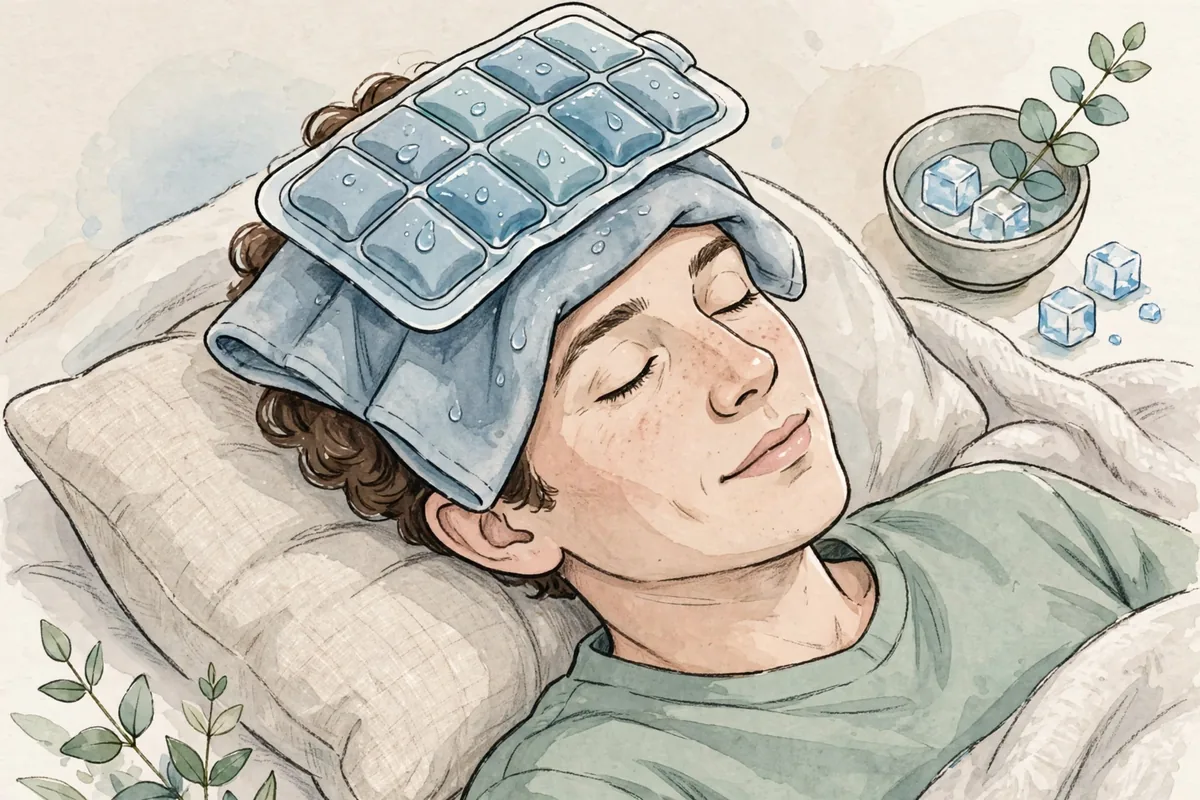
- Cool first. Press a cold, damp cloth against the itchy spot for 10 minutes. Cold constricts blood vessels and numbs the itch without any product at all. An ice cube in a thin cloth works for spots you can isolate.
- Use a liquid or light product, not a thick cream. Heavy creams mat the hair and barely reach the skin. Better options: witch hazel on a cotton ball dabbed along the part, aloe vera gel (the clear kind) worked into the spot, or a calamine lotion applied with a cotton swab directly on the bump.
- Try 1% hydrocortisone. A small dab of hydrocortisone cream or the liquid/solution formulation, massaged through the hair onto the bump, calms the inflammatory itch. Use it short-term — a few days — as directed on the label.
- Consider an oral antihistamine per label directions if itching is widespread or keeping you up at night. This treats the histamine response from the inside, which is genuinely useful when you cannot reach every bite.
- Keep the area clean. Wash the hair normally — clean skin heals faster, and shampooing is fine over bites as long as you are gentle. Avoid harsh scrubbing or scratchy brushes over the bumps.
Do not scratch. This is the whole game with scalp bites. Shorten your nails, and if the urge is overwhelming, press the spot firmly with a fingertip or the cold cloth instead — pressure satisfies the itch reflex without breaking skin. The general rule against scratching and squeezing applies everywhere, and the scalp is no exception: see don’t scratch or squeeze a bite for why this matters so much.
What Not to Put on Scalp Bites #
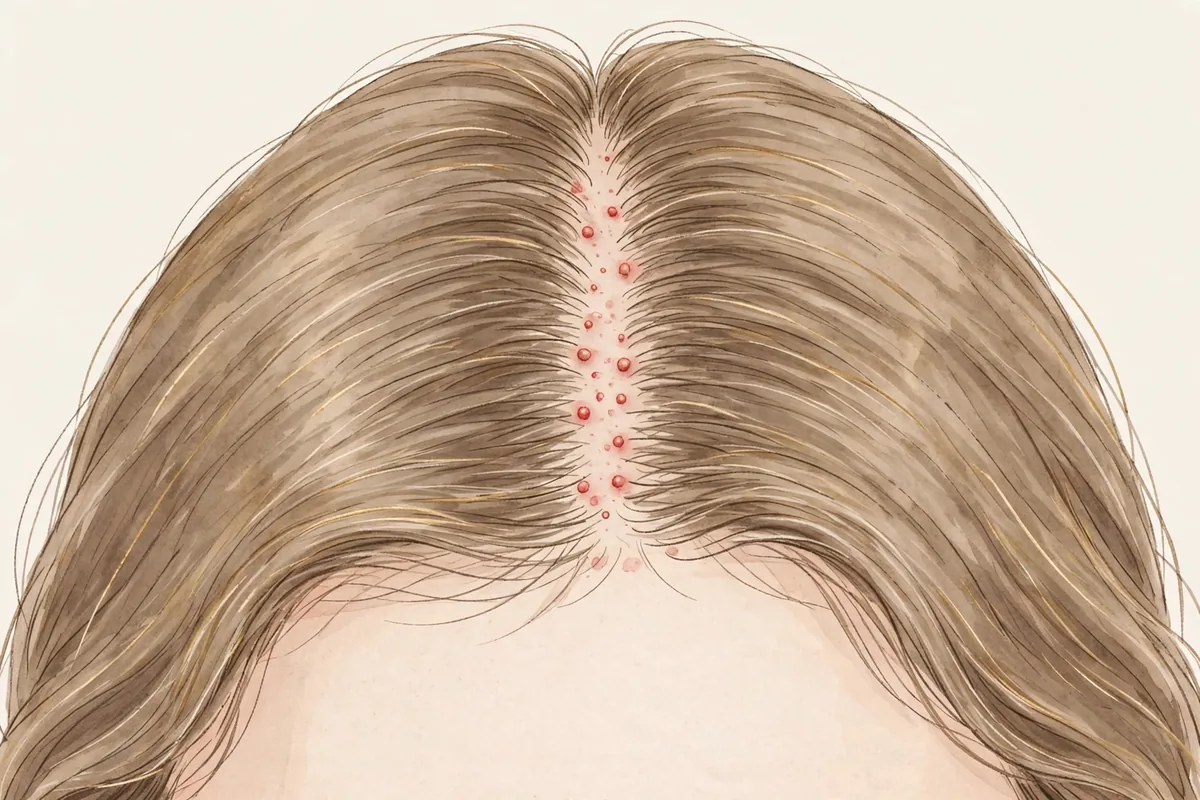
The scalp is not the forearm — some common bite remedies cause more trouble here:
- No picking or popping. Bumps that look like pimples are usually just inflamed bites. Breaking them creates an open wound in a bacteria-rich environment (warm, moist, under hair).
- No undiluted essential oils. Tea tree oil and similar products are often suggested online, but undiluted oils can irritate or burn the scalp, especially on broken skin. Evidence for their benefit on bites is limited.
- No scratching with combs, brushes, or hair tools. Anything with teeth or bristles tears the bump open.
- No sharing hats, combs, or pillowcases while bites are oozing — not because bites are contagious (they are not), but because broken skin plus shared items spreads bacteria.
- Go easy on styling products over the bites for a few days. Gels, sprays, and dry shampoo can sting broken skin and trap irritants against it.
If a bump develops a yellow crust, oozes, or becomes increasingly painful rather than itchy, that points toward a secondary bacterial infection (such as folliculitis or impetigo) rather than a simple bite — and that needs medical evaluation, not more home remedies.
Preventing Scalp Bites #
Mosquitoes find the scalp when it is exposed and they are active — typically dusk through dawn.
- Cover up at peak hours. A hat is the single best scalp-bite prevention, especially a wide-brim style that also shades the neck and ears. For camping or heavy mosquito areas, a head net over the hat is unbeatable.
- Use repellent correctly. Apply insect repellent to exposed skin around the hairline, ears, and neck — not directly into thick hair, where it does little and irritates. For the scalp itself under a hat, the physical barrier does the work.
- Protect the sleeping area. If mosquitoes get indoors, a bed net or a fan blowing across the bed keeps them off your head at night. Window screens in good repair matter more than any spray.
- Tie hair back in mosquito country — loose hair gives mosquitoes sheltered landing zones near the scalp, and it makes bites harder to find and treat.
- Treat the yard. Dump standing water (mosquito nurseries), keep grass trimmed, and consider a fan on the patio — mosquitoes are weak fliers and avoid moving air.
For itch control strategies that work beyond the scalp, reduce bite itching collects the most reliable methods in one place.
How Long Scalp Bites Last #
A typical mosquito bite — scalp included — itches most for the first 24 to 48 hours and fades over 3 to 7 days. Scalp bites sometimes feel like they linger because every hair movement tugs at the bump and re-triggers the itch. If a bump is still growing after several days, becomes hard and hot, or develops the infection signs below, the timeline has diverged from normal and needs a professional look.
Warning signs: when to seek care #
Call 911 immediately if a bite is followed by signs of a severe allergic reaction — these are rare with mosquito bites but always urgent: trouble breathing or swallowing; swelling of the face, lips, tongue, or throat; widespread hives; dizziness or fainting.
See a doctor or urgent care promptly if: a scalp bump shows spreading redness, increasing pain, warmth, yellow crusting, or pus (likely secondary infection); you develop fever after multiple bites; a bump does not improve after a week or keeps enlarging; or you notice many bites plus flu-like symptoms (headache, body aches, fever) in the days after heavy mosquito exposure, which can signal a mosquito-borne illness worth evaluating.
Frequently asked questions #

Why do mosquito bites on my head itch more than bites elsewhere? #
The scalp has a dense network of nerves and blood vessels, so the histamine-driven itch response feels stronger. Warmth trapped under hair keeps the area irritated, and you cannot easily see or cool the bites, which delays treatment.
Can I use hydrocortisone cream on scalp bites? #
Yes — a small amount of 1% hydrocortisone dabbed directly on the bump through the hair is a standard itch remedy. Liquid or solution formulations reach the skin more easily than thick creams. Use it short-term as the label directs, and stop if the skin becomes irritated.
How do I stop scratching scalp bites in my sleep? #
Keep nails short, apply an oral antihistamine per label directions before bed if itching is severe, and cool the worst spots with a damp cloth at bedtime. Some people find a snug sleep cap reduces unconscious scratching. If nighttime scratching keeps breaking the skin open, that is worth mentioning to your doctor.
Are bumps on my scalp definitely mosquito bites? #
Not necessarily. Folliculitis, seborrheic dermatitis, contact irritation from hair products, and even shingles can all produce itchy scalp bumps. Mosquito bites are most likely if you have had recent outdoor evening exposure and the bumps appeared within hours, are intensely itchy, and fade within a week. Persistent, painful, or spreading bumps deserve medical evaluation rather than assumption.
Medical and editorial note #
This article is general information, not medical advice. Most mosquito bites heal on their own, but infected bites and mosquito-borne illnesses are real — if a scalp bump is worsening instead of improving, or you feel systemically ill after heavy mosquito exposure, see a healthcare professional promptly.


