
Cats get ticks more often than most owners expect — especially cats that roam, hunt, or nap in tall grass. How to check your cat for ticks comes down to a calm, methodical 7-step routine: good lighting, fingertips against the fur, and a sweep of the warm, hidden spots where ticks prefer to attach.
Before You Start: Setup #
Pick a calm moment — after a meal or a nap works better than right after an exciting outdoor session. Settle your cat on your lap or a table with a towel underneath. You need bright light: a desk lamp, a sunny window, or a flashlight. Keep fine-tipped tweezers and a small jar of rubbing alcohol nearby in case you find one.
Run your hands slowly over the whole body first, going against the direction of the fur. You are feeling for small bumps — an unfed tick can be as tiny as a poppy seed, while an engorged one feels like a small wart or smooth gray-brown bead. Common look-alikes include scabs, skin tags, and nipples, so do not yank anything until you are sure it is a tick: ticks have visible legs tucked against the body, and the head is embedded in the skin.
Step 1: Check the Head and Neck #
Ticks gravitate to the warmest areas, and the head and neck top the list. Stroke the fur backward around the cheeks, chin, forehead, and the scruff. Cats that push through brush and tall grass pick up “questing” ticks on the face first — ticks do not jump or fall from trees; they latch on when the cat brushes past vegetation.
Lift the fur in sections rather than just patting the surface. Short-haired cats are easier to check, but long-haired cats need the coat parted down to the skin, especially around the ruff where a tick can hide for days.
Step 2: Check the Ears and Face #
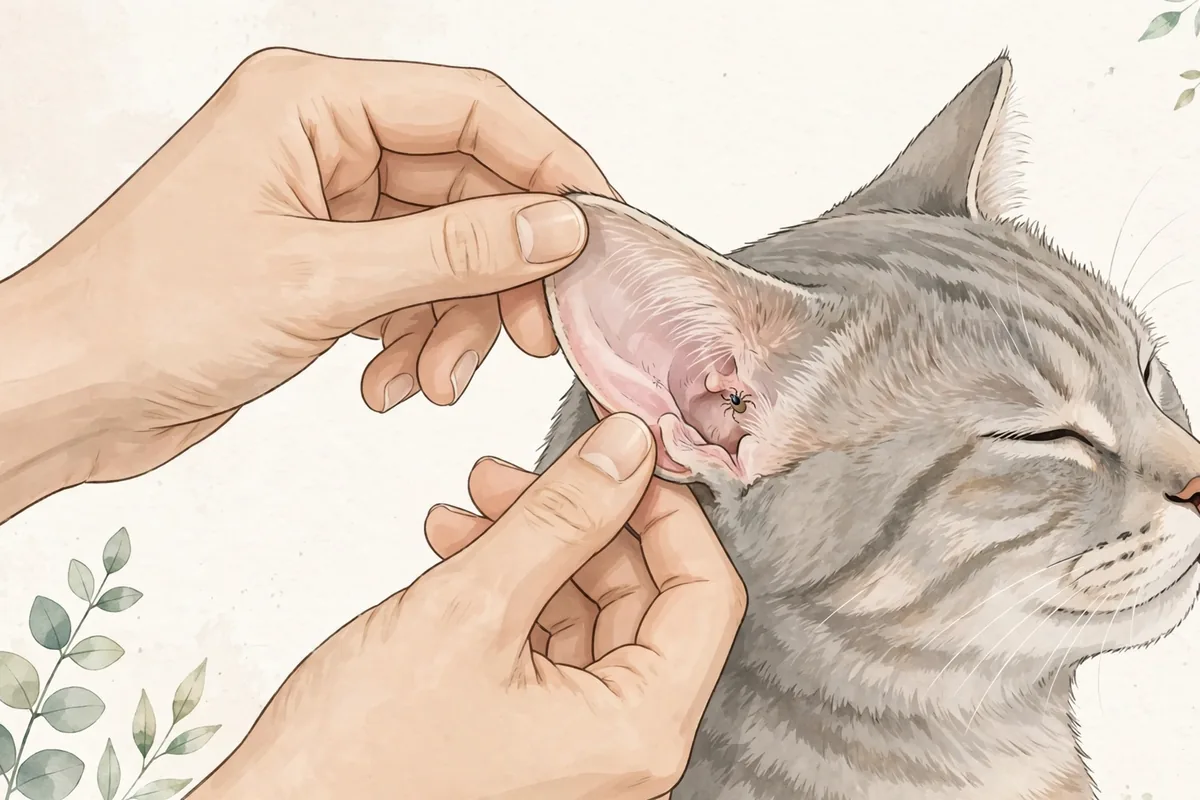
Look inside each ear flap and behind the ears — these thin-skinned, warm spots are prime real estate for ticks. Gently fold the ear back and inspect the inner surface and the crease where the ear meets the head. Check around the eyes, the eyelid edges, and the lips too.
If your cat wears a collar, slide it aside and check the skin underneath and around it. Ticks frequently settle in the sheltered ring under a collar. While you are there, this is a good moment to confirm the collar still fits with two fingers of slack — a collar that has tightened over a growing cat causes its own skin problems.
Step 3: Check the Belly, Groin, and Tail Base #
Turn your attention to the underside: the armpits, the belly, and the groin. Ticks are drawn to moist, protected areas, so the groin and the base of the tail deserve a careful look. Lift the tail gently and check the skin around its base and the rear.
Many cats dislike belly handling, so keep this step brief and reward cooperation with a treat or chin scratches. If your cat will not tolerate it, try again later rather than forcing it — a stressed cat will remember the experience and fight the next check too.
Step 4: Inspect the Paws and Between the Toes #
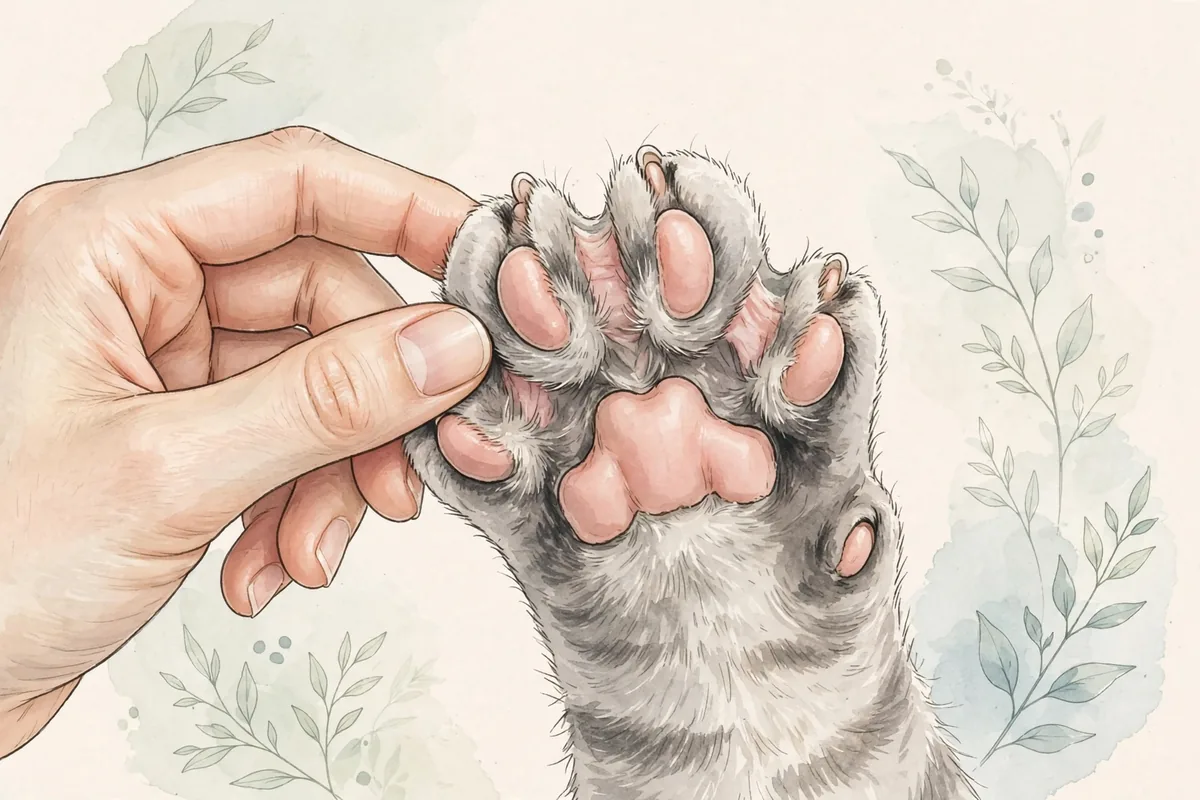
Spread each paw gently and look between the toes. The gaps between the claws are warm, dark, and hard for the cat to groom — a favorite tick hiding spot on both cats and dogs. Also check the top of each foot and up the lower leg.
While you are down there, glance at the paw pads for thorns, burrs, or small cuts from outdoor roaming. Outdoor cats collect all kinds of debris, and a quick paw check catches more than ticks.
Step 5: Do a Full-Body Sweep #
Finish with a nose-to-tail pass: run your fingertips firmly over the back, sides, and flanks, feeling for anything raised. Part the fur wherever you feel a bump. Do not forget the area around the tail tip and the backs of the thighs.
This is also your chance to notice other issues — flea dirt, bald patches, scabs from fights, or lumps that were not there last week. A weekly body sweep is one of the highest-value habits an outdoor-cat owner can build.
Step 6: Check Any New Bumps Carefully #
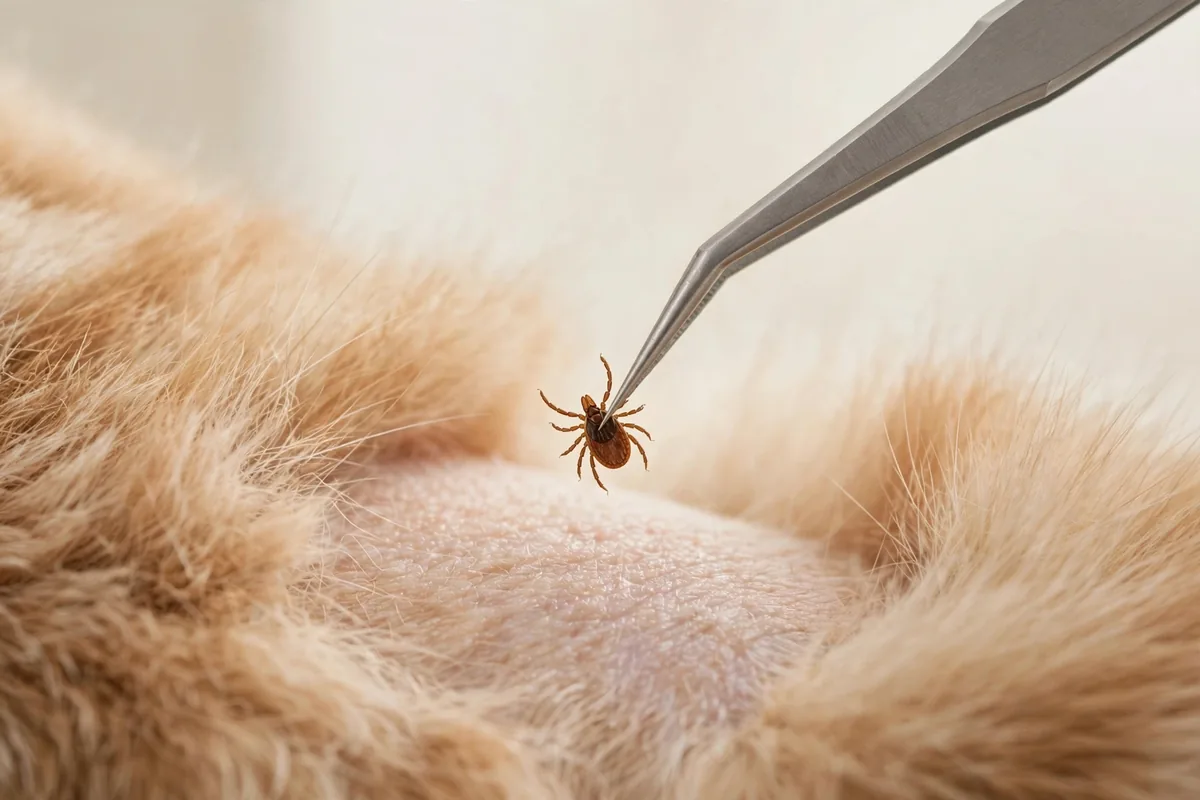
When you find a suspicious bump, stop and identify it before acting. A tick’s body is oval and firm, with tiny legs visible around the edges and the mouthparts buried in the skin. A scab flakes or has dried blood; a wart or skin tag is attached by a stalk of skin and has no legs.
If you are unsure, take a clear photo and call your vet rather than guessing. Mistakenly ripping off a nipple, mole, or healing wound causes bleeding and pain — and it happens more often than people admit.
Step 7: What to Do If You Find a Tick #
- Remove it with fine-tipped tweezers. Grasp the tick as close to the skin as possible and pull straight upward with steady pressure. Do not twist, jerk, or squeeze the body.
- Do not use folk remedies. Nail polish, petroleum jelly, alcohol, or a hot match do not make ticks release — they irritate the tick and can make it regurgitate into the wound, raising infection risk.
- Clean the bite site with mild soap and water, then wash your hands.
- Save the tick in a jar of rubbing alcohol labeled with the date. If your cat gets sick later, identification helps the vet.
- Watch the site and your cat for the next two to four weeks: expanding redness, swelling, lethargy, appetite loss, or fever all warrant a vet call. Cats can pick up tick-borne illnesses including cytauxzoonosis (bobcat fever, spread by the lone star tick — often severe in cats), tularemia, and anaplasmosis. For guidance on safe removal technique in detail, see remove an attached tick safely.
Tick Prevention for Cats #
The best tick check is one that finds nothing. Ask your vet about a tick preventive registered specifically for cats — this matters enormously, because some dog tick products contain permethrin, which is highly toxic to cats and can be fatal. Never apply a dog flea or tick product to a cat, even a small amount, and keep cats away from recently treated dogs until the product dries.
Additional steps: keep grass mowed and brush cleared near the house, discourage roaming with indoor enrichment (ticks are an outdoor hazard your cat meets outside), and check the cat every time it comes in from tall grass or woods. Year-round vigilance beats seasonal panic — ticks can be active whenever temperatures allow, not just in summer. After any bite, the weeks of monitoring matter as much as the removal itself; see tick bite aftercare for the next few weeks.
Warning signs: when to seek care #
Call your vet or an emergency animal hospital immediately if your cat shows any of these red flags after a tick bite or tick exposure: sudden high fever, extreme lethargy or collapse, loss of coordination, difficulty breathing, pale or yellow-tinged gums, loss of appetite lasting more than a day, or swelling and pus at the bite site. Multiple attached ticks can also cause weakness from blood loss in small cats and kittens — treat heavy infestations as urgent.
Call your regular vet promptly if a tick’s head breaks off and stays embedded, if redness around the bite spreads over several days, or if your cat develops limping, joint swelling, or unusual tiredness in the weeks after a bite. And if your cat ever shows signs of permethrin exposure (twitching, tremors, drooling after contact with a dog tick product), that is an emergency — get to the vet immediately.
Frequently asked questions #
How often should I check my cat for ticks? #
Check every time your cat comes indoors from grassy, brushy, or wooded areas — daily in tick season if your cat roams. At minimum, do a full body sweep once a week for any cat with outdoor access. Ticks can transmit disease after roughly a day or more of attachment, so prompt checks genuinely reduce risk.
Where do ticks hide most on cats? #
The face, ears (inside and behind), neck, under the collar, armpits, groin, base of the tail, and between the toes. These warm, sheltered spots are where ticks settle first. But ticks can attach anywhere, so finish with a full-body sweep every time.
Can indoor cats get ticks? #
Yes, though it is less common. Ticks can ride in on dogs, on your clothing, or through open windows and screens. Indoor-outdoor cats and cats in multi-pet households are at higher risk. If you find a tick on a strictly indoor cat, check your other pets and your yard too.
Should I save the tick after removing it from my cat? #
Yes — drop it in rubbing alcohol in a dated container. If your cat develops symptoms weeks later, your vet may want the tick identified to narrow down which diseases to test for. It costs nothing and can save diagnostic time.
Medical and editorial note #
This guide is general information about pet care, not veterinary advice. Tick-borne diseases vary by region, and product safety depends on your individual cat — always consult your veterinarian about prevention products, suspicious bites, and any illness that follows tick exposure.


