
Dogs love to snap at buzzing bees, and the muzzle is exactly where the sting lands most often. Dog stung by bee on muzzle treatment starts with calmly removing the stinger, cooling the swelling, and watching closely for allergic reactions over the next several hours.
Step 1: Stay Calm and Check the Sting Site #
Your dog will probably yelp, paw at the face, or rub the muzzle on the ground. Stay calm — dogs read your tension, and a panicked owner makes a frightened dog harder to handle. Move your dog indoors or away from the bees before doing anything else.
Look for the stinger. Honeybees leave their stinger (a tiny dark spike) behind in the skin; wasps and yellow jackets do not, since they keep their stinger and can sting repeatedly. On a muzzle, the stinger may be buried in fur, so part the hair gently and look for a small dark dot at the center of a reddening bump.
Scrape the stinger out with the edge of a credit card, your fingernail, or a dull knife edge. Veterinary guidance consistently warns against squeezing it with tweezers, because pinching the venom sac can pump more venom into the skin. If you cannot find the stinger, do not dig at the skin — it may have already fallen out or will work its way out as the swelling subsides.
Note the time of the sting and how many stings you can see. A single sting on the muzzle is usually manageable at home with observation, but multiple stings or stings inside the mouth or throat are more serious because swelling there can affect the airway.
Step 2: Clean the Area Gently #
Once the stinger is out, rinse the muzzle with cool, clean water. You can use a soft damp cloth — no harsh soap, no alcohol, no hydrogen peroxide on the tender muzzle skin. Just water is enough to wash away residual venom on the surface and reduce the chance of secondary irritation.
Pat dry rather than rubbing. The muzzle is sensitive, and rubbing irritates the sting site further. If your dog keeps pawing at the spot or rubbing the face on furniture, that is a sign the area is painful or intensely itchy — an Elizabethan collar (cone) for a few hours can prevent the dog from making the wound worse.
Keep other pets and children away while you work. A stung, stressed dog can snap even if it is normally gentle, especially when you are touching a painful face.
Step 3: Cool the Swelling Safely #
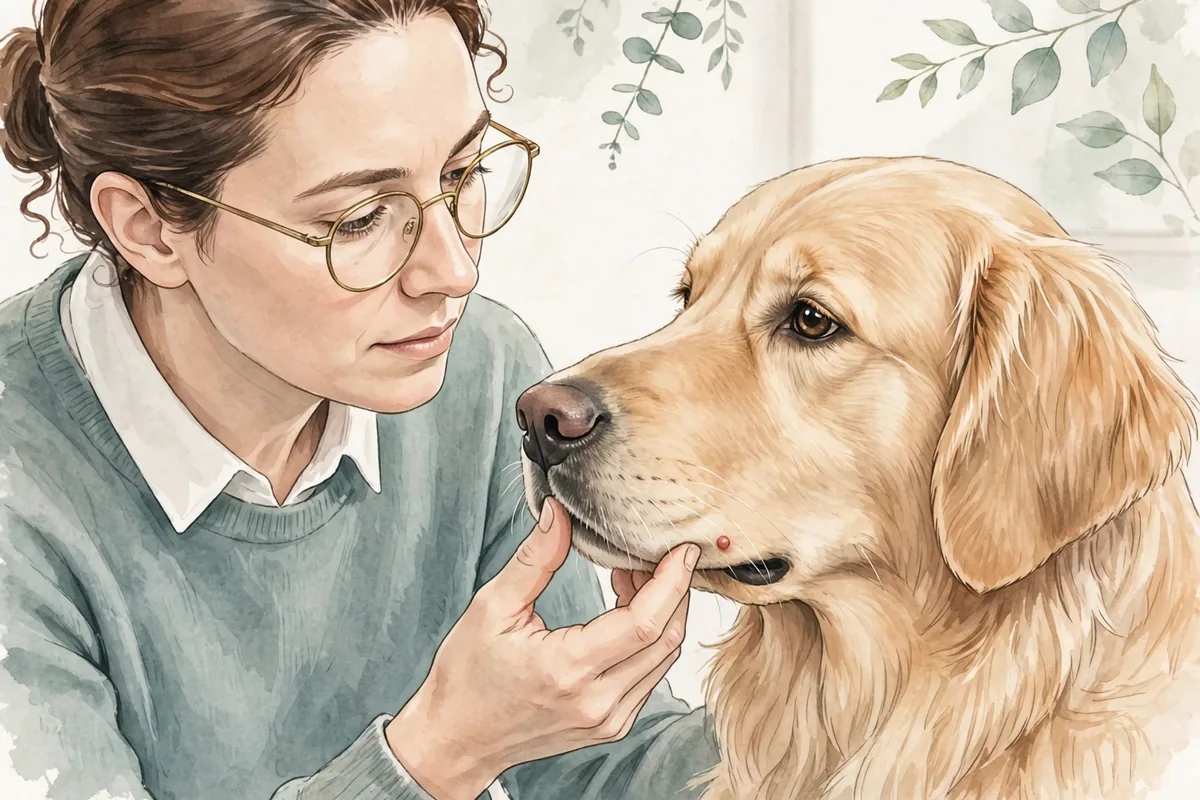
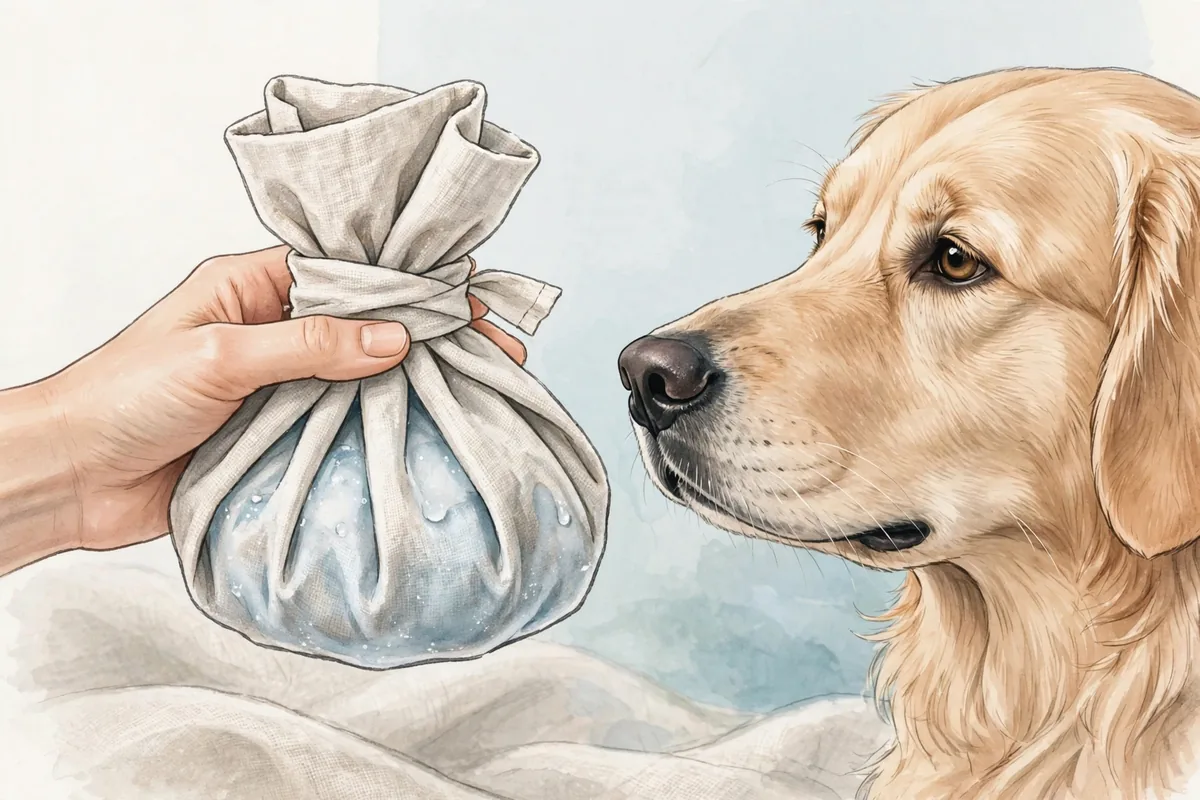
Apply a cold compress to the muzzle for about 10 minutes at a time, with breaks in between. Wrap ice or a frozen bag of peas in a towel — never place ice directly against the skin or the nose, which can damage tissue on its own. Repeat every few hours during the first day as needed.
Swelling on the muzzle often looks dramatic. The loose skin of the face puffs up fast, and a stung dog can look like it suddenly gained a second chin. In most single-sting cases, this swelling peaks within a few hours and eases over 24 to 48 hours. A baking-soda-and-water paste (roughly three parts baking soda to one part water) dabbed on the site is a commonly recommended home soother — keep it off the nose and lips, and do not let the dog lick it off.
Never give your dog over-the-counter human medications — including antihistamines or pain relievers — without asking your veterinarian first. Some products safe for people are dangerous for dogs, and combination cold-and-allergy products can contain ingredients that harm pets. If you think your dog needs more than a cold compress, call your vet before reaching for the medicine cabinet. For more on what the first minutes after any sting look like, see the first 10 minutes after a sting guide.
Step 4: Watch for Allergic Reactions #
Most dogs recover from a single muzzle sting with nothing but local swelling. But some dogs are allergic to bee venom, and reactions can escalate fast — often within about 10 minutes of the sting, though they can take longer to appear. Watch your dog continuously for at least the first hour, then check regularly for several more hours.
Signs that demand an immediate emergency vet visit include: trouble breathing, gasping or wheezing, severe or spreading facial and neck swelling, hives anywhere on the body, excessive drooling (which can signal throat swelling), vomiting or diarrhea, pale gums, sudden weakness, dizziness, collapse, or seizures. If you see any of these, skip home treatment entirely and go straight to the nearest emergency animal hospital.
If your dog was stung inside the mouth or on the tongue — for example, after snapping at a bee — treat that as urgent from the start. Internal swelling can close the airway even in a dog that is not allergic, so call your vet right away rather than waiting to see how it develops.
What Not to Do After a Muzzle Sting #
- Do not squeeze the stinger with tweezers. Scraping is the recommended removal method.
- Do not give human medications on your own. “Ask your vet” is the rule for every drug, including antihistamines.
- Do not apply heat to the swelling — warmth increases blood flow and can make it worse in the first day.
- Do not assume one sting means the next is safe. Dogs can develop worse reactions to later stings, so note this event for your vet records.
- Do not leave the dog unsupervised for the first few hours after the sting, even if it looks fine.
Preventing the Next Muzzle Sting #
Dogs that snap at bees usually do it again. Discourage the behavior with a firm “leave it” and redirect attention when bees are around. Keep food bowls, sweet treats, and fallen fruit picked up in the yard, since these draw foraging bees. Check your yard for ground nests and low bushes where bees gather, and walk your dog on a leash near flowering beds in summer. If your dog has reacted badly to a sting before, ask your vet at the next visit whether an emergency plan — such as keeping vet-prescribed medication on hand — makes sense. If your dog ever takes multiple stings at once, review guidance on multiple stings and medical care while heading to the vet.
Warning signs: when to seek care #
Call your vet or an emergency animal hospital immediately if your dog shows any of these red flags after a sting: difficulty breathing, wheezing, or gasping; severe swelling of the face, lips, tongue, throat, or neck; widespread hives; repeated vomiting or diarrhea; excessive drooling; pale, white, or blue-tinged gums; sudden weakness, collapse, disorientation, or seizures. Do not wait to see if these improve — anaphylaxis in dogs can turn fatal quickly, and emergency treatment may include IV fluids, injectable antihistamines, steroids, or epinephrine.
For milder situations, call your regular vet the same day if the swelling keeps spreading after 24 hours, the site becomes hot with pus or discharge, your dog stops eating, or a fever develops. Stings inside the mouth or throat always warrant a prompt vet call because internal swelling can threaten the airway.
Frequently asked questions #
How long does muzzle swelling last after a bee sting on a dog? #
Mild swelling from a single sting usually peaks within a few hours and fades over 24 to 48 hours. The muzzle’s loose skin makes swelling look worse than it often is. If swelling is still growing after a full day, or it has not started improving by 48 hours, call your vet.
Should I pull the stinger out of my dog with tweezers? #
No — scrape it out instead. Pinching the stinger with tweezers can squeeze the attached venom sac and inject more venom. Use a credit card edge or your fingernail to scrape it sideways out of the skin.
Can I give my dog Benadryl for a bee sting? #
Only if your veterinarian tells you to. Antihistamines are sometimes used for mild sting reactions in dogs, but the decision and the amount must come from your vet — some human allergy products contain added ingredients that are unsafe for dogs. Call your vet first.
My dog was stung on the muzzle but seems fine — can I go to work? #
Not right away. Allergic reactions usually appear within the first hour but can develop over several hours. Arrange for someone to watch the dog for at least the first few hours, and check the swelling before leaving.
Medical and editorial note #
This guide is general information about pet first aid, not veterinary advice. Every dog and every sting is different, and only your veterinarian can judge your dog’s situation. When in doubt — especially with breathing trouble, facial swelling, or multiple stings — contact your veterinarian or an emergency animal hospital right away.


