
Probably not. Can you feel a tick bite? For most people the answer is no — tick saliva contains anesthetic compounds that numb the skin as the tick attaches, so the bite itself is painless. What you can feel, though, are the clues a silent bite leaves behind — and a simple routine catches them.
Why Tick Bites Are Silent #
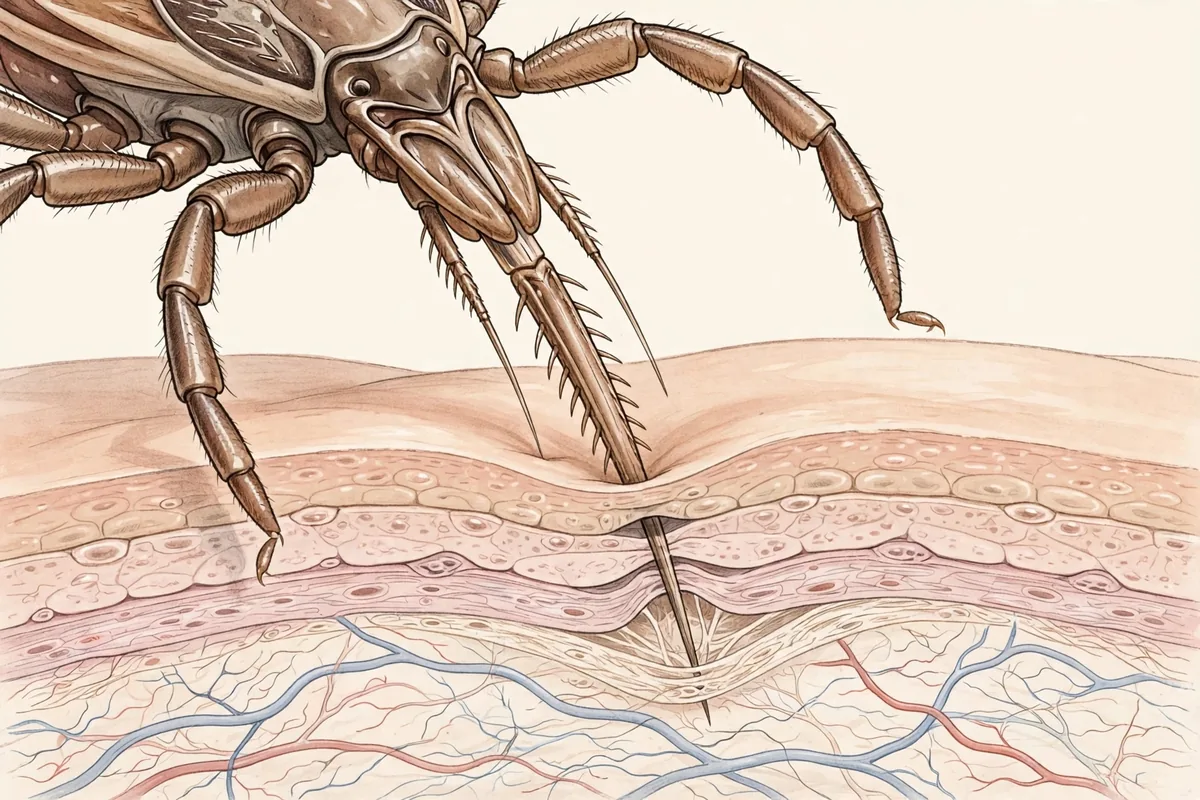
A tick is not built for a quick nip. It is built for a long, undisturbed meal, and silence is its survival strategy. Here is the biology:
- Anesthetic saliva. As the tick cuts into the skin, it secretes saliva with numbing properties, so the initial puncture registers as nothing. The CDC describes this directly: the person cannot feel that the tick has attached itself.
- Anti-inflammatory compounds. Tick saliva also tamps down the local immune response, which delays the redness and swelling that would otherwise announce the bite.
- Cement anchor. Many species secrete a glue-like substance around the feeding tube, locking the tick in place without any sensation of tugging.
- Slow feeding. The tick draws blood over hours to days rather than seconds, so there is no sudden event for your nerves to report.
Compare that with a mosquito: the mosquito’s saliva triggers an almost immediate itchy welt, usually within minutes. A tick’s chemistry is specifically tuned to avoid exactly that alarm. This is why the majority of people who develop Lyme disease have no memory of being bitten.
What You Might Notice Instead #
You may not feel the bite, but the aftermath often speaks up. Watch for:
- A tick, still attached. The most common “symptom” is simply finding one — often during a shower, while dressing, or when someone spots it on your neck or hairline.
- Itching after removal. Once the tick is gone and the numbing saliva wears off, the bite site commonly itches for a few days. This is normal and not a sign of disease by itself.
- A small red bump. A pea-sized reddened bump at the attachment site is the typical local reaction. It should fade within a few days.
- A crawling sensation beforehand. Some people do feel a tick walking on the skin before it attaches — that tickle is your best early warning, and it is worth stopping to check immediately.
- Tenderness in thin-skinned spots. Bites behind the ear, in the groin, or in the armpit may become noticeable sooner because the skin there is more sensitive.
If the area around a removed tick becomes increasingly red, warm, or painful instead of calming down, that is worth a clinician’s look — and our guide to tick bite aftercare for the next few weeks maps out the full monitoring timeline.
The Tick-Check Routine That Catches Them #
Since you cannot rely on feeling the bite, make finding the tick the plan:
- Shower within a couple of hours of coming indoors. Showering washes off unattached ticks and creates a natural moment for a full-body scan.
- Check the thin-skin zones first. Behind the ears, hairline and scalp, armpits, waistline, groin, behind the knees, between the toes, inside the belly button.
- Use your fingertips. Run fingers slowly over the scalp and behind ears — an unattached or flat tick feels like a tiny new mole or scab.
- Check children head to toe. Kids are lower to the ground and less likely to notice a painless bite. Make it part of the post-playground routine.
- Do not forget pets. A quick once-over of the dog after walks keeps ticks from hitching a ride indoors and onto you later.
- Tumble clothes on high heat. Ten minutes in a hot dryer kills ticks that the washing machine misses.
For help deciding what a mark actually is once you find one, identify an insect bite from a photo walks through the visual clues.
After You Find One: The First 10 Minutes #

- Remove it correctly. Fine-tipped tweezers, grasp close to the skin, pull straight up with steady pressure. No twisting, no squeezing the body.
- Clean the site with soap and water or rubbing alcohol, and wash your hands.
- Save the tick in a sealed bag with the date. Species identification can matter if symptoms develop.
- Write down the date and where you were. This starts your 30-day symptom watch: look for an expanding rash, and note fever, headache, fatigue, or aching joints in the coming weeks.
- Do not wait for symptoms to “confirm” the bite. Prompt removal is the intervention — especially for Lyme disease, where transmission generally requires extended attachment.
Warning signs: when to seek care #
Call 911 immediately if you develop trouble breathing or swallowing, swelling of the face, lips, tongue, or throat, widespread hives, dizziness or fainting, or a racing heartbeat after any bite or sting. If you carry prescribed epinephrine, use it first, then call for help.
Call your doctor promptly if: an expanding rash appears within 30 days of a bite; you develop fever, chills, headache, fatigue, or joint aches after outdoor exposure; the bite site shows spreading redness, pus, or red streaks; or part of the tick remains embedded and the area becomes inflamed.
Frequently asked questions #

Do tick bites itch right away? #
Usually not. The numbing and anti-inflammatory compounds in tick saliva suppress the immediate reaction. Itching commonly starts after the tick is removed, as the saliva’s effects wear off — sometimes a day or two later.
Can you feel a tick crawling on you? #
Sometimes, yes. Many people report a faint tickling sensation as a tick walks across the skin, especially on the neck or arms. If you feel that tickle outdoors, stop and check — it is the easiest catch you will ever get.
Why didn’t I feel a tick that was attached for days? #
Because the tick’s saliva kept the site numb and the inflammation suppressed the whole time. An attached tick in a sheltered spot — scalp, behind the ear, groin — can feed for days without ever announcing itself. This is exactly why scheduled tick checks matter more than your senses.
Does a painless bite mean it is harmless? #
No. Painlessness is normal for tick bites and says nothing about disease risk. Risk depends on the tick species, your region, and how long it was attached — not on whether it hurt.
Medical and editorial note #
This guide is general information, not medical advice. Because most tick bites go unfelt, routine checks after outdoor activity are your most reliable defense. If you find an attached tick or develop a rash, fever, or flu-like symptoms in the weeks after being outdoors, contact a healthcare professional promptly.


