
Ankles are prime biting territory: low to the ground, often exposed between shoe and pant leg, and right at the sock line where tiny biters get trapped. This bug bites on ankles identification guide helps you narrow the culprit by pattern, timing, and appearance — because the right ID points to the right fix.
The Usual Suspects: What Bites Ankles #
Four biters cause the vast majority of ankle attacks. Learn their signatures:
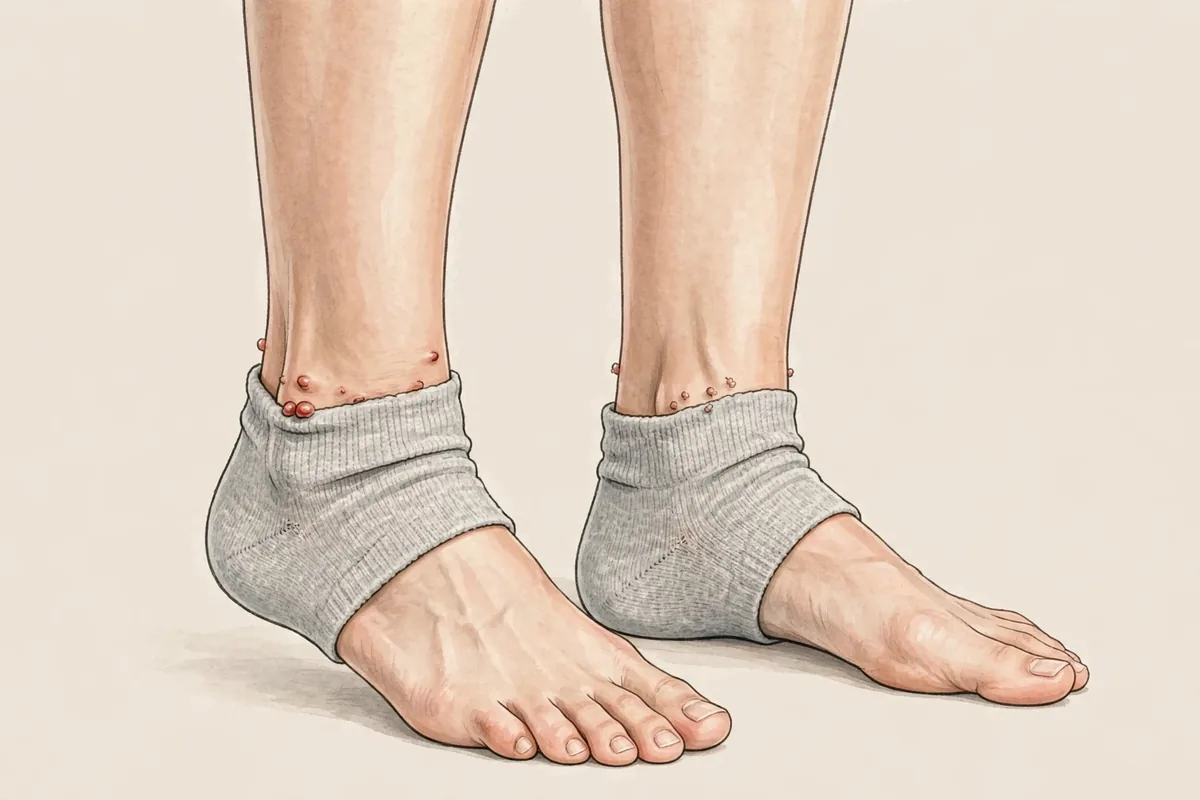
Chiggers. The classic ankle biter. These are the larval stage of harvest mites — nearly microscopic, reddish, six-legged — that lurk in tall grass and brush. They do not burrow under the skin (a persistent myth); they attach at hair follicles or pores, inject digestive enzymes, and feed on liquefied skin cells. Bites cluster where clothing fits tight: the sock line, around the ankles, behind the knees, at the waistband. The itch starts a few hours after exposure, peaks at 24–48 hours, and can last a week or more. Bites look like small red bumps, sometimes with a tiny blister or pustule at the center. Chiggers are most active in warm months when ground temperatures are high.
Fleas. If you have pets — or visited somewhere with animals — fleas jump onto passing ankles and feet. Flea bites are small, red, intensely itchy bumps, often with a tiny dark puncture center, appearing in clusters or short lines of three or four (“breakfast, lunch, and dinner”). They favor ankles and lower legs because fleas jump from carpets, rugs, and pet bedding at ground level. Unlike chiggers, flea bites usually appear within minutes to hours and the culprit may still be around.
Mosquitoes. The familiar raised, puffy, itchy welt — usually larger and more isolated than chigger or flea bites. Mosquitoes bite ankles because they fly low and target exposed skin, especially at dusk. A single welt here and there after an evening outdoors points to mosquitoes; dozens of tiny clustered bumps at the sock line point elsewhere.
No-see-ums (biting midges). Tiny flies whose bites feel disproportionately painful — a sharp sting at the moment of the bite, followed by intensely itchy red welts that can linger for days. They attack exposed skin near water, marshes, and damp sand, often at dawn and dusk. If your ankles erupted during a beach or lakeside evening, no-see-ums belong on the suspect list.
Pattern Clues: Reading the Bite Map #
Bite arrangement is often more revealing than any single bump. Use this comparison:
| Clue | Chiggers | Fleas | Mosquitoes | No-see-ums | |—|—|—|—|—| | Arrangement | Dense clusters at sock line, waistband | Clusters or short lines of 3–4 | Scattered, isolated welts | Clusters on exposed skin | | Bump size | Small red bumps, sometimes tiny blisters | Small bumps, often dark center dot | Larger puffy welts | Small but intensely itchy welts | | Itch onset | Hours later, peaks 1–2 days | Minutes to hours | Minutes | Immediate sharp sting, then itch | | Season/place | Warm months, grass/brush | Year-round, pets/carpets | Dusk, warm evenings | Dawn/dusk near water or damp sand | | Key tell | Tight-clothing lines (socks, waist) | Pets in the home or visit | You heard or saw mosquitoes | Painful bite moment |
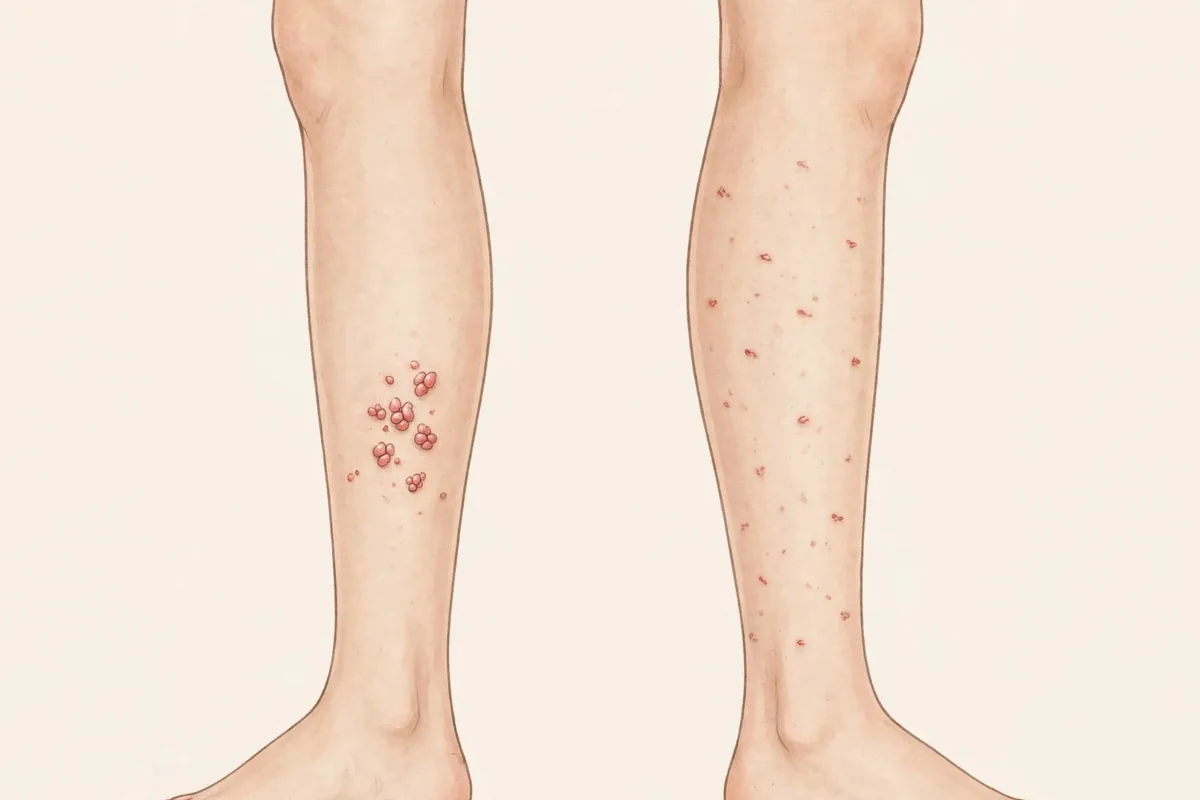
Two more pattern principles help everywhere on the body, not just ankles: bites that fall in lines or tight clusters suggest something that crawled or got trapped under clothing (chiggers, fleas, bed bugs), while scattered single welts suggest flying biters that landed, fed, and left (mosquitoes). For more on reading these arrangements, see bites in lines and clusters.
Fleas deserve one extra check: part the fur at the base of your pet’s tail and look for flea dirt (tiny black specks that turn reddish on a wet paper towel). Finding it confirms the household source. A side-by-side comparison of two commonly confused ankle-and-leg biters lives at spider bite vs flea bites — useful because flea clusters get blamed on spiders constantly.
Treating Ankle Bites #
Regardless of the culprit, the first-aid sequence is the same:
- Wash the ankles with soap and cool water — especially after grass or brush exposure, which also washes off any still-feeding chiggers.
- Cool the itch: a cold damp cloth for 10 minutes, or a cool shower.
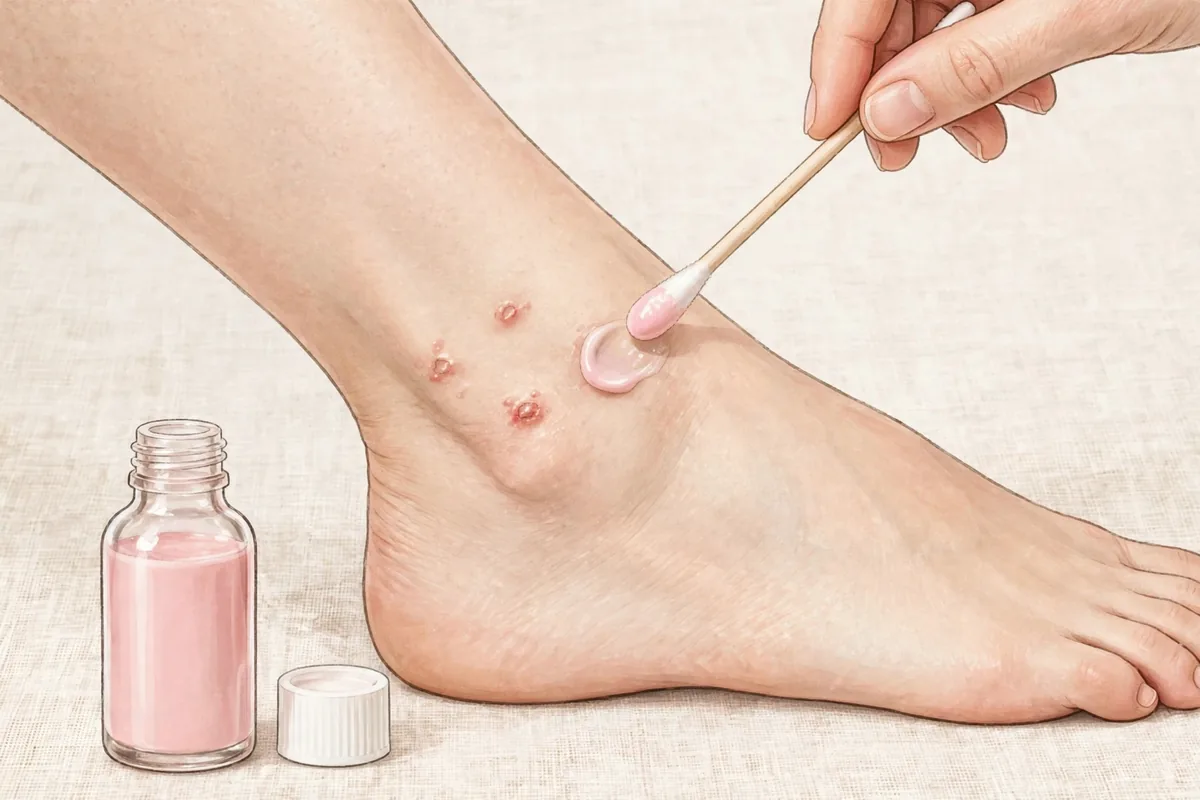
- Soothe with calamine lotion, 1% hydrocortisone cream, or aloe vera gel. An oral antihistamine per label directions helps when itching is widespread or disrupting sleep.
- Do not scratch. Ankle skin gets knocked and rubbed by shoes all day, so broken bite skin here infects easily. Keep nails short; cover the worst spots with a bandage if shoes keep irritating them.
- Launder clothes worn during exposure in hot water — this matters especially for chiggers, which may still be on the fabric.
Chigger-specific note: because chiggers feed for a few days unless removed, a hot soapy shower soon after exposure physically dislodges them and prevents new bites from developing. If the itching already started, the mites have usually dropped off or been scratched away — at that point you are treating the reaction, not the mite.
When Ankle Bites Are Not “Just Bites” #
Most ankle bites resolve within a week or two. Get medical evaluation when the picture deviates:
- Cellulitis signs: spreading redness, warmth, increasing pain, swelling that grows after the first day, red streaks up the leg, or fever. Ankles and lower legs are common cellulitis sites because the skin barrier gets breached by scratching plus shoe friction.
- Bites that blister widely, ulcerate, or turn dusky/purple — not typical for chiggers, fleas, or mosquitoes.
- A bite with a spreading bull’s-eye rash, or flu-like illness after tick-area exposure — think tick-borne disease, not ankle-biters.
- Intense swelling of the whole foot or ankle from a large local reaction, especially if it limits walking.
- Pus, yellow crusting, or worsening pain days in — secondary bacterial infection.
Also reconsider the diagnosis if bites keep appearing despite treatment: recurring “ankle bites” every morning in your own bed point to bed bugs or fleas in the home, not outdoor chiggers — and the fix is environmental (wash bedding hot, treat pets, address the infestation) rather than more cream.
Preventing the Next Round #
Match prevention to the biter you identified:
- Chiggers: long pants tucked into socks in grassy/brushy areas, repellent on skin and permethrin-treated clothing for heavy exposure, shower promptly after coming inside, keep lawns mowed and brush cleared.
- Fleas: year-round vet-approved flea prevention for pets, wash pet bedding hot weekly, vacuum carpets and rugs frequently (vibration stimulates pupae to emerge where treatment reaches them).
- Mosquitoes: repellent at dusk, cover ankles in the evening, dump standing water around the home.
- No-see-ums: fine-mesh screens (standard screens may not stop them), avoid exposed skin at dawn/dusk near water, repellent helps.
One habit covers all four: shoes and socks outdoors, and a quick ankle check when you come inside. Most ankle-biters exploit the gap between pant leg and shoe — closing it is the cheapest prevention there is.
Warning signs: when to seek care #
Call 911 immediately if bites are followed by signs of severe allergic reaction: trouble breathing or swallowing; swelling of the face, lips, tongue, or throat; widespread hives; dizziness or fainting. True anaphylaxis to these common biters is uncommon, but any of these symptoms is an emergency regardless of the cause.
Seek urgent or same-day care for: spreading redness, red streaks, increasing pain, warmth, or fever (possible cellulitis); pus or yellow crusting; a bite that ulcerates or turns dark; a bull’s-eye rash or flu-like symptoms after possible tick exposure; or swelling so severe you cannot walk comfortably. Infected lower-leg bites can escalate — do not wait out spreading redness.
Frequently asked questions #
How do I know if my ankle bites are chiggers or fleas? #
Look at context and pattern. Chigger bites cluster at tight-clothing lines (sock line, waistband) hours after grass or brush exposure, with itch peaking at 1–2 days. Flea bites appear in small clusters or lines of 3–4 on ankles and feet, often within minutes to hours, and there is usually a pet or carpeted indoor source. Check your pet for flea dirt to settle it.
Do chiggers stay on your skin? #
They can feed for 3–5 days if undisturbed, but most are dislodged by scratching, bathing, or clothing friction much sooner. A hot soapy shower after exposure removes them. Once intense itching has set in, you are dealing with the skin’s reaction — the mites are usually already gone.
Why do I only get bitten on the ankles? #
Ankles sit at the intersection of biter habitat and exposed skin: fleas and chiggers live at ground level, mosquitoes fly low, and the gap between shoe and pant leg offers easy access. Tucking pants into socks and wearing closed shoes removes the opportunity most ankle-biters depend on.
Can ankle bites get infected easily? #
Yes, more easily than bites elsewhere. Ankle skin takes constant friction from shoes and socks, and scratching breaks the surface — that combination invites bacteria. Keep bites clean, avoid scratching, cover irritated spots, and watch for the spreading redness and warmth that signal cellulitis.
Medical and editorial note #
This guide is general information, not medical advice. Bite identification from appearance alone is imperfect — many skin conditions mimic bites. If ankle bumps are spreading, worsening, or not following the expected timeline, see a healthcare professional for an in-person evaluation.


