
A mosquito bite during pregnancy feels different — every treatment question suddenly runs through the filter of “is this safe for the baby?” Bug bite treatment while pregnant starts with a reassuring fact: the safest steps (cooling the bite, keeping it clean, not scratching) are exactly the same ones anyone would take. This guide covers prevention-first strategies, gentle first aid, what current guidance says about repellents, and when to call your OB-GYN.
Prevention first: physical barriers that work during pregnancy #
When you are pregnant, the best bite treatment is the bite that never happens. Physical barriers are completely safe at every stage of pregnancy, and they are surprisingly effective:
- Cover your skin. Long sleeves, long pants, and socks are your first line of defense. Light-colored clothing helps you spot ticks, and loose fabrics keep you comfortable in warm weather.
- Sleep behind a net. If you are in an area with heavy mosquito activity — or if mosquitoes get indoors at night — a bed net with fine mesh tucked under the mattress gives reliable, chemical-free protection while you sleep.
- Screen your windows and doors. Check screens for tears and gaps before mosquito season. A quick repair job keeps biting insects out of your home around the clock.
- Avoid peak mosquito hours. Mosquitoes are most active at dawn and dusk. Plan walks and outdoor time for midday when you can, and stay in screened or air-conditioned spaces during the biting hours.
- Drain standing water around your home. Empty saucers, birdbaths, and anything that collects rainwater weekly — mosquitoes breed in even small amounts of water.
- Treat clothing, not skin, with permethrin. Permethrin-treated clothing is an option for extended outdoor time. Never apply permethrin directly to skin, and follow product instructions carefully. When in doubt, ask your OB-GYN.
For a broader seasonal plan, our outdoor bite prevention checklist covers every layer of defense in one place.
Gentle first aid for bites while you are expecting #

Good news: the core first aid for an ordinary bug bite is drug-free, and it works just as well during pregnancy. When you get bitten:
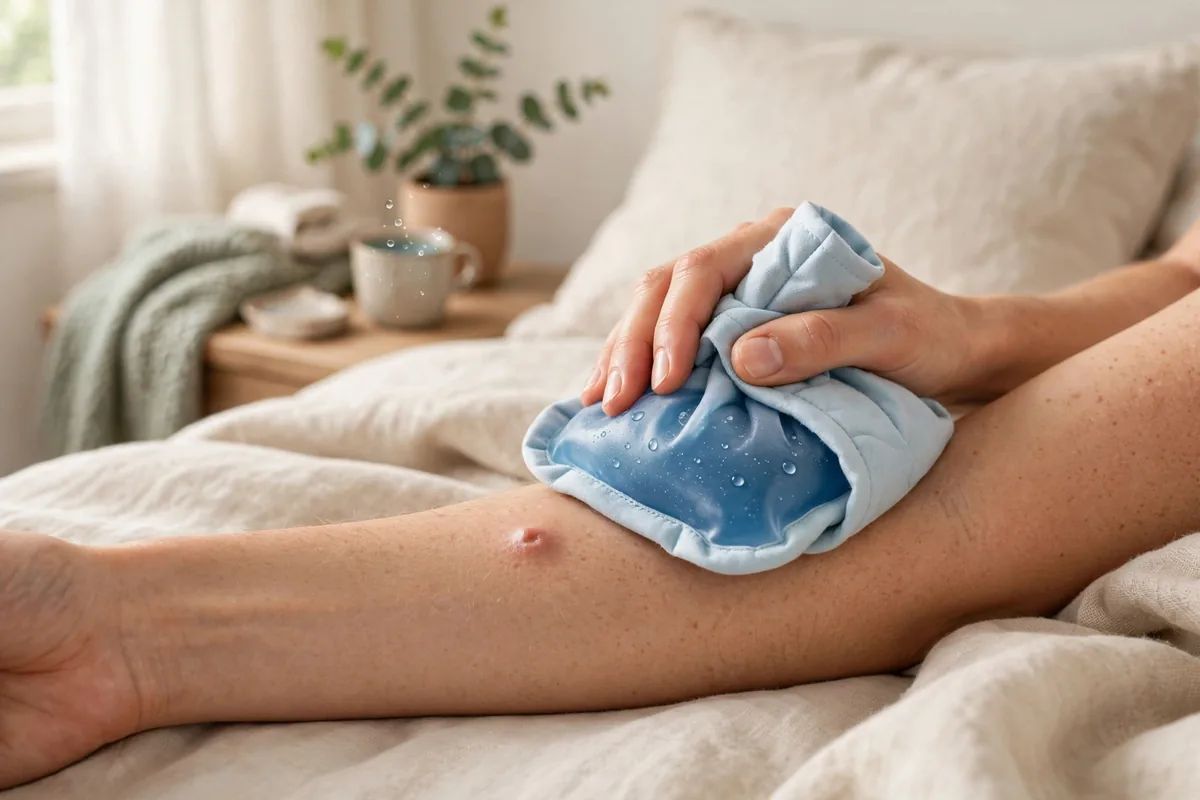
- Apply a cool compress. Hold a damp cloth or an ice pack wrapped in a towel against the bite for about 15 minutes at a time. This calms itching, pain, and swelling. Our cold compress guide explains the technique in detail.
- Wash the bite with soap and water. Clean the area gently to reduce infection risk, especially if you have been gardening or hiking.
- Do not scratch. Scratching breaks the skin and invites infection — the same advice applies pregnant or not. Keep nails short so an absent-minded scratch does less damage.
- Leave blisters alone. If a bite blisters, do not pop it. Cover it loosely with a clean bandage and let it heal on its own.
- Track how the bite changes. Normal bites get a little red and itchy, then improve over a few days. Note what the bite looks like today so you can tell your OB-GYN if it changes.
What about medications — creams, antihistamines, pain relievers? Talk to your OB-GYN or pharmacist before using any antihistamine or cream during pregnancy. Oral and topical options exist, but pregnancy changes which products are appropriate, so get personalized advice rather than reaching for whatever is in the medicine cabinet. This applies to prescription and over-the-counter products alike — including ones you used comfortably before pregnancy.
Repellents and pregnancy: what the guidance says #
Many pregnant people are unsure whether insect repellent is safe — and avoiding bites matters even more when mosquito-borne illness is a concern. Here is what the major guidance says:
- The CDC states that EPA-registered insect repellents are proven safe and effective when used as directed, including for women who are pregnant or breastfeeding. The listed active ingredients include DEET, picaridin, IR3535, oil of lemon eucalyptus, para-menthane-diol, and 2-undecanone.
- Use repellent exactly as the label directs. Apply a light coat to exposed skin (not under clothing), avoid eyes, mouth, and broken skin, and wash it off with soap and water when you come indoors.
- Many OB-GYNs consider repellent use appropriate during pregnancy — but “many” is not “yours.” Ask your OB-GYN which active ingredient and concentration they recommend for your situation, especially if you will be using it daily or for long periods.
- Permethrin is for clothing and gear only — never for skin, pregnant or not.
A note on essential-oil products: non-EPA-registered repellents, including citronella, wristbands, and ultrasonic devices, have limited evidence behind them. Public health agencies do not recommend them where disease-carrying mosquitoes are a concern. For a deeper look at repellent choices during pregnancy, see our article on insect repellent safety during pregnancy.
Mosquito-borne illness: special attention during pregnancy #
Most bug bites are a nuisance, nothing more. But during pregnancy, mosquito-borne infections deserve extra respect, because some can affect the developing baby:
- Know your local risks. In the US, West Nile virus is the most commonly discussed mosquito-borne concern; in some regions, other viruses circulate. Your OB-GYN or local health department can tell you what is active in your area.
- Take Zika guidance seriously. If you are pregnant or planning pregnancy, follow current CDC travel guidance about Zika-affected areas. If you live in or must travel to such an area, talk to your OB-GYN first and follow bite prevention strictly.
- Fever after bites is a call-your-OB-GYN moment. A fever developing after mosquito bites — especially with headache, body aches, or rash — should be reported to your OB-GYN promptly, not watched at home.
- Ticks matter too. Tick-borne infections can also be serious during pregnancy. After hiking or yard work, check your whole body for ticks, and remove any attached tick promptly with fine-tipped tweezers.
Warning signs: when to seek care #
Call 911 immediately if you develop trouble breathing or swallowing, swelling of the face, lips, tongue, or throat, widespread hives, dizziness or fainting, or a racing heartbeat after a bite or sting. These can signal a severe allergic reaction (anaphylaxis). If you carry an epinephrine auto-injector, use it as prescribed and call 911 even if you feel better afterward.
During pregnancy, also contact your OB-GYN promptly — same day — for:
- Fever after bug bites. Even a low-grade fever following mosquito or tick bites deserves a call, given the added concern about mosquito-borne illness in pregnancy.
- Spreading redness or red streaks. Redness that grows beyond the bite, especially with lines moving outward, can signal a skin infection that needs treatment.
- Increasing pain, warmth, or swelling after 24 to 48 hours. A bite that is getting worse instead of better should be evaluated.
- Pus, drainage, or worsening pain. Signs of infection should not wait — call for guidance on whether you need to be seen.
- Severe swelling or any allergic symptoms. Large local swelling, hives beyond the bite site, or any breathing difficulty needs urgent attention.
Pregnancy is not the time to “wait and see” with symptoms that concern you. Your OB-GYN would rather hear from you early.
Frequently asked questions #

Can I use anti-itch cream for bug bites while pregnant? #
Ask your OB-GYN or pharmacist first. Oral and topical options exist, but which ones are appropriate can depend on your trimester, your health history, and the specific product. Do not assume a product is fine just because it worked before pregnancy — get advice tailored to you.
Is insect repellent really safe during pregnancy? #
The CDC states that EPA-registered insect repellents are proven safe and effective when used as directed, including for pregnant and breastfeeding women. That said, follow the label exactly, and ask your own OB-GYN which product they prefer for you — especially for daily or long-term use.
Should I avoid traveling to areas with Zika while pregnant? #
Follow current CDC guidance on Zika and pregnancy travel, and discuss any planned travel with your OB-GYN before booking. If you must be in an area with mosquito-borne illness risk, use every prevention layer: repellent, covering clothing, nets, and screens.
What is the safest way to soothe an itchy bite without medication? #
A cool compress is your best drug-free option — about 15 minutes at a time, repeated as needed. Keeping the bite clean, covered loosely, and untouched helps it heal on its own. Oatmeal baths and loose, breathable clothing can also reduce irritation, but check with your OB-GYN before trying any home remedy you have not used before.
Medical and editorial note #
This guide is general information, not medical advice, and pregnancy makes every health question more personal. If you are worried about a bite, a fever, or any product you are considering, talk to your OB-GYN or pharmacist — they know your history and can give guidance no article can replace.


