
Noticing a tender lump in your armpit, groin, or neck a day or two after a bug bite can be alarming — but it is often just your immune system doing its job. Swollen lymph nodes after bug bite episodes are a common response: the nodes nearest the bite filter out the irritants and briefly enlarge. Most cases settle on their own, but certain patterns deserve a doctor’s look.
Why lymph nodes swell after a bite #
Lymph nodes are small, bean-shaped filters stationed throughout the body, clustered in the neck, armpits, and groin. When a bite introduces saliva proteins, bacteria from scratching, or other irritants, immune cells rush to the nearest nodes, which swell as they ramp up their filtering work. A bite on the hand often swells nodes in the armpit; a bite on the leg affects the groin nodes; bites on the head or neck involve the neck nodes.
This is the same mechanism behind swollen glands during a cold — a sign of an active immune response, not automatically a sign of something dangerous. The nodes typically feel tender, slightly enlarged (pea- to grape-sized), and movable under the skin. They usually appear within a day or two of the bite and shrink back over one to three weeks as the bite heals. Scratching a bite increases the odds of node swelling, because broken skin lets more bacteria in and gives the lymph system more debris to filter.
How to monitor them at home #
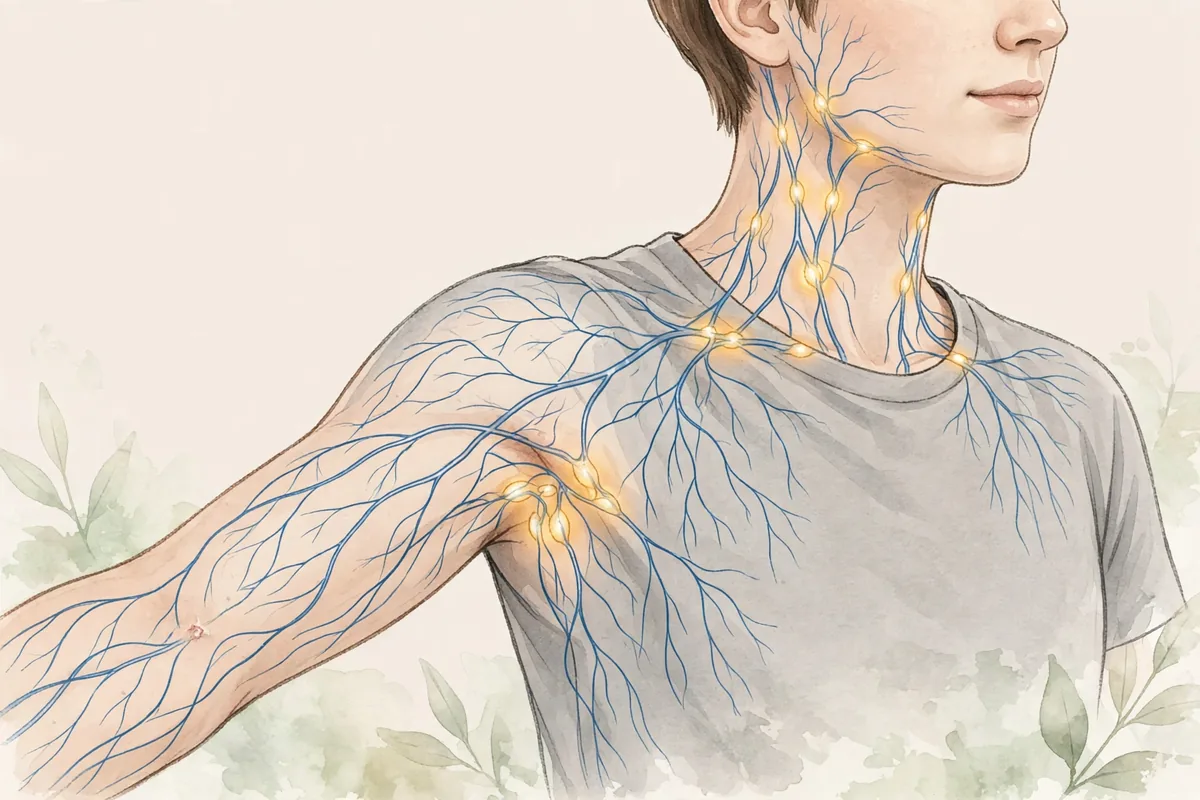
Start by treating the bite itself well: wash it, apply a cold compress, avoid scratching, and keep it clean and covered if it has broken open. A bite that heals cleanly usually lets the nodes settle on their own. An oral antihistamine taken per label directions can ease itching that drives scratching.
Check the nodes gently once a day — not repeatedly through the day, since constant prodding keeps them tender. Note three things: size (is it stable or growing?), texture (soft and movable is reassuring), and trend (gradually shrinking over days is what you want to see). A simple note on your phone with the date and a rough size comparison (pea, marble, grape) makes trends easier to track than memory. Sometimes nodes swell when you cannot find the original bite — bites on the scalp, behind the ear, or along the waistband often go unnoticed while their nearby nodes still react. In that case, look carefully for a small healing mark in the drainage area before assuming the swelling is unexplained. If the bite itself is getting redder or more painful over time, review guidance on why a bite gets redder after 24 hours to judge whether the bite, the nodes, or both need attention. Most bite-related node swelling peaks within a few days and then steadily improves.
Red flags that need a doctor #
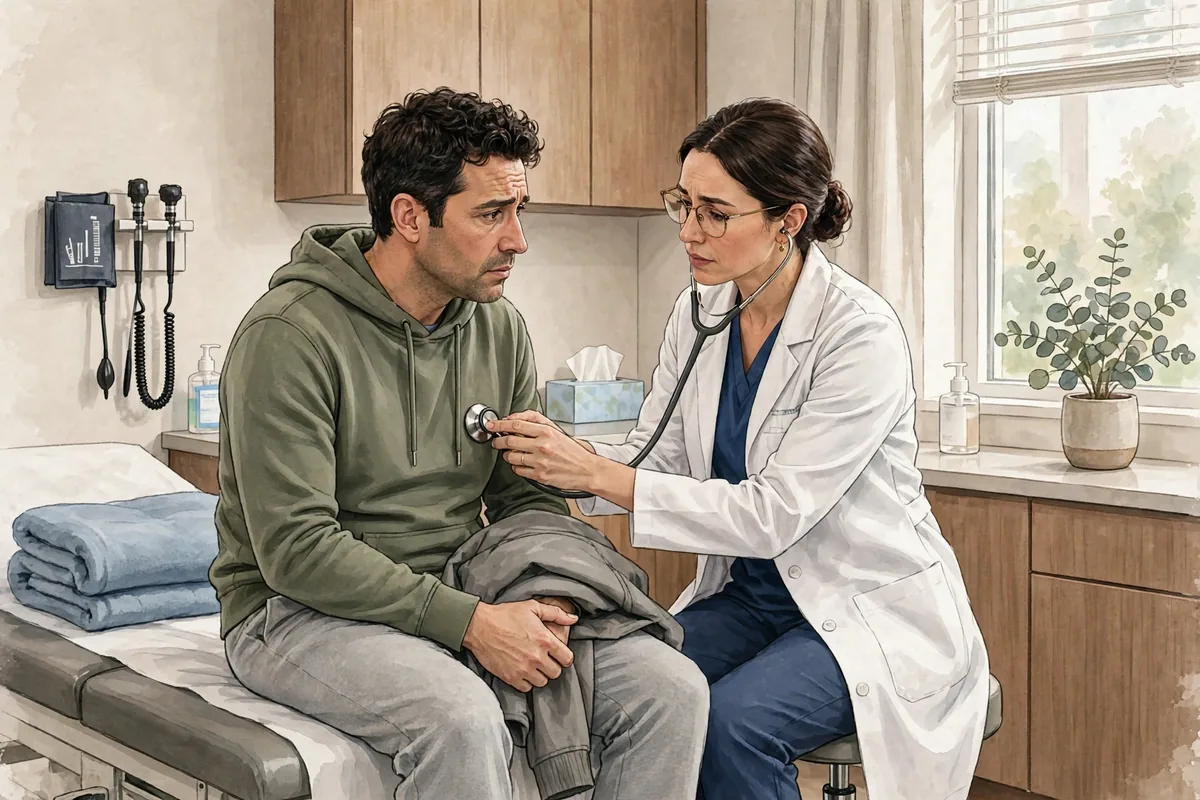
Most swollen nodes after a bite are benign, but see a doctor promptly if any of these appear: a node that keeps enlarging rapidly over days rather than stabilizing, a node that feels hard, fixed in place, or irregular rather than soft and movable, swelling that spreads to multiple distant node groups, or nodes that stay enlarged beyond three to four weeks. Fever, night sweats, or unexplained weight loss alongside swollen nodes also warrant evaluation.
Red streaks running from the bite toward the node, increasing warmth and throbbing pain at the bite site, pus, or a bite that becomes warm, painful, or draining suggest infection that may need treatment — the nodes are reacting to something the body is struggling to contain. Swelling on both sides of the neck or in the armpits without any identifiable bite also deserves evaluation, since the cause is less clear. Do not try to massage, squeeze, or “drain” a swollen node yourself; that irritates the tissue and tells you nothing useful.
Warning signs: when to seek care #

Call 911 immediately if, along with swollen nodes, there is trouble breathing or swallowing, swelling of the face, lips, tongue, or throat, widespread hives, dizziness or fainting, or a racing heartbeat. These signal a possible severe allergic reaction, not a routine immune response.
Seek urgent care or see your doctor soon if nodes are rapidly enlarging, hard, or fixed; if red streaks extend from the bite; if fever develops or the bite site shows spreading redness, increasing pain, warmth, or pus; or if swelling has not improved after three to four weeks. Swollen nodes in a child after a bite deserve a lower threshold for calling the pediatrician, especially with fever.
Frequently asked questions #
How long do swollen lymph nodes last after a bug bite? #
Typically one to three weeks, shrinking gradually as the bite heals. Nodes often lag behind the bite itself — the skin may look fine while a node is still slightly enlarged. If a node is still prominent after a month, or if it is growing rather than shrinking at any point, have it checked.
Should I put heat or ice on a swollen lymph node? #
Neither is necessary for the node itself. Treat the bite with cool compresses to reduce itching and swelling, which indirectly calms the nodes. Avoid applying heat to a node that might be fighting infection unless a clinician advises it, and never try to squeeze or lance a swollen node.
Can a bug bite cause swollen nodes without infection? #
Yes — this is the most common scenario. The immune system reacts to bite saliva proteins alone, without any bacterial infection. Nodes can swell from the immune response itself, which is why they often appear even when the bite looks clean and uninfected.
Does a swollen lymph node after a bite mean something serious like cancer? #
In the context of a recent bite, with tender, movable nodes near the bite site that appear within days and then shrink, cancer is very unlikely — this pattern is classic for a reactive immune response. The features that would prompt a doctor to investigate further are hard, painless, fixed nodes, widespread swelling, or persistence beyond several weeks.
Medical and editorial note #
This guide is general information about lymph node responses to insect bites, not medical advice. Swollen nodes are usually a normal immune reaction, but persistent, hard, or rapidly enlarging nodes need professional evaluation. If you are worried about swollen lymph nodes, consult a healthcare professional rather than trying to diagnose the cause yourself.


