
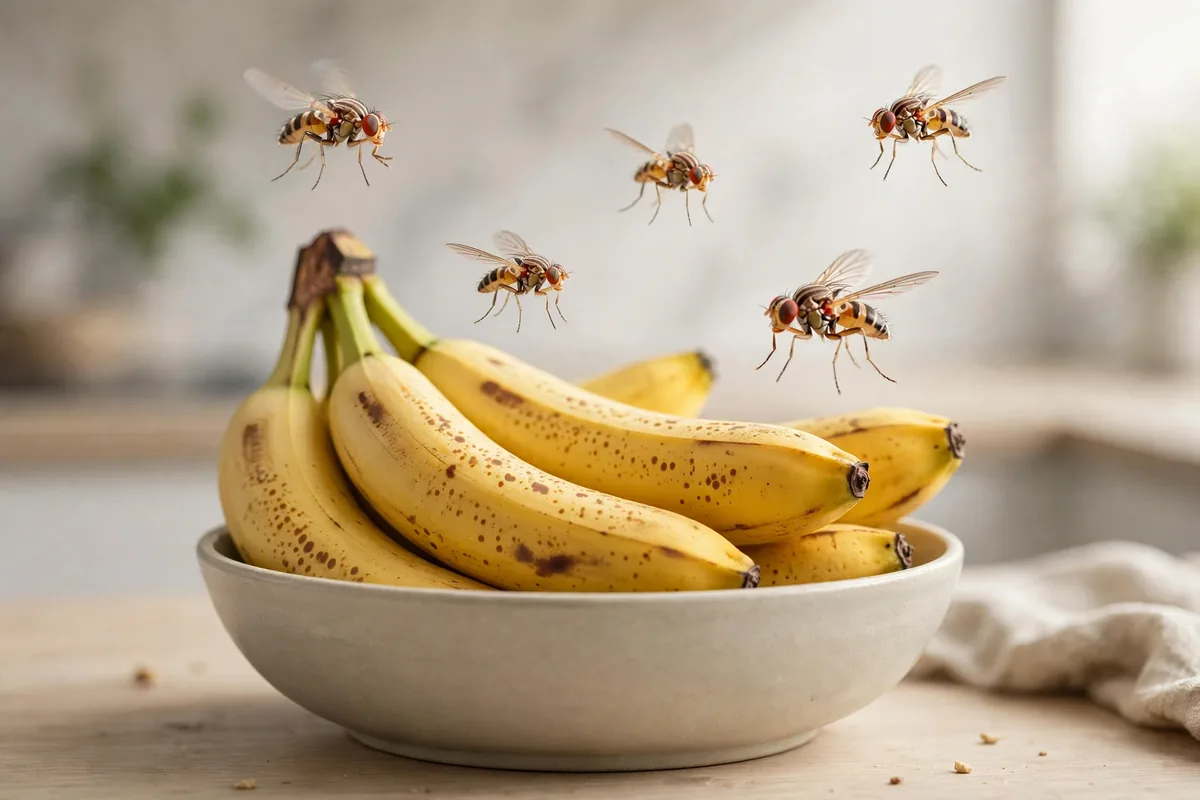
A cloud of tiny flies over your bananas is annoying — but do fruit flies bite humans? No. Fruit flies feed on fermenting fruit, vegetables, and spills, and they have no mouthparts capable of biting people. If something small is biting you in the kitchen, it is a lookalike insect. This guide explains the difference, identifies the real biters, and shows you how to clear out the fruit flies.
Why fruit flies do not bite #
Fruit flies are built for rotting produce, not for people.
Their mouthparts cannot pierce skin. A fruit fly’s mouth is a soft, sponging structure designed to lap up liquids from fermenting matter. It has no needle, no cutting blades, and no mechanism for breaking human skin. Biting is physically impossible for them.
Blood is not their food. Adult fruit flies eat yeasts and bacteria growing on fermenting fruit, vegetables, alcohol, and spills. Their larvae feed inside the same material. No life stage seeks out people or animals.
They do not sting or carry venom. Like drain flies and fungus gnats, fruit flies are defenseless against people. They cannot sting, cannot inject anything, and cannot transmit disease to humans.
The annoyance is real; the danger is not. Fruit flies are a food-hygiene nuisance — they can carry bacteria from garbage to food surfaces — but they do not bite, do not cause allergic emergencies, and do not make you sick through bites. Keeping them off food is a cleanliness habit, not a medical one.
The lookalikes that do bite #
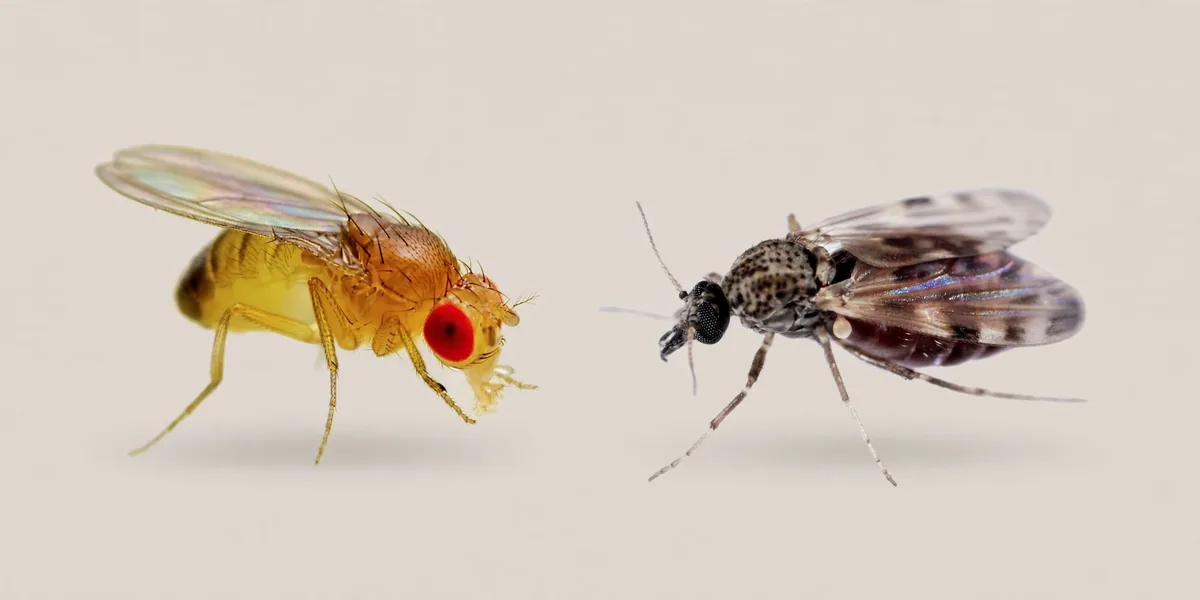
When people report fruit-fly bites, one of these is usually responsible.
Biting midges (no-see-ums). Nearly invisible, breed in moist soil and drains, and leave clusters of intensely itchy red dots. Because midges are hard to see, people blame the visible fruit flies. Midge bites itch far more than any mark a fruit fly could theoretically leave — which is none.
Phorid flies. Humpbacked, tan flies that run erratically across surfaces instead of hovering. Some species can give a nip, and they breed in deeper organic matter — a sign of a sanitation problem beyond overripe bananas.
Fungus gnats. Dark, mosquito-like flies hovering over houseplant soil. They do not bite people — but they are constantly mistaken for fruit flies, which muddies the picture. Their larvae can damage plant roots.
Stable flies and house flies. Larger than fruit flies and easy to tell apart on close look, but a quick glance at a small fly in the kitchen gets misidentified often.
The identification test. True fruit flies are tan with red eyes, hover in place, and gather directly over fermenting material. If the tiny flies are biting you, they are not fruit flies. Compare what you are seeing with the visual clues in the guide on how to identify an insect bite from a photo.
Getting rid of fruit flies for good #
Fruit flies reproduce explosively — a single female can lay hundreds of eggs — so the goal is eliminating breeding sites, not swatting adults.
Remove the breeding material.
- Toss overripe and damaged produce. One forgotten potato or onion is a nursery. Check under appliances and inside cabinets.
- Take out the trash and recycling frequently. Rinse cans and bottles before binning them; residue ferments fast.
- Clean the sink and disposal. Food film in the drain and garbage disposal breeds fruit flies as readily as a banana peel. Scrub, then flush with boiling water.
- Wipe spills promptly. Juice, wine, and beer spills under the fridge or behind the counter are classic hidden sources.
- Check houseplants. Overwatered soil with decaying matter can support a population — let soil dry between waterings.
Trap the adults.
- The vinegar trap. Fill a small jar with apple cider vinegar, add a drop of dish soap (it breaks the surface tension so flies sink), and cover loosely or leave open. Replace every couple of days.
- The wine-bottle trap. A little leftover wine in a narrow-necked bottle works the same way — flies enter and cannot find the exit.
Break the cycle. Fruit flies develop from egg to adult in about a week in warm kitchens, so maintain the cleanup and traps for two full weeks. One good weekend of cleaning usually collapses the population; persistence finishes it. General prevention habits in the outdoor bite prevention checklist also help against the biting lookalikes.
Fruit flies vs drain flies vs fungus gnats #
These three non-biting flies get mixed up constantly. A quick sorting guide.
| Fly | Color/size | Where it gathers | Bites? | |—|—|—|—| | Fruit fly | Tan, red eyes, tiny | Produce, trash, spills | No | | Drain fly | Gray, fuzzy moth-like | Drains, wet walls | No | | Fungus gnat | Dark, slender | Houseplant soil | No |
Why it matters. None of them bite, so the remedy for all three is sanitation — not repellent or bite treatment. But each breeds in a different place, so correct identification tells you where to clean: produce and trash for fruit flies, drain slime for drain flies, plant soil for fungus gnats.
Warning signs: when to seek care #
Call 911 immediately if you develop trouble breathing or swallowing, swelling of the face, lips, tongue, or throat, widespread hives, dizziness or fainting, or a racing heartbeat after any insect encounter. If you have been prescribed an epinephrine auto-injector, use it first, then call 911 — epinephrine buys time but does not replace emergency care.
Fruit flies do not bite or trigger allergic emergencies. Seek urgent care or call your doctor if small mystery bites develop spreading redness, red streaks, pus, increasing pain after the first day, or fever — signs of infection or a different insect’s work.
Frequently asked questions #

Do fruit flies bite humans? #
No. Fruit flies cannot bite people. Their soft, sponging mouthparts are built for lapping up fermenting liquids, not for piercing skin. Any bites you notice around fruit flies come from lookalike insects such as biting midges.
Can fruit flies make you sick? #
Fruit flies do not transmit disease through bites, because they do not bite. They can transfer bacteria from garbage or drains onto food surfaces, so keep them off food as a hygiene measure — but they are not a disease vector in the medical sense.
Why do fruit flies hover around my face? #
They are attracted to the moisture and carbon dioxide of your breath, plus any food residue or sweet drinks nearby. It is attraction, not aggression — they cannot bite you.
How fast do fruit flies multiply? #
Very fast in warm kitchens — egg to adult in roughly a week. That is why a few flies on Monday become a swarm by the weekend, and why cleanup must be maintained for about two weeks to break the cycle completely.
Medical and editorial note #
This guide is general information about fruit flies and is not medical advice. Fruit flies do not bite, sting, or transmit disease to people. If you are unsure about a skin reaction, have a known venom allergy, or feel unwell after any insect encounter, contact a healthcare professional promptly rather than relying on this reference alone.


