
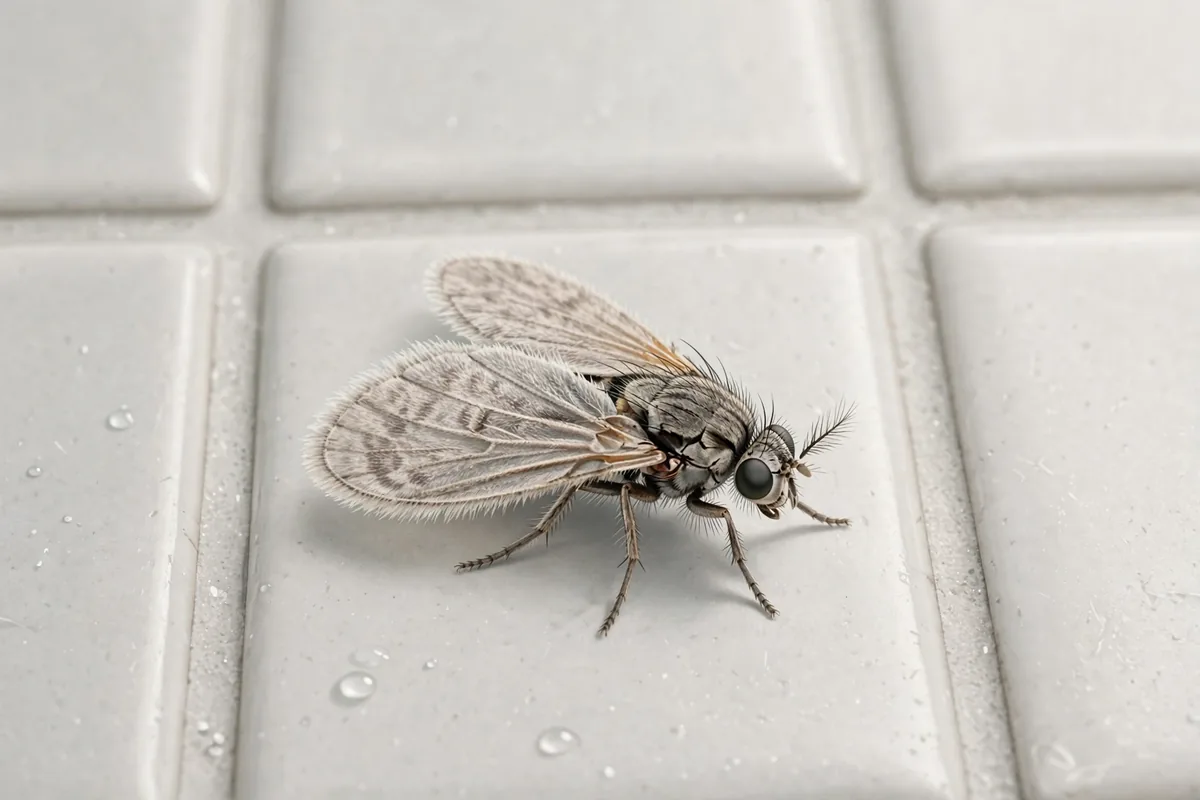
Those tiny gray flies hovering around your sink or shower can look suspicious, but do drain flies bite? No. Drain flies (also called moth flies) physically cannot bite you — they lack the mouthparts for it entirely. If you have itchy marks after spending time near a drain, a different insect is responsible. This guide explains why drain flies are innocent, identifies the real culprits, and shows you how to get rid of the flies themselves.
Why drain flies cannot bite #
Drain flies are anatomically incapable of biting people or pets.
They have no piercing mouthparts. Biting flies — mosquitoes, horse flies, stable flies — carry specialized needle-like mouthparts for piercing skin and drinking blood. Drain flies have soft, sponging mouthparts built for sipping moisture and organic film. There is nothing sharp, nothing that pierces, and nothing that injects.
They do not feed on blood. Adult drain flies feed on flower nectar, moisture, and the organic sludge coating the inside of drains. Blood is not part of their diet at any life stage, and they have no instinct to land on you and feed.
They cannot sting either. Drain flies have no stinger, no venom, and no defensive bite. They are weak fliers that mostly sit on walls near their breeding sites. A drain fly landing on your arm is simply resting — brush it off and it is gone.
They do not spread disease to people. Drain flies breed in the bacterial film inside drains, which makes them unpleasant, and they can theoretically carry bacteria on their bodies. There is no evidence, however, that drain flies transmit disease to humans. They are a sanitation nuisance, not a health threat.
What is actually biting you near the sink #
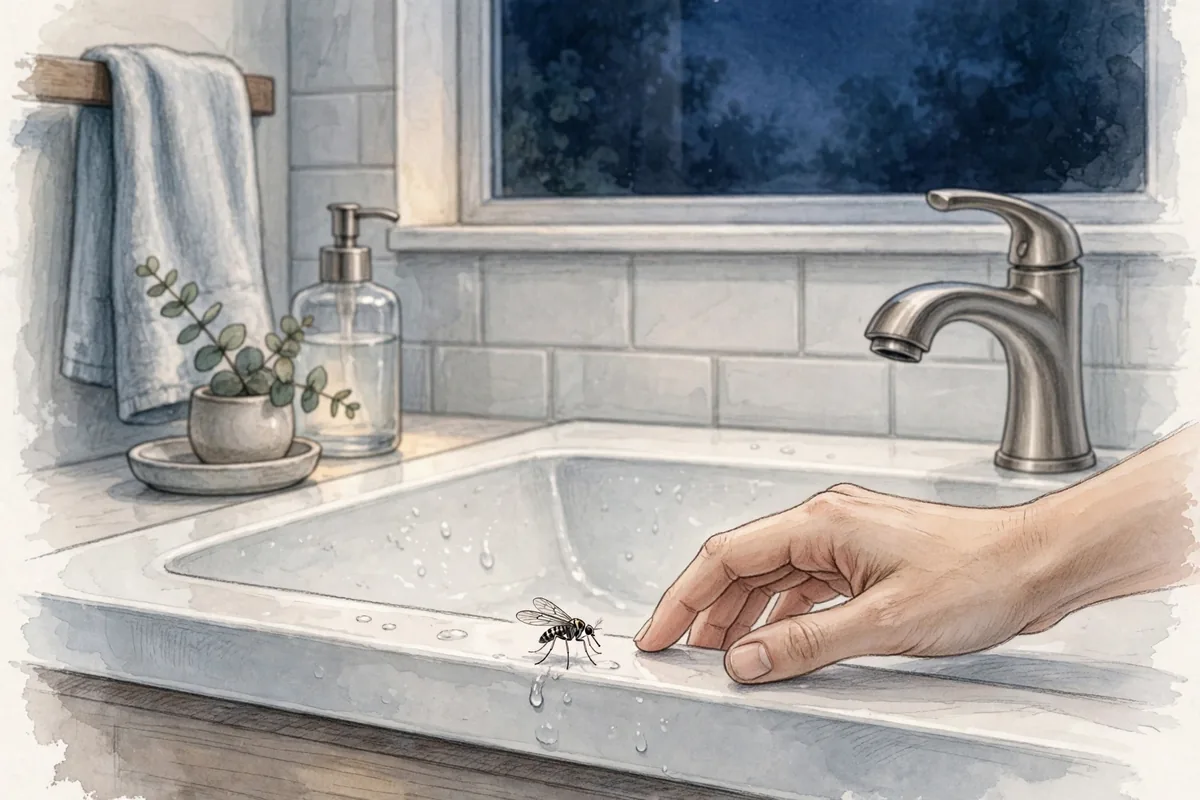
If you are getting bitten in the bathroom or kitchen, the drain flies are bystanders. Look for these instead.
Biting midges (no-see-ums). Nearly invisible, active near moisture and drains, and their bites leave small, intensely itchy red dots. Because you cannot see them well, people blame the visible drain flies. Midge bites often appear in clusters on ankles and arms.
Mosquitoes. A single mosquito in a damp bathroom can bite repeatedly through the night. Check for standing water — a plant saucer, a slow drain, an unused toilet — which breeds mosquitoes indoors.
Fleas. If you have pets, flea bites around the ankles are the classic pattern, and fleas hitchhike into bathrooms and kitchens easily. Flea bites cluster and itch fiercely.
The timing test. Drain flies are most active in the evening around their breeding drain. If your bites appear overnight in bed rather than in the bathroom, drain flies are definitively not the cause — bed bugs or fleas are far more likely. Compare the marks with the guide on how to identify an insect bite from a photo before treating.
Drain fly control checklist #
You cannot stop drain flies from biting — they already cannot — but you can eliminate them by destroying their breeding sites.
Find the source.
- The tape test. Place clear tape loosely over each suspect drain overnight. Flies emerging from the drain stick to the tape, confirming the breeding site.
- Check every drain. Kitchen sinks, bathroom sinks, showers, tub overflows, floor drains, and rarely-used toilets are all candidates. Also check drip pans under refrigerators and the soil of overwatered houseplants.
Clean the breeding film.
- Scrub the drain walls. A long stiff brush (a bottle brush works) physically removes the organic slime where larvae live. This single step does more than any chemical.
- Pour boiling water down the drain after scrubbing to flush loosened material.
- Repeat for several days. Drain fly life cycles run about one to three weeks, so one cleaning rarely ends it. Scrub daily for a week to break the cycle.
What does not work well.
- Bleach alone disinfects but often fails to remove the thick slime layer; scrubbing matters more than chemicals.
- Pouring hot tap water once is rarely enough — it must be truly boiling and combined with mechanical cleaning.
- Bug spray kills the adults you see but leaves the larvae untouched in the drain. The next generation is already developing.
Prevent their return.
- Run rarely-used drains weekly so the slime film never matures.
- Fix slow drains. Standing water in a sluggish drain is a nursery.
- Seal unused drains with a stopper or cover if you travel for weeks.
A quick note on drain fly lookalikes #
Two insects are commonly confused with drain flies, and neither bites — but knowing the difference focuses your cleanup.
Fruit flies are smaller, tan, and hover over produce and garbage rather than drains. They also do not bite.
Phorid flies (humpbacked flies) breed in deeper organic matter — broken sewer lines, dead animals in walls — and signal a more serious sanitation problem than a slimy drain. If scrubbing every drain fails and the flies persist, a plumber or pest professional should investigate the pipes.
Warning signs: when to seek care #
Call 911 immediately if you develop trouble breathing or swallowing, swelling of the face, lips, tongue, or throat, widespread hives, dizziness or fainting, or a racing heartbeat after any insect encounter. If you have been prescribed an epinephrine auto-injector, use it first, then call 911 — epinephrine buys time but does not replace emergency care.
Drain flies do not bite, sting, or trigger allergic emergencies. Seek urgent care or call your doctor if mystery bites near sinks develop spreading redness, red streaks, pus, increasing pain after the first day, or fever — those are infection signs or a different insect’s work. For general protection during any biting-insect problem, review the outdoor bite prevention checklist, which covers the indoor habits too.
Frequently asked questions #

Do drain flies bite humans or pets? #
No. Drain flies cannot bite people or pets. They lack piercing mouthparts entirely and feed only on moisture and organic film. Any bite marks found near drains come from other insects such as midges, mosquitoes, or fleas.
Are drain flies harmful? #
Not in any medical sense. They do not bite, sting, or transmit disease. They are a sanitation nuisance that signals organic buildup in your drains — unpleasant, but not dangerous.
Why do drain flies keep coming back? #
Because the breeding film inside the drain was not fully removed. Surface chemicals and single cleanings leave larvae behind. Consistent mechanical scrubbing over a week or more is what breaks the life cycle.
How long do drain flies live? #
Adults live roughly two to three weeks, and the full life cycle from egg to adult runs one to three weeks depending on temperature. That is why control takes persistence — you are fighting overlapping generations.
Medical and editorial note #
This guide is general information about drain flies and is not medical advice. Drain flies do not bite, sting, or transmit disease to people. If you are unsure about a skin reaction, have a known venom allergy, or feel unwell after any insect encounter, contact a healthcare professional promptly rather than relying on this reference alone.


