
If the chirping from your basement or garage has you wondering whether crickets bite humans, here is the honest answer: not really. Crickets have chewing mouthparts built for plants and crumbs, and they do not feed on blood, carry venom, or attack people. On rare occasions one may nibble skin, but that is curiosity or accident — not a true bite. This guide separates fact from worry and shows you how to keep them out of your house.
Can crickets bite? The honest answer #
Crickets are physically capable of chewing on almost anything soft — but people are not on their menu.
The mouthparts are made for chewing plants. House crickets and field crickets have mandibles — small chewing jaws — designed to tear plant fibers, fruit, and crumbs. They have no piercing tube, no venom glands, and no stinger. Nothing in their anatomy is specialized for feeding on humans.
They do not feed on blood. Unlike mosquitoes, fleas, or bed bugs, crickets get zero nutrition from human skin or blood. There is no evolutionary reason for a cricket to bite you, and in practice they almost never do.
Documented nibbles are rare and trivial. Entomologists note that crickets may occasionally nibble dead skin, sweat residue, or a crumb on your hand — especially if one is trapped against the skin. The sensation is a faint tickle or pinch with no puncture wound, no venom, and no reaction afterward. It is the insect equivalent of tasting a surface, not biting it.
Camel crickets and cave crickets are equally harmless. The spider-like camel crickets that startle people in basements and crawlspaces look alarming but are completely harmless — no bite, no sting, no venom. Their long legs are built for jumping in the dark, not for attacking.
Why a cricket might nibble your skin #
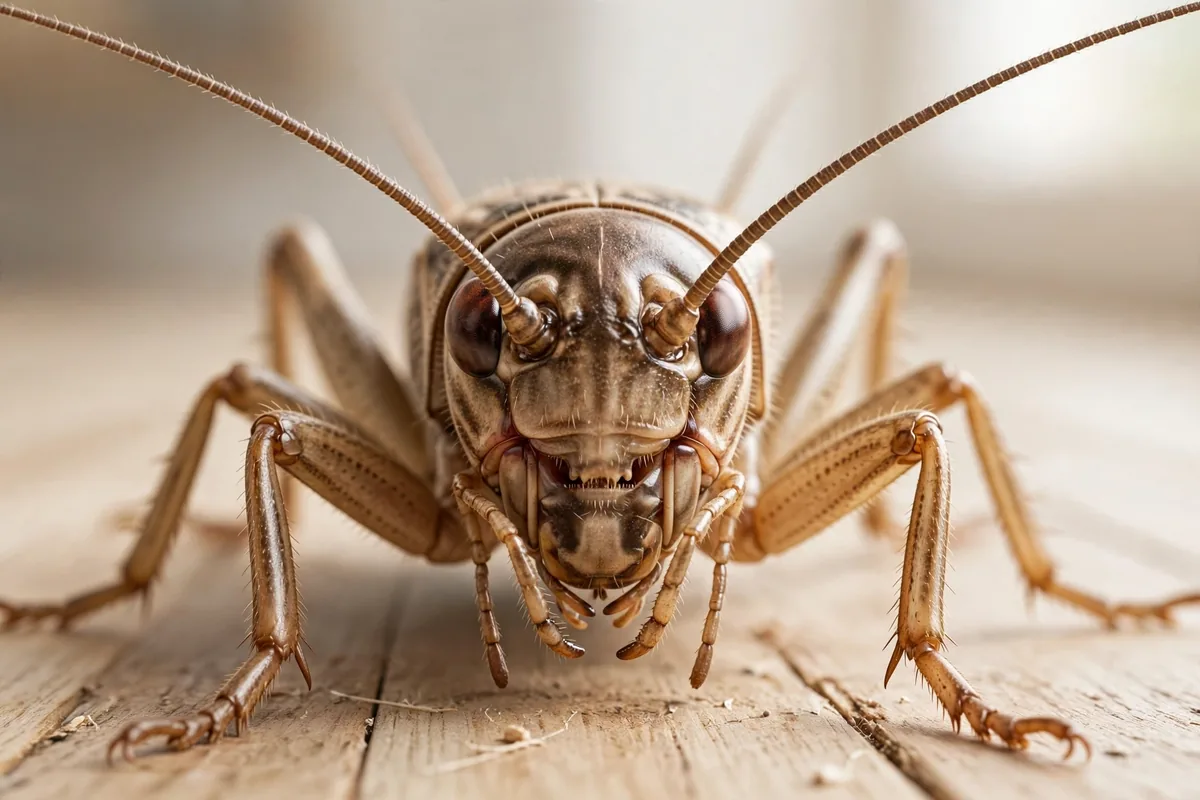
When a nibble does happen, there is always a mundane explanation.
Trapped and panicking. A cricket caught inside a sleeve, shoe, or bedsheet may chew at whatever confines it. This is escape behavior, not aggression — free it and the behavior stops.
Attracted by sweat or food residue. Salt from sweat, lotion, or food on your hands can interest a curious cricket. Washing your hands before bed or before handling crickets removes the attraction.
Nighttime contact. Crickets are nocturnal and wander. One crossing your foot or arm in the dark may test the surface with its mouthparts. The nibble lasts a second and leaves no mark.
What a nibble leaves behind. Nothing, in almost every case — no redness, no swelling, no itch. If you wake up with itchy red bumps, crickets are very unlikely to be the cause; bed bugs, fleas, or mosquitoes are far more plausible. Compare the marks using the guide on how to identify an insect bite from a photo before blaming the chirping in the walls.
Crickets and disease: what the evidence says #
Crickets do not spread disease to people. Here is where the evidence stands.
No known disease transmission. Crickets are not known vectors of any human illness. They do not feed on blood, so they cannot move pathogens between people the way blood-feeding insects can.
The honest limits of the evidence. Crickets live in soil, leaf litter, and damp indoor corners, so they can carry ordinary environmental bacteria on their bodies — as can any insect that crawls across a floor. There is no evidence that this poses a meaningful health risk to people, and no public-health agency lists crickets as a disease concern.
Allergies are the one real footnote. Some people develop respiratory irritation from cricket frass (droppings) or shed skins in heavy indoor infestations, similar to dust-mite or cockroach allergen sensitivity. This is a cleanliness and ventilation issue in a major infestation — not a bite issue — and it resolves with cleanup.
Food contamination is a nuisance, not a poisoning. A cricket in the pantry may nibble dry goods. Discard anything it has clearly contaminated and store food in sealed containers. The cricket itself adds no toxin.
Keeping crickets from bothering you indoors #
Crickets come inside for warmth, moisture, and food. Remove the invitations and they stay outside.
Seal the entries.
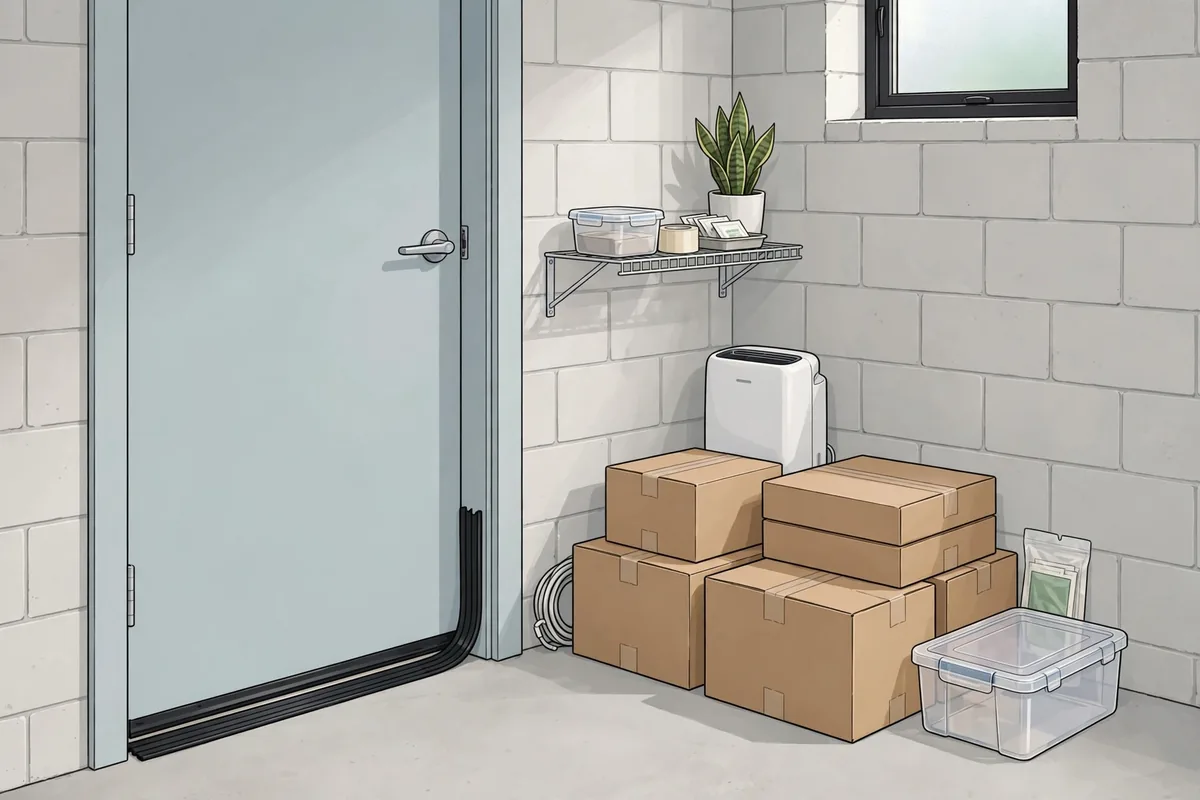
- Install door sweeps on exterior doors and seal gaps around windows, pipes, and the foundation with caulk.
- Repair torn window screens. A single torn screen is an open door for a whole chirping chorus.
- Declutter the perimeter. Move firewood, mulch, and dense plantings a few feet from the foundation — crickets shelter there before wandering in.
Dry and tidy the interior.
- Fix leaks and ventilate damp spaces. Basements and crawlspaces are cricket magnets when they are moist. A dehumidifier helps substantially.
- Store dry goods and pet food in sealed containers. Open bags and bowls are a cricket buffet.
- Reduce clutter. Cardboard stacks, laundry piles, and storage boxes are cricket apartments — thin them out where you can.
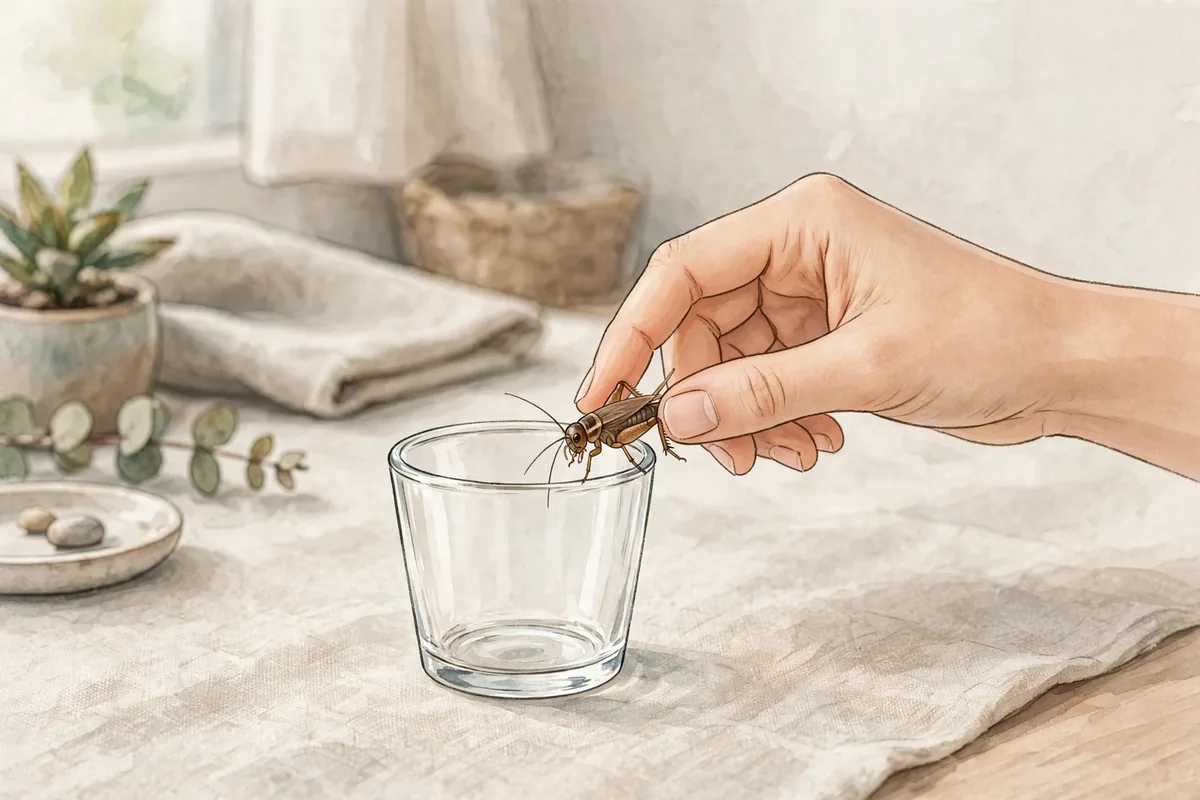
Catch and release. A single cricket is easiest handled with a cup and a stiff card: trap it, slide the card under, and release it outside away from the house. Skip the panic — it cannot hurt you. For the same reason, chemical sprays indoors are overkill for a few crickets; reserve professional pest help for true infestations.
Warning signs: when to seek care #
Call 911 immediately if you develop trouble breathing or swallowing, swelling of the face, lips, tongue, or throat, widespread hives, dizziness or fainting, or a racing heartbeat after any insect encounter. If you have been prescribed an epinephrine auto-injector, use it first, then call 911 — epinephrine buys time but does not replace emergency care.
Crickets do not cause allergic emergencies or transmit disease, so 911-level reactions from a cricket encounter are extraordinarily unlikely. Seek urgent care or call your doctor if you notice spreading redness, red streaks, pus, or increasing pain around any skin mark; fever; or swelling that worsens after 24 hours — signs that point to a skin infection from a scratch or a different insect entirely. For basic wound hygiene after any skin contact, the guide to clean a bite or sting safely covers the steps.
Frequently asked questions #
Do crickets bite humans at night? #
Crickets do not truly bite people at any hour. A nocturnal cricket may nibble skin out of curiosity or if trapped against you, but it cannot puncture skin meaningfully and leaves no reaction. Nighttime bites with red, itchy bumps are almost always from bed bugs, fleas, or mosquitoes — not crickets.
Can a cricket bite draw blood? #
Effectively no. Cricket mandibles are not strong enough to break human skin in a feeding bite. At most, a hard nibble on very thin skin might feel like a pinch, with no bleeding and no wound to treat.
Are camel crickets dangerous? #
No. Camel crickets look like spiders and startle people in dark basements, but they have no venom, no sting, and do not bite people. They are harmless decomposers that eat decaying organic matter.
Do crickets spread disease or parasites? #
No. Crickets are not known to transmit any disease to humans or pets. They do not feed on blood, which removes the main transmission route of insect-borne illness.
Medical and editorial note #
This guide is general information about crickets and is not medical advice. Crickets do not truly bite people in the feeding sense, carry no venom, and are not known to spread disease. If you are unsure about a skin reaction, have a known venom allergy, or feel unwell after any insect encounter, contact a healthcare professional promptly rather than relying on this reference alone.


