
If a gangly, mosquito-like insect with a two-inch wingspan just landed on your arm, here is the reassuring answer to do crane flies bite: no. They cannot bite you, and they cannot sting you either.
Why Crane Flies Cannot Bite You #
Crane flies look alarming, but their anatomy tells a different story. Unlike mosquitoes, crane flies do not have piercing-sucking mouthparts — the tube-like proboscis a mosquito uses to draw blood. Ohio State University Extension states plainly that they lack that equipment, so biting is physically impossible.
WebMD puts it just as clearly: most crane fly species have no mouthparts at all, and the species that do have them use them only to sip nectar. They do not sting either — they have no stinger, so there is no way for them to inject anything into your skin.
The adult stage is also short-lived. Many adult crane flies do not feed at all; their adult lives revolve around mating and laying eggs. So when one bumps clumsily against your porch light or blunders through an open window, it is not hunting you. It is lost.
One common point of confusion: the female’s pointed abdomen tip. That is an ovipositor — an egg-laying organ — and it is completely harmless. It cannot pierce skin. For a broader look at how these encounters differ, see our guide to bite vs sting differences.
Crane Fly vs Mosquito: A Quick ID Check #
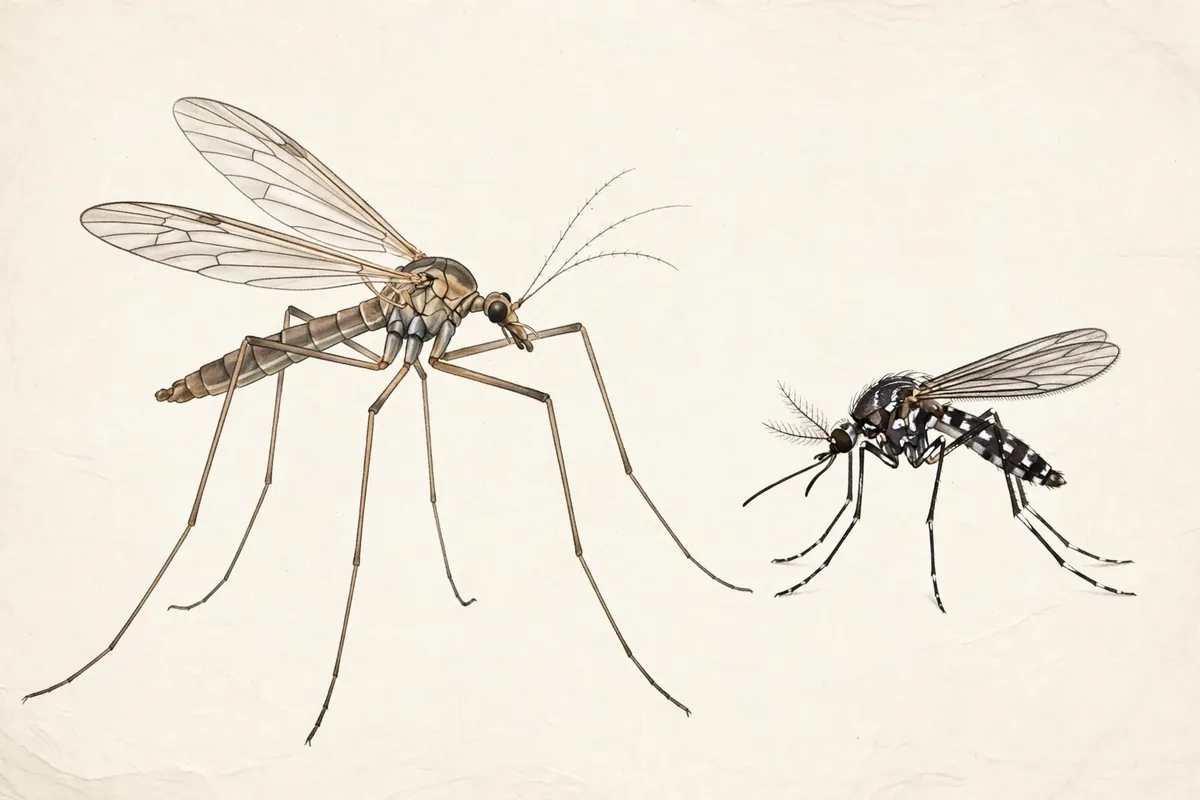
Because the two get mixed up constantly, run through this side-by-side check before you panic.
| Feature | Crane fly | Mosquito | |—|—|—| | Body size (legs excluded) | About 1/2 to 3/4 inch | About 1/4 inch | | Wingspan | Up to 2 inches | Under 1/2 inch | | Mouthparts | Blunt snout or none — no piercing tube | Piercing, tube-like proboscis | | Wing veins | No scales | Tiny scales along the veins | | Thorax | Distinctive V-shaped groove on top | No such groove | | Legs | Extremely long and fragile | Proportionate to body | | Bites? | Never | Only females, for blood meals |
Sound: mosquitoes whine; crane flies are mostly silent bumblers.
Flight: mosquitoes fly with purpose toward hosts; crane flies bounce off walls, lights, and screens.
Timing: both show up around dusk near lights and moisture, which is why the confusion happens.
If the insect you saw actually fed on blood, it was not a crane fly. And if you are dealing with a mystery mark on your skin, our insect bite photo identification guide can help you narrow down the real culprit.
What to Do About Crane Flies Indoors #
They are harmless, but a living room full of bouncing crane flies is no fun. Work through these steps:
1. Stay calm and do not swat. They cannot hurt you, and swatting just shatters their fragile legs without solving anything.
2. Dim indoor lights near entry points. Crane flies are drawn to light, so closing curtains and turning off lamps near doors and windows keeps more of them outside.
3. Open a door or window. Most will wander out on their own toward the brighter outdoor light.
4. Catch and release stragglers. A cup and a stiff card work fine — they are slow and clumsy fliers.
5. Check your window screens. Torn or loose screens are the main entry route; patch them before the next emergence wave.
6. Switch your porch bulbs. Warm yellow “bug lights” attract far fewer night-flying insects than bright white bulbs.
Adults emerge in spring and fall waves, so expect a few weeks of activity followed by quiet. No sprays are needed for the adults — and since they do not bite, there is no health reason to treat them as pests.
Leatherjackets: When the Larvae Attack Your Lawn #
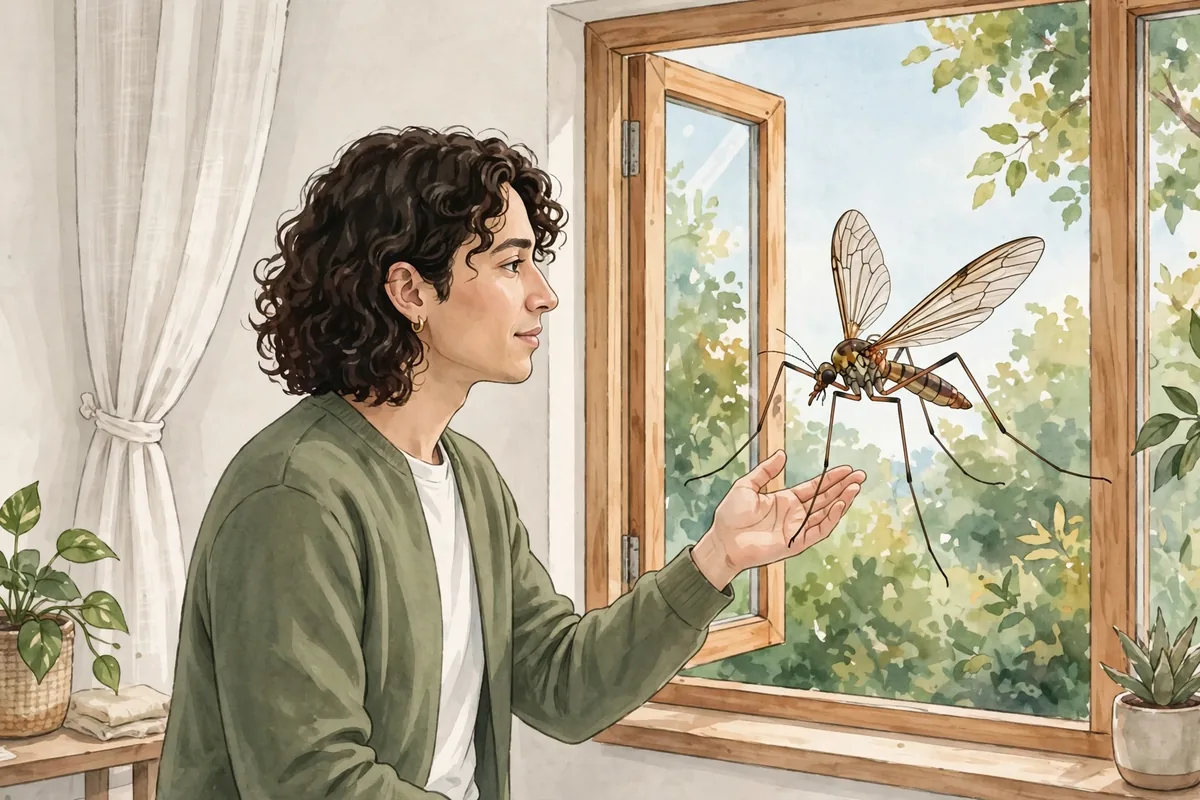
The real damage from crane flies happens underground. Their larvae, called leatherjackets for their tough skin, feed on grass roots, shoots, and leaves. Some species — especially the common and European crane flies of the Pacific Northwest — can leave brown patches across a lawn as they chew.
Signs of a leatherjacket problem:
- Irregular brown or thinning patches of grass that pull up easily
- Birds or skunks digging in the turf to eat the grubs underneath
- Large numbers of adult crane flies emerging from the same lawn
What helps: good lawn care is the first line of defense. Dethatch heavy thatch layers, since larvae thrive in decaying thatch. Avoid overwatering, because moist soil favors egg survival. Overseed damaged patches in the fall to help the turf recover.
Insecticides exist, but WebMD and extension services alike suggest trying cultural controls first. Lawn chemicals can be hazardous to children and pets who play on treated grass — which may be the most genuinely harmful thing about a crane fly problem.
Warning signs: when to seek care #
Since crane flies cannot bite or sting, you will never need medical care for a crane fly encounter itself. But bites do happen — and if the real culprit was a mosquito, wasp, or something else you misidentified, the standard warning signs apply.
Call 911 or your local emergency number right away if you notice: trouble breathing or swallowing; swelling of the face, lips, tongue, or throat; widespread hives; dizziness or fainting; or a racing heartbeat. If you carry an epinephrine auto-injector and have signs of a severe allergic reaction, use it as prescribed, then call emergency services.
See a doctor or urgent care if a real bite or sting shows spreading redness, red streaks moving outward, pus, increasing pain after the first day, or fever. Bites on the face, eyes, mouth, or genitals deserve prompt attention, as does any reaction that keeps worsening after 48 hours. If you applied lawn insecticides for leatherjackets, keep the product label handy — call poison control if anyone, especially a child or pet, may have been exposed.
Frequently asked questions #

Do crane flies eat mosquitoes? #
No. Despite nicknames like “mosquito hawk” or “mosquito eater,” adult crane flies do not hunt mosquitoes. Many species do not feed at all as adults, and those that do drink only nectar.
Can crane flies bite dogs or cats? #
No. They lack the mouthparts to bite any animal, including pets. A crane fly landing on your dog is, at most, a brief annoyance.
Why are there suddenly so many crane flies in my house? #
Adults emerge in large seasonal waves, usually spring and fall. They are strongly attracted to lights, so open doors and lit windows at night pull them indoors. The wave typically passes in a few weeks.
Do crane fly larvae bite people? #
No. Leatherjackets live in soil and feed on roots, decaying matter, and grass. They do not seek out people or pets and cannot bite you.
Medical and editorial note #
This article is for general information only and is not medical advice. Crane flies are harmless to people and pets, but if you are dealing with an actual bite or sting, a spreading rash, or symptoms that worry you, talk to a doctor, pharmacist, or other qualified healthcare professional for guidance about your situation.


