
Few travel thoughts are worse than imagining bed bugs in the seat you are about to occupy for six hours. Bed bugs on airplanes are rare, but planes combine everything these hitchhikers love: endless streams of passengers, upholstered seats with seams, and luggage piled together. A two-minute inspection and disciplined luggage habits make the risk negligible.
Inspecting your seat before takeoff #
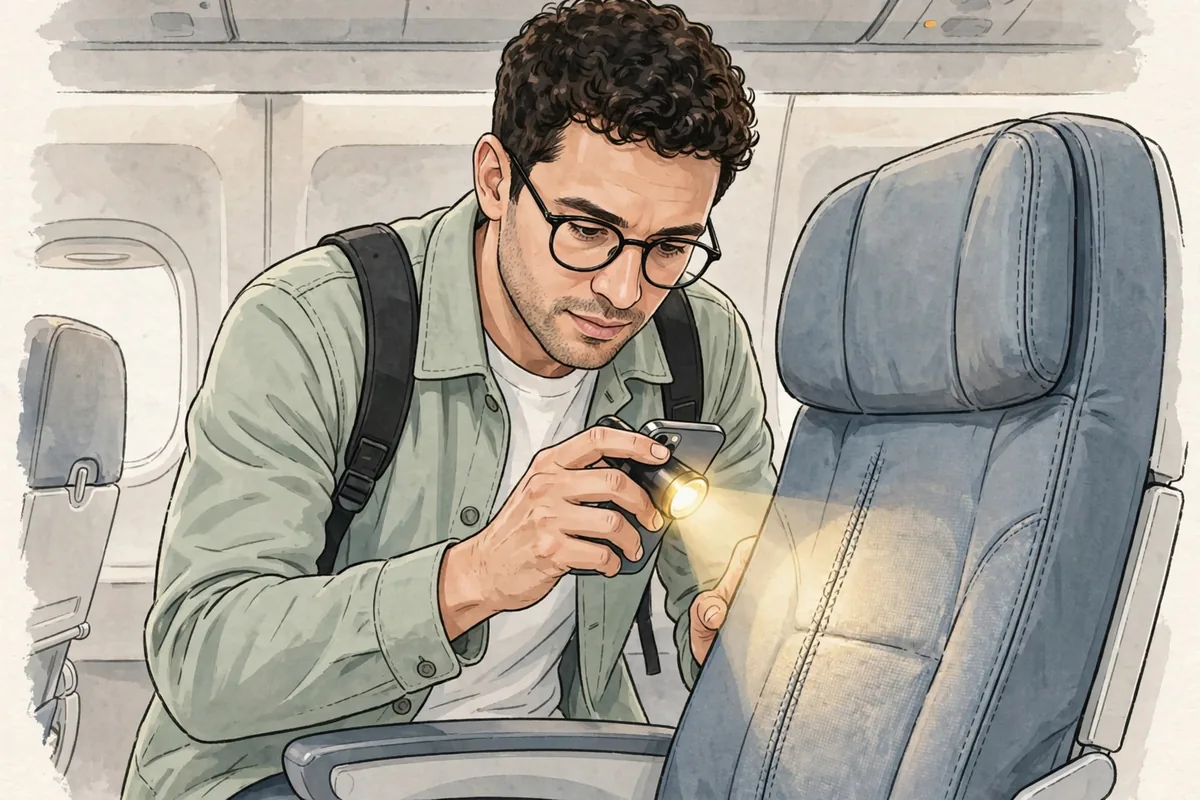
Do a quick check while boarding, before you settle in. With your phone flashlight, look along the seat seams, the piping where the cushion meets the backrest, the crevice between seat and armrest, and the folds of the tray table and seat-back pocket. You are looking for live bugs — flat, reddish-brown, apple-seed-sized — or their calling cards: tiny dark spots, shed translucent skins, or pale pinhead eggs tucked into stitching.
Pay the same attention in every cabin class; bed bugs do not respect ticket prices. If you find live bugs, discreetly show a flight attendant and ask to be reseated — crews have procedures for this and would rather know than have the problem spread silently. Do not make a scene, but do not sit in a compromised seat out of politeness either. A single sighting does not mean the whole aircraft is infested, since bugs typically stay near where a previous passenger left them. Travelers who master the hotel version of this check will find the airplane version familiar — the same technique in our bed bug bites in hotels guide applies seat by seat.
Protecting your luggage in flight #
Your luggage matters more than your body on a flight. Bed bugs feed on people but live in things, and a suitcase is the perfect vehicle home. Keep your carry-on in the overhead bin, fully closed — not under the seat in front of you, where it sits against upholstery for the whole flight. Hard-sided luggage offers fewer hiding spots than soft-sided bags, and packing cubes or sealed bags inside add another barrier.
For checked bags you cannot control placement, so the post-flight routine carries the weight there. Consider luggage liners or large zip bags for clothes inside any bag. Avoid placing your coat or personal item in the seat-back pocket; keep them on your lap or in the closed overhead bin instead. If you travel frequently for work, a quick wipe-down of your bag’s exterior seams with a damp cloth after landing is a reasonable habit — it will not kill hidden bugs but it removes the easy riders. Some frequent travelers also keep a dedicated set of packing cubes for trips and run them through the dryer between journeys, which adds a layer of protection without much extra effort.
The post-flight decontamination routine #
This is the step that actually protects your home. Do not bring luggage into the bedroom. Unpack in the garage, laundry room, or bathtub — somewhere with hard floors and no upholstery, where a stray bug is visible and contained. Inspect the bag’s seams, zippers, and pockets as you empty it.
Clothes go straight into the dryer on the highest heat the fabric tolerates for at least 30 minutes; heat reliably kills bed bugs at every life stage, and the dryer beats washing alone for this purpose. Washable items can be washed hot first, but the dryer cycle is the critical kill step. Store the empty suitcase away from sleeping areas — a garage shelf or a sealed bag — for a week or two, and re-inspect before the next trip. Within the following days, check your mattress seams and headboard for any signs of hitchhikers that slipped through. Early detection is everything: one bug caught in week one is a story, while one bug missed for two months is an infestation. If bites show up later in lines or clusters, the bed bug bite identification guide article helps you read the clues.
Warning signs: when to seek care #

Call 911 immediately if bites cause trouble breathing or swallowing, swelling of the face, lips, tongue, or throat, widespread hives, dizziness or fainting, or a racing heartbeat. Allergic reactions to bed bug bites are uncommon but real.
For most travelers, bed bug bites are an itchy nuisance. See a doctor or urgent-care clinic if bites develop spreading redness, red streaks, increasing pain and warmth, pus, or fever — signs of secondary bacterial infection from scratching. Severe itching that disrupts sleep for several nights is also worth a clinician’s advice. Keep bites clean, avoid scratching them open, and use an oral antihistamine per label directions for itch relief.
Frequently asked questions #

How common are bed bugs on airplanes? #
Rare, but confirmed cases exist across airlines. Aircraft see enormous passenger turnover, and a single infested bag can seed a row of seats. Airlines do treat when problems are reported, which is another reason to tell the crew rather than staying quiet. Your personal risk on any given flight is low, but the inspection habit costs two minutes.
Can bed bugs bite me through the seat during the flight? #
They can bite exposed skin, though a flight is a relatively short window and they prefer to hide in belongings. Bites often appear hours or days later, so judge by inspection and prevention rather than by whether you felt anything. The luggage routine after landing matters more than anything that happens in your seat.
Should I use a bed bug spray on the airplane seat? #
No. Spraying pesticides in a confined aircraft cabin is inappropriate and likely against airline policy, and over-the-counter sprays are unreliable against hidden bugs anyway. Inspection, luggage discipline, and post-flight heat treatment are the effective, safe measures. Leave chemical treatment to professionals dealing with confirmed infestations.
What if I find bed bugs at my hotel after the flight too? #
Then you may be dealing with two separate exposures, or the hotel may be the actual source. Document with photos, notify the hotel immediately and request a room change (not an adjacent room), and run the full post-trip decontamination when you get home. Keep luggage isolated until everything has been heat-treated, and inspect your bed weekly for the next month.
Medical and editorial note #
This guide is general information about avoiding bed bugs while flying, not medical advice. Bed bug bites are typically minor skin irritations, though scratching can lead to infections that need care. If bites look infected or you experience signs of an allergic reaction, consult a healthcare professional.


