
The scalp is one of the most common hiding spots for ticks — and one of the hardest to check. A tick bite on scalp often goes unnoticed for days because hair conceals the tick, the bite, and the early redness. If you have found a tick in your hair or suspect a bite under it, here is a calm, methodical way to find it, remove it safely, and handle the aftercare.
Finding a Tick Hidden in Hair #
Ticks on the scalp favor the hairline, the nape of the neck, behind the ears, and the crown — warm, sheltered spots with thin skin and good blood flow. They can also attach anywhere under thick hair, so a partial check is not enough.
Do a systematic scalp check:
- Work in bright light. Natural daylight or a strong lamp makes dark ticks visible against the scalp. A handheld mirror helps with the back of the head, or ask someone to help.
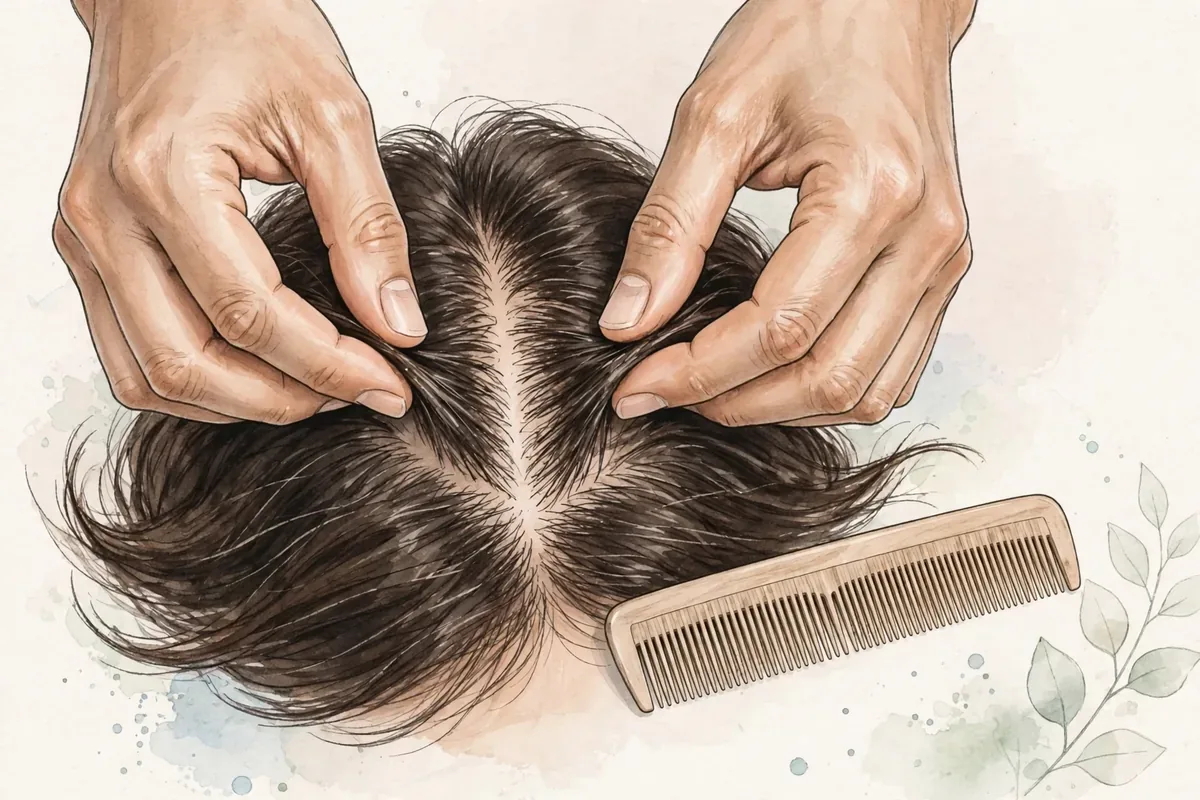
- Part the hair in sections. Using your fingers or a comb, part the hair row by row from the hairline to the nape, looking at the exposed scalp line before moving on. Rushing this step is how ticks get missed.
- Use a fine-toothed comb. A fine comb dragged slowly from roots to tips can catch an attached tick or knock loose a wandering one. Check the comb teeth after each pass.
- Feel with your fingertips. Run your fingers firmly over the entire scalp, feeling for small bumps, scabs, or anything that was not there before. An attached tick feels like a tiny new mole or a small raised bump.
- Do not forget the edges. Behind the ears, the hairline at the forehead and temples, the nape, and around any hair ties or braids where ticks can shelter.
If you find a wandering tick (crawling, not attached), remove it from the hair, drop it in rubbing alcohol or flush it, and keep checking — where there is one, check for more. Only an attached tick counts as a bite.
Removing a Tick From the Scalp #
The technique is the same as anywhere else on the body — the challenge is access through the hair.
Step-by-step removal:
- Clear the hair. Clip or tie the surrounding hair back so you have a clear view and the tweezers will not catch strands. A helper makes this much easier on the back of the head.
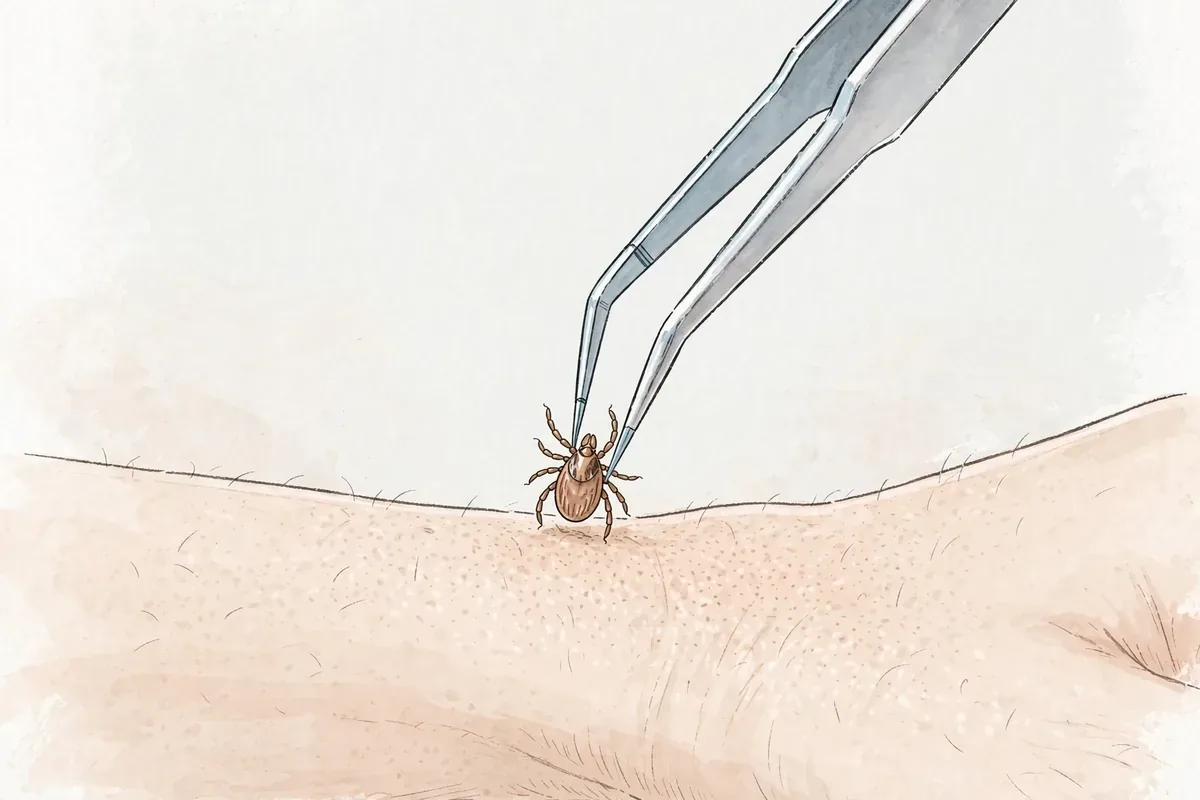
- Use fine-tipped tweezers. Grasp the tick as close to the scalp surface as possible — right at the mouthparts, not the swollen body.
- Pull straight up with steady, even pressure. Do not jerk, twist, or yank. The tick should release after a few seconds of constant tension.
- If the mouthparts break off, try once more with the tweezers to lift them out. If you cannot get them easily, leave them alone and let the skin heal — the body will usually expel the fragments on its own. Our guide on what to do when a tick head is stuck in skin covers this in detail.
- Clean the bite site. Wash the area with soap and water, or dab with an antiseptic. Wash your hands too.
Do NOT:
- Burn the tick with a match or lighter — this risks burns and can agitate the tick.
- Smother it with petroleum jelly, nail polish, or oils — these folk methods can make the tick regurgitate saliva (and any pathogens) into the bite.
- Squeeze the body with your fingers or blunt tweezers — pressure on the abdomen pushes fluids back into you.
If the tick is deeply embedded in thick hair and you cannot get a clean grip at the skin surface, go to an urgent-care clinic or your doctor rather than struggling — a clean removal on the first try is worth the trip. Full removal technique is also covered in how to remove an attached tick safely.
Aftercare: What to Watch Over the Next Weeks #
Scalp bites deserve the same aftercare as bites anywhere else — with one extra challenge: hair makes it harder to see changes at the site.
Immediate aftercare:
- Save the tick. Tape it to an index card or seal it in a bag with the date and “scalp” noted. Species identification helps your doctor assess risk.
- Mark the spot. Note exactly where on the scalp the bite was — behind the right ear, crown, nape — so you can find it again through the hair.
- Photograph the site. A dated photo gives you a baseline to compare against if redness develops.
Over the next 2-4 weeks, check the site every few days:
- Feel for changes. Part the hair and look at the marked spot for expanding redness, a ring-like rash, swelling, or a scab that keeps growing.
- Watch your whole body for symptoms. Fever, headache, unusual fatigue, muscle or joint aches, or any new rash — especially an expanding circular rash — warrant a call to your doctor.
- Note swollen lymph nodes. Tender nodes behind the ears or at the base of the skull after a scalp bite are worth mentioning to your doctor.
- Keep a short log. Dates of the bite, removal, and any symptoms make the doctor’s visit far more productive than memory alone.
Scalp-specific healing notes: the bite may itch as it heals, especially under hair where scratching is tempting. Try not to scratch the site — broken skin invites secondary infection. A cool compress held against the spot can calm itching. If a scab forms, let it fall off naturally rather than picking at it.
Warning signs: when to seek care #
Call 911 immediately if you develop trouble breathing or swallowing, swelling of the face, lips, or tongue, widespread hives, dizziness or fainting, or a racing heartbeat. Severe allergic reactions after tick bites are rare but always an emergency — use an epinephrine auto-injector first if you have one.
Call your doctor promptly if you develop fever, headache, unusual fatigue, or a rash in the weeks after a scalp tick bite — particularly an expanding circular or bull’s-eye rash around the bite site. Increasing pain, spreading redness, red streaks, warmth, swelling, or pus at the bite suggest infection and need medical evaluation. If the tick was engorged (attached for days), contact your doctor even before symptoms appear to discuss whether preventive steps are appropriate.
Frequently asked questions #

How do I know if a tick bit me on the scalp if I never saw it? #
You may notice a new itchy bump, a scab that was not there before, or tenderness when brushing your hair. Sometimes the first sign is a rash or flu-like symptoms weeks later with no remembered bite — scalp bites are notorious for going unnoticed. If you spent time in tick habitat and develop unexplained symptoms, tell your doctor about the possible exposure even without a confirmed bite.
Should I shave the area around a scalp tick bite? #
No — shaving is unnecessary and risks irritating the bite site. Parting the hair gives enough access for removal and monitoring. If the hair is extremely thick and you truly cannot reach the site, a clinician can help rather than you shaving a patch yourself.
Can I use a tick removal tool instead of tweezers on the scalp? #
Tick removal tools (tick keys, tick twisters) work on the scalp as long as you can slide them flat against the skin at the base of the tick. Fine-tipped tweezers are usually easier in dense hair because they need less clearance. Whichever tool you use, grasp at the skin surface and pull with steady pressure — never squeeze the tick’s body.
The bite itches a lot — is that normal? #
Mild itching during healing is common and usually fades within a week or two. Itching alone, without spreading redness, swelling, or other symptoms, is generally not a warning sign. What matters is change: itching that intensifies, a bump that keeps growing, or new redness spreading outward deserves a doctor’s look.
Medical and editorial note #
This guide provides general information about scalp tick bites and is not medical advice. If a tick was attached to your scalp, save the tick and talk to your doctor about species-specific risks, local tick-borne disease prevalence, and what symptoms to watch for in the coming weeks.


