
You were gardening, and now your arms sting with tiny pinpricks — but you cannot find a single bug. Thrips bites on skin are the likely culprit: thrips are 1-millimeter plant-feeding insects whose piercing mouthparts can nip human skin, especially in late summer when huge numbers go airborne. The bites are a momentary annoyance, not a medical problem — wash the area, apply something cool, and use an oral antihistamine or hydrocortisone cream per label directions if it itches. Here is how to confirm the ID and get relief.
Can thrips really bite skin? #
Yes — and entomologists have documented it for decades, even though thrips are plant feeders first.
The biology:
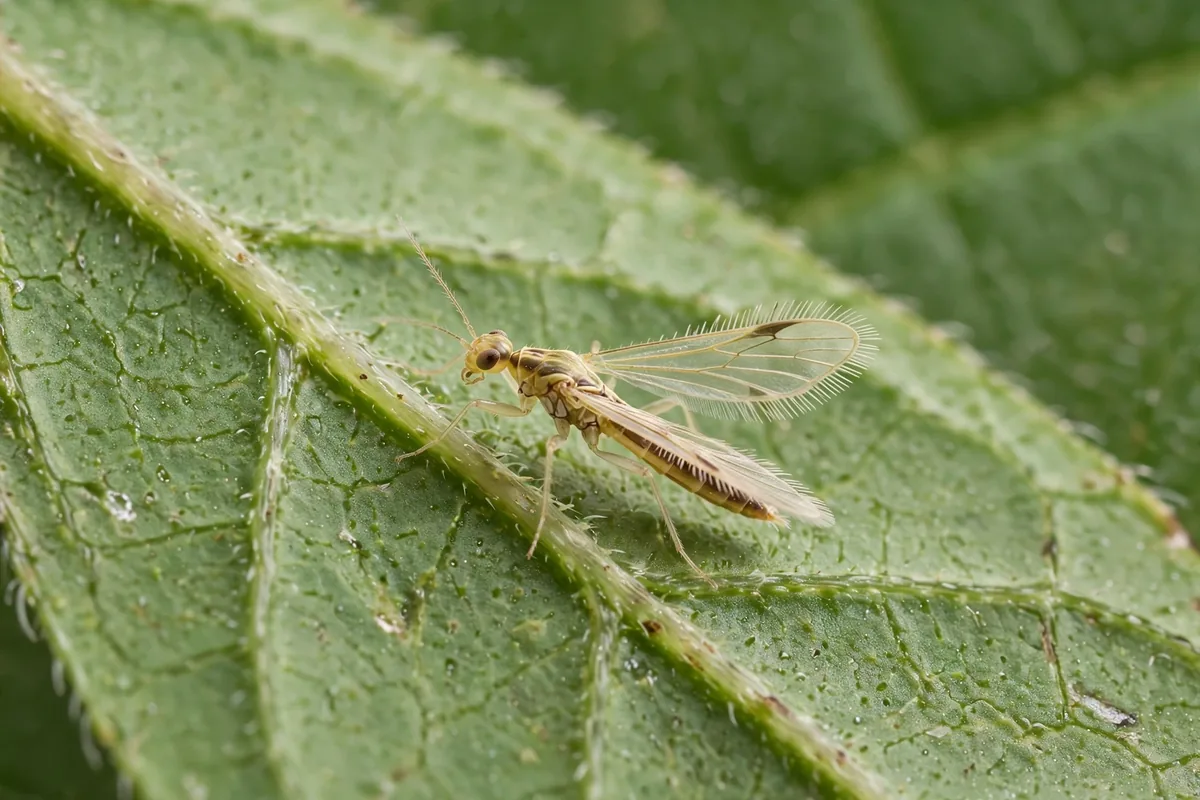
- Thrips are tiny — about 1/16 of an inch (roughly 1 mm), slender, straw-colored to dark insects with fringed wings. You can barely see one with the naked eye, and you will almost never catch one in the act.
- They have piercing-sucking mouthparts built for rasping plant tissue and drinking the juices. Those same mouthparts can pierce human skin.
- The bite does not draw blood. Thrips are not blood feeders like mosquitoes — they cannot take a blood meal. The nip is exploratory or defensive: the insect lands on warm, sweaty skin and probes.
- The sensation is a pinprick — a brief, sharp, tiny sting, often described as a needle prick or a static-electricity zap. It is momentary discomfort, not lasting pain.
- They do not spread disease to people. Thrips transmit plant viruses between plants (such as tomato spotted wilt virus) — a serious agricultural issue — but they are not vectors of human disease.
When it happens most:
- Late summer, when thrips populations peak and huge numbers become airborne, landing on people’s clothing and skin.
- In and around gardens, greenhouses, and flowering plants — wherever thrips are feeding.
- On warm, sweaty skin. Thrips are attracted to moisture and the salts in sweat, which is why gardeners notice them most on hot days.
- Indoors near houseplants, especially if you have a thrips infestation on indoor plants — the insects wander onto nearby skin.
What thrips bites look and feel like #
Because the insect is nearly invisible and the bite is minor, the pattern is often diagnosed by circumstance rather than by the mark itself.
The typical picture:
- Tiny red dots or pinprick marks, sometimes slightly raised, on exposed skin — arms, neck, legs.
- Brief sharp sensation at the moment of the bite, fading within minutes.
- Mild itching or irritation afterward in some people; others feel nothing after the initial prick.
- No large welts, no spreading redness, no blistering. If you have dramatic skin changes, think beyond thrips.
- Multiple tiny marks after a gardening session, consistent with many insects landing on skin at once.
- Marks fade quickly — usually within a day or two, faster than mosquito or midge bites.
What thrips bites are NOT:
- Not the large, raised, long-itching welts of mosquitoes or no-see-ums.
- Not the clustered, intensely itchy papules of chiggers (which concentrate at sock lines and waistbands).
- Not burrows or lines — those suggest scabies, which needs medical diagnosis.
- Not a spreading, hot, painful area — that suggests infection or a different bite entirely.
If your “mystery bites” do not match the thrips pattern — especially if they itch intensely for days, cluster in lines, or appear overnight in bed — the single vs multiple bites and bites in a line or cluster references help sort the possibilities.
Relief and aftercare #
Thrips bites need minimal care — the goal is soothing the itch and not making things worse.
- Wash the area. Soap and water remove any insect residue and sweat, and give you a clean slate to assess the marks.
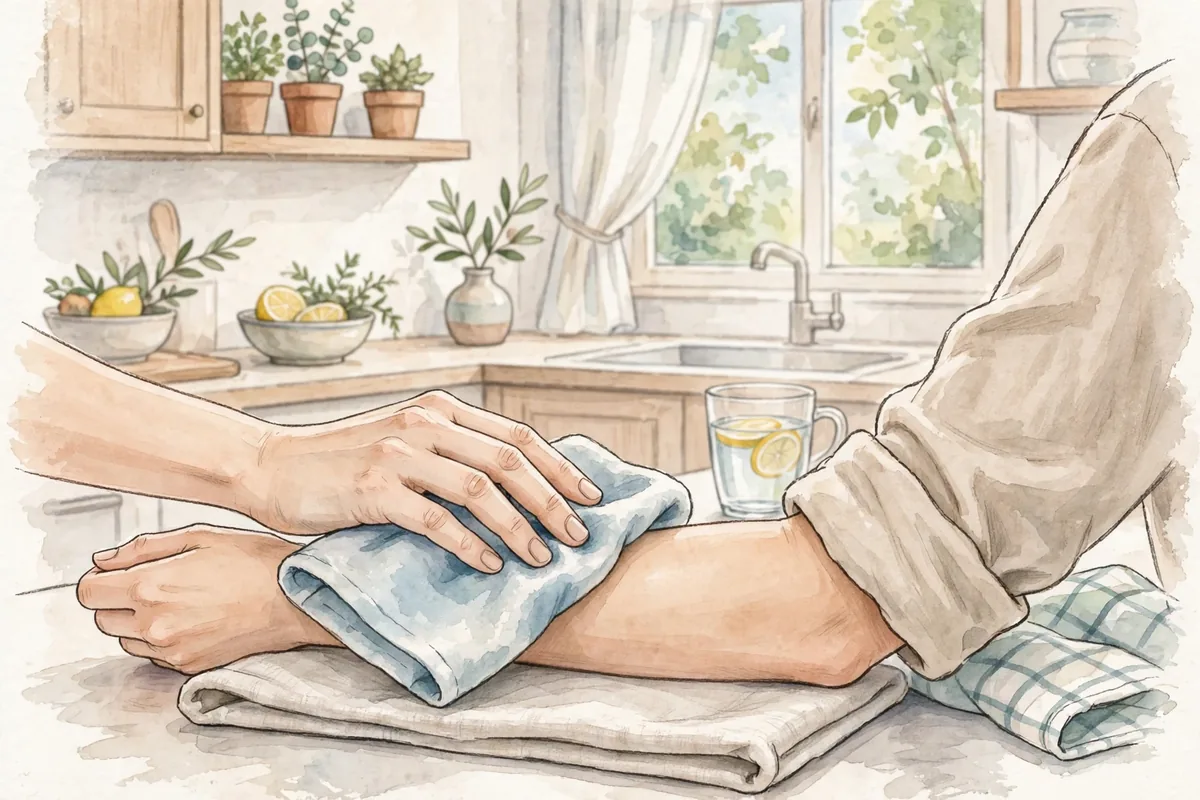
- Apply something cool. A cool damp cloth or cold compress for 10 minutes calms the prickling sensation. For technique, see how to use a cold compress on bites and stings.
- Calm the itch. Hydrocortisone cream or calamine lotion on the skin; an oral antihistamine per label directions if the itching is bothersome or widespread. Most thrips itch is mild and short-lived.
- Do not scratch. Even minor marks can become infected if scratched open — especially gardener’s hands, which carry soil bacteria. The short version of why is in why you should not scratch or squeeze a bite.
- Moisturize if skin is dry. Dry, irritated skin itches more; a plain moisturizer after the acute phase helps.
- Change out of garden clothes and shower after heavy exposure — thrips can linger in clothing and keep nipping.
Ruling out other causes of mystery bites #
Thrips get blamed for many rashes they did not cause. Before you settle on thrips, run through the more common suspects — especially if the itch is severe or persistent.
More likely culprits for itchy mystery marks:
- No-see-ums (biting midges). Tiny, nearly invisible, swarm at dusk, leave intensely itchy red welts in clusters that appear hours later. Far itchier than thrips.
- Chiggers. Nearly microscopic mites; bites cluster where clothing is tight (ankles, waist, armpits) and itch ferociously for days. Classic late-summer yard pest.
- Fleas. Visible, jumping; bites cluster on ankles and lower legs, intensely itchy, often in homes with pets.
- Bed bugs. Nighttime bites in lines or clusters on exposed skin during sleep; look for the bugs themselves in mattress seams.
- Mosquitoes. Larger raised itchy bumps, usually with a witnessed bite or a heard whine.
- Scabies mites. Burrow lines, intense nighttime itching, needs medical diagnosis — never diagnose this yourself.
- Non-insect causes. Contact dermatitis from garden plants, soaps, or sunscreens; heat rash; hives; and dry skin can all mimic “bites.” The University of Tennessee extension’s guidance on unknown skin irritations lists household products, medications, and fabrics among common mimics.
How to investigate:
- Note the timing. Thrips nips happen outdoors, during the activity, in daylight — felt immediately. Bites that appear overnight or hours later point elsewhere.
- Look for the insect. Shake garden clothing over white paper — thrips are tiny dark or straw-colored slivers, barely visible. Sticky traps near houseplants catch them too.
- Consider the itch severity. Mild, brief itch fits thrips. Intense, days-long itch does not — look at midges, chiggers, or fleas.
- When in doubt, see a dermatologist. Persistent unexplained rashes deserve professional eyes, not internet guessing. And the identify an insect bite from a photo checklist can help you document what you are seeing before the appointment.
Preventing thrips encounters #
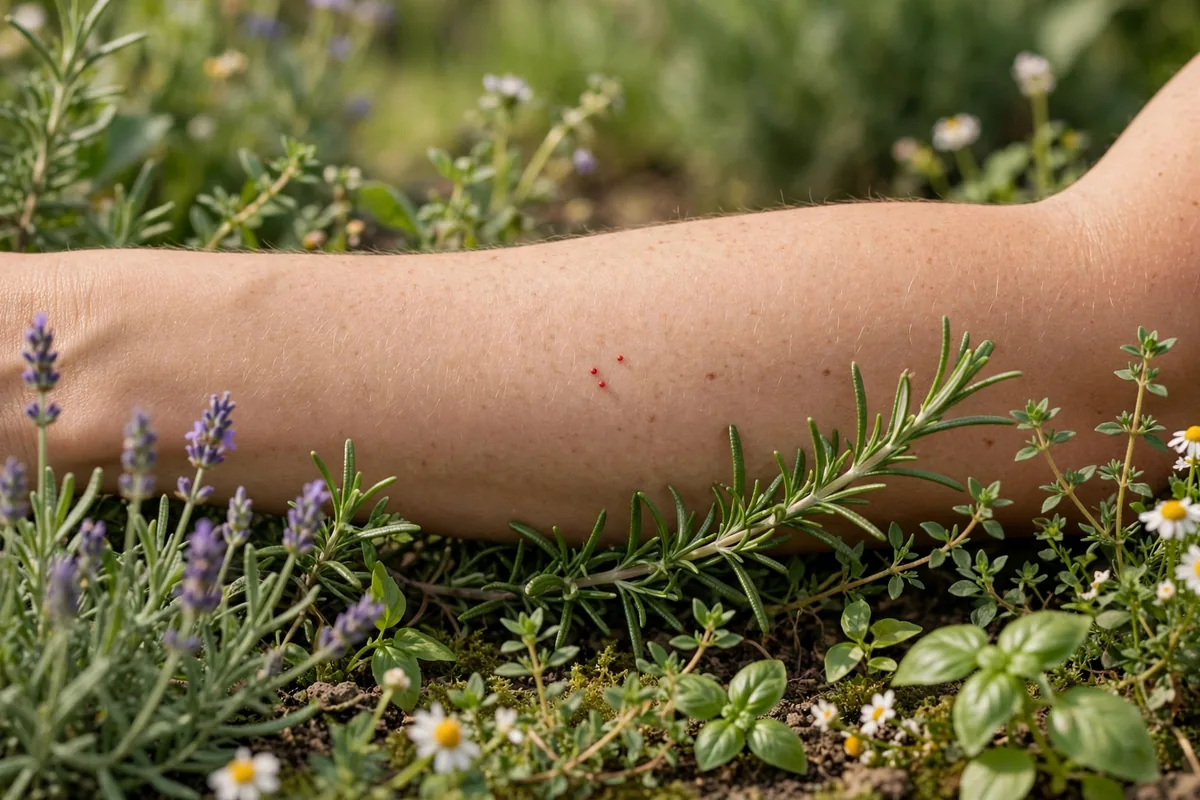
- Garden in long sleeves during late summer when thrips are airborne in large numbers.
- Shower and change after heavy garden sessions — thrips ride home in clothing and hair.
- Manage thrips on plants. If houseplants or garden plants have thrips (silvery stippled leaves, tiny dark specks of frass), treating the plants reduces the wanderers. Yellow sticky traps monitor indoor populations.
- Avoid peak airborne times. Calm, hot late-summer afternoons are when the most thrips are drifting; breezy days are better.
Warning signs: when to seek care #
Call 911 immediately if you develop trouble breathing or swallowing, swelling of the face, lips, tongue, or throat, widespread hives, dizziness or fainting, or a racing heartbeat. True anaphylaxis from thrips is essentially unheard of — but if you have these symptoms after any insect exposure, treat them as an emergency regardless of the suspected cause.
See a doctor or dermatologist if the marks are spreading, blistering, or oozing; if you develop pus, increasing pain, warmth, or fever (signs of infection); if intense itching persists beyond a week; if you suspect scabies (burrow lines, severe nighttime itching) — which requires medical diagnosis; or if a rash keeps recurring and you cannot identify the cause. General bite and sting warning signs apply to any broken or worsening skin.
Frequently asked questions #
Do thrips bite humans? #
Yes, they can. Thrips are plant feeders with piercing mouthparts, and those mouthparts can nip human skin — the bite feels like a brief pinprick. They do not feed on blood and do not transmit human diseases. The nips are most common in late summer when large numbers are airborne around gardens.
What do thrips bites look like? #
Tiny red dots or pinprick marks on exposed skin, sometimes slightly raised, with brief sharp sensation and mild itching that fades quickly. They do not form large welts. If you have large, intensely itchy welts, the culprit is more likely no-see-ums, chiggers, or fleas than thrips.
How do you get rid of thrips bites? #
Wash with soap and water, apply a cool compress, and use hydrocortisone cream or calamine lotion for itching — an oral antihistamine per label directions helps if the itch is bothersome. Most thrips marks fade within a day or two on their own. The more useful project is reducing the thrips: treat infested plants and change out of garden clothes after exposure.
Are thrips dangerous? #
Not to people. Thrips do not transmit human diseases and their bites are a minor, short-lived nuisance. They are a serious agricultural and houseplant pest — they damage plants and spread plant viruses — but for human health the risk is essentially zero. Persistent or severe skin symptoms blamed on thrips usually have another cause worth investigating.
Medical and editorial note #
This guide is general information about thrips and skin irritation and is not medical advice. Many rashes attributed to thrips have other causes, and persistent, spreading, or severe skin symptoms deserve professional evaluation. If you are unsure about a rash or feel unwell, contact a healthcare professional or dermatologist promptly.


