
One sniff at the wrong mound and your dog is yelping, spinning, and covered in stinging ants. Fire ant stings on dog skin are painful, numerous, and frightening — but with fast, correct first aid, most dogs recover fully at home. The critical first minute is about getting every ant off without making things worse. Here is the full protocol, from the moment of the attack through the two-week healing window.
The First 60 Seconds: Get the Ants Off #
Fire ants do not sting once and die like honeybees — they bite to hold on, then sting repeatedly, pivoting in a circle. Dozens of stings can happen in seconds. Speed matters, but technique matters more.
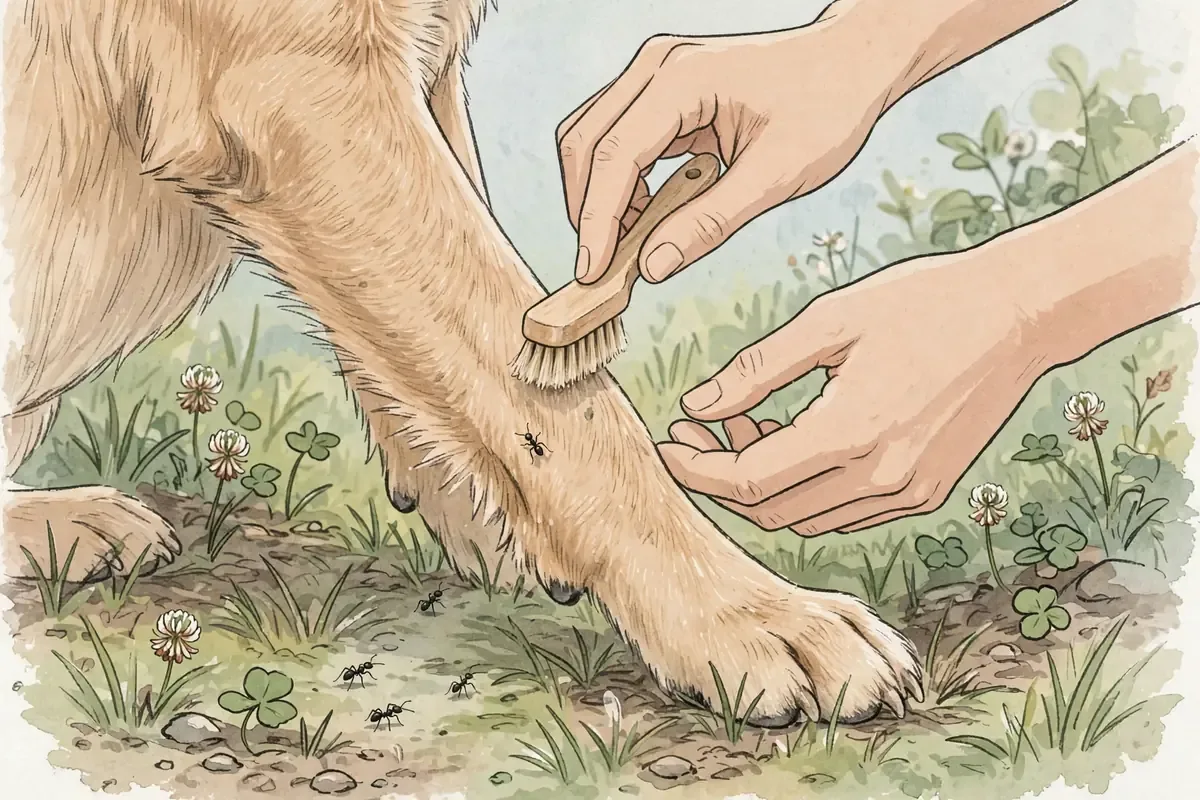
Remove the ants:
- Brush them off with your hands or a cloth. Sweep firmly in one direction — flick ants off the muzzle, ears, belly, and paws. Check between the toes and inside the ears where ants hide.
- Move the dog away from the mound first. Pick the dog up or lead it well clear before you start brushing — standing next to the mound means more ants keep climbing on.
- A fine comb helps for thick-coated dogs: comb through the fur to dislodge ants clinging near the skin.
- Do NOT hose the dog down while ants are still on. A strong stream of water panics fire ants and makes them clamp down and sting harder. Get the ants off first with brushing; water comes after.
Protect yourself: fire ants will climb onto you during the rescue. Wear shoes, brush ants off your own skin promptly, and expect that you may get stung too — treat your own stings with the same calm first aid.
Check the danger zones: ants on the face are the priority — eyes, nose, and mouth. Ants inside the mouth or nose, or a muzzle swelling rapidly, raise the urgency significantly. If your dog stepped on the mound rather than sniffed it, paws take the brunt; still check the belly and legs where ants climb.
For the human version of this escape, see stepped on a fire ant mound: how to escape.
Soothing the Skin After the Attack #
Once every ant is off, shift to calming the skin and watching the dog.
Cool and clean:
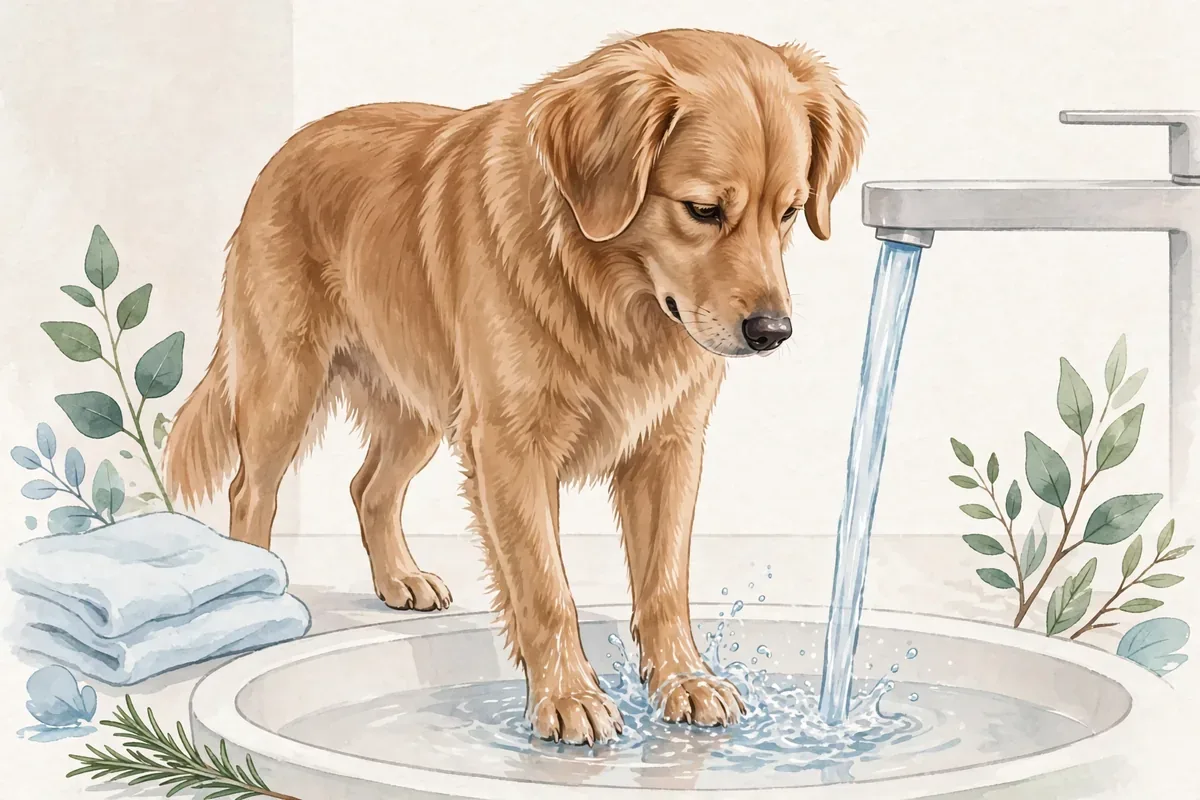
- Rinse with cool (not cold) water. Now that the ants are gone, a gentle cool-water rinse or bath soothes the skin and washes away venom residue. Keep water out of the ears and eyes.
- Cool compress on hot spots. A damp cool cloth held on the worst areas — muzzle, paws, belly — for a few minutes at a time reduces swelling and pain. Most dogs tolerate a cloth better than an ice pack.
- Mild soap is fine for a wash afterward, rinsed thoroughly. Do not scrub sting sites hard.
Comfort measures:
- Keep the dog calm and rested. Excitement increases circulation and can intensify swelling. A quiet room, fresh water, and company work better than a walk.
- Prevent chewing and scratching. Dogs will gnaw at painful sting sites, breaking the skin and inviting infection. An e-collar (cone) for the first day or two is often the difference between clean healing and infected sores.
- Ask your vet about antihistamines before giving anything. Some vets recommend an over-the-counter antihistamine for itching and swelling, but the product and amount must come from your veterinarian — never guess a dose for your dog.
What NOT to do:
- Do not apply human creams, oils, or home remedies unless your vet directs them — dogs lick everything off, and many topical products are unsafe ingested.
- Do not give human pain relievers. Common human pain medications can be toxic to dogs. Pain management, if needed, comes from your vet.
- Do not pop the pustules (see next section) — they are part of the normal healing process.
Pustules and Healing: The Next Two Weeks #
Fire ant stings follow a distinctive timeline in dogs, just as in people. Knowing it prevents alarm at each stage.
The typical arc:
- Hours 0-24: red, painful welts at each sting site. The dog may be sore, restless, and reluctant to walk if the paws were hit.
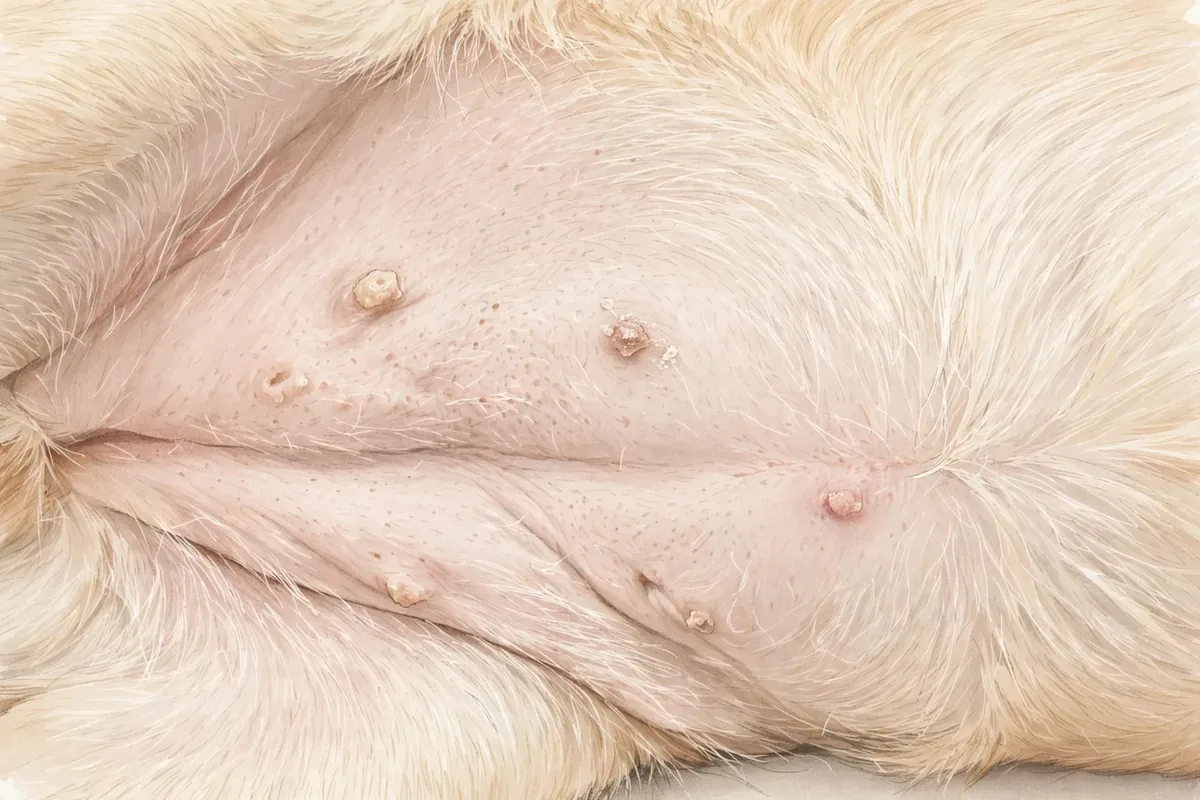
- Day 1-2: small white or yellowish pustules form — these look like tiny pimples. This is the signature fire ant lesion and it is sterile, not infected. It is tempting to pop them; do not. Our guide on fire ant sting pustules and what not to do explains why they must be left alone.
- Days 3-7: pustules dry, crust, and begin to flake off. Itching often peaks in this window as the skin heals.
- Weeks 1-2: most lesions resolve. Some dogs are left with small dark spots or minor scabs that fade over additional weeks.
Support healing:
- Keep the sites clean and dry. A gentle daily check is enough — no aggressive washing of healing pustules.
- Watch the itch. If scratching is breaking the skin, the e-collar stays on and a vet visit is warranted — broken pustules can become genuinely infected.
- Photograph the worst areas on day one so you can compare. Healing is easier to judge against a baseline.
When healing goes wrong: pustules that grow larger instead of drying, spreading redness around the sites, swelling that increases after day two, discharge that looks cloudy or foul, or a dog that develops fever or stops eating — all warrant veterinary evaluation for secondary infection.
Emergency Signs: When Minutes Matter #
Most fire ant attacks on dogs are painful but not dangerous. A minority become emergencies — usually from sheer sting count or individual hypersensitivity.
Rush to the vet or emergency animal hospital for:
- Breathing difficulty — labored breathing, wheezing, or gasping.
- Facial or throat swelling that is rapidly increasing, especially around the muzzle, eyes, or neck.
- Widespread hives breaking out across the body.
- Vomiting, drooling excessively, or diarrhea starting soon after the attack.
- Collapse, extreme weakness, or unresponsiveness.
- Pale or blue-tinged gums.
- Seizures.
Higher-risk situations even without dramatic signs:
- Very small dogs and puppies — the same number of stings delivers more venom per pound.
- Dogs with known insect allergies or a previous bad reaction to stings.
- Hundreds of stings from a full mound attack — venom load alone can cause systemic effects.
- Stings inside the mouth or throat from snapping at ants — swelling in the airway is an emergency even if the dog seems okay at first.
On the way: keep the dog calm and cool, note the time of the attack and roughly how many stings you saw, and call ahead so the clinic is ready. Do not try home remedies for these signs — drive.
Warning signs: when to seek care #
Call your vet or an emergency animal hospital immediately if your dog has difficulty breathing, collapsing or extreme weakness, rapidly spreading facial or throat swelling, widespread hives, uncontrolled vomiting, pale or blue gums, or seizures after fire ant stings. These are emergency signs — do not wait to see if they improve.
Call your regular vet promptly (same day) for a large number of stings even if the dog seems stable, stings on or in the eyes, nose, or mouth, swelling that keeps increasing after the first hours, pustules that look infected (growing, cloudy discharge, foul odor), or a dog that stops eating, becomes very lethargic, or runs a fever during the healing weeks. Small dogs, puppies, and dogs with prior sting reactions deserve a vet call after any significant attack.
Frequently asked questions #
How many fire ant stings are dangerous for a dog? #
There is no fixed number — it depends on the dog’s size, health, and individual sensitivity. A few stings on a large healthy dog are usually a painful nuisance; dozens to hundreds of stings on a small dog, or any number in a hypersensitive dog, can become serious. Judge by the dog’s condition and the emergency signs above, not by counting stings.
Should I give my dog Benadryl after fire ant stings? #
Only if your veterinarian advises it. Antihistamines are sometimes recommended for itching and mild swelling, but the decision — product, amount, and timing — belongs to your vet, who knows your dog’s weight, health conditions, and other medications. Never dose from internet charts.
Why should I not hose the ants off my dog? #
A hard stream of water while ants are still attached causes them to panic-grip and sting more aggressively — you can turn a bad situation worse. Brush every ant off first, move away from the mound, then use gentle cool water to soothe the skin. Order of operations is everything in the first minute.
Can fire ant stings kill a dog? #
Deaths are rare but documented, almost always from anaphylaxis (severe allergic reaction) or overwhelming venom load in small dogs after mound attacks. The vast majority of dogs recover completely with proper first aid. The emergency signs above are what separate the rare dangerous cases from the common painful ones — learn them before you need them.
Medical and editorial note #
This guide is general information about fire ant stings on dogs and is not veterinary advice. Never give your dog human medications or guess at doses — always consult your veterinarian. If your dog shows any emergency signs after a fire ant attack, seek veterinary care immediately.


